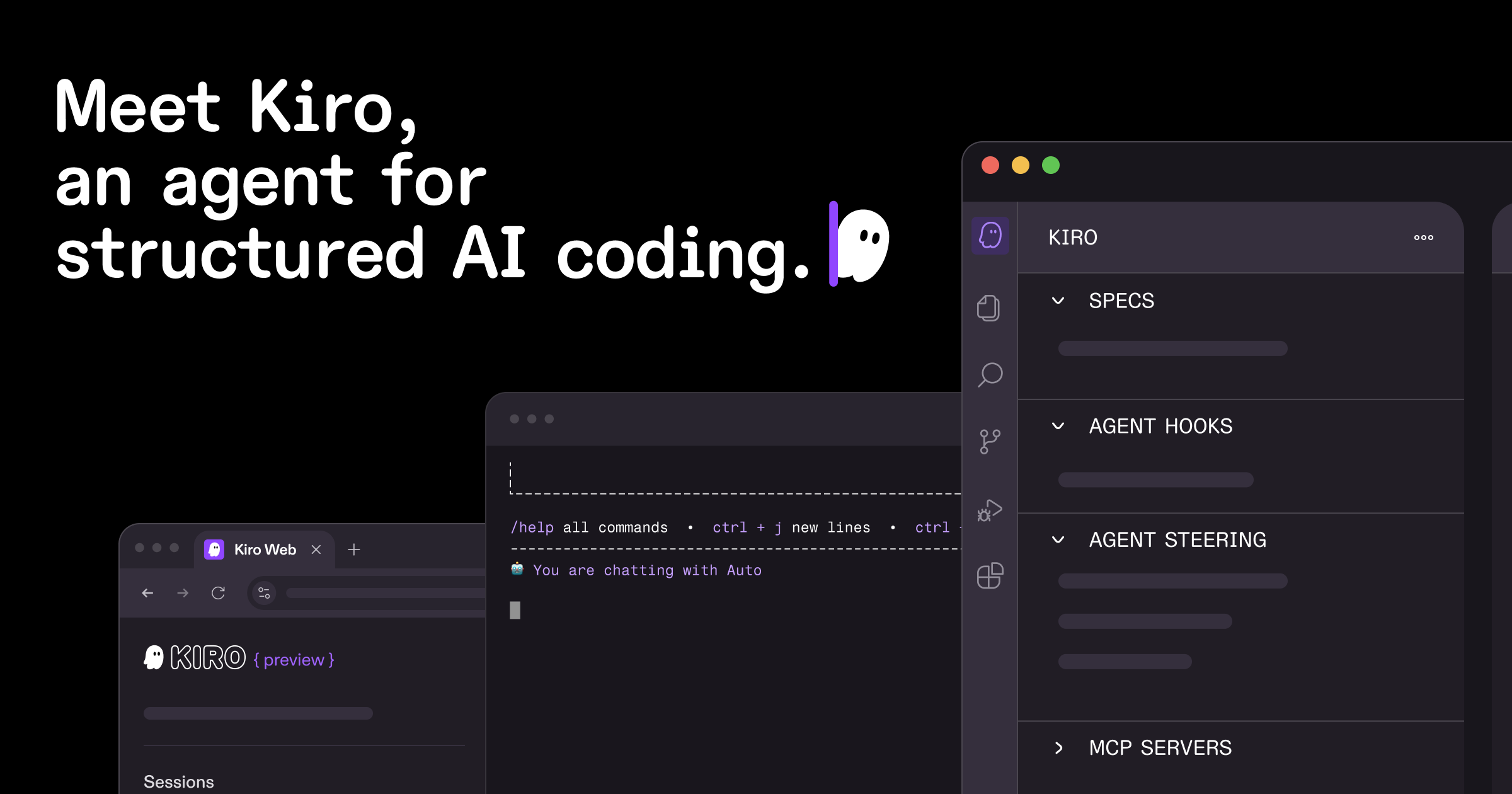
Kiro
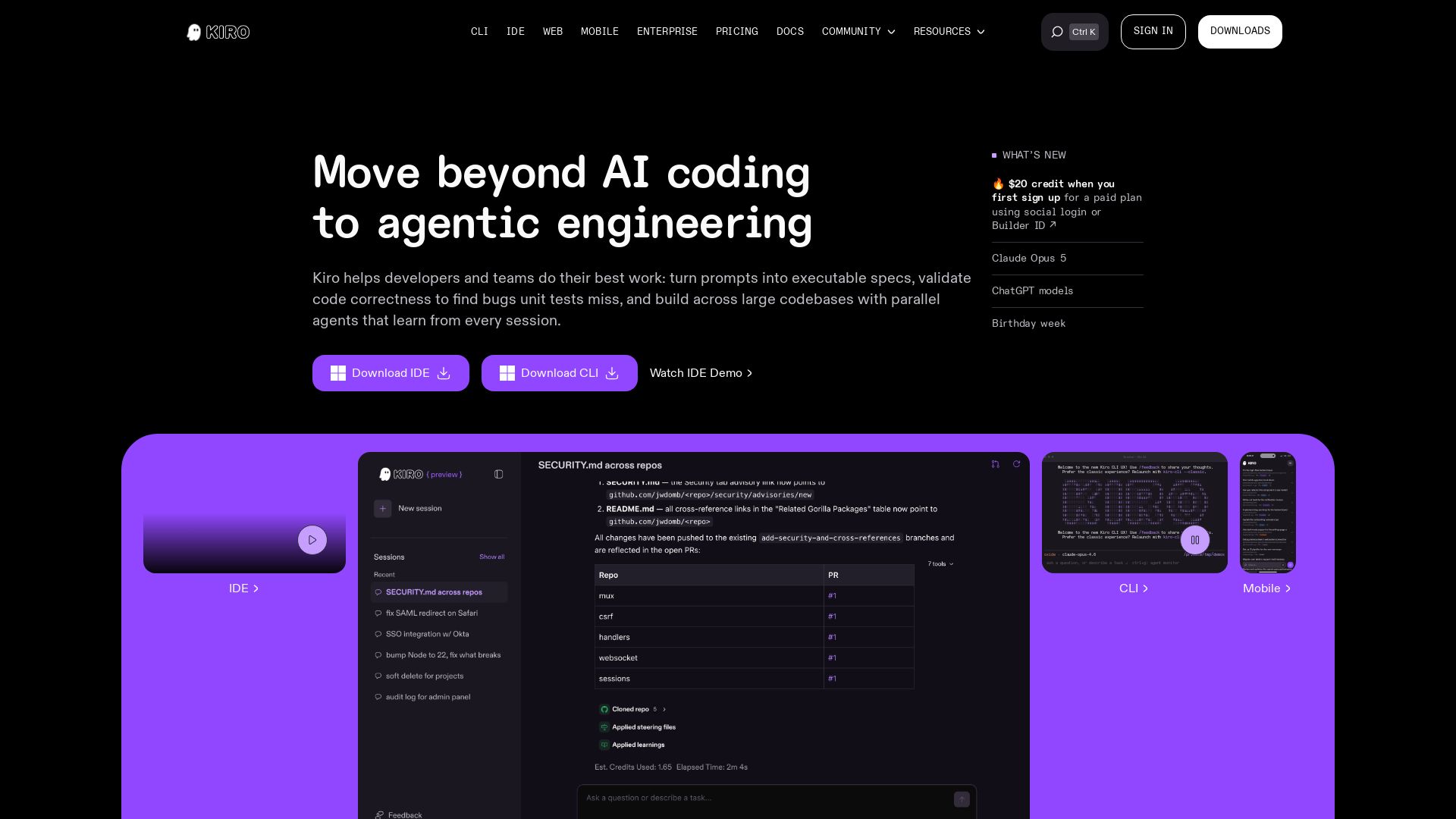
Turn prompts into executable specs, validate code correctness, and build across large codebases with parallel agents. IDE, CLI, and web.

Editor's Verdict
Key Takeaways
- Spec-Driven Development
- Parallel Agents
- Property-Based Testing
- Multi-Model Support
In-Depth Review: What is Kiro?
Kiro is an agentic AI platform that helps developers and teams move beyond AI coding to agentic engineering. It turns prompts into detailed specs, architectural designs, and sequenced tasks, then implements them with parallel agents. Kiro validates code correctness with property-based tests that catch edge cases unit tests miss. It works across large codebases and learns from every session. Available as an IDE, CLI, and web interface, Kiro supports multiple models including Claude and open-weight models, offers enterprise-grade security and pricing, and helps you ship maintainable code that matches your specifications.
Core Features
Spec-Driven Development
Turn prompts into detailed specs, then into executable code, documentation, and tests, ensuring what you build matches your intent.
Parallel Agents
Run multiple agents simultaneously to build across large codebases, reducing development time from weeks to days.
Property-Based Testing
Automatically generate fuzz tests that catch edge cases missed by conventional unit tests, improving code correctness.
Multi-Model Support
Choose from Claude, open-weight models, or Auto mode which selects the best model for each task based on complexity, latency, and cost.
IDE/CLI/Web Interfaces
Work seamlessly across a full-featured IDE, a terminal-based CLI, or a web browser with cloud sandboxes.
Enterprise Readiness
Built and operated by AWS with IAM/SSO authentication, usage dashboards, cost management, IP indemnity, and governance controls.
CI/CD Integration
Run the headless CLI in CI/CD pipelines to review PRs, fix bugs, and automate documentation generation without manual intervention.
Open Standards Compatibility
Compatible with Agent Client Protocol (ACP), AGENTS.md, Skills.md, MCP, and supports Open VSX extensions and VS Code settings.
Pricing
Kiro Free
- 50 credits per month
- Access to open weight models and Claude Sonnet 4.5
Kiro Pro
- 1,000 credits per month
- Access to premium models
- Add-on credits at $0.04/credit
Kiro Pro+
- 2,000 credits per month
- Access to premium models
- Add-on credits at $0.04/credit
Kiro Pro Max
- 5,000 credits per month
- Access to premium models
- Add-on credits at $0.04/credit
Kiro Power
- 10,000 credits per month
- Access to premium models
- Add-on credits at $0.04/credit
Pros and Cons
Pros
- Spec-Driven ClarityTransforms ambiguous prompts into structured specs, reducing misunderstandings and rework.
- Automated ValidationProperty-based tests catch edge cases that unit tests miss, improving software reliability.
- Parallel ExecutionMultiple agents work simultaneously, accelerating large-scale development tasks.
- Enterprise SecurityAWS-backed with IAM/SSO, compliance, and governance controls suitable for regulated environments.
- Flexible InterfacesAvailable as IDE, CLI, and web app, adapting to different workflows and automation needs.
Cons
- Credit-Based PricingUsage is metered by credits, which can be costly for heavy users or teams.
- Limited Free TierFree plan provides only 50 credits, restricting exploration and small projects.
- Model DependencyQuality of output varies by model; premium models require higher-tier plans.
- Learning CurveSpec-driven development and agent orchestration may be unfamiliar to new users.
- Chrome/Chromium Required for PDFThe --pdf feature relies on headless Chrome, which may not be pre-installed on all systems.
Use Cases & Recommended Professions
Software Engineer→ View Toolkit
Use Kiro to rapidly prototype features, generate documentation, and automate testing across large codebases.
Cloud Architect→ View Toolkit
Design and implement cloud infrastructure using Terraform and Python with AI-assisted spec-driven development.
Startup Founder / CTO→ View Toolkit
Accelerate development of business-critical assets while maintaining code quality and reducing time to market.
Data Scientist→ View Toolkit
Automate workflows, generate unit tests, and document analyses to streamline data science projects.
Security Engineer→ View Toolkit
Leverage Kiro's property-based testing to identify security vulnerabilities and enforce secure coding practices.
Solution Architect→ View Toolkit
Use Kiro to generate scalable architecture designs and validate them against requirements.
Frequently Asked Questions
Alternative AI Tools
View Detailed Comparison →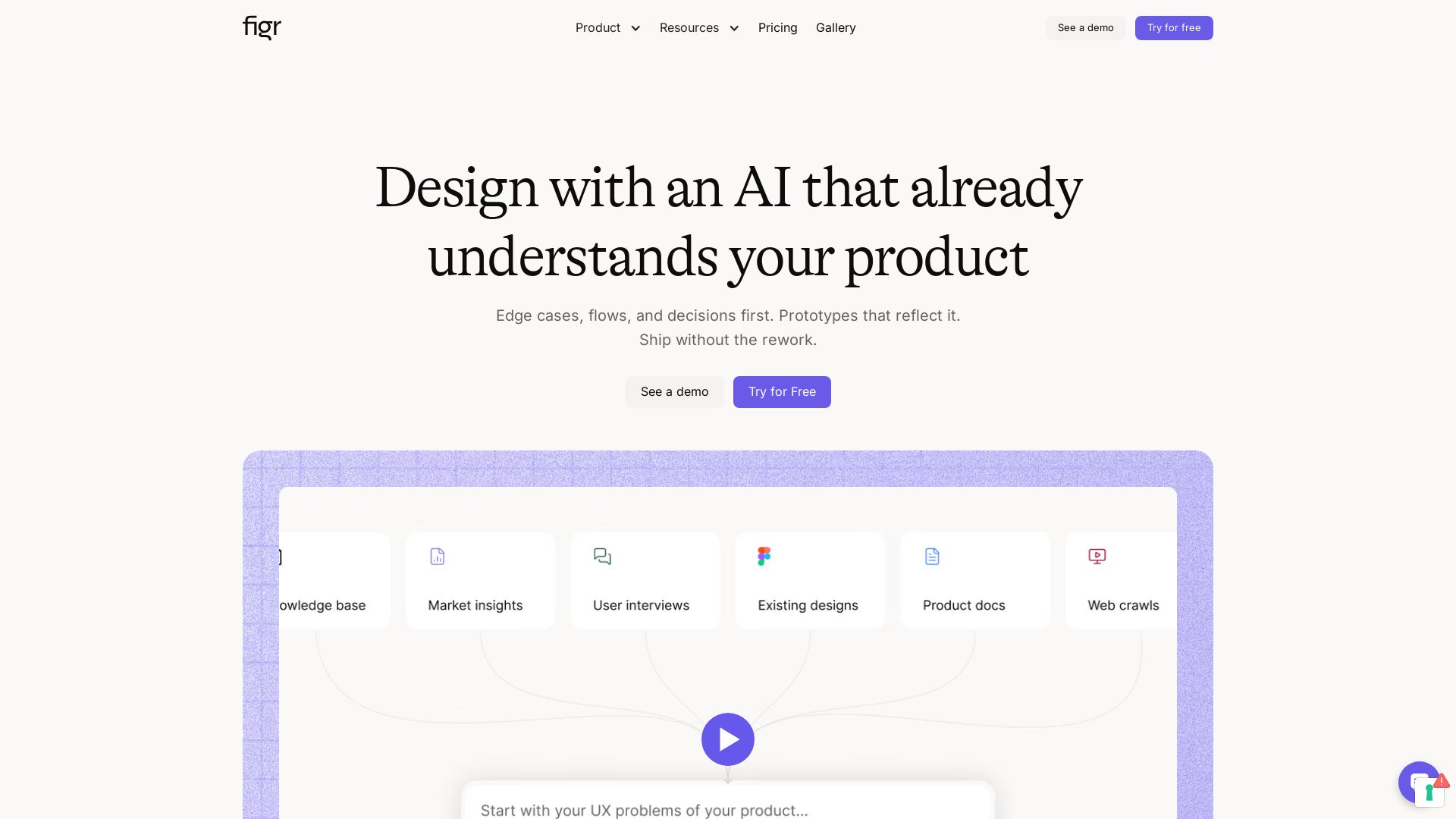
Figr
Ship better UX faster. Figr builds a living understanding of your product, maps flows, finds edge cases, and generates high-fidelity prototypes from your actual design system.

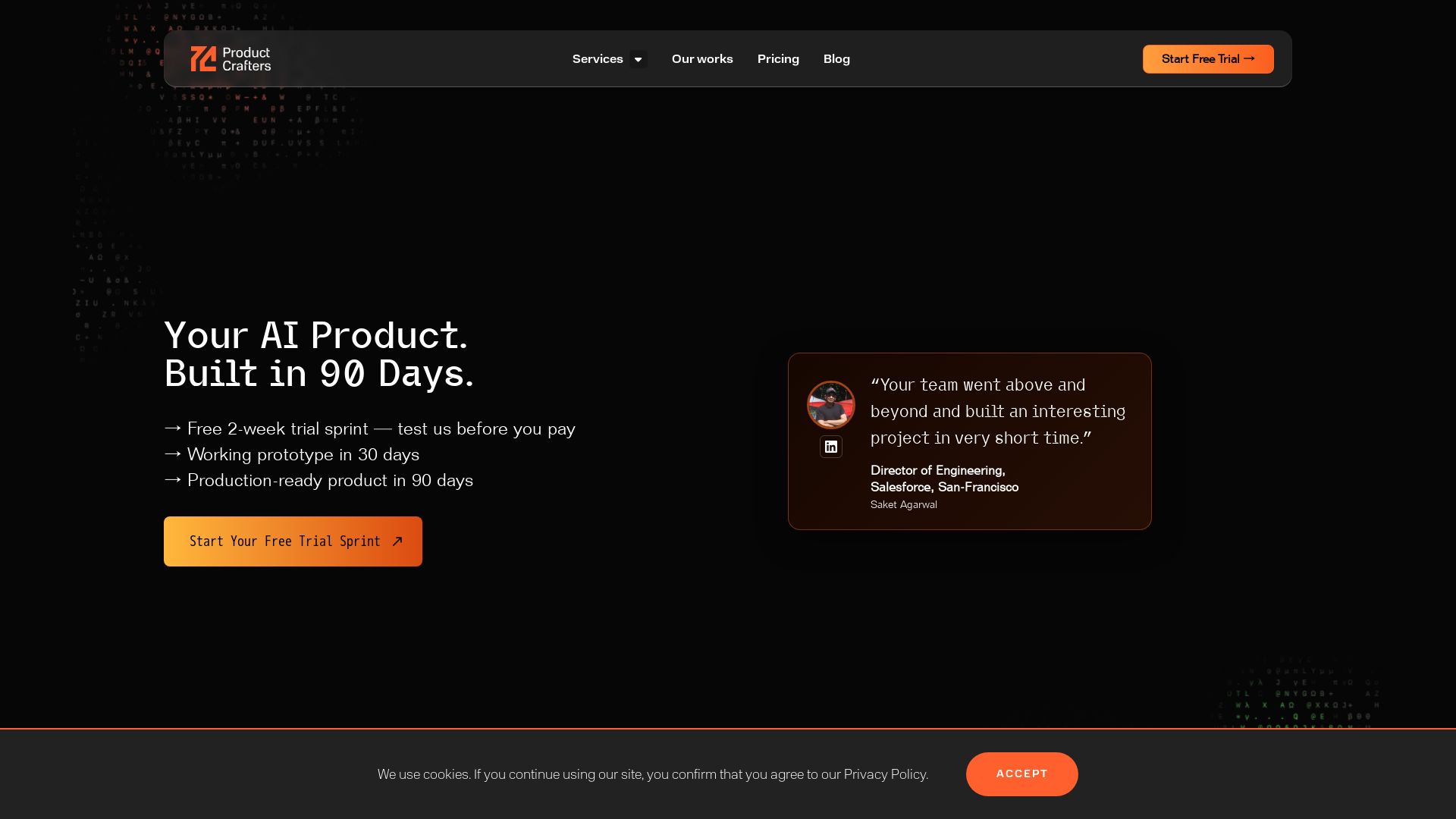
ProductCrafters
Get a free 2-week trial sprint for your AI product. Working prototype in 30 days, production-ready in 90. No contract, no credit card. Test your dev team risk-free.

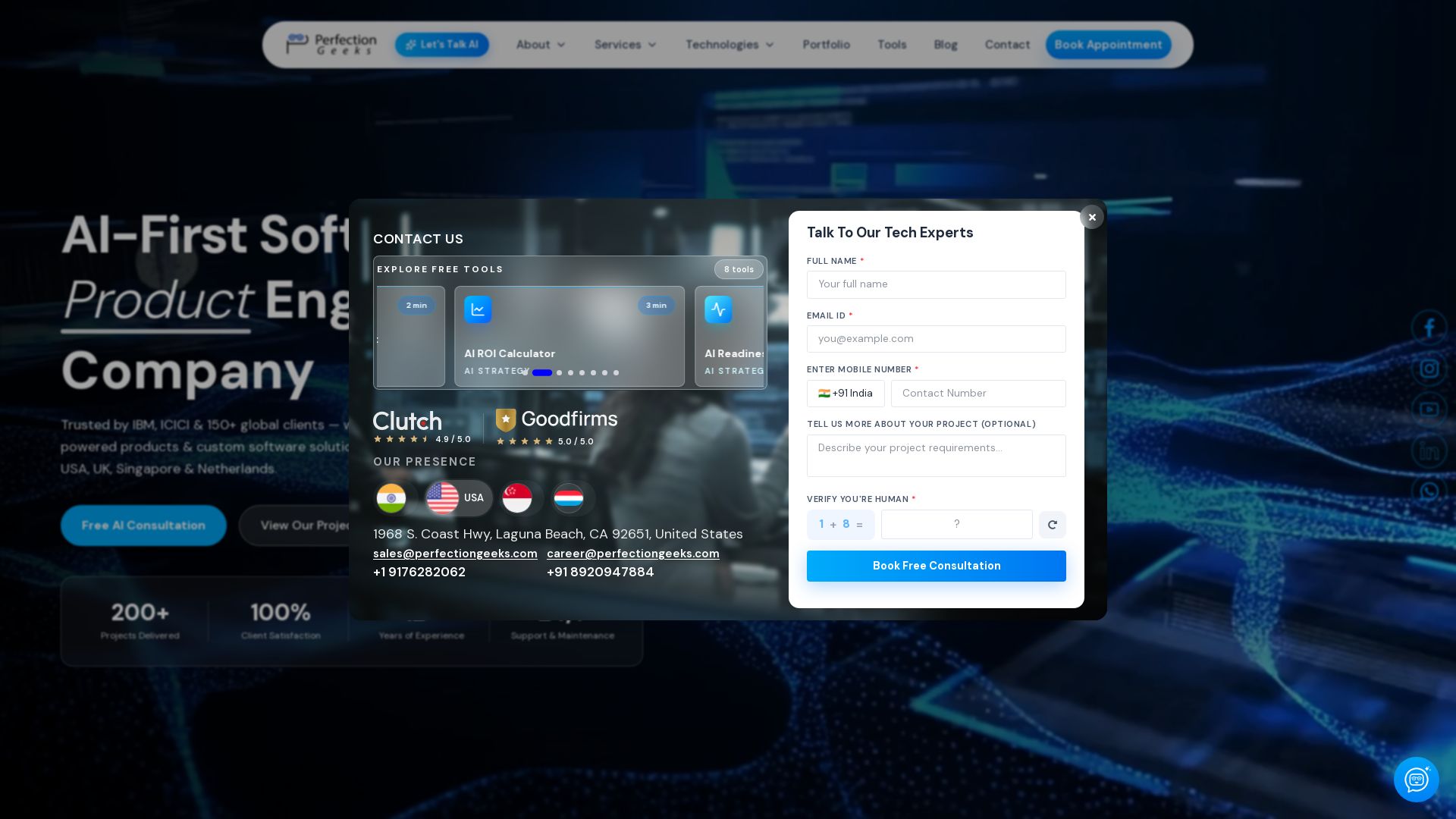
PerfectionGeeks Technologies
Trusted by IBM, ICICI & 150+ clients. Build mobile apps, web platforms, AI products & custom software. Serving USA, UK, Singapore, Netherlands.

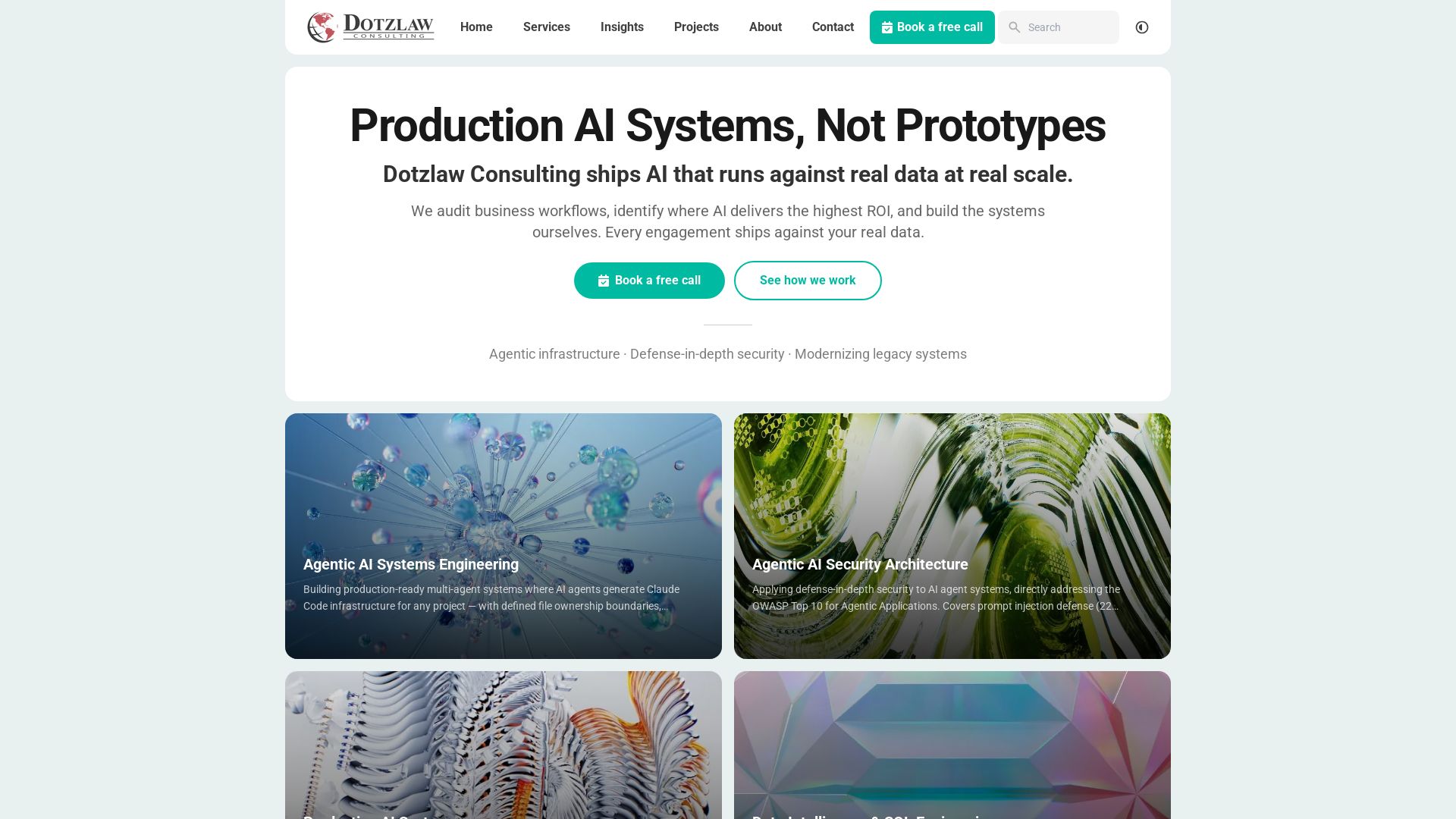
Dotzlaw Consulting
We build production-ready AI systems, multi-agent workflows, and secure architectures. Real data, real scale. Expert SQL & data intelligence.

SKULaunch
Automate supplier data onboarding, AI extracts attributes, enrich product catalogs, and publish ready data. From messy files to filterable search.

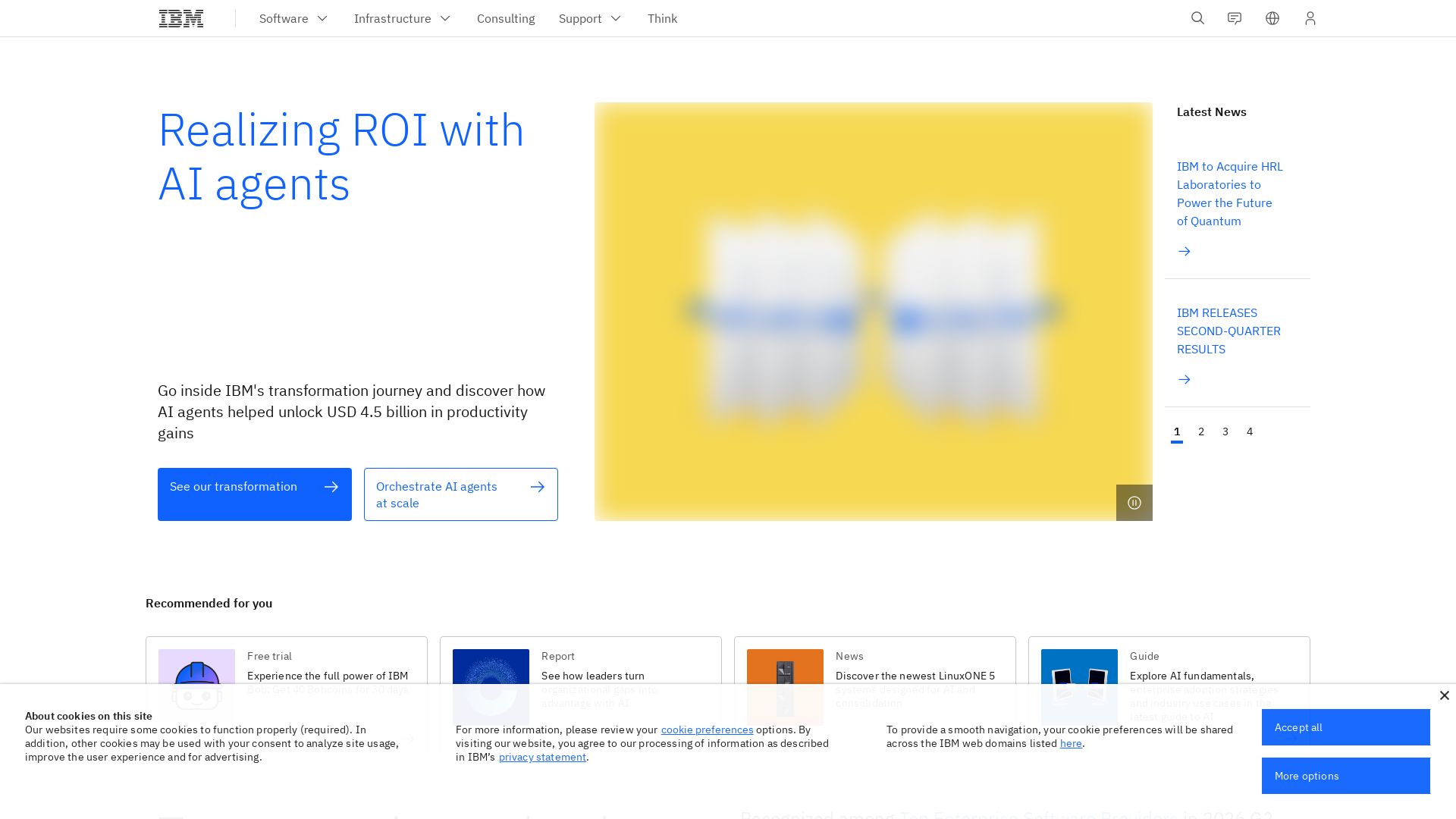
IBM
Discover how IBM's AI agents transformed operations, delivering $4.5 billion in productivity. Explore IBM Bob, watsonx Orchestrate, and more.
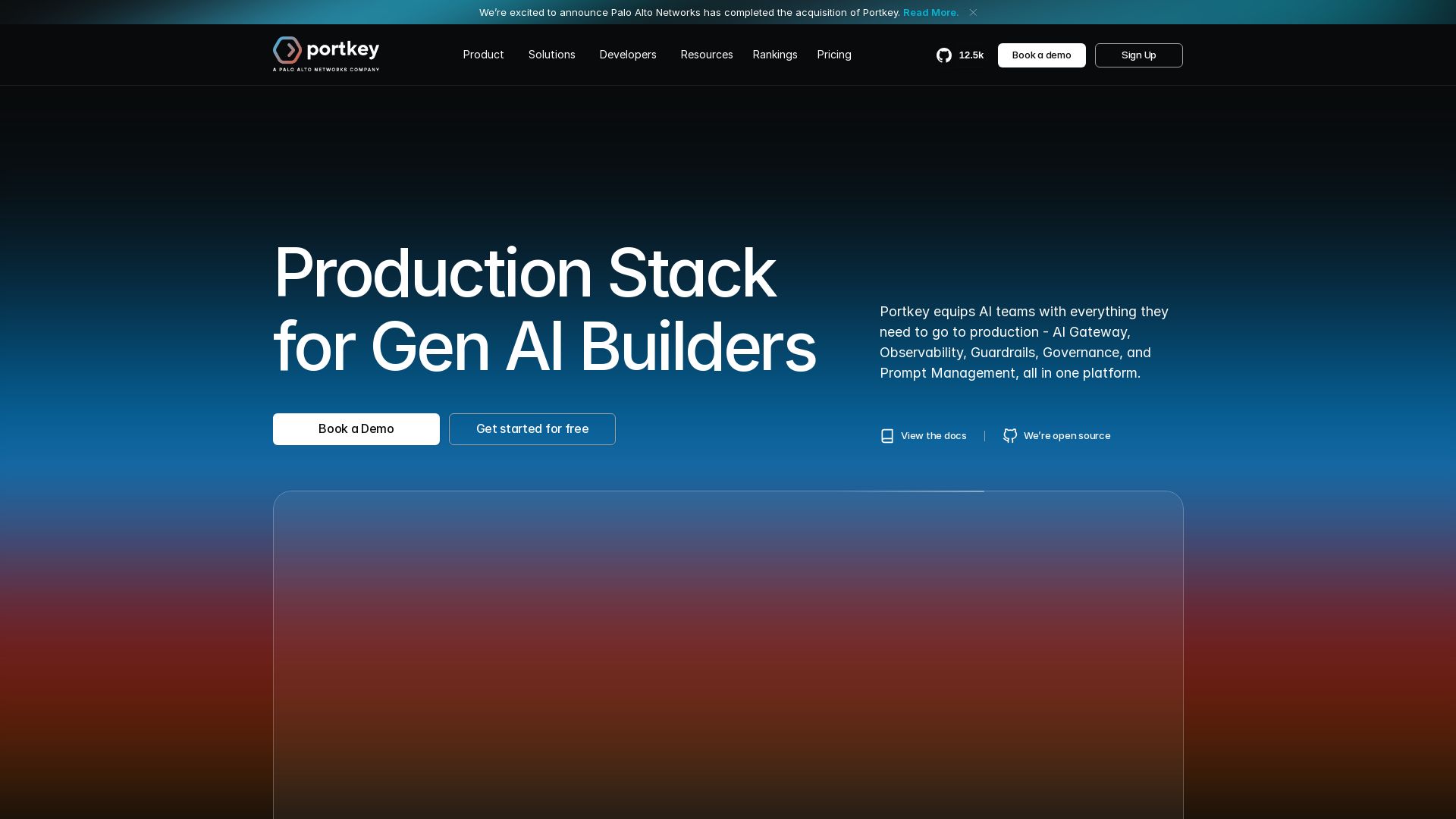
Portkey
Portkey equips AI teams with AI Gateway, Observability, Guardrails, and Prompt Management. Unified API for 1600+ LLMs. Save costs with caching. Trusted by Fortune 500s.

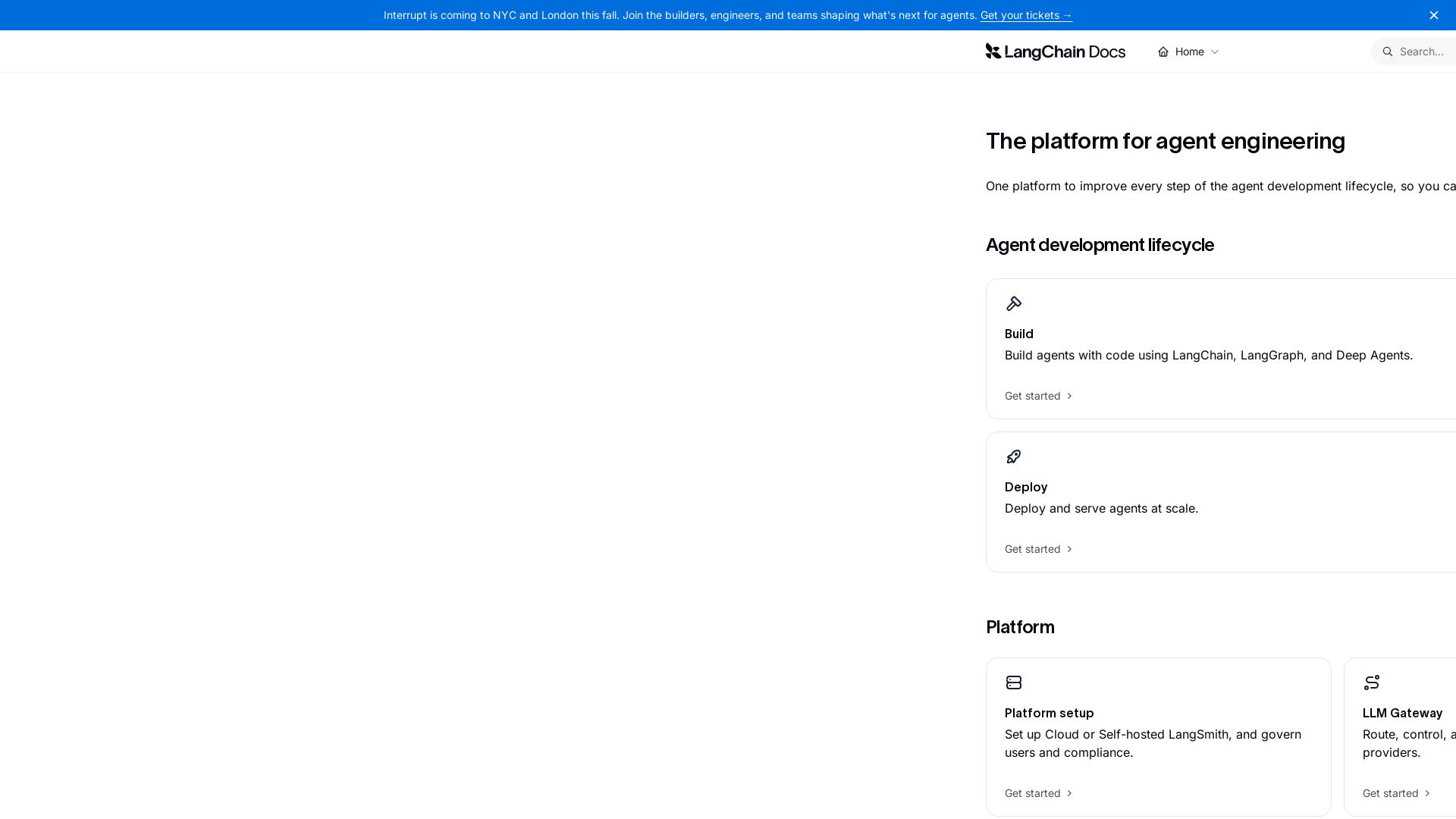
LangChain
The platform for agent engineering. Build, test, deploy, and monitor AI agents with ease. Ship reliable agents faster.

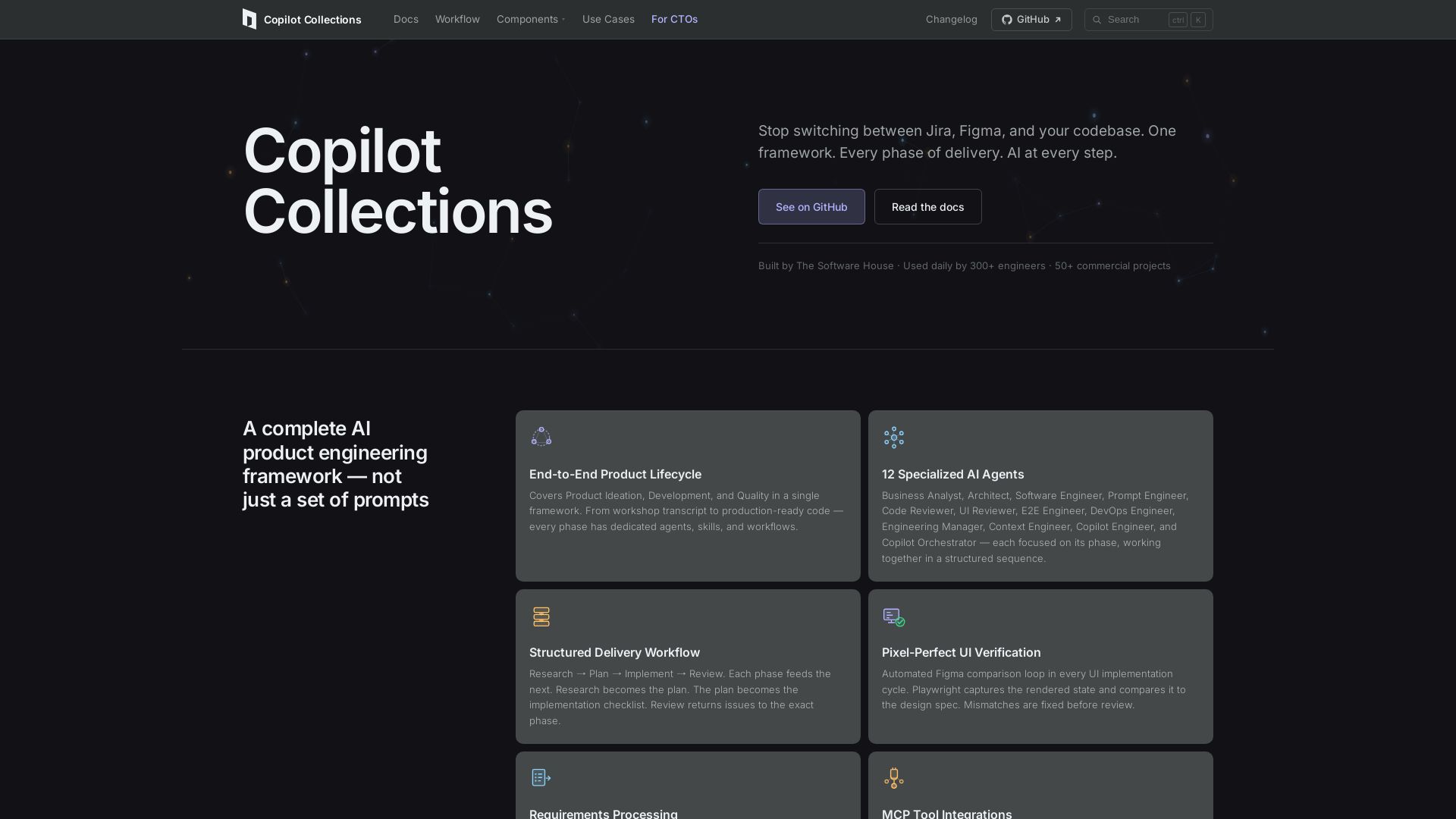
Copilot Collections
Turn ideas into production code with 12 AI agents, MCP integrations, and pixel-perfect UI verification. Used by 300+ engineers. Reduce lead time by 30%.

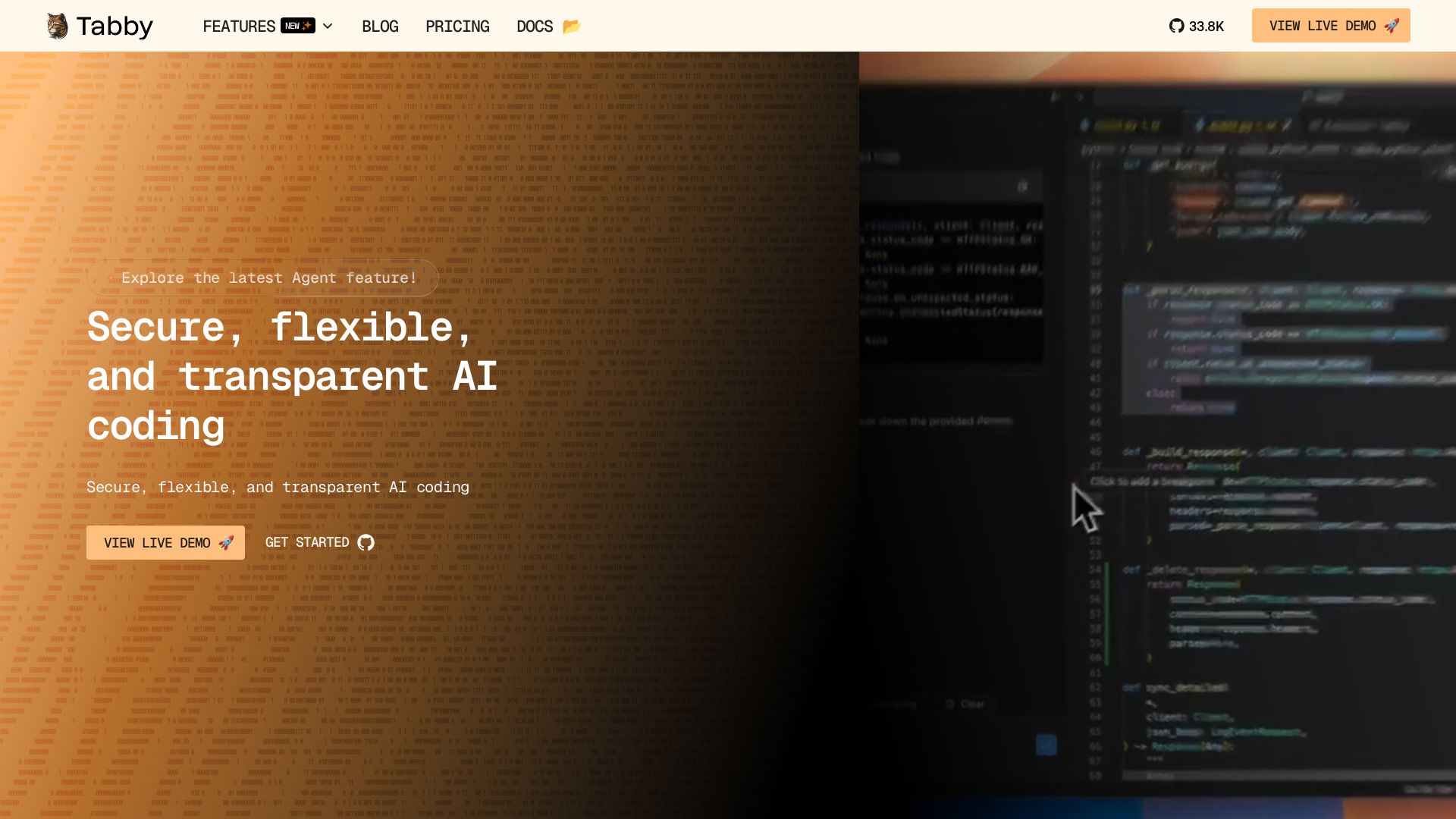
Tabby
Self-hosted, secure AI coding assistant with code completion, answer engine, and inline chat. Private and flexible.

Axify
Get clear visibility into AI usage, cost, and impact across your engineering teams. Flat fee, no per-seat pricing. Start free trial.

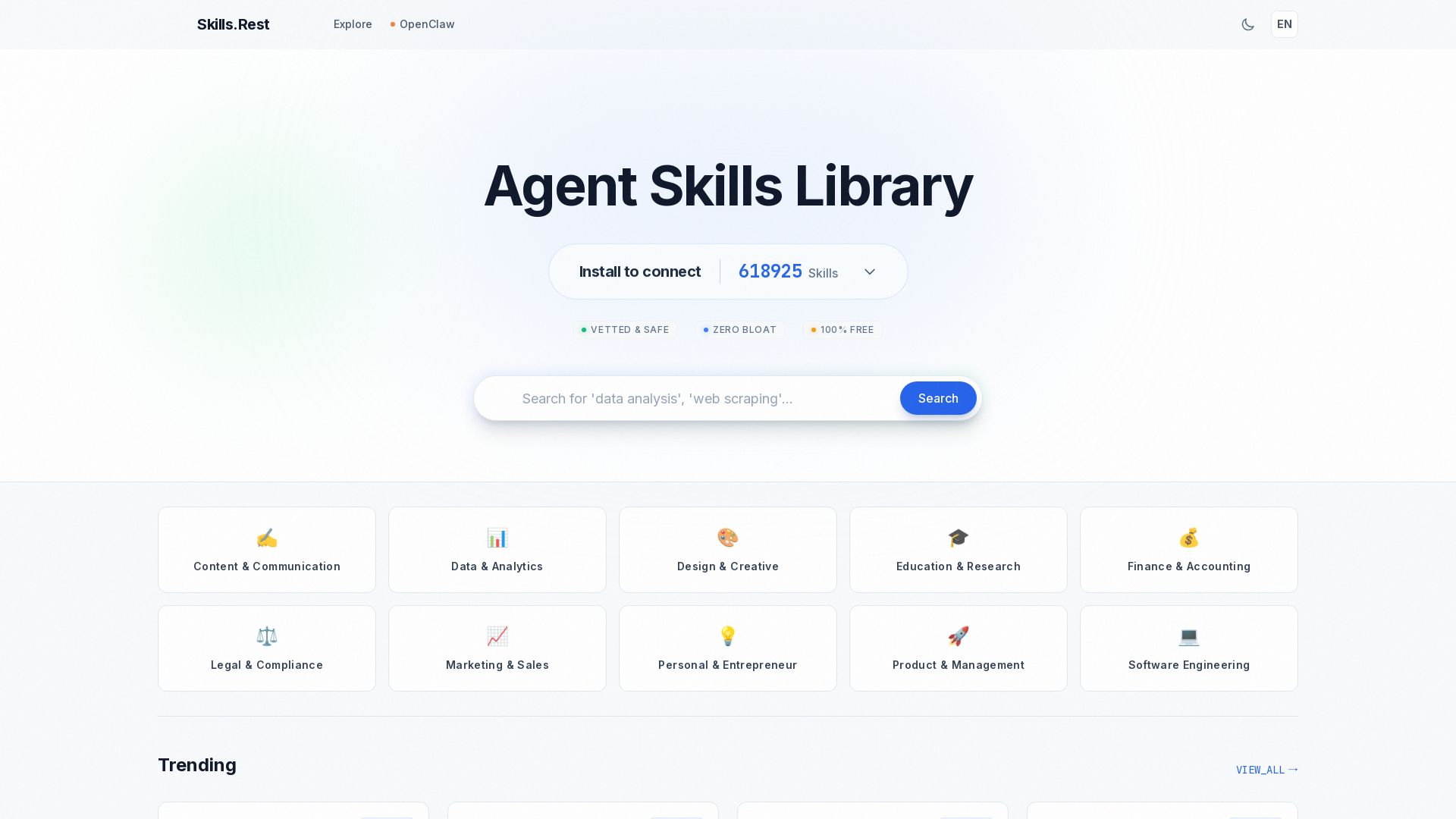
Skills.rest
Discover a curated library of free, safe, and zero-bloat AI agent skills. Install instantly via PowerShell and enhance your Claude Code workflows.

ℹ️ Curation Disclosure: The overview and features of Kiro were synthesized using AI and fact-checked by our curation team to ensure accuracy.