Portkey
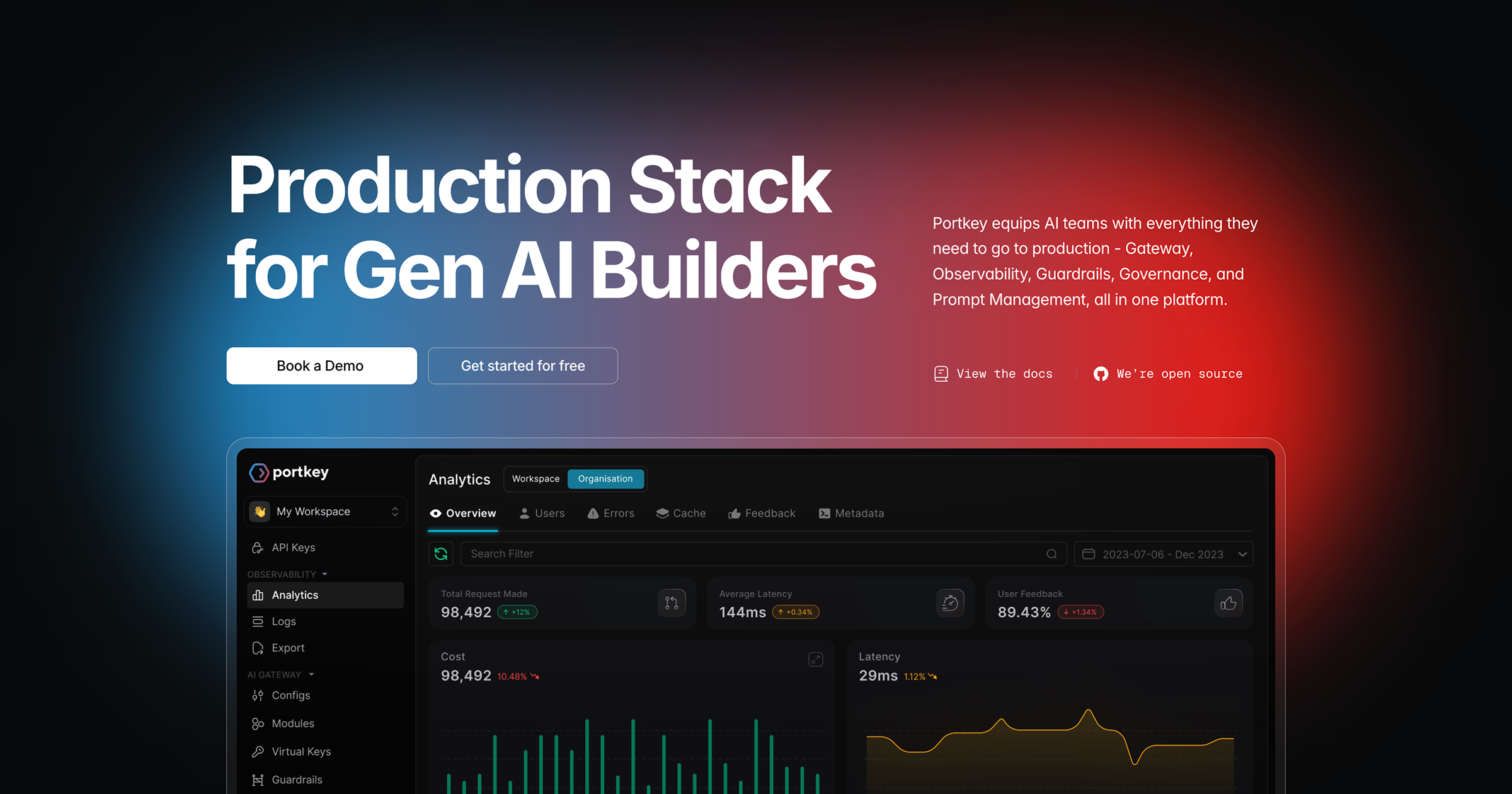
Portkey equips AI teams with AI Gateway, Observability, Guardrails, and Prompt Management. Unified API for 1600+ LLMs. Save costs with caching. Trusted by Fortune 500s.

Editor's Verdict
Key Takeaways
- AI Gateway
- Observability
- Guardrails
- Prompt Management
In-Depth Review: What is Portkey?
Portkey is a comprehensive platform for Gen AI builders, providing end-to-end LLM orchestration, real-time observability, guardrails, and governance. Integrate in minutes with 3 lines of code. Supports 1600+ models, intelligent caching, PII redaction, and RBAC. Used by Fortune 500 companies and startups to accelerate time-to-market and reduce costs. Now part of Palo Alto Networks.
Core Features
AI Gateway
Unified API access to over 1,600 LLMs with automatic fallbacks, load balancing, retries, and timeouts.
Observability
Real-time dashboard to monitor LLM behavior, catch anomalies, and manage usage with logs, traces, and alerts.
Guardrails
Built-in and custom guardrails for PII redaction, content moderation, and safety checks.
Prompt Management
Manage prompt templates, versioning, and variables with a playground and API endpoints.
Caching
Simple and semantic caching to reduce costs and latency by reusing LLM responses.
AI Governance
Role-based access control, budget limits, and activity logs to manage security and compliance.
MCP Gateway
Secure access to Model Context Protocol tools with centralized authentication and observability.
Model Catalog
Curated list of supported LLMs with pricing and performance data.
Pricing
Developer
- 10,000 recorded logs per month
- 3 days log retention, 30 days metrics retention
- Universal API, Fallbacks, Loadbalancing, Retries
- Logs, Traces, Feedback, Custom Metadata, Filters
- 3 Prompt Templates, Playground, API Endpoints, Versioning, Variables
- Simple Caching
- Deterministic Guardrails
- Community Support
Production
- 100,000 recorded logs per month
- 30 days log retention, 90 days metrics retention
- Universal API, Fallbacks, Loadbalancing, Retries
- Logs, Traces, Feedback, Custom Metadata, Filters, Alerts
- LLM & Partner Guardrails
- Unlimited Prompt Templates, Playground, API Endpoints, Versioning, Variables
- Simple & Semantic Caching
- Role-Based Access Control, Service Account API Keys
- Production Support
Enterprise
- 10 million+ recorded logs per month
- Custom retention periods for logs and metrics
- Custom Guardrail Hooks, Advanced Evaluation Templates
- Role-Based Access Control, SSO, Granular Budget & Rate Limits
- Private Cloud Deployment, Data Export to Data Lakes, VPC Hosting
- Advanced Compliance (SOC2 Type 2, GDPR, HIPAA), Custom BAAs, Data Isolation
- Dedicated Onboarding & Priority Support
Pros and Cons
Pros
- Easy IntegrationIntegrate with just 3 lines of code in minutes without changing existing stack.
- Cost SavingsIntelligent caching and routing strategies can reduce annual costs by up to 90%.
- Comprehensive ObservabilityReal-time insights into LLM behavior, costs, and performance with detailed logs and traces.
- Multi-Model SupportAccess to 1,600+ LLMs through a single API with automatic fallbacks and load balancing.
- Enterprise SecurityPII redaction, RBAC, SSO, and compliance with SOC2, HIPAA, and GDPR.
Cons
- Limited Free TierFree plan includes only 10,000 logs/month and 3-day retention, which may be insufficient for some use cases.
- No Overage on Free PlanExceeding free tier limits stops logging; no pay-as-you-go option.
- Semantic Caching Only on Paid PlansAdvanced caching features require Production or Enterprise plan.
- Enterprise Pricing Not TransparentCustom pricing may be a barrier for smaller organizations.
- Potential LatencyWhile minimal, additional hops through the gateway may introduce slight latency.
Use Cases & Recommended Professions
Machine Learning Engineer→ View Toolkit
Needs to integrate and manage multiple LLMs in production, monitor performance, and optimize costs.
Software Engineer (AI/ML)→ View Toolkit
Requires a unified API to quickly build and deploy AI features without managing individual provider integrations.
Data Scientist→ View Toolkit
Uses observability and caching to experiment with models and ensure reproducible results.
Product Manager (AI Products)→ View Toolkit
Needs to track costs, usage, and model performance to make data-driven decisions for AI features.
DevOps Engineer→ View Toolkit
Responsible for deploying and managing AI infrastructure, benefiting from RBAC, logs, and security compliance.
AI Solutions Architect→ View Toolkit
Designs and scales AI systems for enterprises, requiring governance, multi-model support, and custom deployment options.
Frequently Asked Questions
Alternative AI Tools
View Detailed Comparison →
Envoy AI Gateway
Envoy AI Gateway is an open source project for handling GenAI traffic with Envoy Gateway. Supports 16+ LLM providers, production-ready v1.0.

Figr
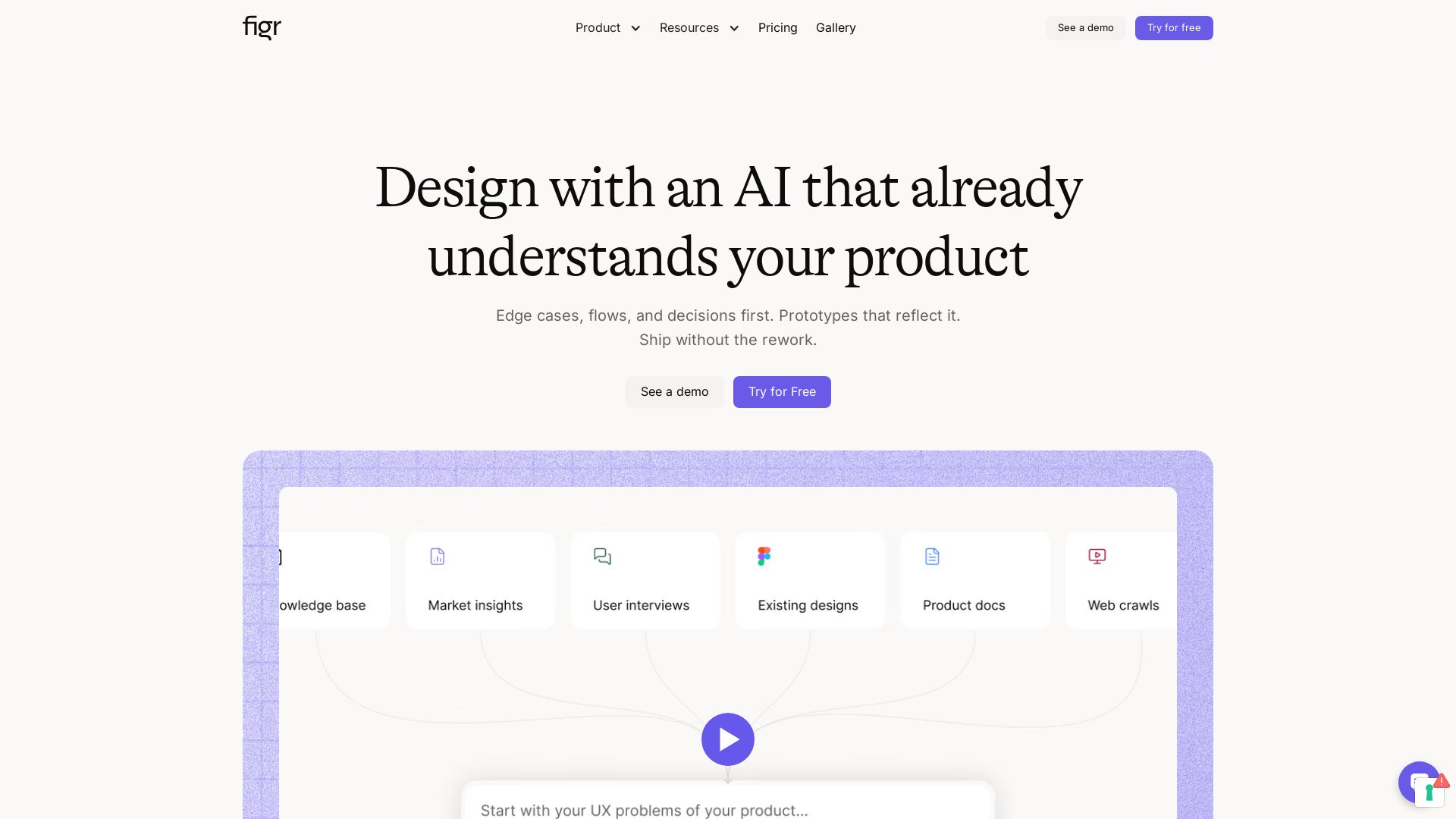
Ship better UX faster. Figr builds a living understanding of your product, maps flows, finds edge cases, and generates high-fidelity prototypes from your actual design system.

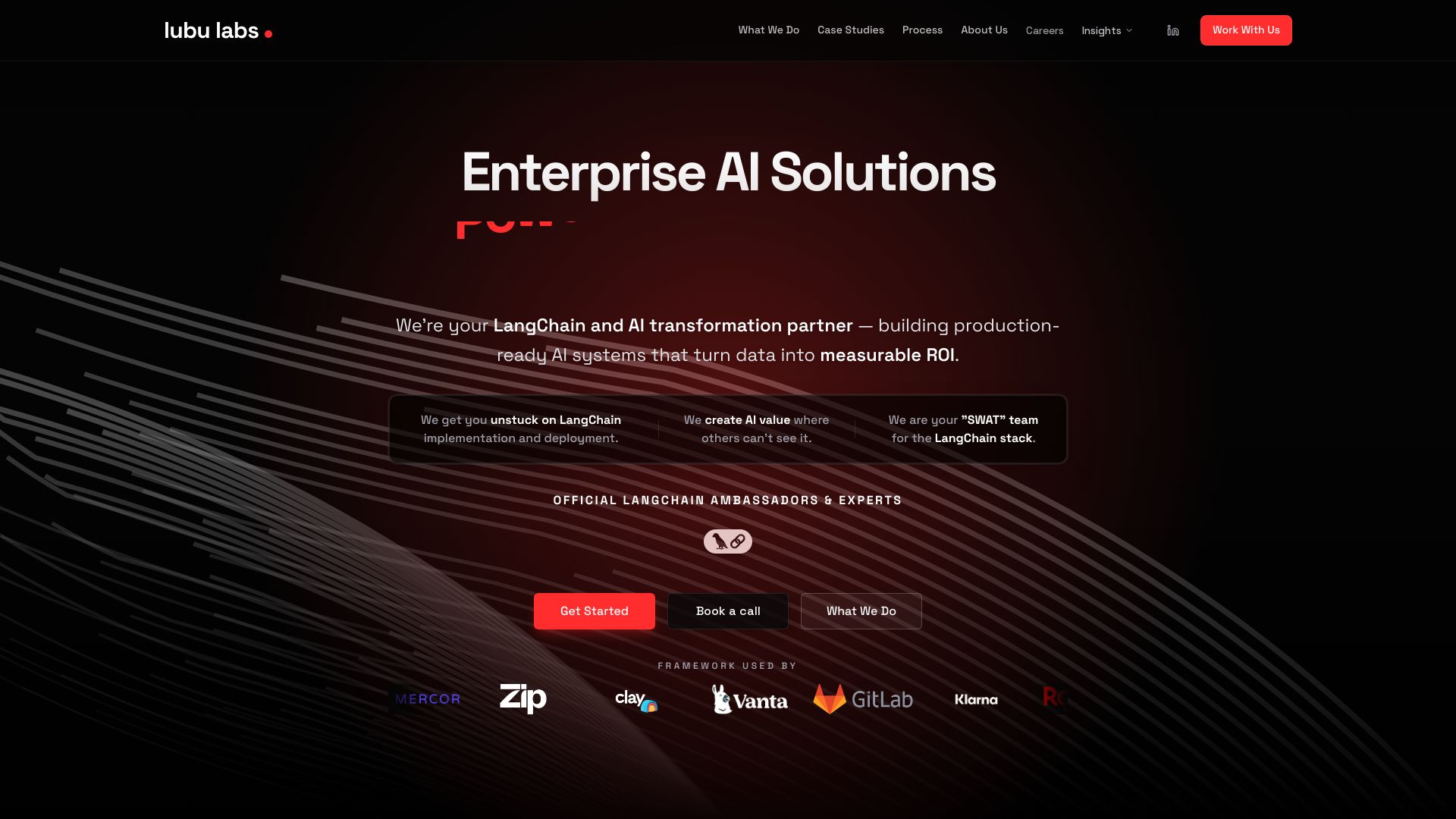
Lubu Labs
Official LangChain Ambassadors building reliable, observable AI systems. From PoC to production, we turn data into measurable ROI. Book a call.

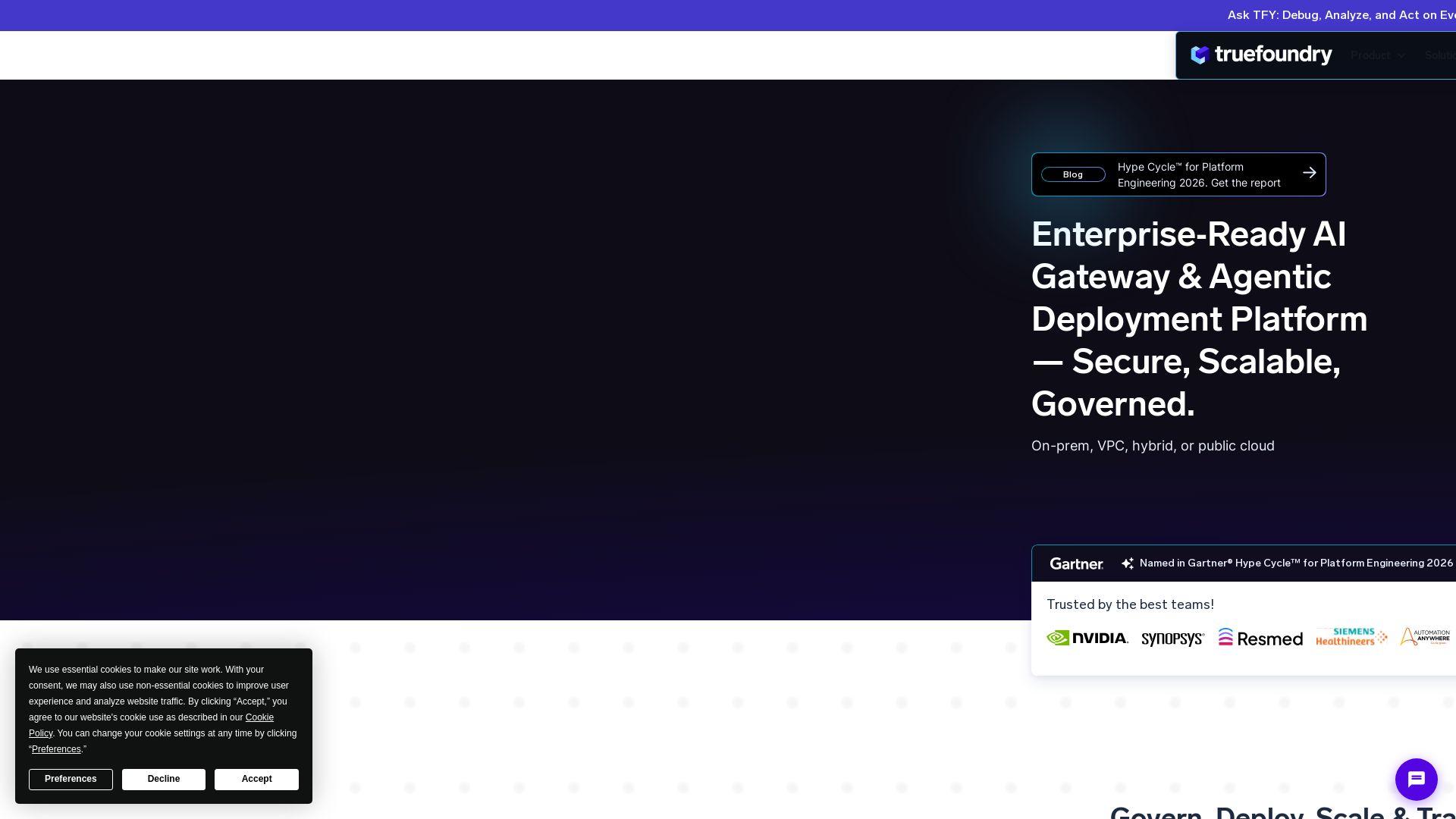
Truefoundry
Deploy, govern, and scale agentic AI with TrueFoundry's secure AI gateway. On-prem or cloud, with full observability and compliance. Get 3x faster value.

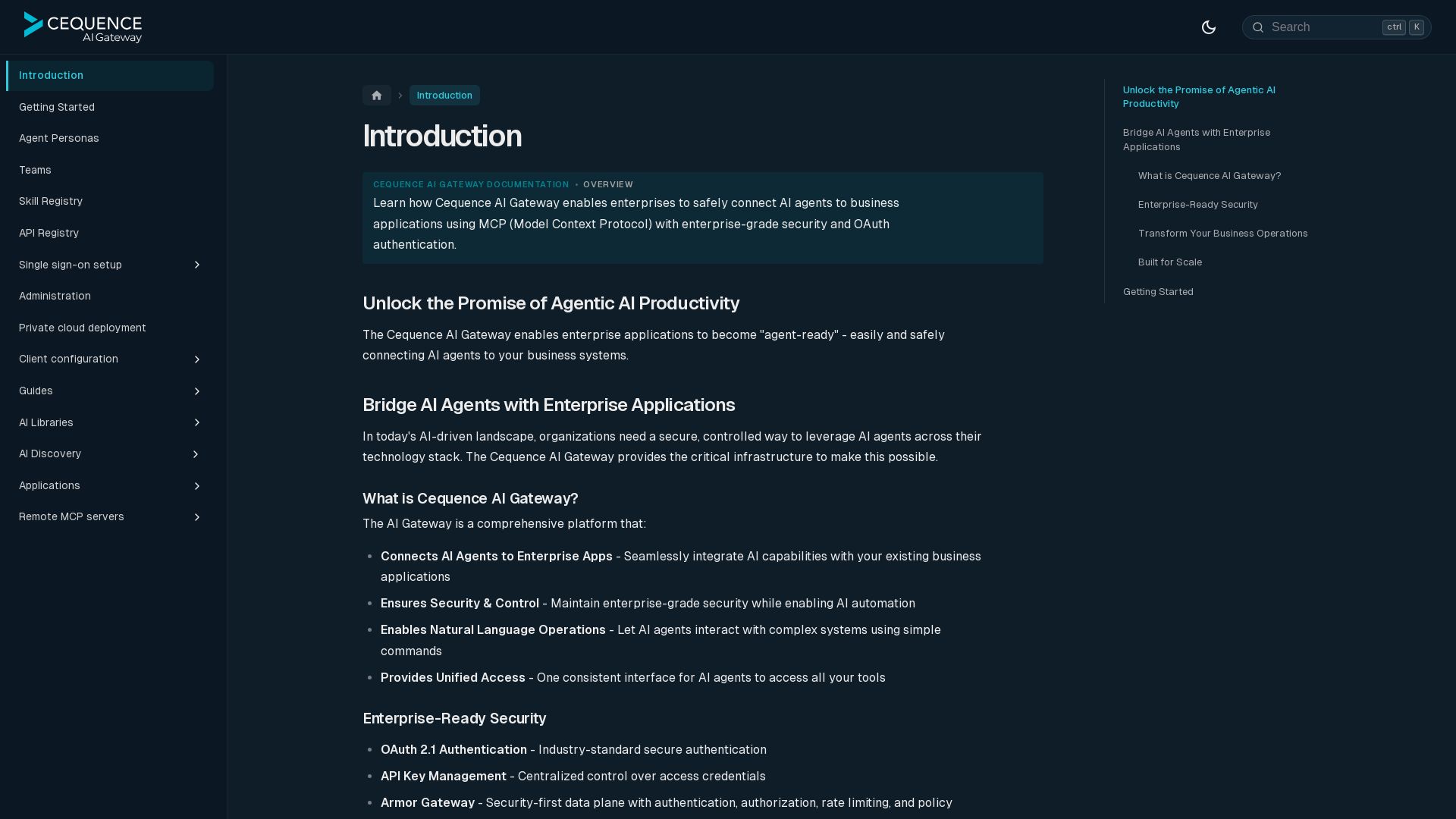
Cequence AI Gateway
Safely connect AI agents to business apps with enterprise-grade security, OAuth 2.1, and MCP. Unlock agentic AI productivity.

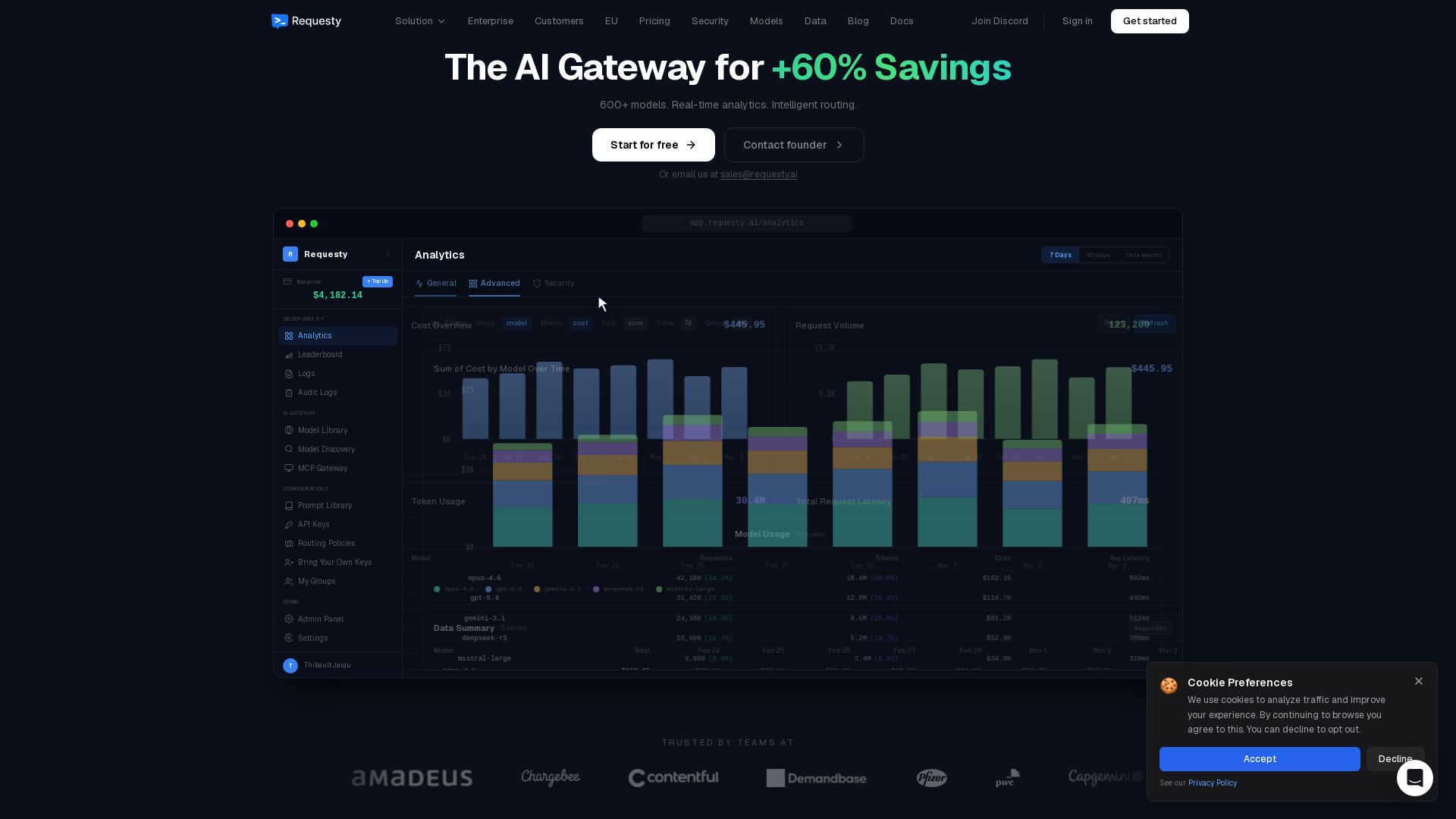
Requesty
Route to 600+ LLMs, get real-time analytics, reduce costs with smart routing & caching. Enterprise-grade security & observability.

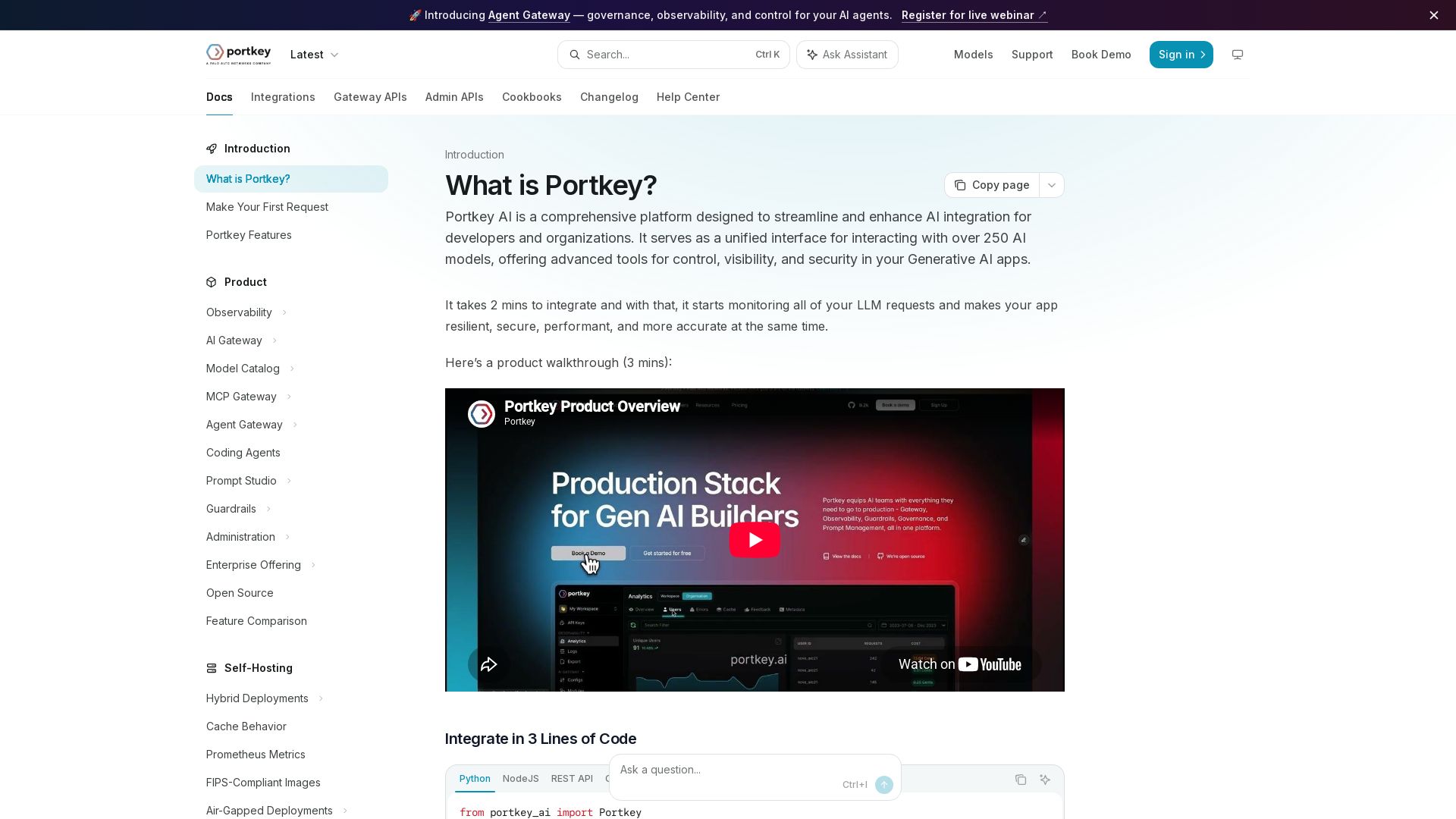
Portkey
Portkey AI provides a unified interface for 250+ AI models with observability, security, and control. Integrate in 3 lines of code.

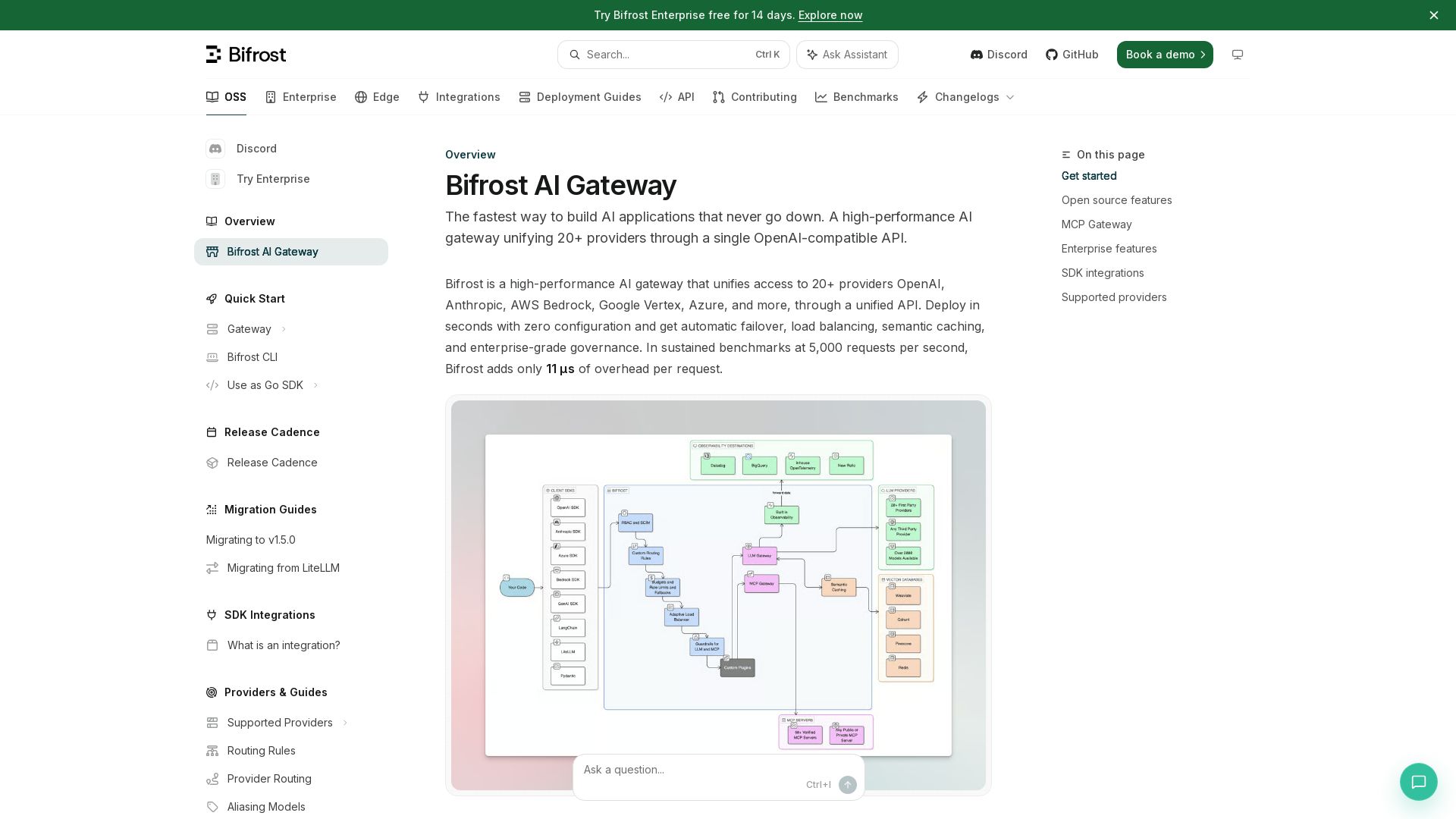
Bifrost AI Gateway
Unify 20+ AI providers with automatic failover, load balancing, and semantic caching. Drop-in replacement for OpenAI SDK. Deploy in seconds.

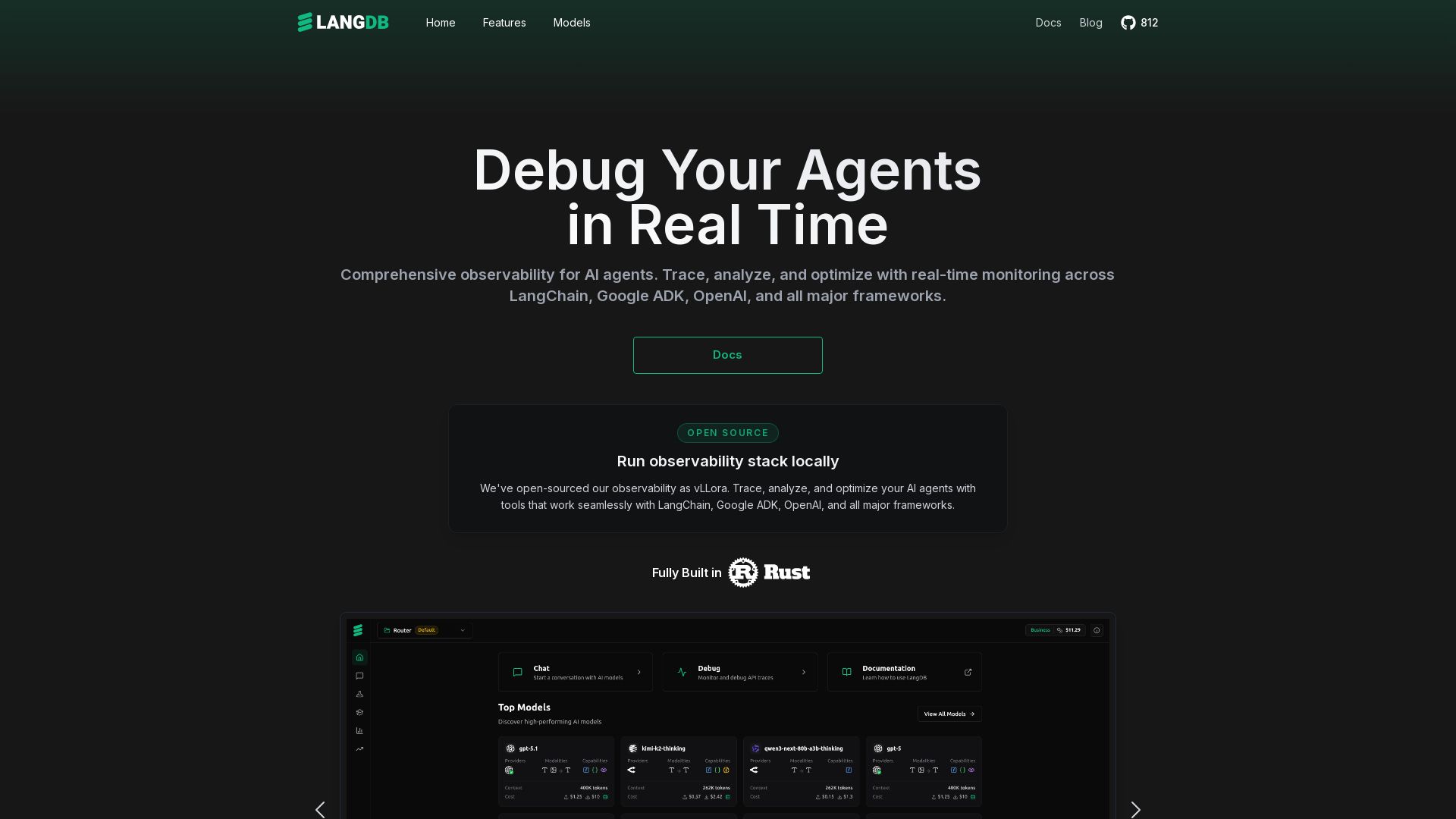
LangDB
Comprehensive observability for AI agents. Trace, analyze, and optimize with real-time monitoring across all major LLM frameworks. Unified API for 250+ models.

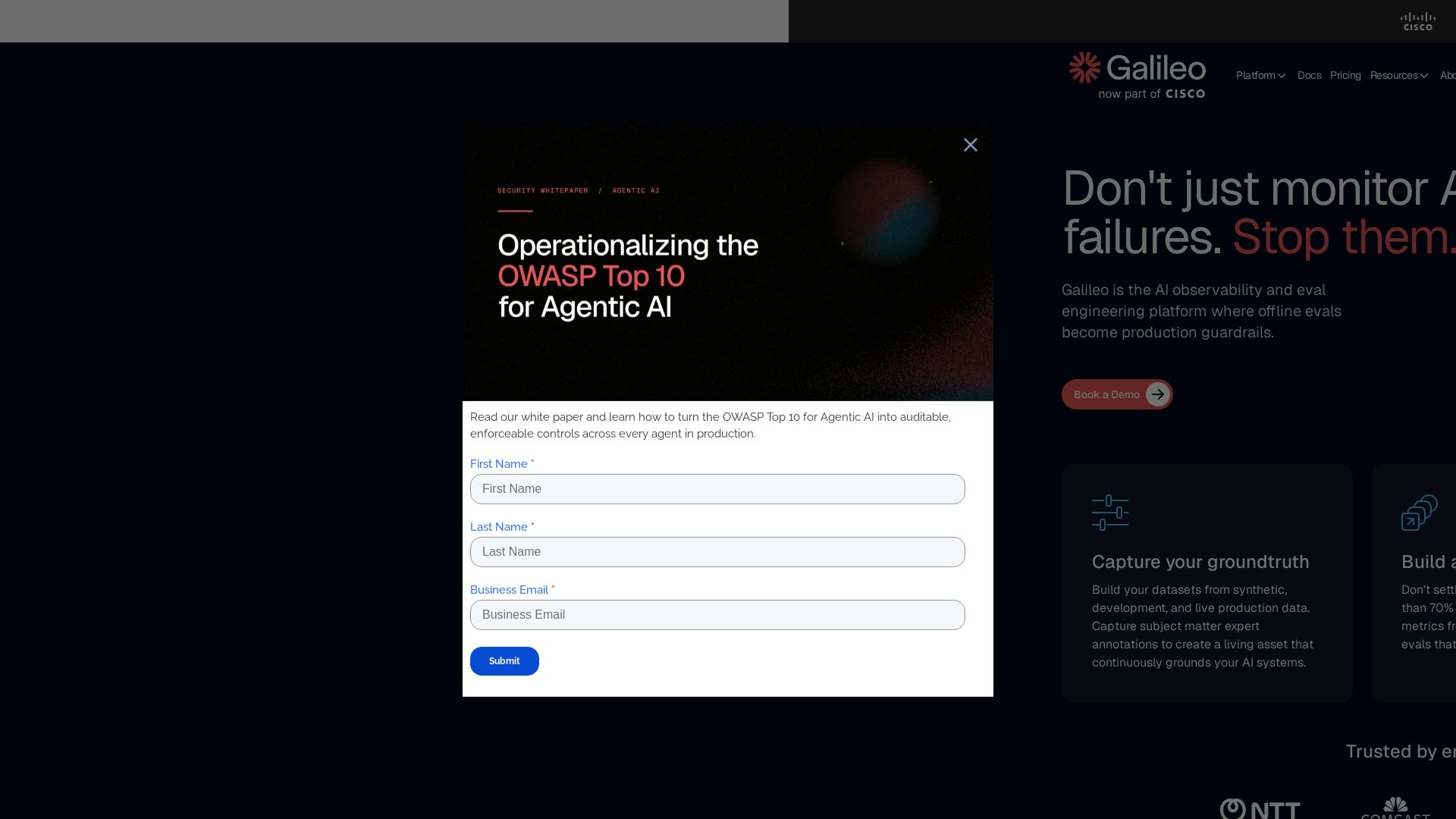
Galileo AI
Galileo is the AI observability and eval engineering platform that turns offline evals into production guardrails. Monitor, evaluate, and improve agent behavior at scale with low-cost Luna models.


CrewAI
Design, orchestrate, and deploy multi-agent systems with guardrails, memory, and observability. Production-ready from day one.

ProductCrafters
Get a free 2-week trial sprint for your AI product. Working prototype in 30 days, production-ready in 90. No contract, no credit card. Test your dev team risk-free.

ℹ️ Curation Disclosure: The overview and features of Portkey were synthesized using AI and fact-checked by our curation team to ensure accuracy.