Deepgram
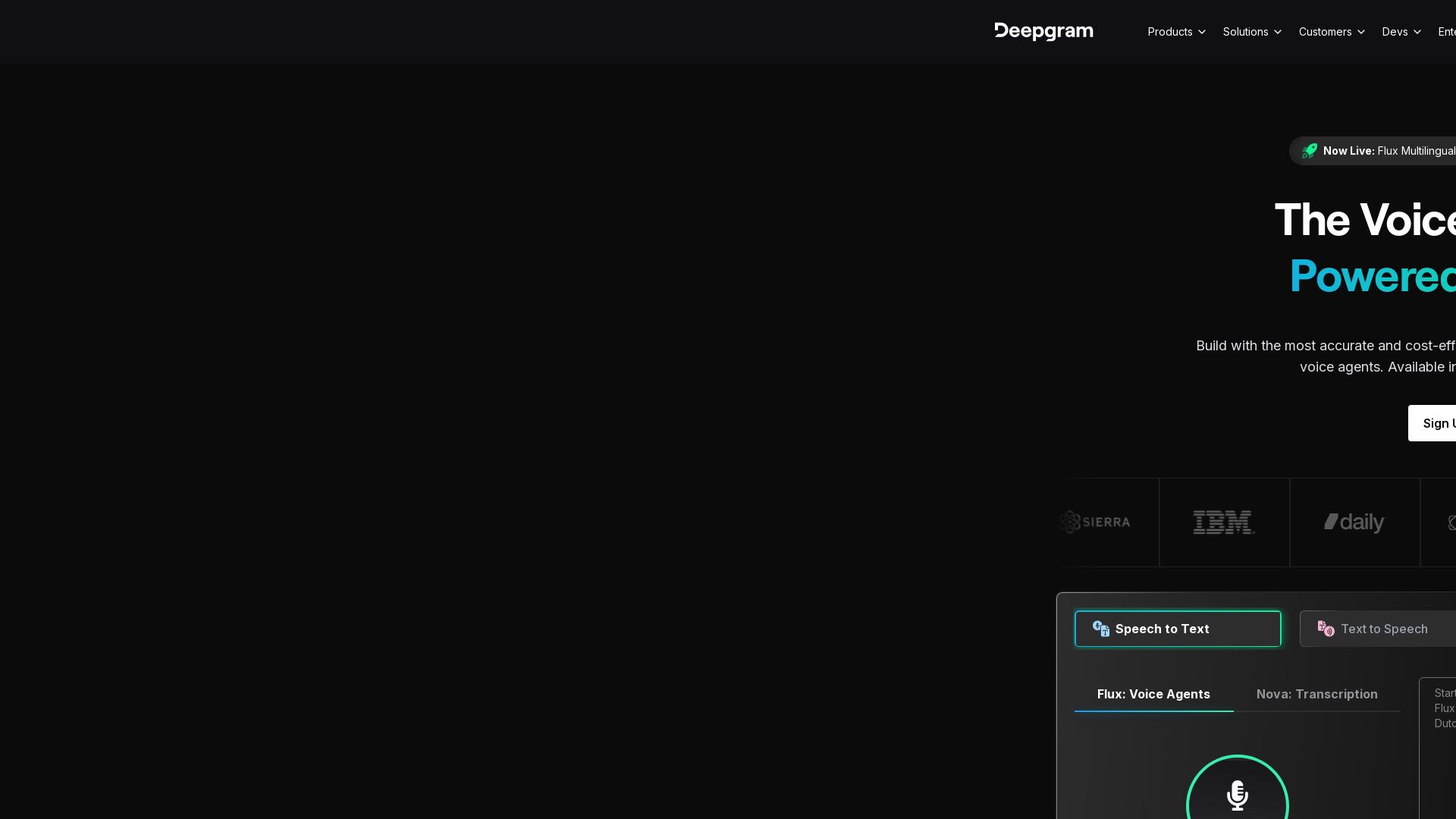
Build with the most accurate real-time APIs for speech-to-text, text-to-speech, and voice agents. Available in cloud and self-hosted. Sign up free.

Editor's Verdict
Key Takeaways
- Speech-to-Text API
- Text-to-Speech API
- Voice Agent API
- Audio Intelligence API
In-Depth Review: What is Deepgram?
Deepgram is a leading Voice AI platform that provides unified, real-time APIs for speech-to-text, text-to-speech, and voice agent orchestration. It delivers high accuracy, low latency, and cost-effectiveness, supporting multiple languages and customizable models. Trusted by enterprises and developers, Deepgram powers conversational AI applications, from transcription to intelligent voice agents, with flexible deployment options including cloud and self-hosted.
Core Features
Speech-to-Text API
Highly accurate real-time and batch transcription in 10 languages, available in cloud or self-hosted.
Text-to-Speech API
Real-time speech synthesis with natural voices for voice applications.
Voice Agent API
Unified API combining STT, TTS, and LLM orchestration to reduce complexity, latency, and cost.
Audio Intelligence API
Analyze audio for insights, including sentiment and speaker identification.
Multilingual Support
Supports English, Spanish, German, French, Hindi, Russian, Portuguese, Japanese, Italian, Dutch.
Real-time & Batch
Process audio in real-time or batch mode with flexible deployment options.
Enterprise Security
SOC 2 compliant, self-hosted options, and customizable models for compliance.
Pricing
Free Tier
- Access to playground
- Limited API calls
- Community support
Pay-as-you-go
- Scalable API usage
- Real-time and batch
- Standard support
Enterprise
- Custom models
- Self-hosted options
- Dedicated support
- SLA guarantees
Pros and Cons
Pros
- High AccuracyState-of-the-art speech recognition with superior accuracy even in noisy environments.
- Low LatencyReal-time processing enables conversational AI with minimal delay.
- Unified Voice Agent APISimplifies development by combining STT, TTS, and LLM into a single API.
- Flexible DeploymentAvailable in cloud and self-hosted options to meet security and compliance needs.
- Trusted by Industry LeadersUsed by Cloudflare, Twilio, and other major companies for reliable voice AI.
Cons
- Limited Language SupportCurrently supports 10 languages, which may not cover all global use cases.
- Learning CurveDevelopers new to voice AI may need time to integrate APIs effectively.
- Pricing TransparencyEnterprise and pay-as-you-go pricing require contacting sales, lacking upfront details.
- Dependency on InternetReal-time APIs require stable internet connection for optimal performance.
- Self-Hosted ComplexitySelf-hosted deployment demands additional infrastructure management.
Use Cases & Recommended Professions
Software Developer→ View Toolkit
Build voice-enabled applications like virtual assistants or transcription tools using flexible APIs.
Product Manager→ View Toolkit
Integrate voice AI into products to enhance user experience and reduce time-to-market.
Data Scientist→ View Toolkit
Leverage Audio Intelligence for sentiment analysis, speaker diarization, and call analytics.
Customer Support Manager→ View Toolkit
Deploy voice agents to handle customer inquiries efficiently and reduce support costs.
Healthcare Professional→ View Toolkit
Use medical transcription to accurately document patient encounters in real-time.
Contact Center Operator→ View Toolkit
Implement speech analytics to monitor call quality and improve agent performance.
Frequently Asked Questions
Alternative AI Tools
View Detailed Comparison →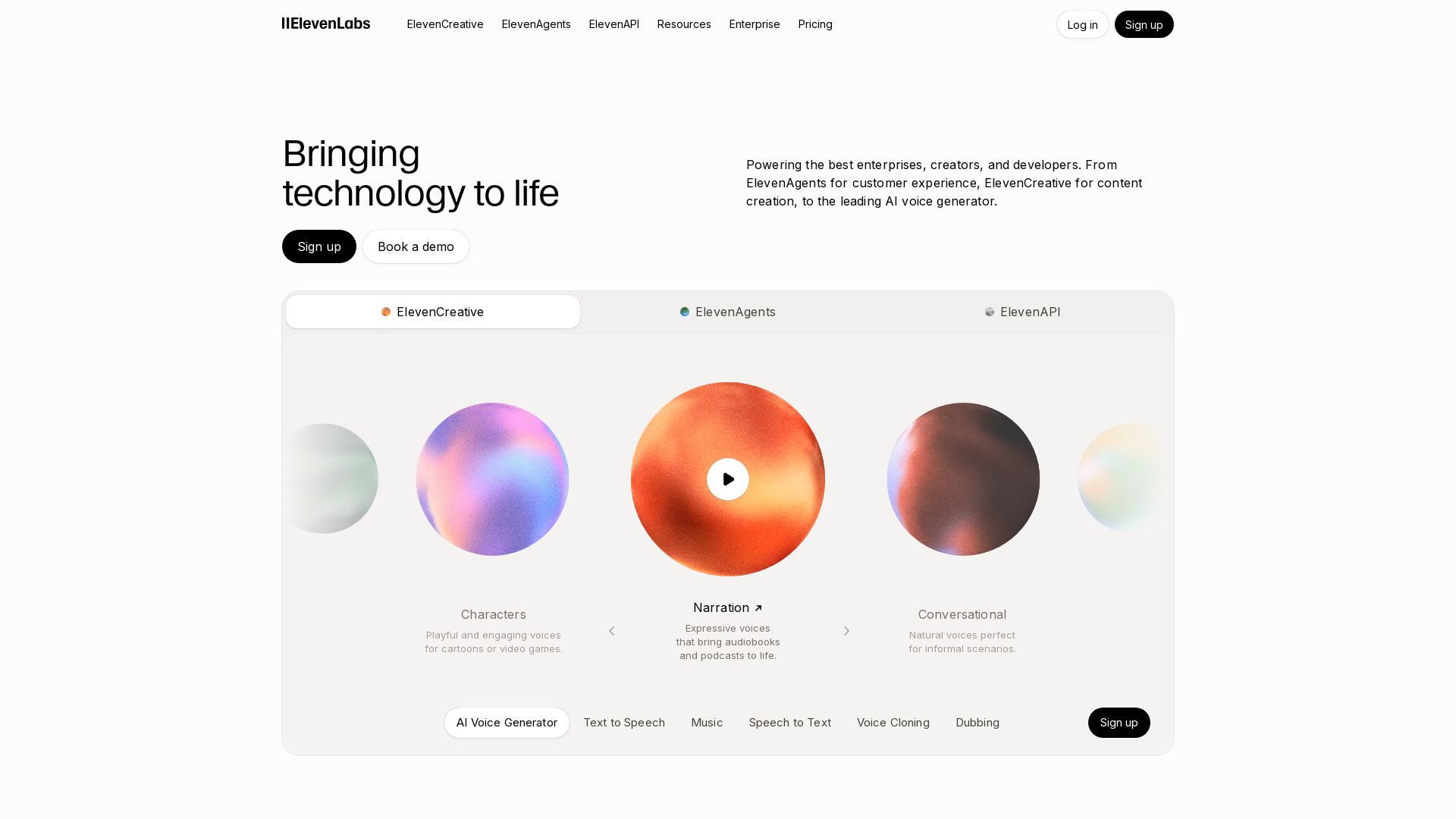
ElevenLabs
Create ultra-realistic speech, music, sound effects, and deploy conversational AI agents. Trusted by leading enterprises and developers. 70+ languages.

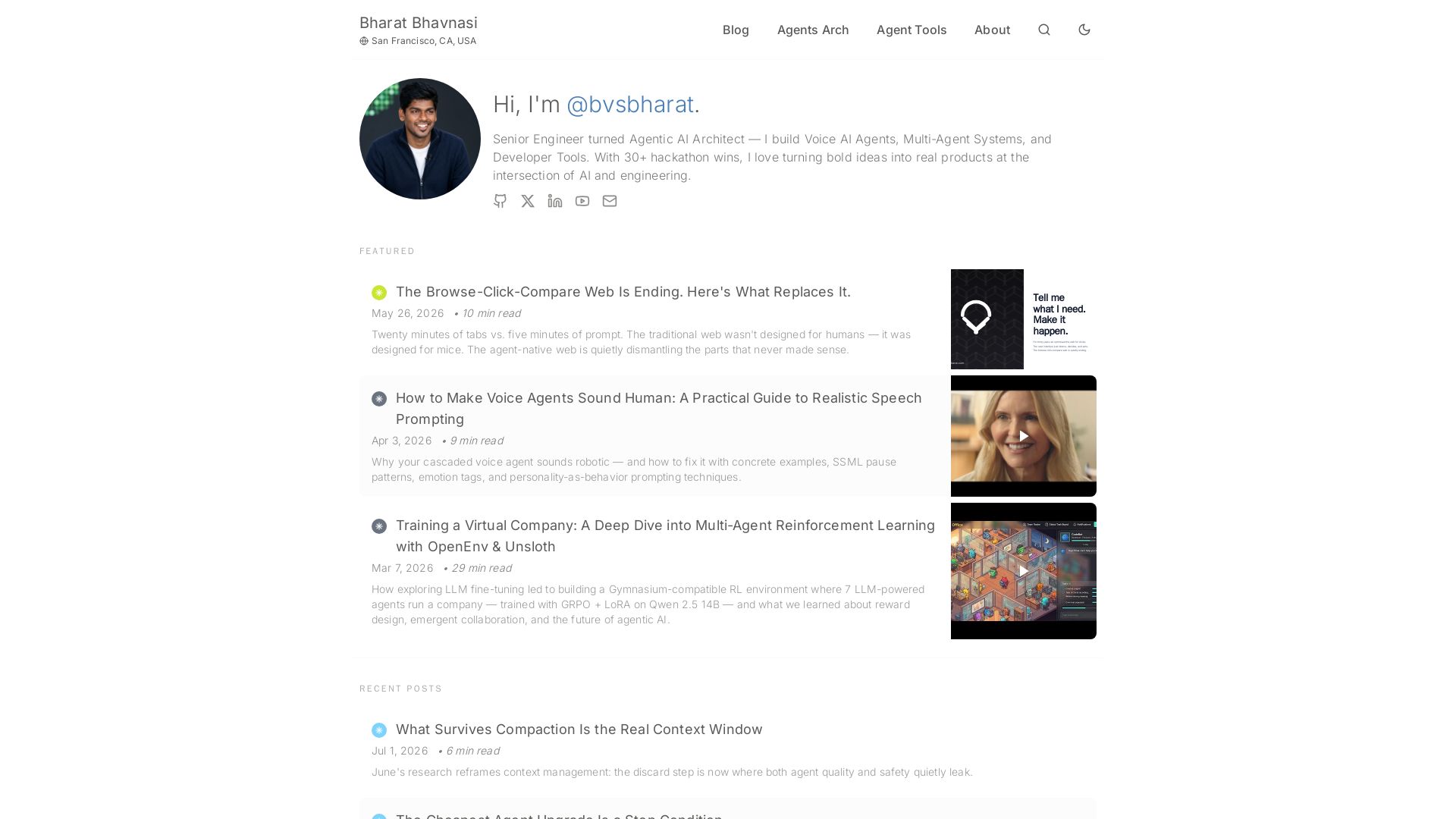
I Tested Every Major Open-Source AI Agent SDK So You Don't ...
Explore insights on Voice AI Agents, Multi-Agent Systems, and Developer Tools from a 30+ hackathon winner. Practical guides and cutting-edge research.

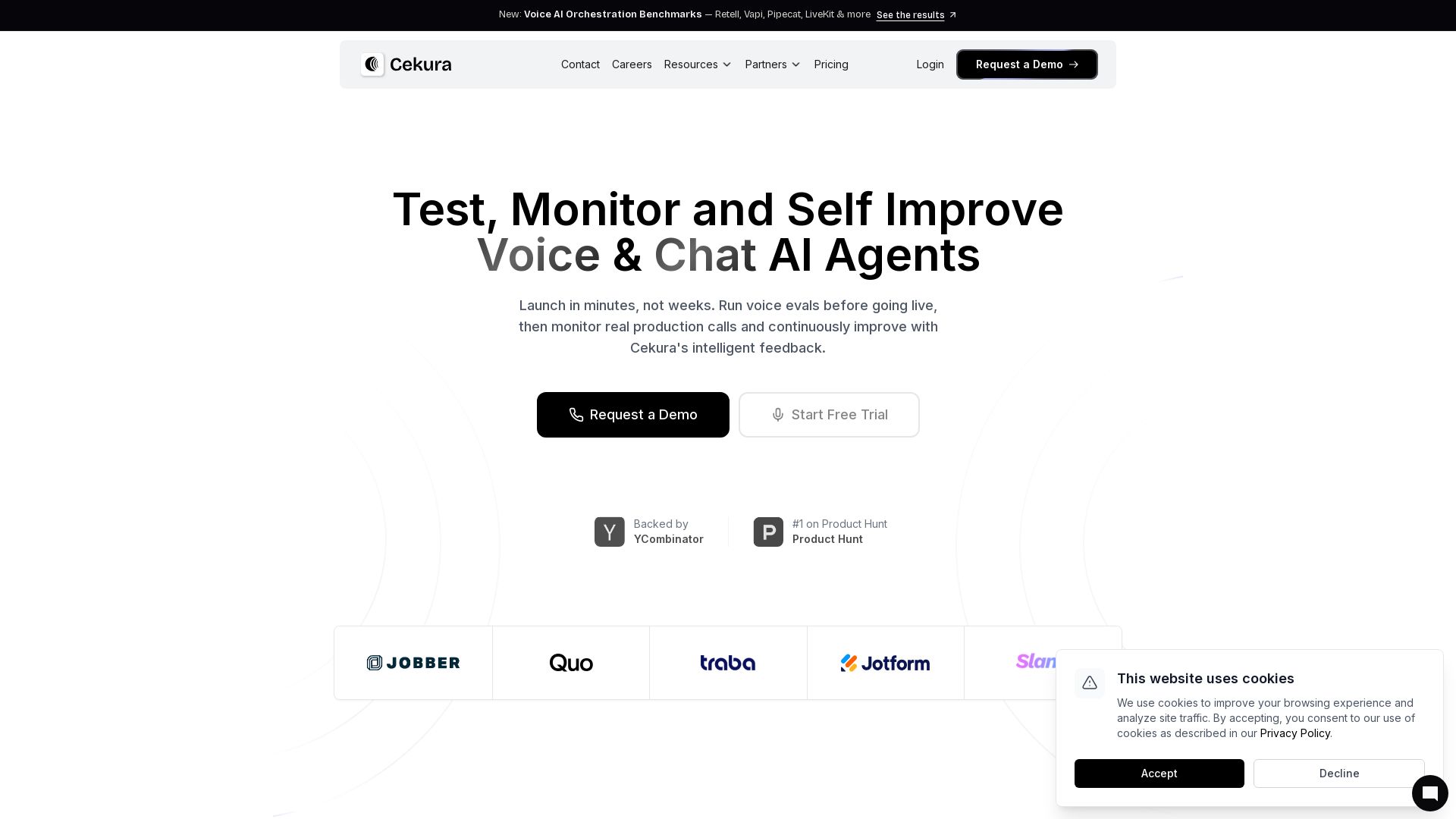
Cekura
Launch voice agents in minutes. Run evals, monitor production calls, and continuously improve with intelligent feedback. Trusted by 70+ AI companies.

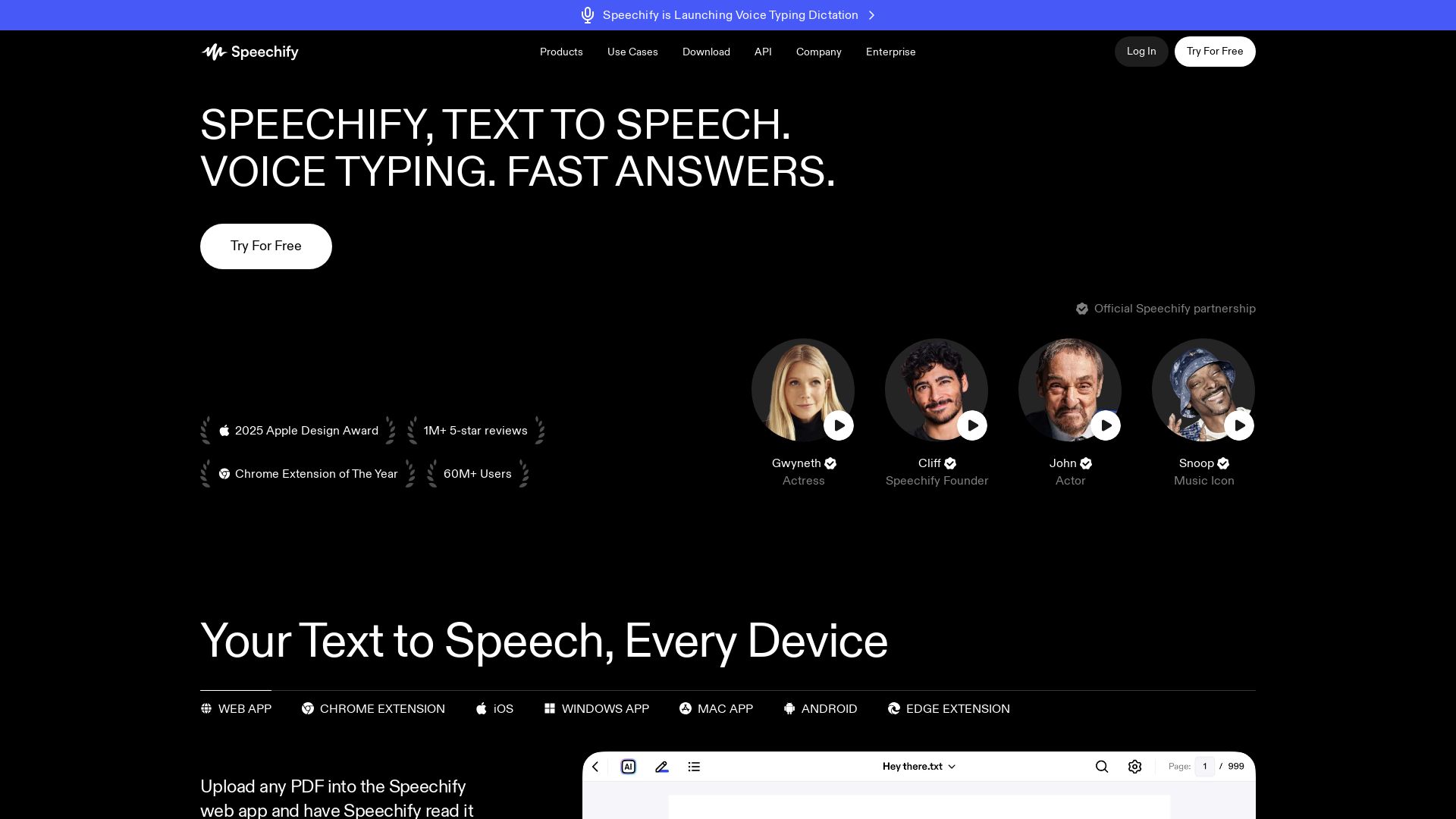
Speechify
Read text with AI voices, write 5x faster with voice typing, create podcasts, and get answers – all with one Voice AI assistant. Try free!

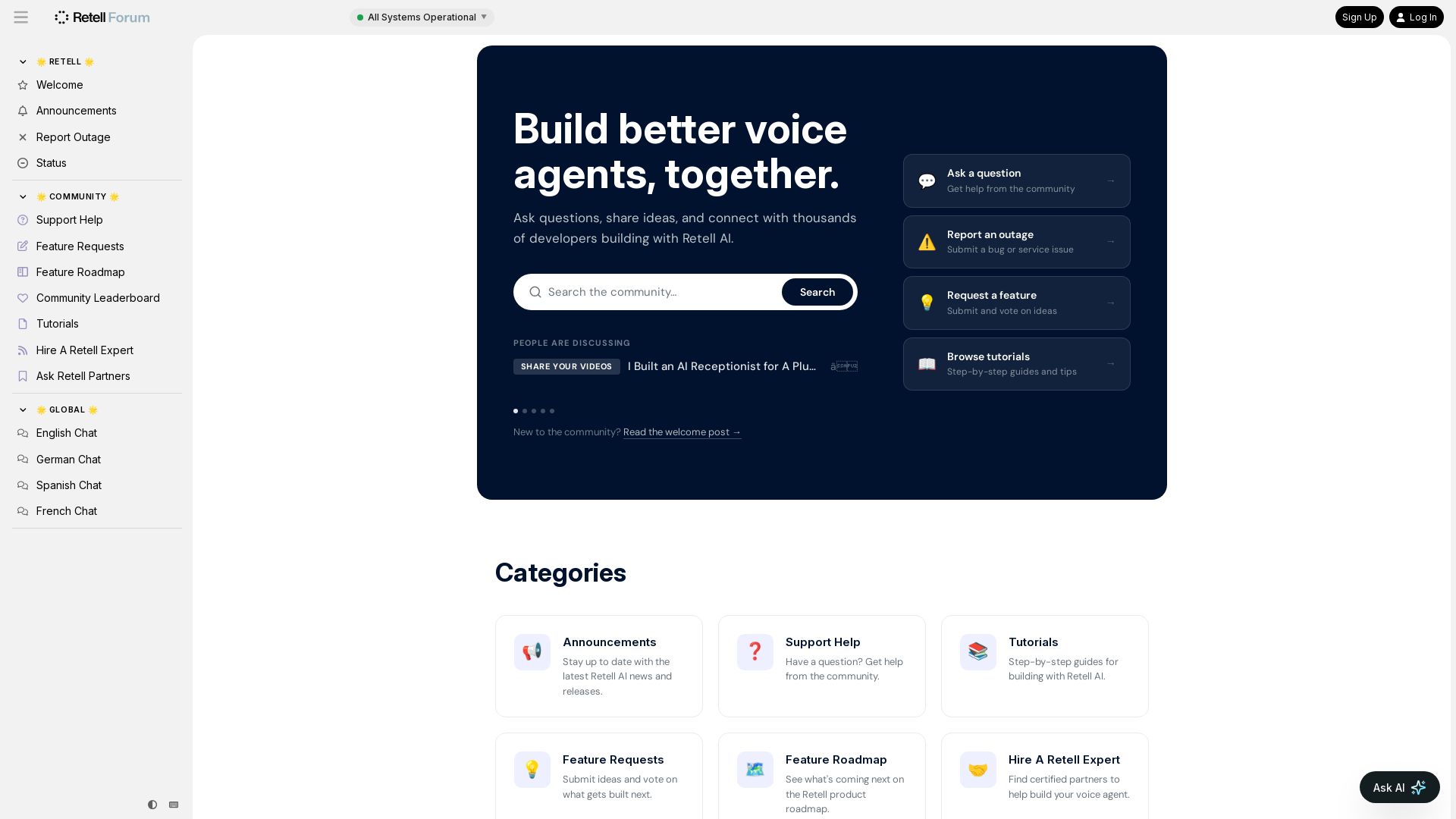
Retell AI
Join thousands of developers in the Retell AI community. Get help, share ideas, request features, and access tutorials for building voice agents.

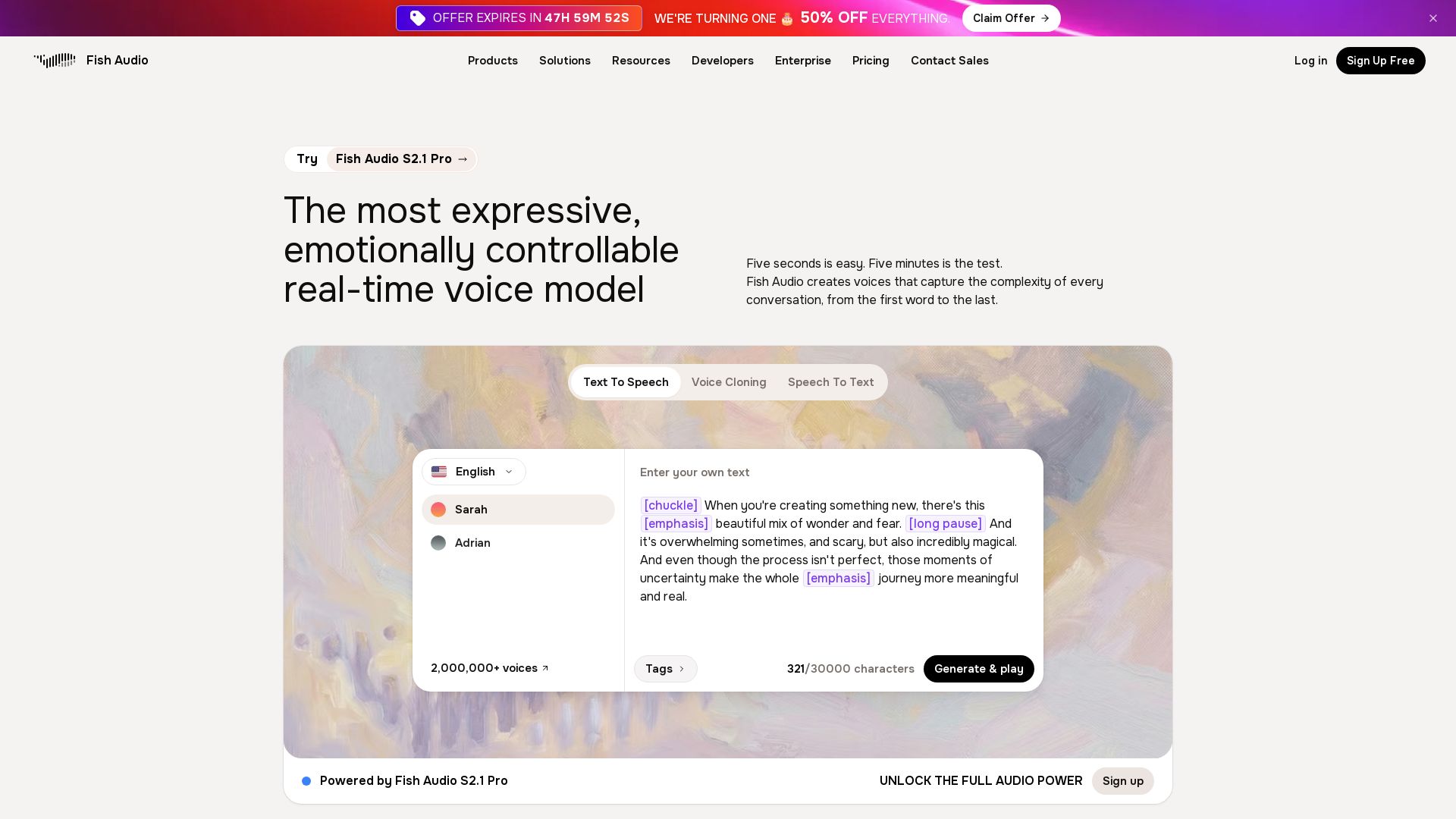
Fish Audio
Create studio-quality AI voices with emotional control. Clone any voice in 15 seconds, supports 30+ languages. Trusted by millions. 50% off now!

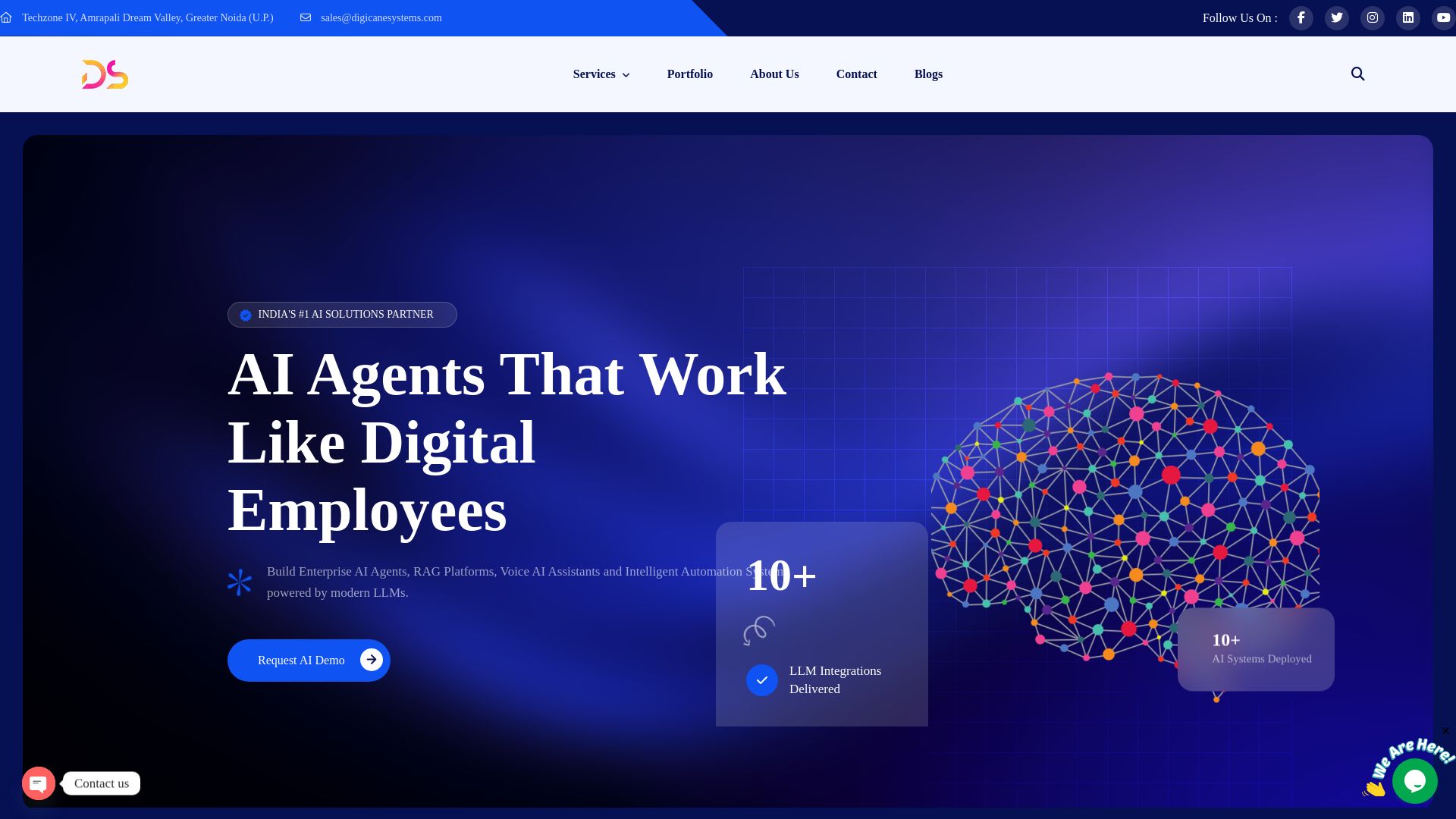
Digicane Systems
Build enterprise AI agents, RAG platforms, voice AI, and automation. 20+ AI engineers, 50K+ interactions. Request a demo.

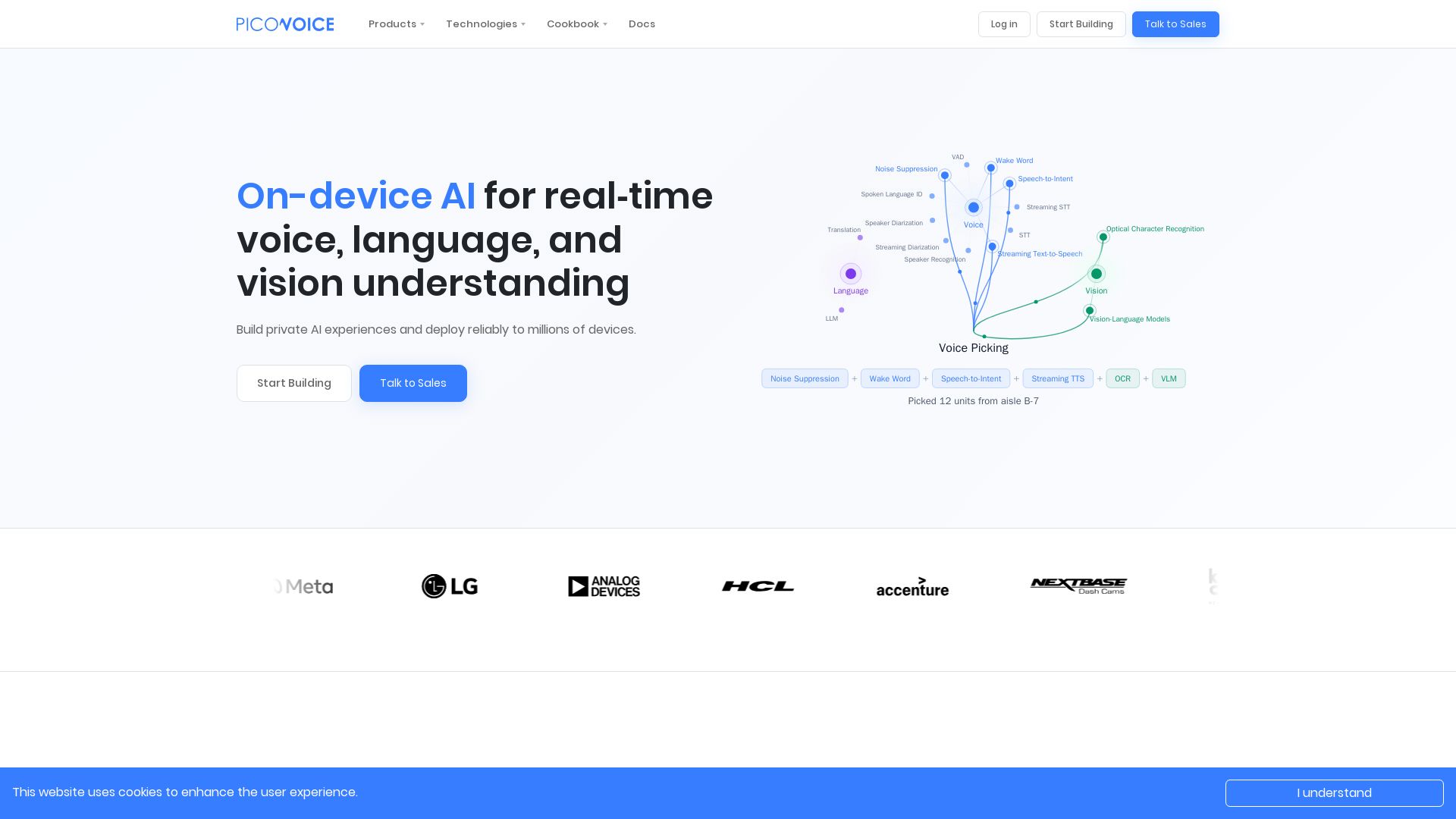
Picovoice
Build private, real-time AI experiences with Picovoice's on-device SDKs. No cloud latency, no data leaving the device. Start building for free.

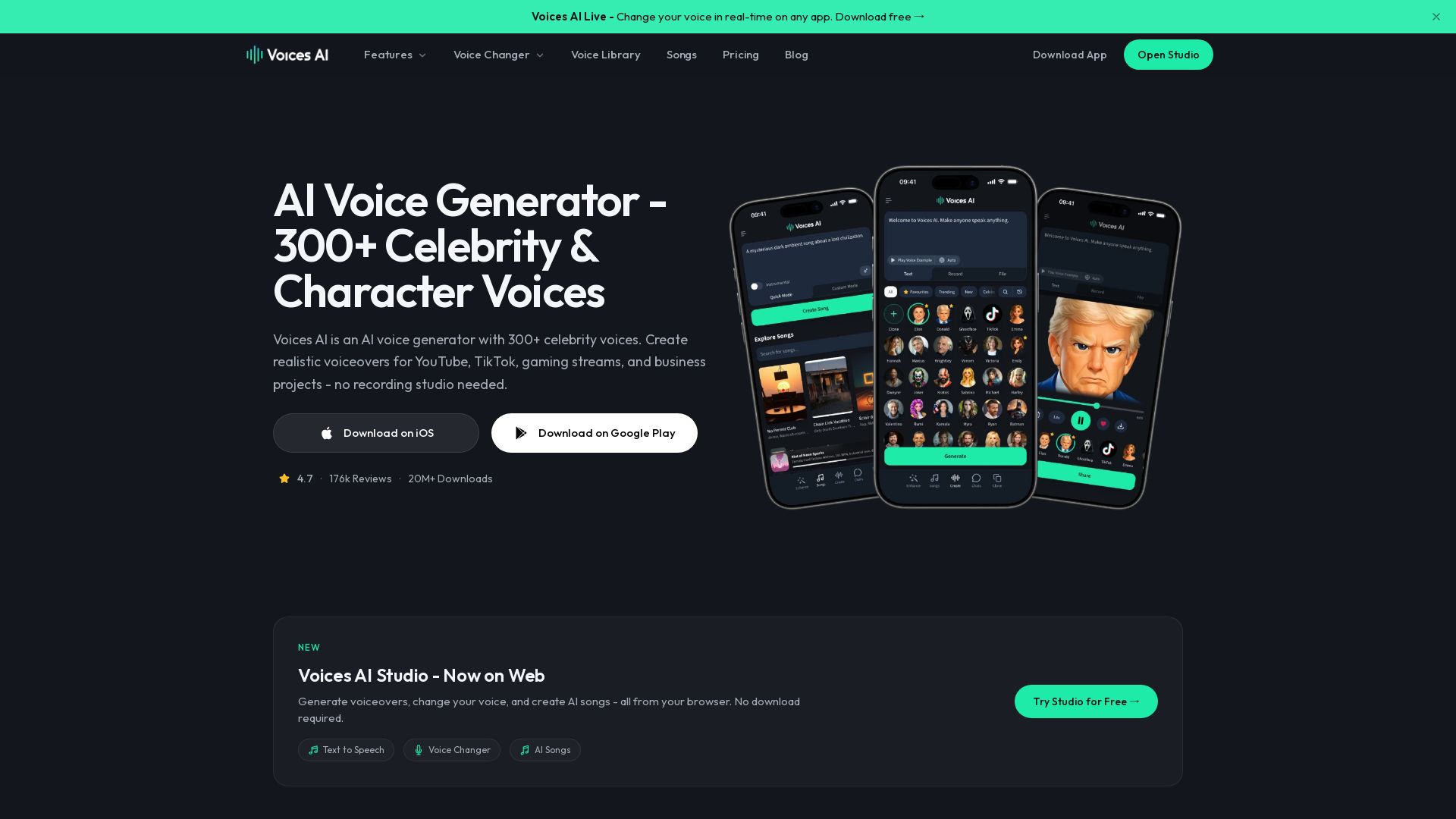
Voices AI
Change your voice in real-time or generate realistic voiceovers with 300+ celebrity voices. Perfect for YouTube, TikTok, gaming, and business. Download free!

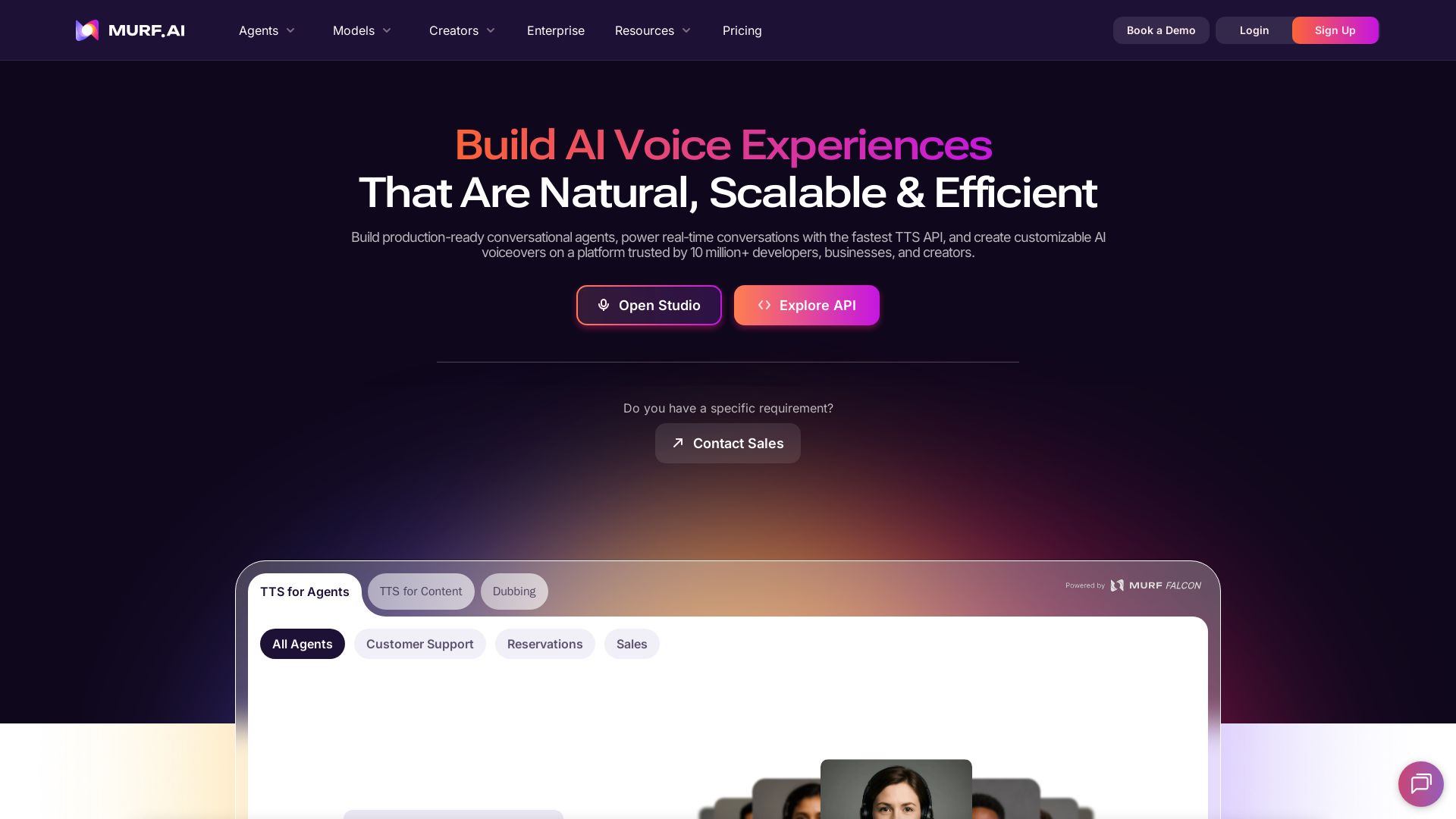
Murf AI
Build natural, scalable AI voice agents and generate studio-quality voiceovers with Murf's TTS API. Trusted by 10M+ users, offering 200+ voices in 35+ languages, with enterprise-grade security.


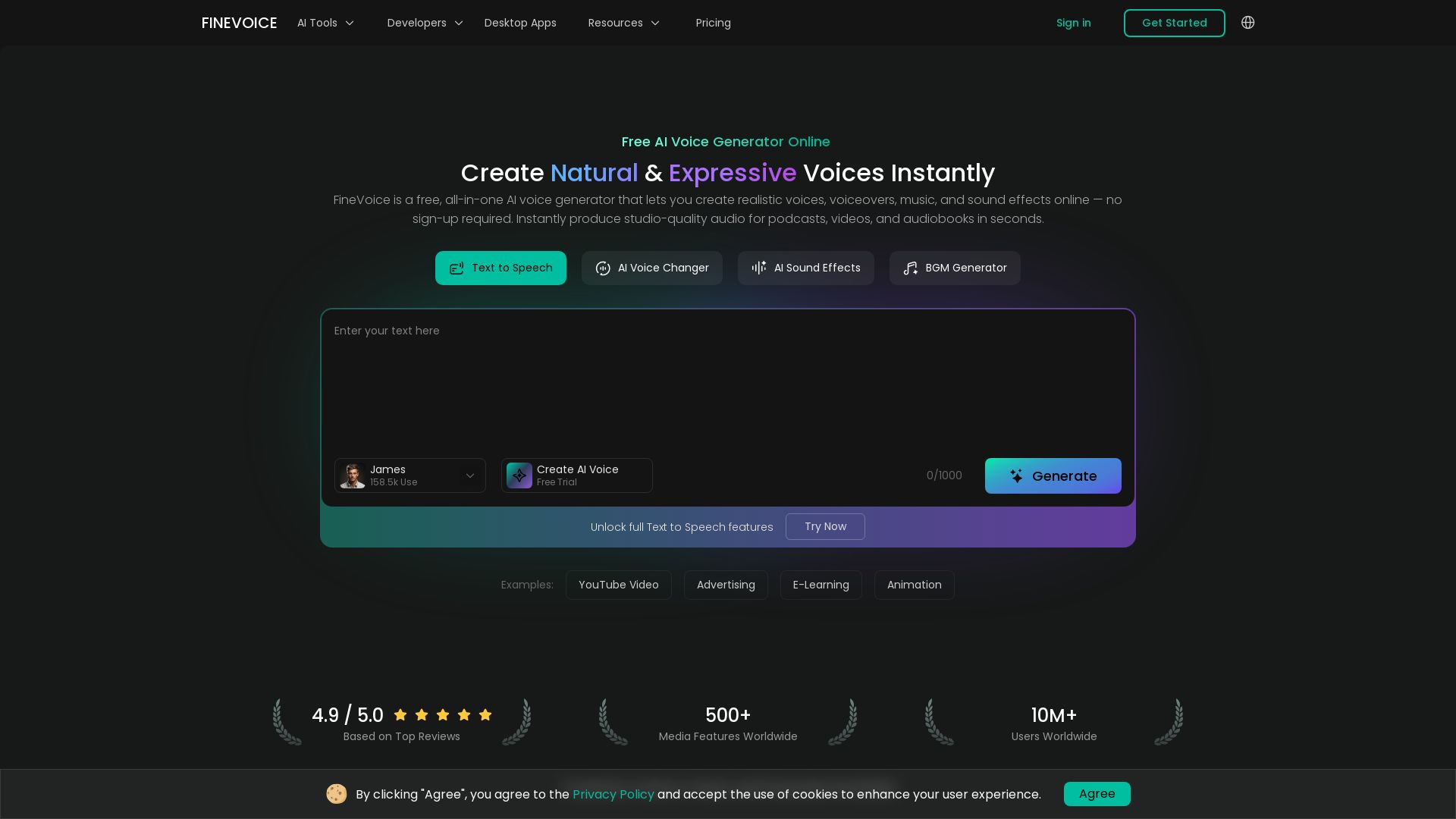
FineVoice
Create natural, expressive AI voices instantly. 1500+ voices, 154 languages, voice cloning, sound effects. No sign-up needed. Free online AI voice generator.

ℹ️ Curation Disclosure: The overview and features of Deepgram were synthesized using AI and fact-checked by our curation team to ensure accuracy.