MCP Python SDK
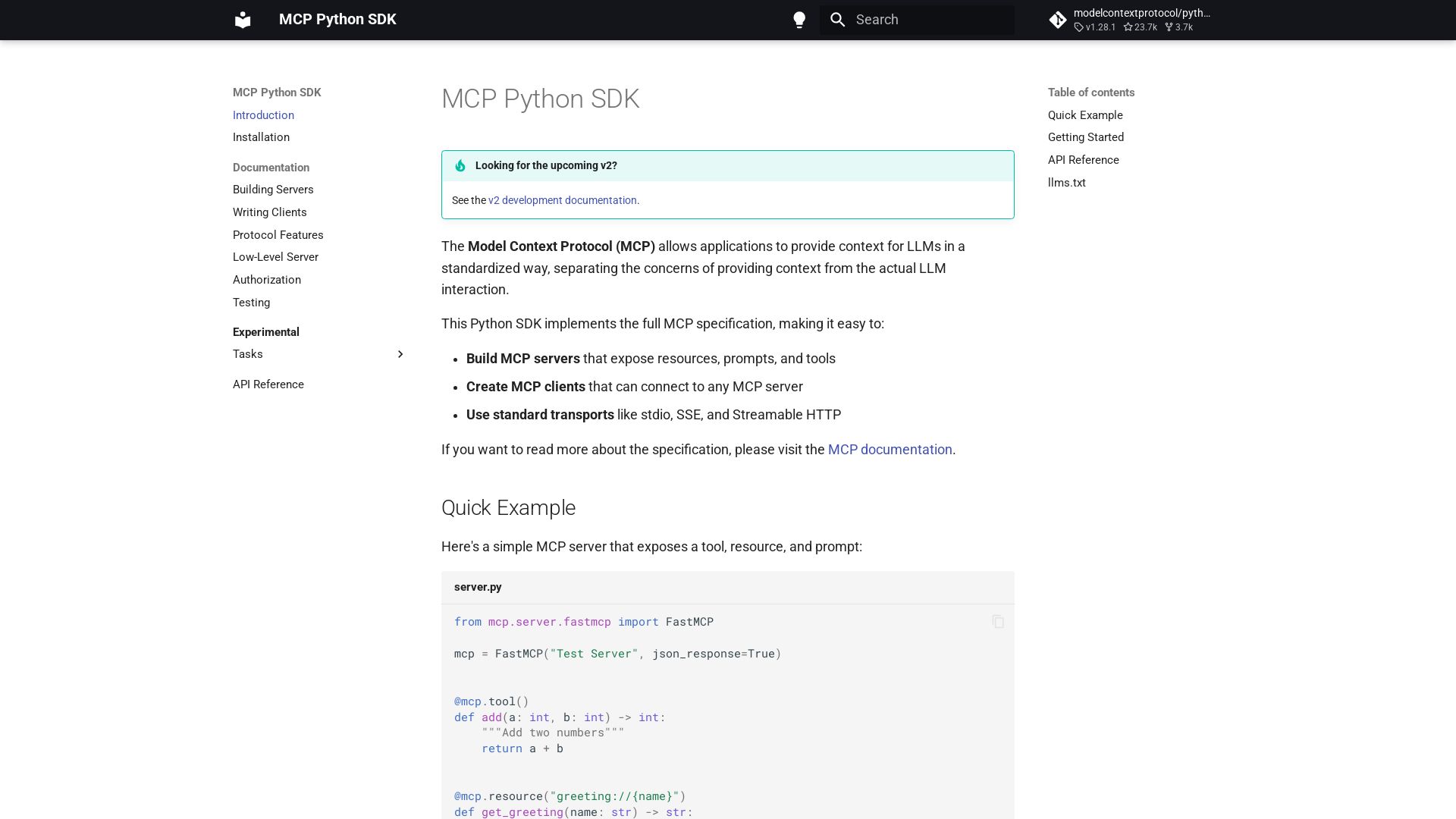
Python SDK for Model Context Protocol. Easily build servers and clients exposing tools, resources, and prompts.
Editor's Verdict
Key Takeaways
- Expose Resources, Prompts, and Tools
- Build MCP Clients
- Multiple Transport Support
- Authorization
In-Depth Review: What is MCP Python SDK?
The MCP Python SDK implements the Model Context Protocol, enabling developers to build servers that provide context for LLMs via tools, resources, and prompts, and clients that connect to any MCP server. It supports stdio, SSE, and Streamable HTTP transports, with high-level and low-level APIs for flexibility.
Core Features
Expose Resources, Prompts, and Tools
Enable LLMs to access context and actions through standardized primitives.
Build MCP Clients
Create clients that connect to any MCP server and utilize its resources, tools, and prompts.
Multiple Transport Support
Use stdio, SSE, or Streamable HTTP for flexible server-client communication.
Authorization
Add security to your MCP servers with built-in authorization support.
Low-Level APIs
Access advanced customization and protocol-level control for complex use cases.
Full MCP Specification Implementation
Adheres to the complete MCP standard, ensuring interoperability with other MCP components.
Pricing
Open Source
- All features including tools, resources, prompts, transports, authorization, and low-level APIs
- Community support via GitHub
Pros and Cons
Pros
- Comprehensive SDKImplements the full MCP specification, making it easy to build servers and clients.
- Flexible Transport OptionsSupports stdio, SSE, and Streamable HTTP to suit various deployment scenarios.
- Open SourceFree to use and modify, with a large community and active development.
Cons
- Python OnlyCurrently limited to Python; developers using other languages must use alternative SDKs or wrappers.
- Learning CurveRequires understanding of MCP concepts and protocol, which may be new to some developers.
Use Cases & Recommended Professions
AI Engineer→ View Toolkit
Need to integrate LLMs with external tools and data sources in a standardized way.
Software Developer→ View Toolkit
Build MCP servers to expose resources, prompts, and tools for LLM applications.
Data Scientist→ View Toolkit
Use MCP to provide contextual data to LLMs for improved analysis and reporting.
DevOps Engineer→ View Toolkit
Deploy and manage MCP servers with various transports and authorization.
LLM Application Developer→ View Toolkit
Create custom clients that leverage MCP servers to enhance LLM capabilities.
Frequently Asked Questions
Alternative AI Tools
View Detailed Comparison →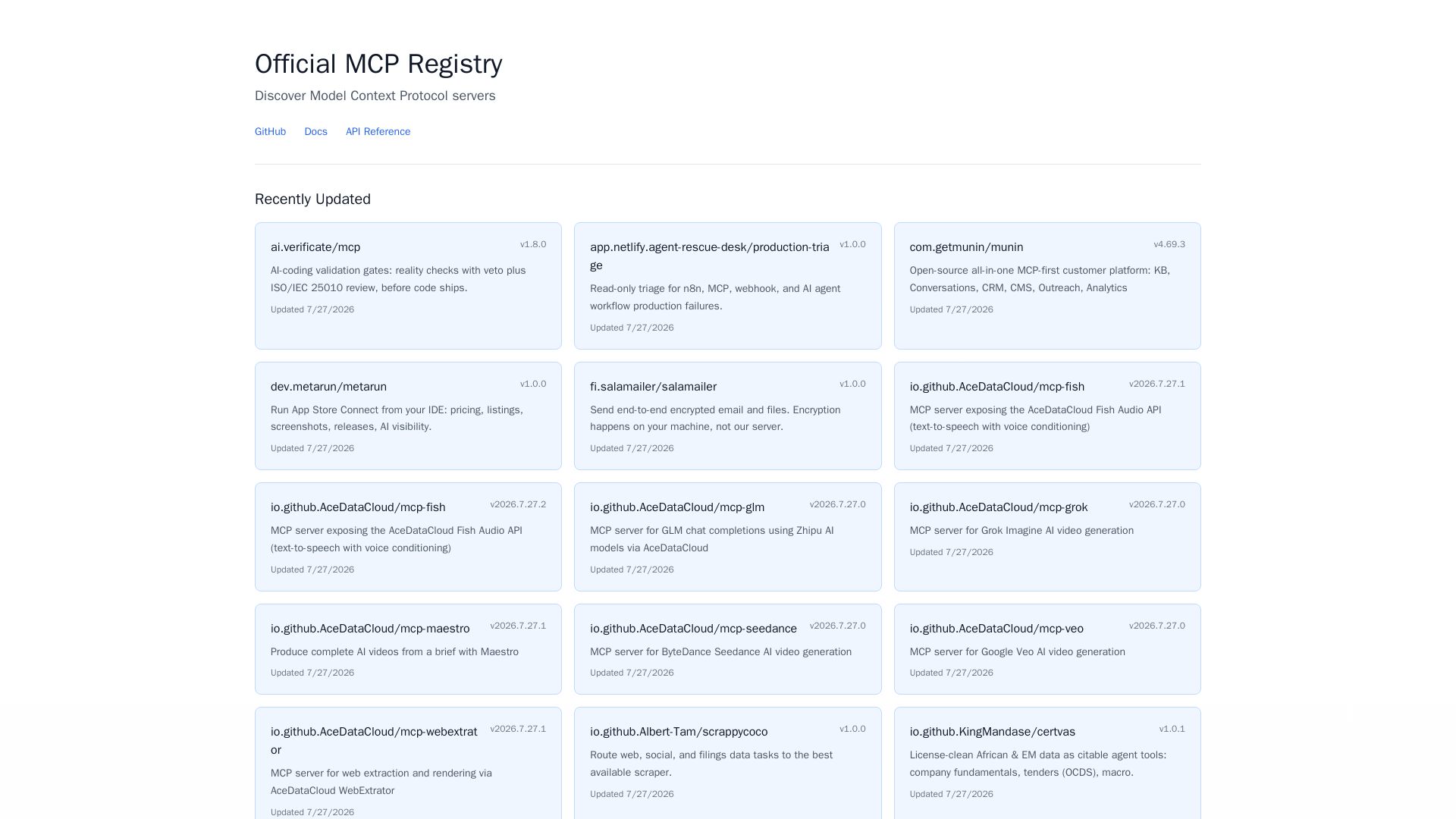
MCP Registry
Explore the official directory of MCP servers for AI integration, data processing, automation, and more. Find vetted servers with descriptions and updates.
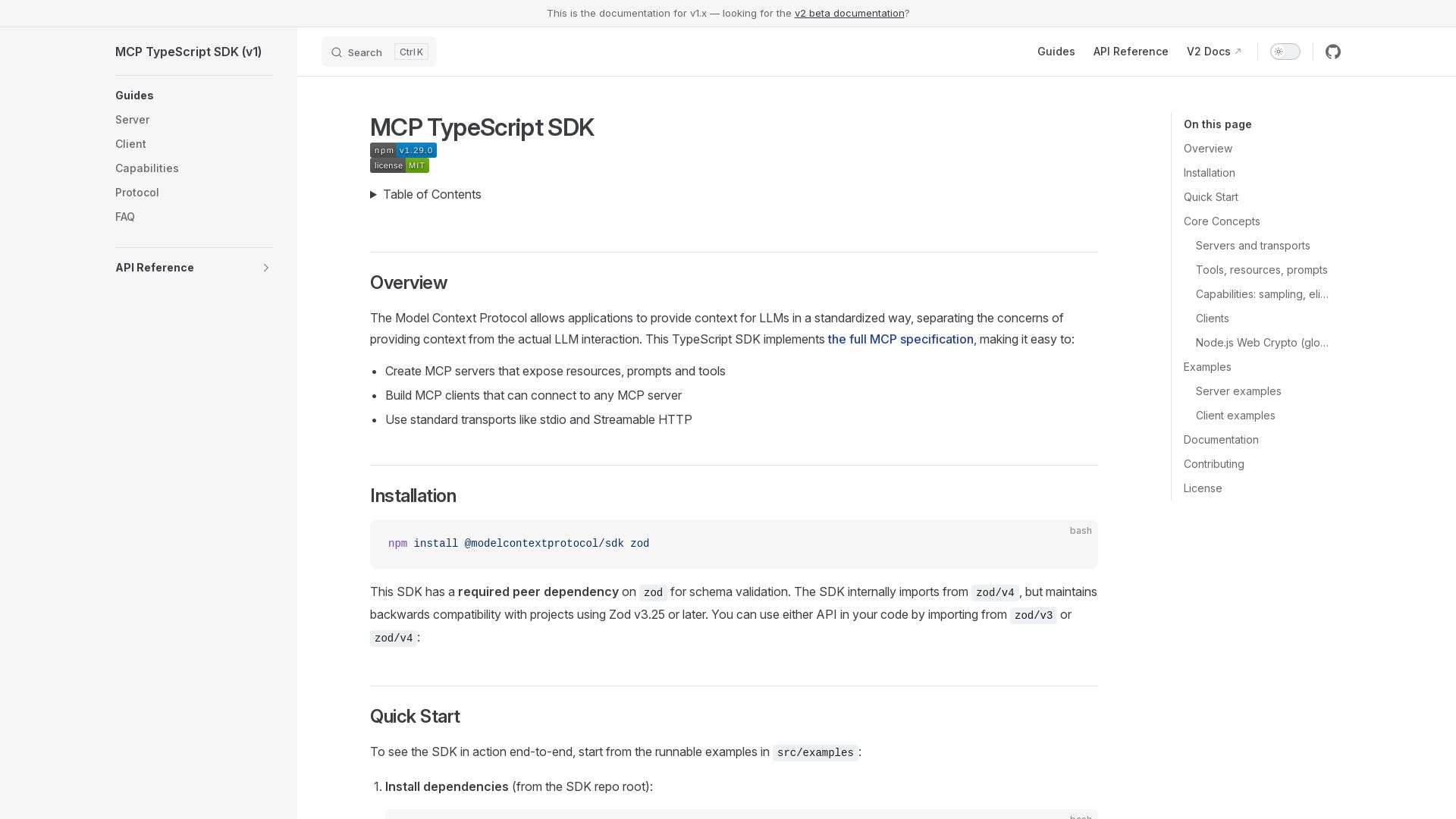
MCP TypeScript SDK
Create MCP servers and clients with TypeScript. Expose resources, prompts, and tools using stdio or Streamable HTTP.

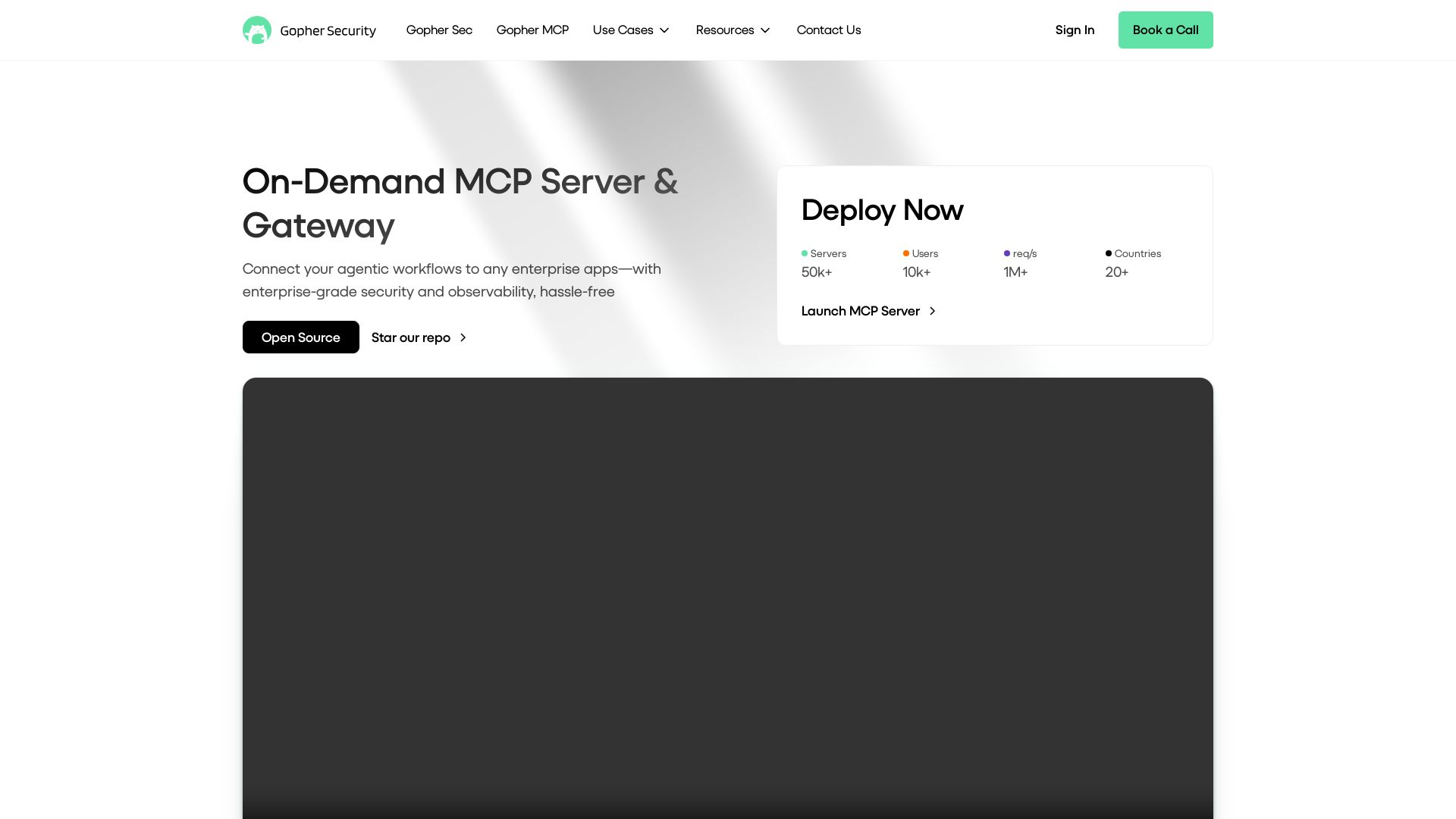
Gopher-MCP
Deploy secure MCP servers in minutes with 4D security: deep inspection, zero-trust access, granular policies, and post-quantum encryption.

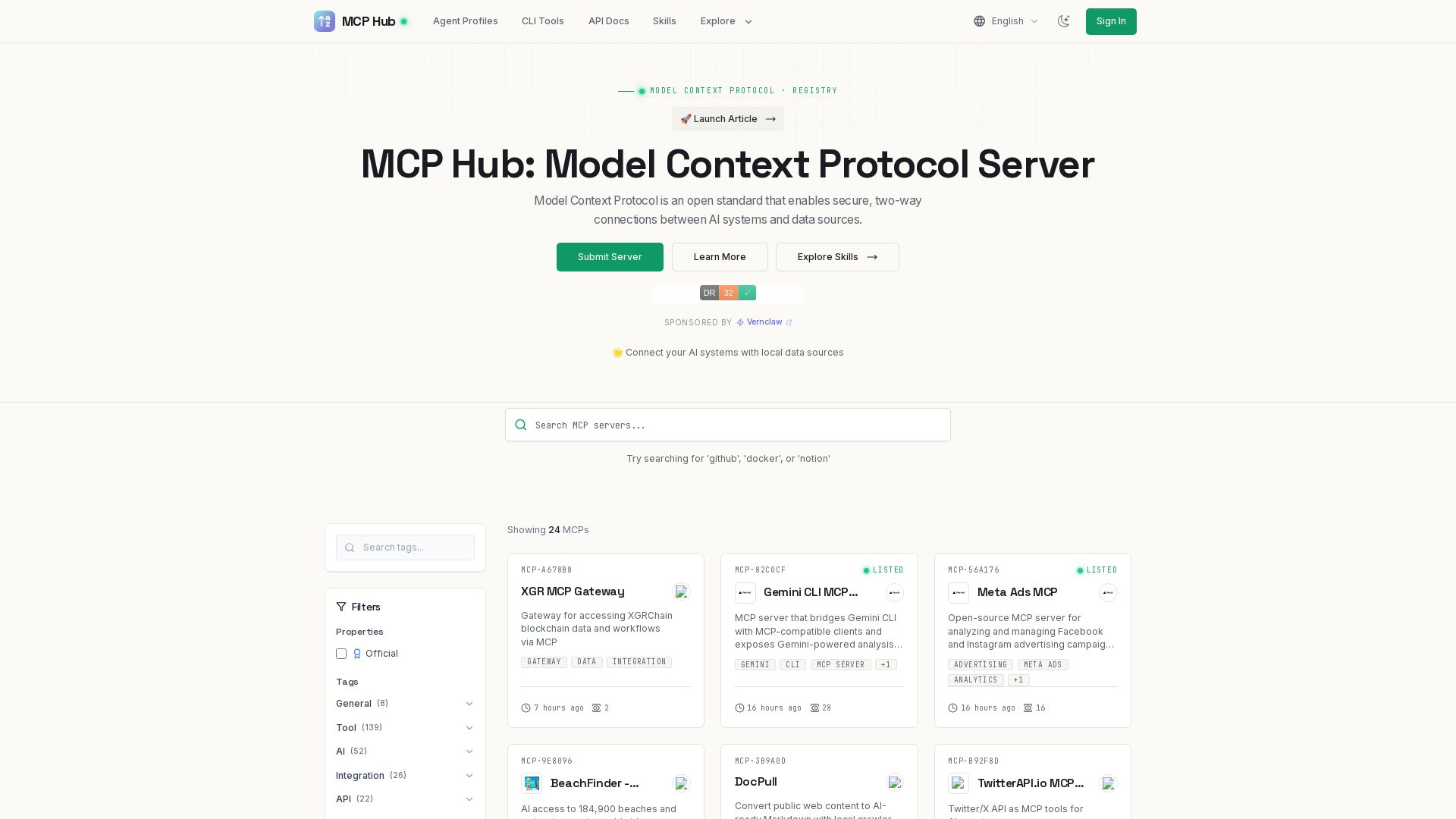
MCP Hub
Explore hundreds of MCP servers for secure AI-data connections. Find tools for GitHub, Docker, Notion, and more. Submit your own MCP implementation.

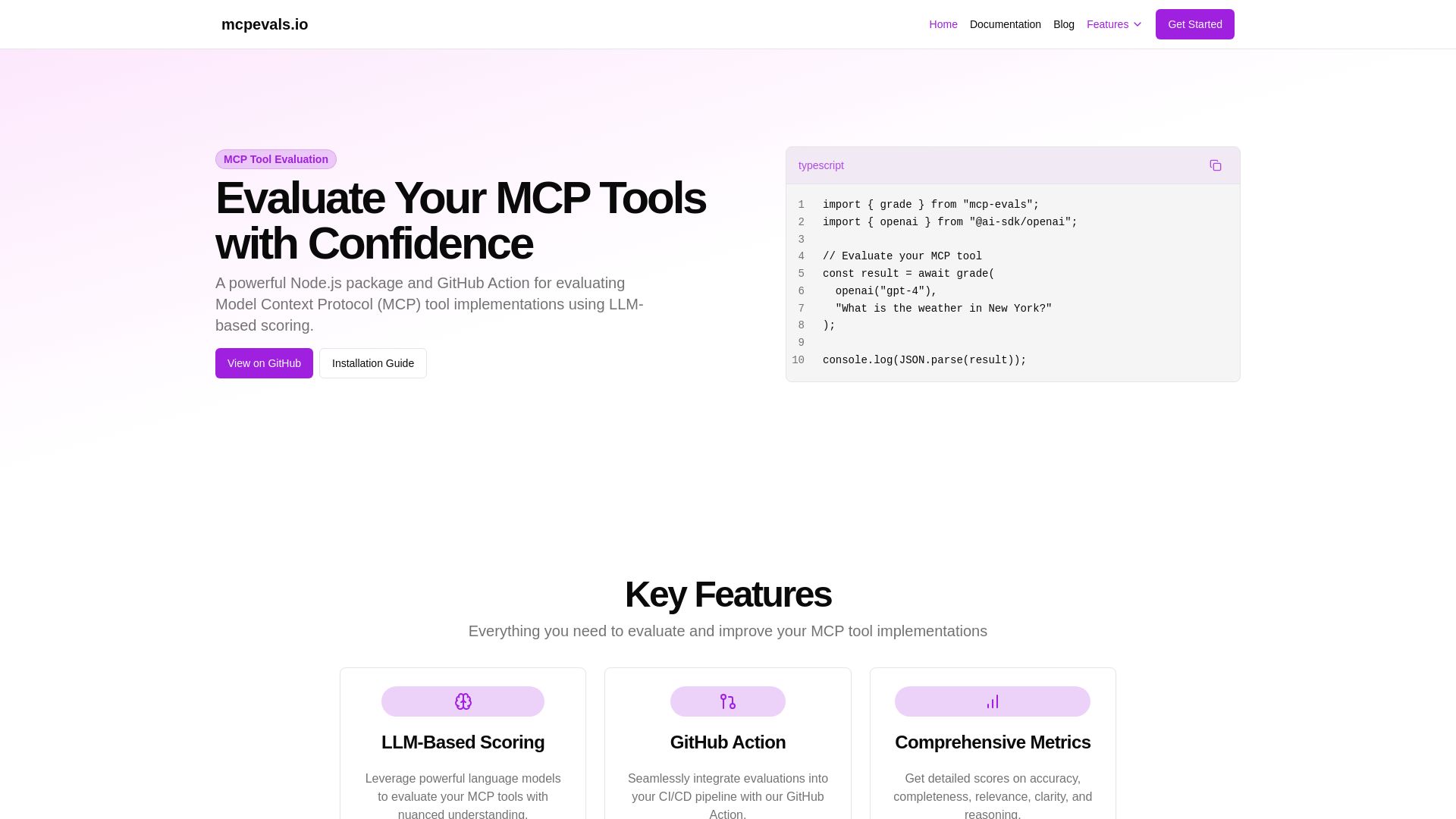
MCP Evals
A powerful Node.js package and GitHub Action for evaluating Model Context Protocol tool implementations using AI scoring. Get accurate metrics & feedback.

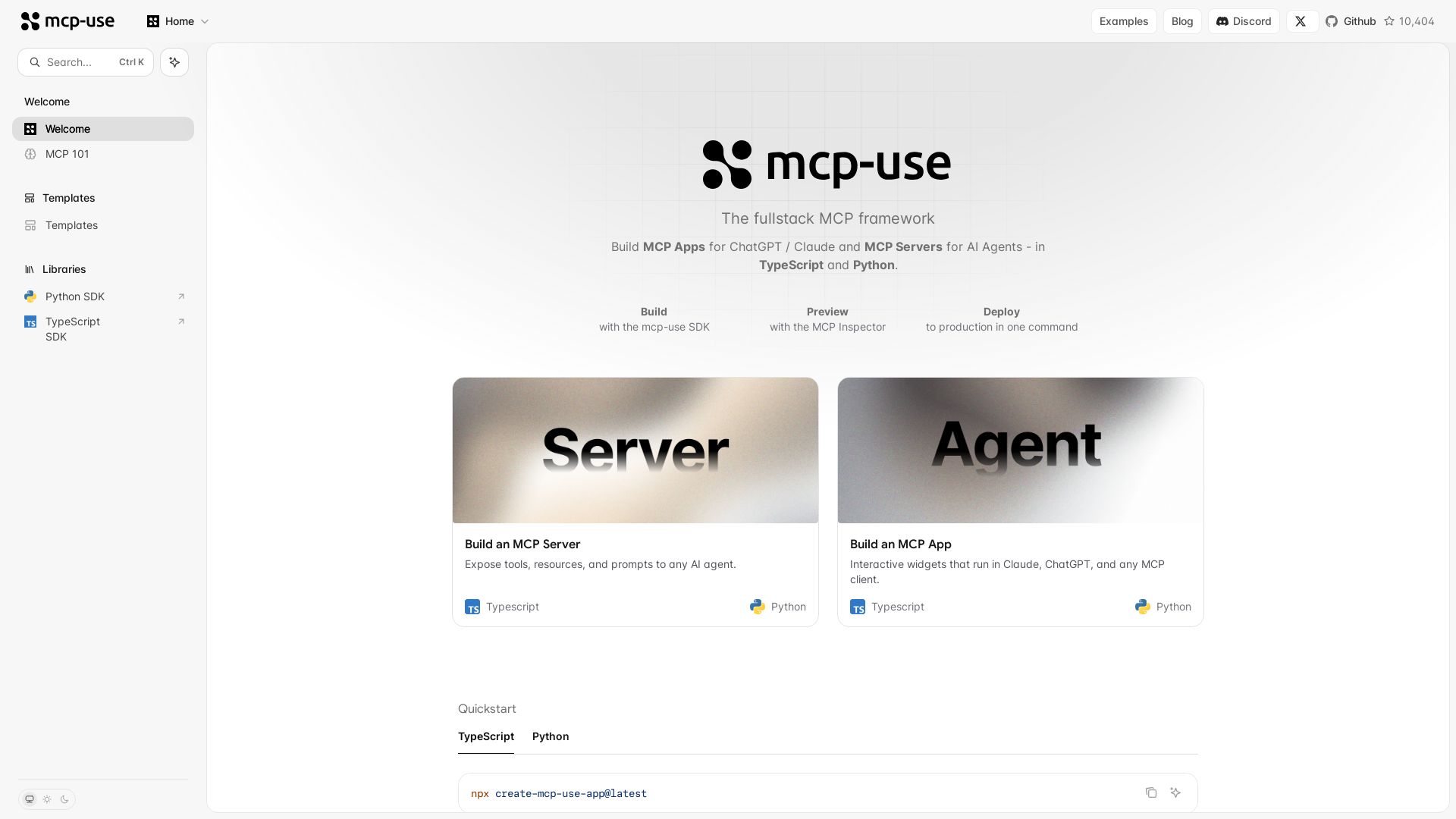
mcp-use
Build MCP apps for ChatGPT/Claude and MCP servers for AI agents. TypeScript & Python. Deploy in one command.

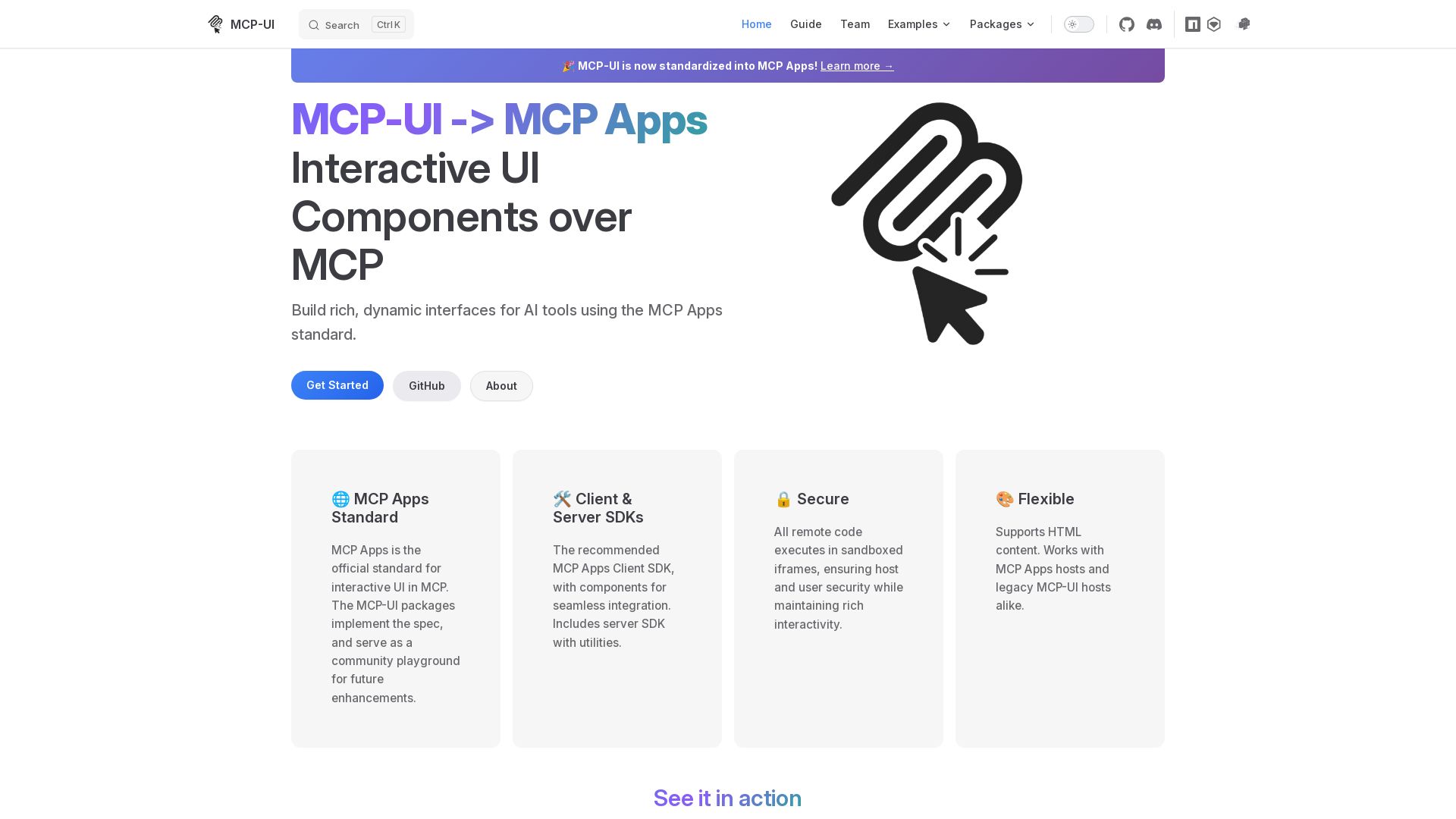
MCP-UI
Build rich, dynamic interfaces for AI tools with MCP Apps. Secure sandboxed execution, HTML support, client & server SDKs.

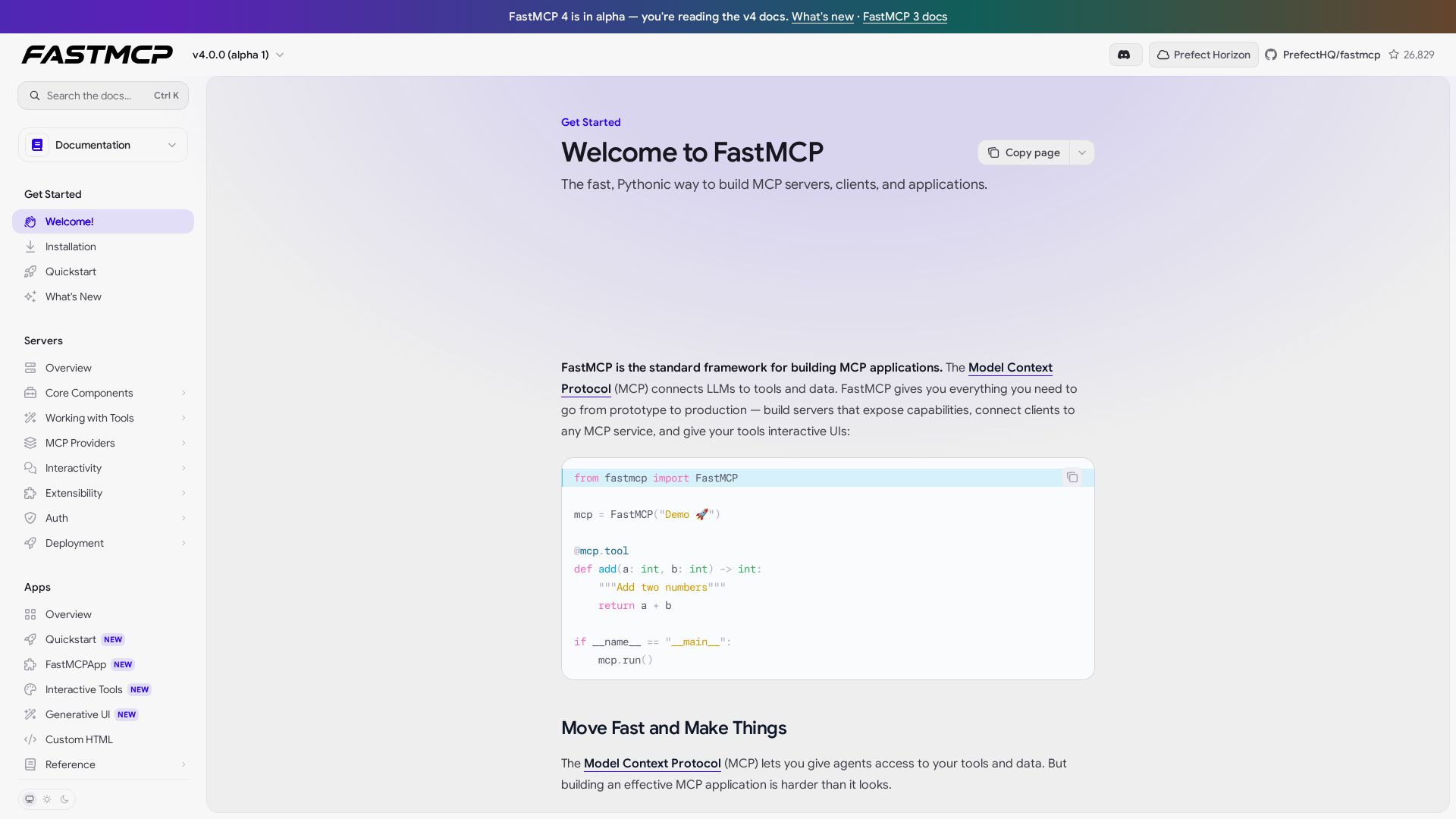
FastMCP
Build MCP servers, clients, and apps with ease. FastMCP handles schema, transport, auth, and interactive UIs. Get started in minutes.

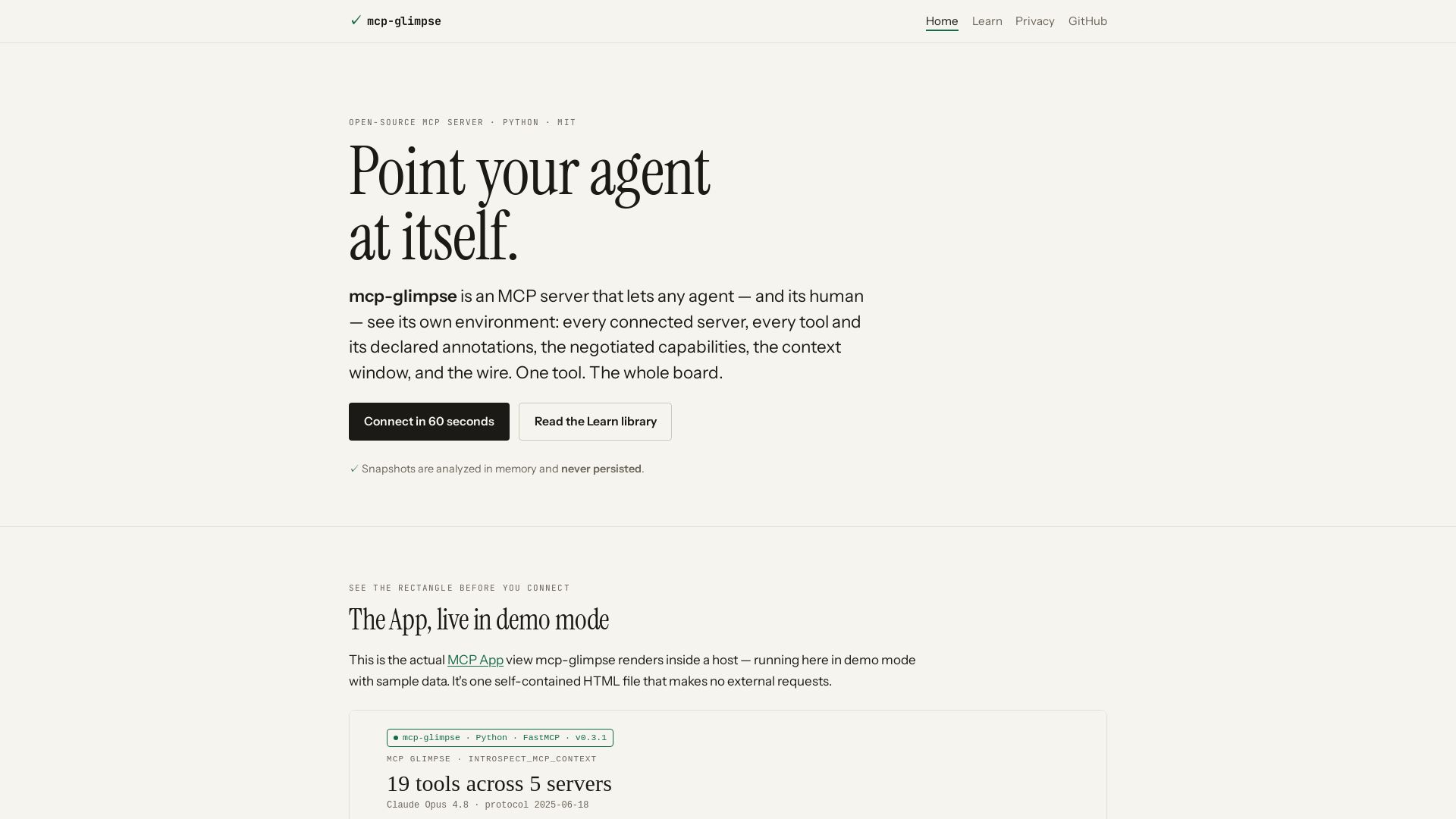
mcp-glimpse
Open-source MCP server that lets agents and humans introspect every tool, capability, and context. Privacy-first, no persistence.


Hugging Face
Master Model Context Protocol (MCP) for free! Build AI apps with external tools. Hands-on, certifications, community. Join now!
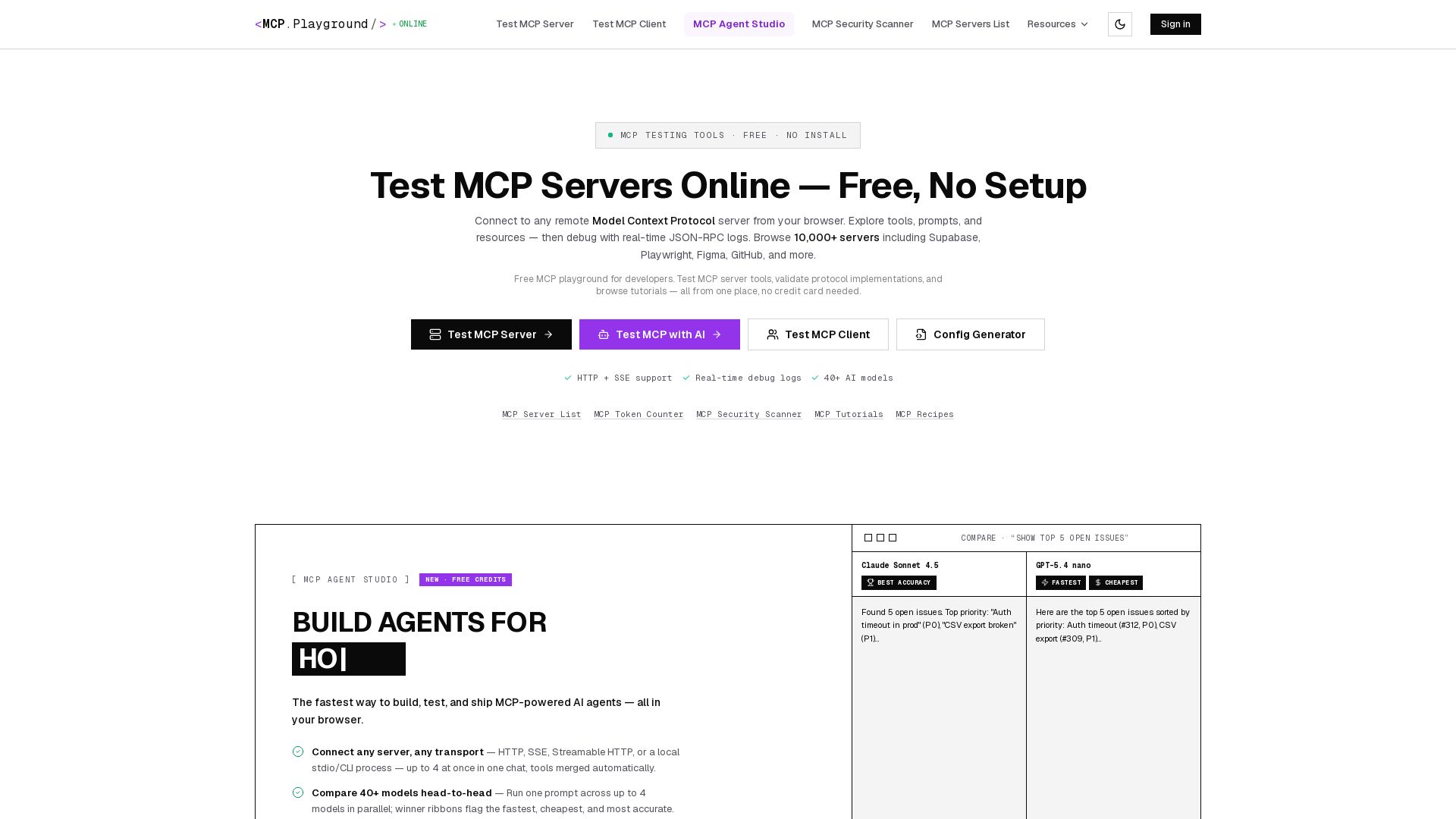
MCP Playground Online
Free browser-based MCP testing tool. Connect to any server, browse tools, execute commands, and view live JSON-RPC logs. No install required.

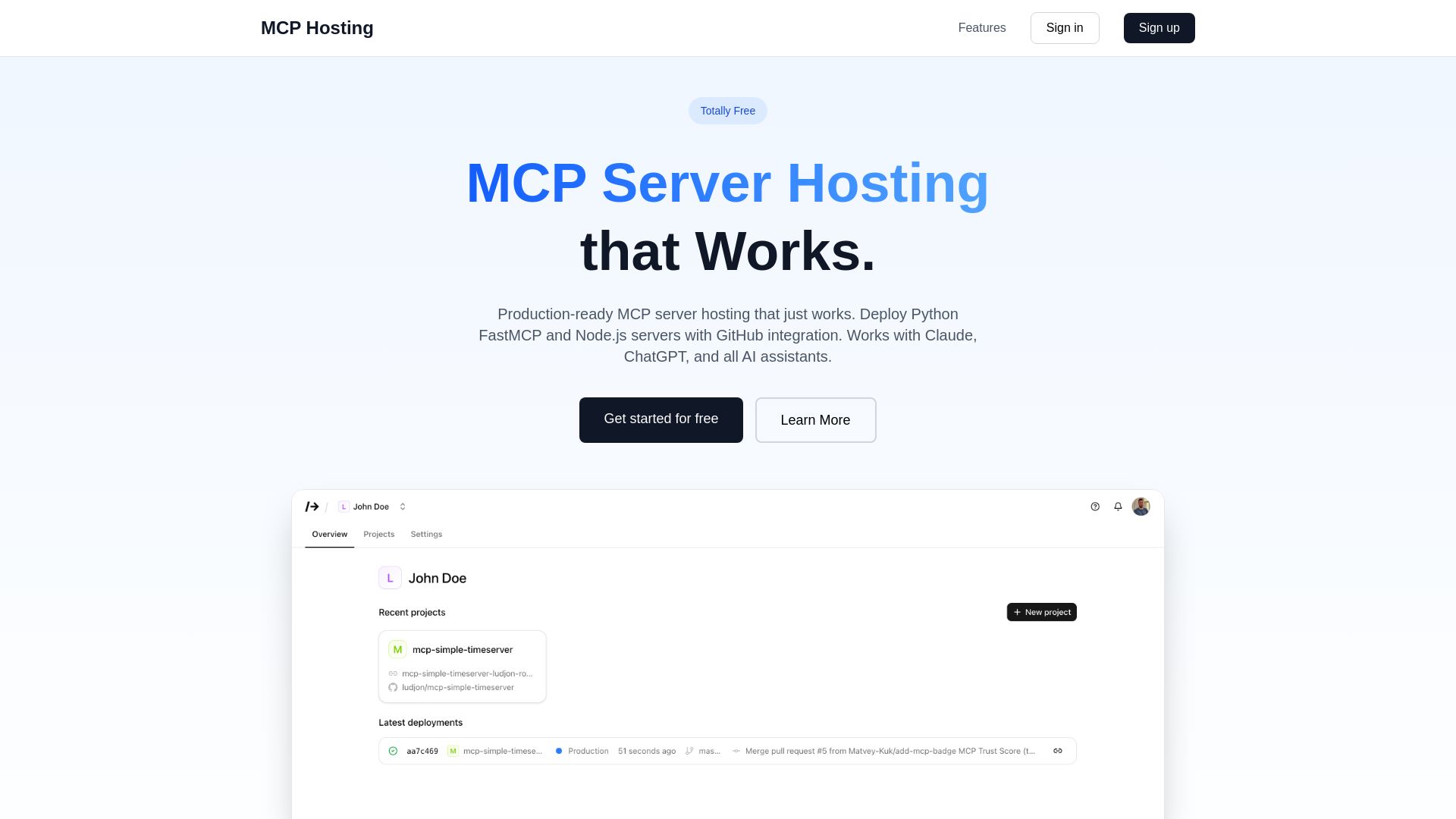
MCP Hosting
Production-ready MCP server hosting with GitHub integration. Deploy Python FastMCP & Node.js servers instantly. Free tier available. Works with Claude, ChatGPT, and all AI assistants.
ℹ️ Curation Disclosure: The overview and features of MCP Python SDK were synthesized using AI and fact-checked by our curation team to ensure accuracy.