
Model Context Protocol
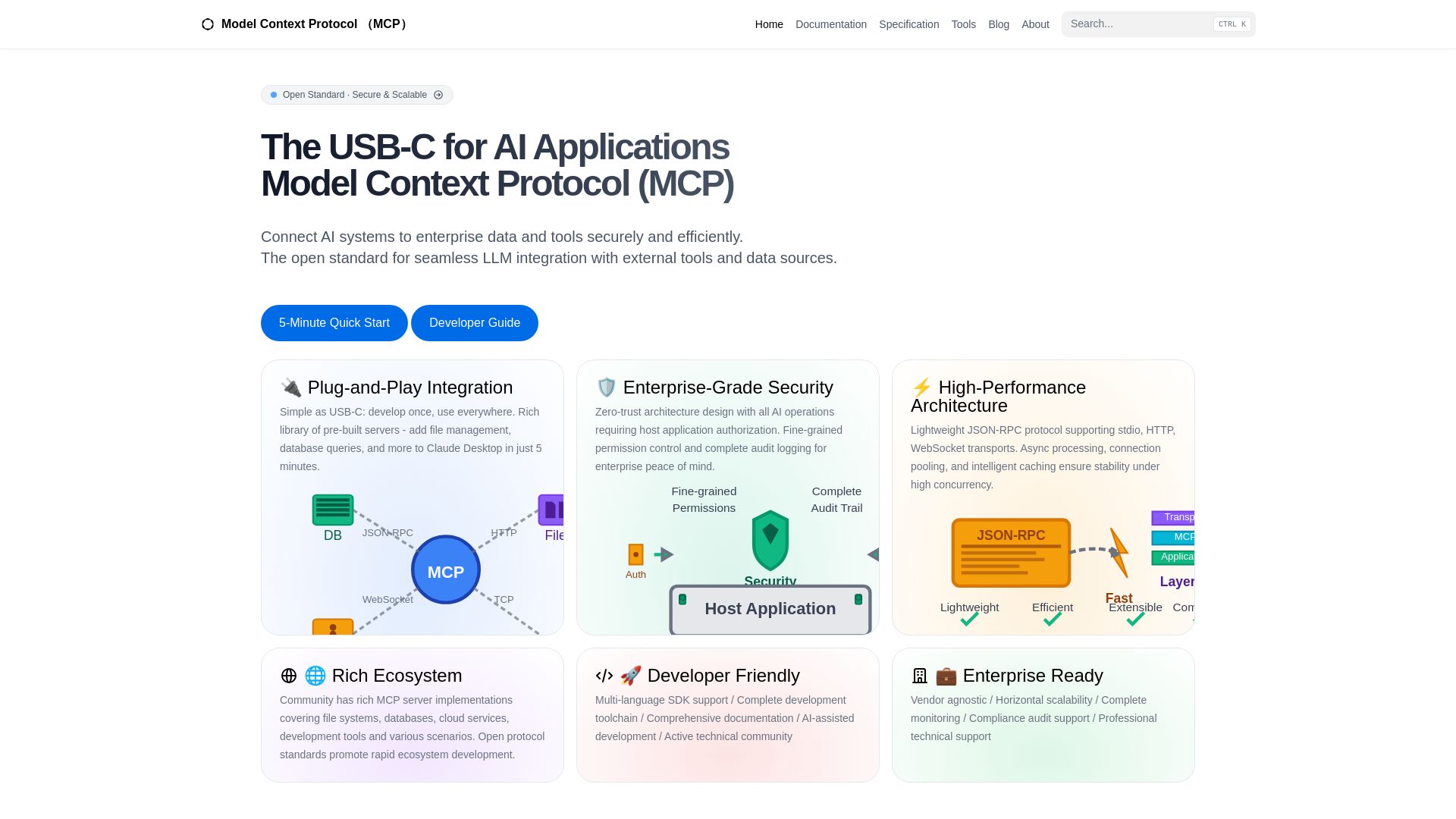
Open standard connecting AI systems to enterprise data and tools securely. Plug-and-play integration, enterprise security, high performance.
Editor's Verdict
Key Takeaways
- Plug-and-Play Integration
- Enterprise-Grade Security
- High-Performance Architecture
- Rich Ecosystem
In-Depth Review: What is Model Context Protocol?
Model Context Protocol (MCP) is the open standard for seamlessly integrating LLMs with external tools and data sources. It offers plug-and-play integration like USB-C, enterprise-grade zero-trust security, high-performance JSON-RPC protocol, and a rich ecosystem of pre-built servers. Ideal for developers, enterprise architects, and protocol beginners.
Core Features
Plug-and-Play Integration
Simple as USB-C: develop once, use everywhere. Rich library of pre-built servers - add file management, database queries, and more to Claude Desktop in just 5 minutes.
Enterprise-Grade Security
Zero-trust architecture design with all AI operations requiring host application authorization. Fine-grained permission control and complete audit logging for enterprise peace of mind.
High-Performance Architecture
Lightweight JSON-RPC protocol supporting stdio, HTTP, WebSocket transports. Async processing, connection pooling, and intelligent caching ensure stability under high concurrency.
Rich Ecosystem
Community has rich MCP server implementations covering file systems, databases, cloud services, development tools and various scenarios. Open protocol standards promote rapid ecosystem development.
Developer Friendly
Multi-language SDK support / Complete development toolchain / Comprehensive documentation / AI-assisted development / Active technical community
Enterprise Ready
Vendor agnostic / Horizontal scalability / Complete monitoring / Compliance audit support / Professional technical support
Pros and Cons
Pros
- Seamless IntegrationDevelop once, use everywhere with plug-and-play integration across different environments.
- Enterprise SecurityZero-trust architecture ensures all AI operations require authorization, with fine-grained controls and audit logs.
- High PerformanceLightweight JSON-RPC protocol with async processing and intelligent caching for stability under high concurrency.
- Rich EcosystemWide range of pre-built servers and community contributions covering many scenarios like file systems and databases.
- Developer FriendlyMulti-language SDKs, comprehensive documentation, and active community support for rapid development.
Cons
Use Cases & Recommended Professions
AI Developer→ View Toolkit
Needs to integrate AI models with external tools and data sources efficiently using an open standard.
Enterprise Architect→ View Toolkit
Designs scalable and secure AI infrastructure and needs a standardized protocol for LLM integration.
Software Engineer→ View Toolkit
Builds MCP servers and clients to connect AI to enterprise data and tools.
Data Engineer→ View Toolkit
Uses MCP to provide structured data context to language models for better responses.
DevOps Engineer→ View Toolkit
Manages deployment, monitoring, and scaling of MCP in production environments.
Product Manager→ View Toolkit
Leverages MCP to quickly add AI capabilities to products with pre-built integrations.
Frequently Asked Questions
Alternative AI Tools
View Detailed Comparison →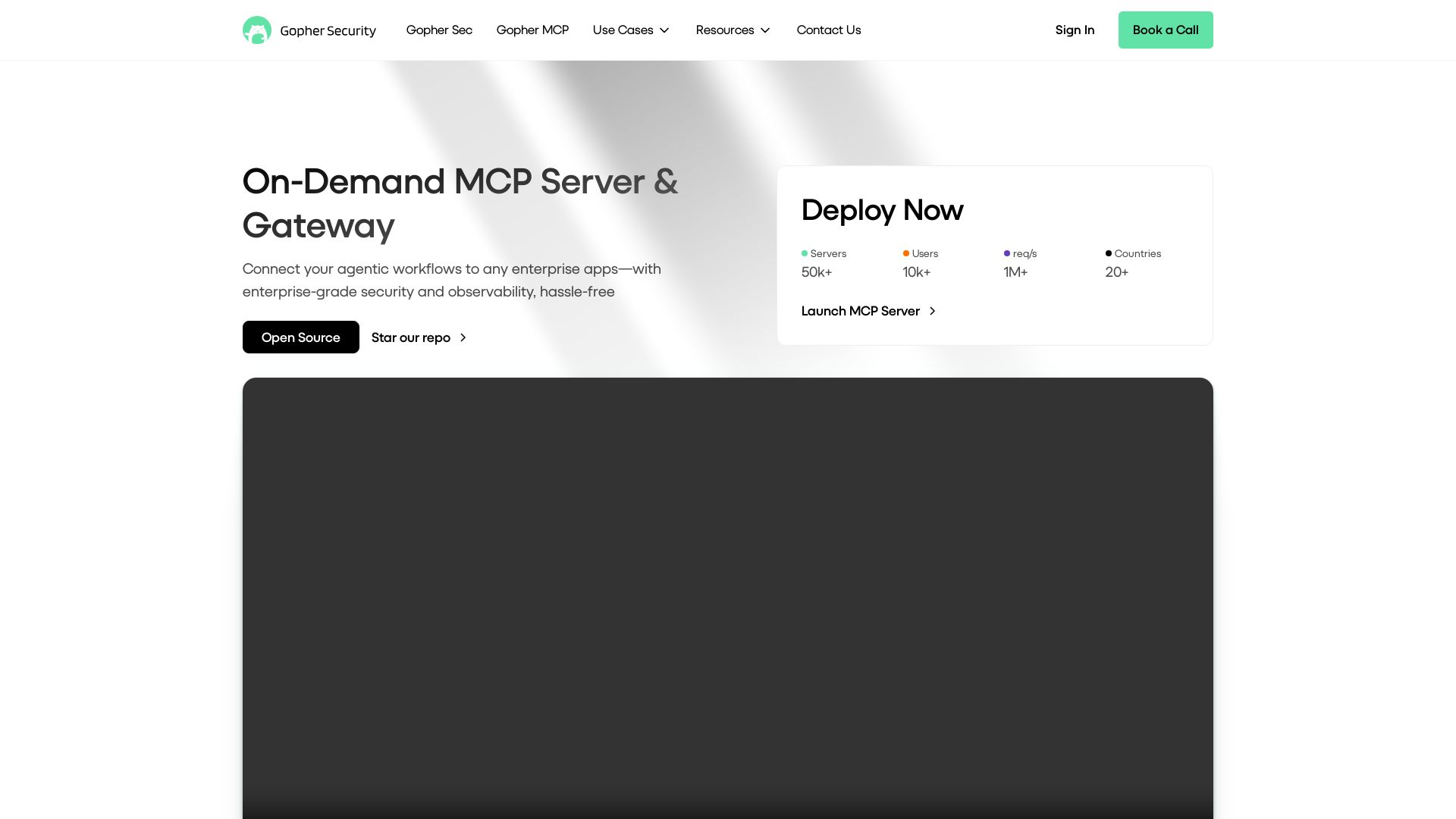
Gopher-MCP
Deploy secure MCP servers in minutes with 4D security: deep inspection, zero-trust access, granular policies, and post-quantum encryption.

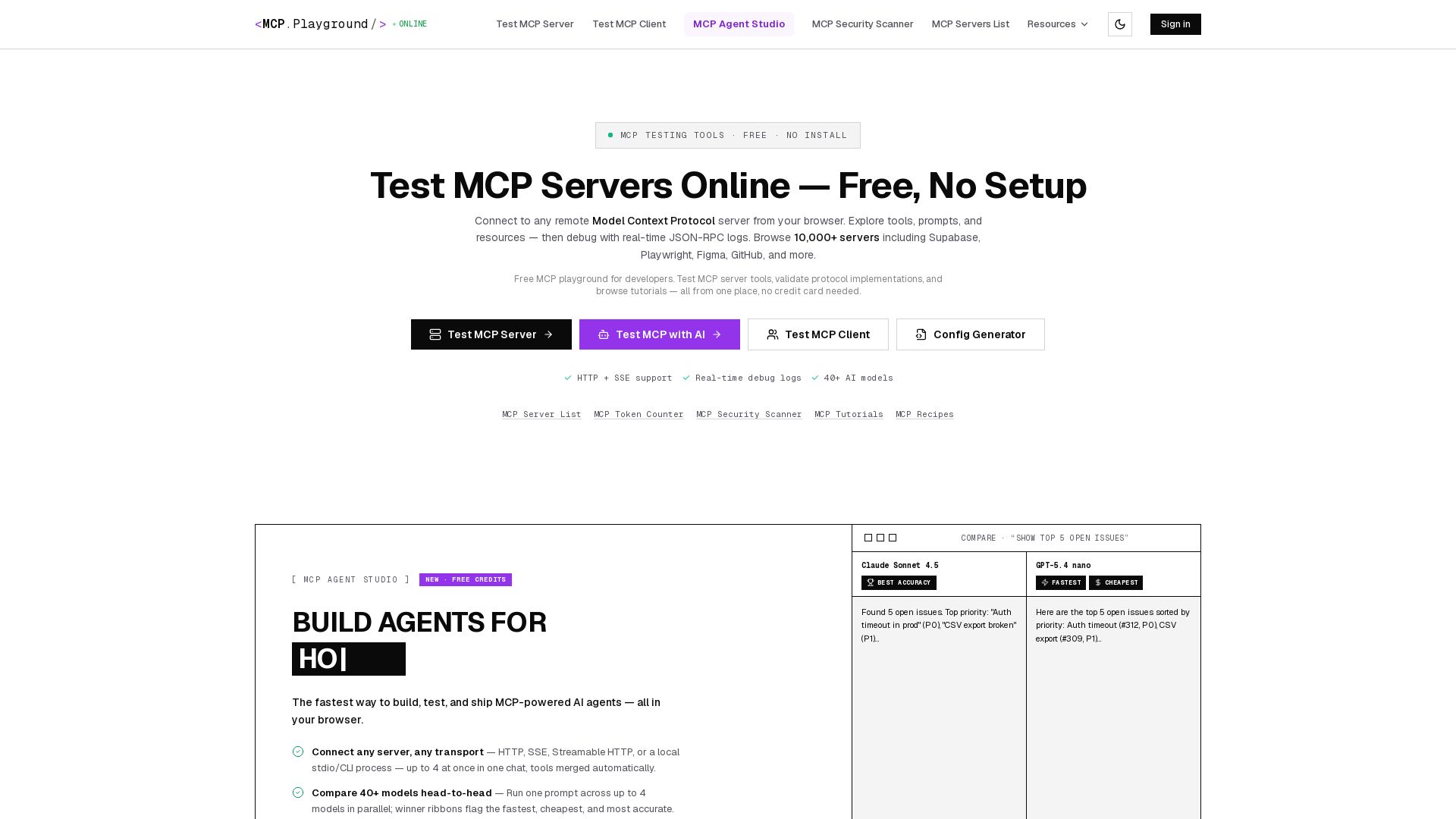
MCP Playground Online
Free browser-based MCP testing tool. Connect to any server, browse tools, execute commands, and view live JSON-RPC logs. No install required.

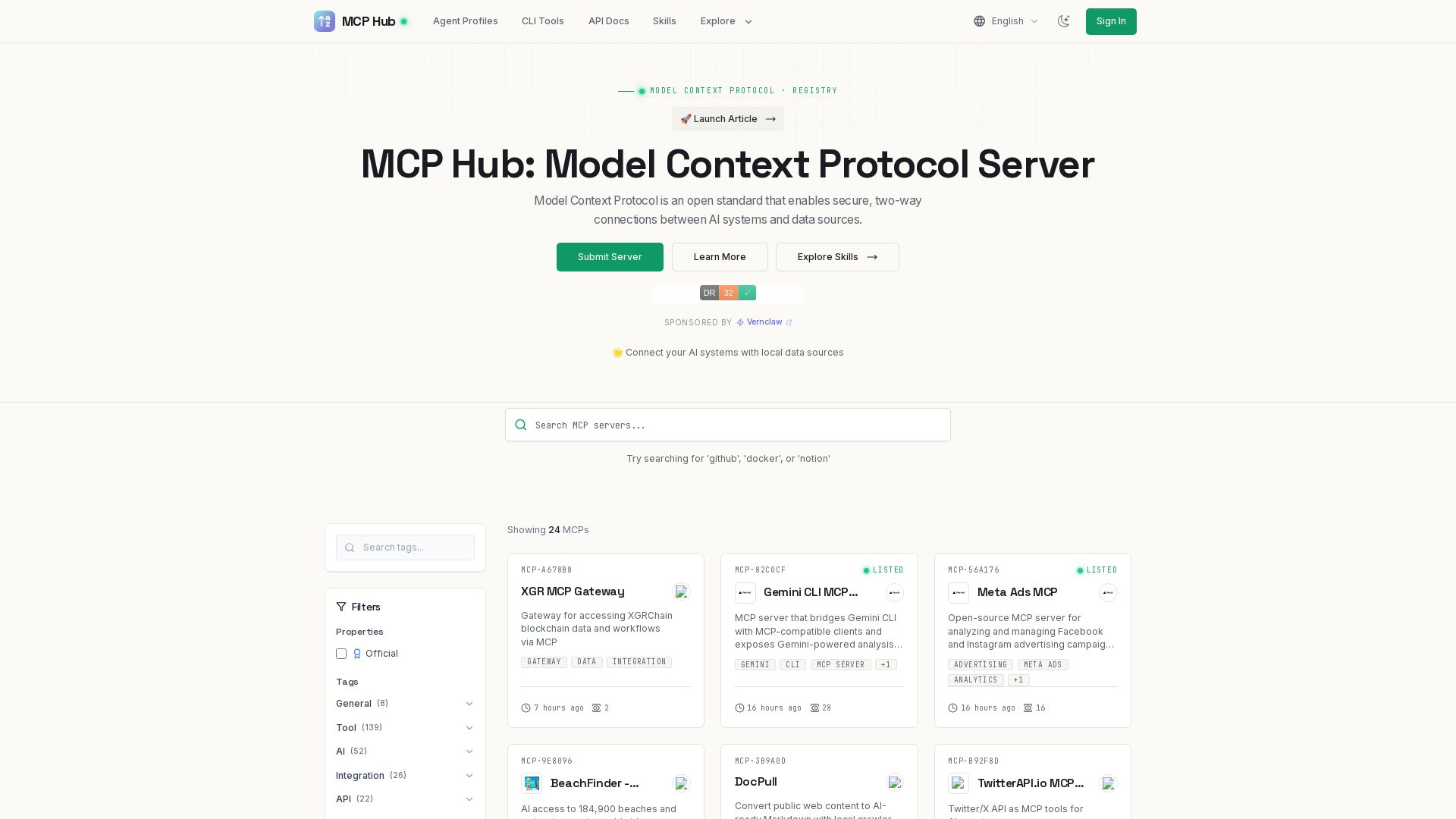
MCP Hub
Explore hundreds of MCP servers for secure AI-data connections. Find tools for GitHub, Docker, Notion, and more. Submit your own MCP implementation.

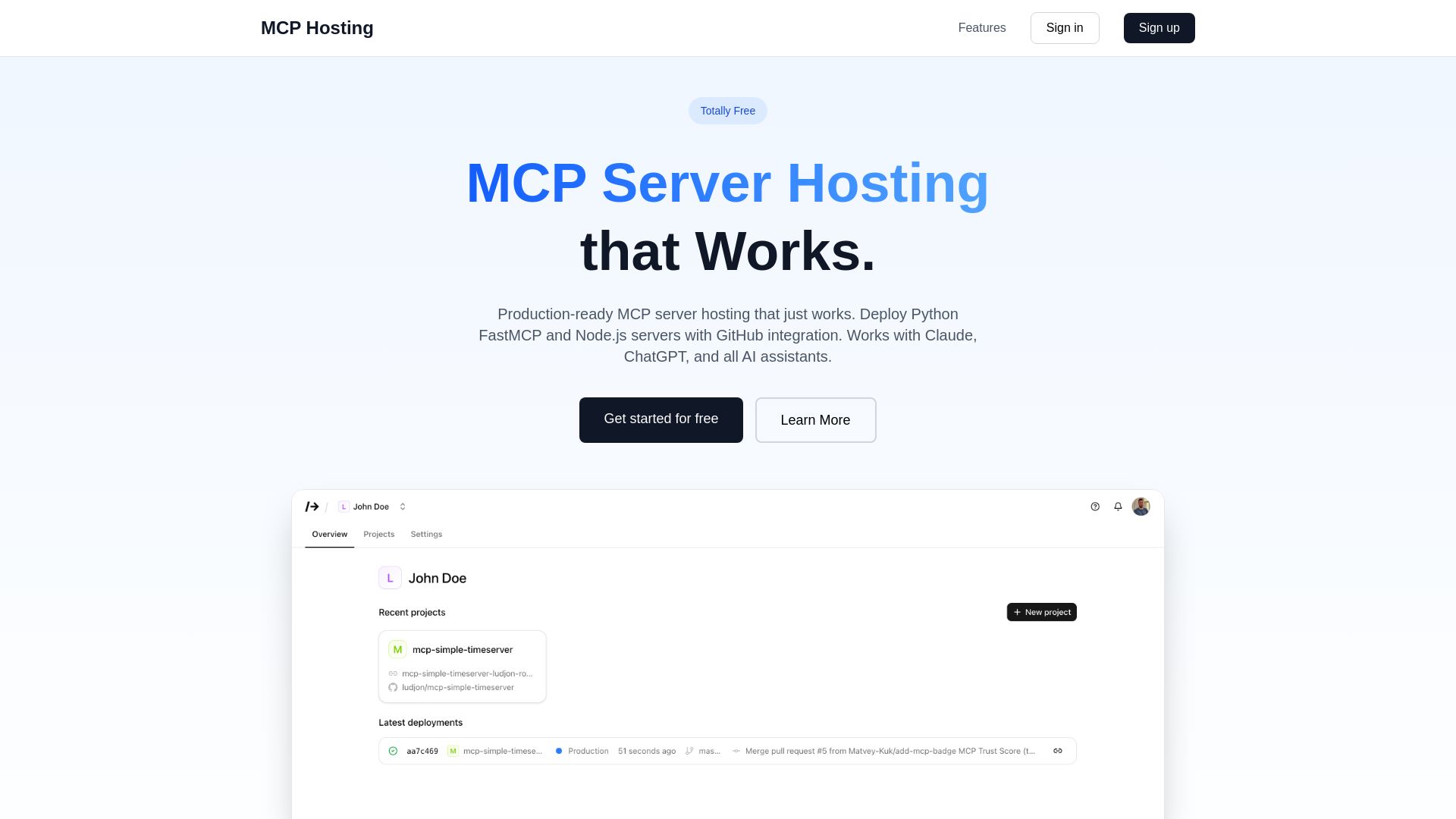
MCP Hosting
Production-ready MCP server hosting with GitHub integration. Deploy Python FastMCP & Node.js servers instantly. Free tier available. Works with Claude, ChatGPT, and all AI assistants.
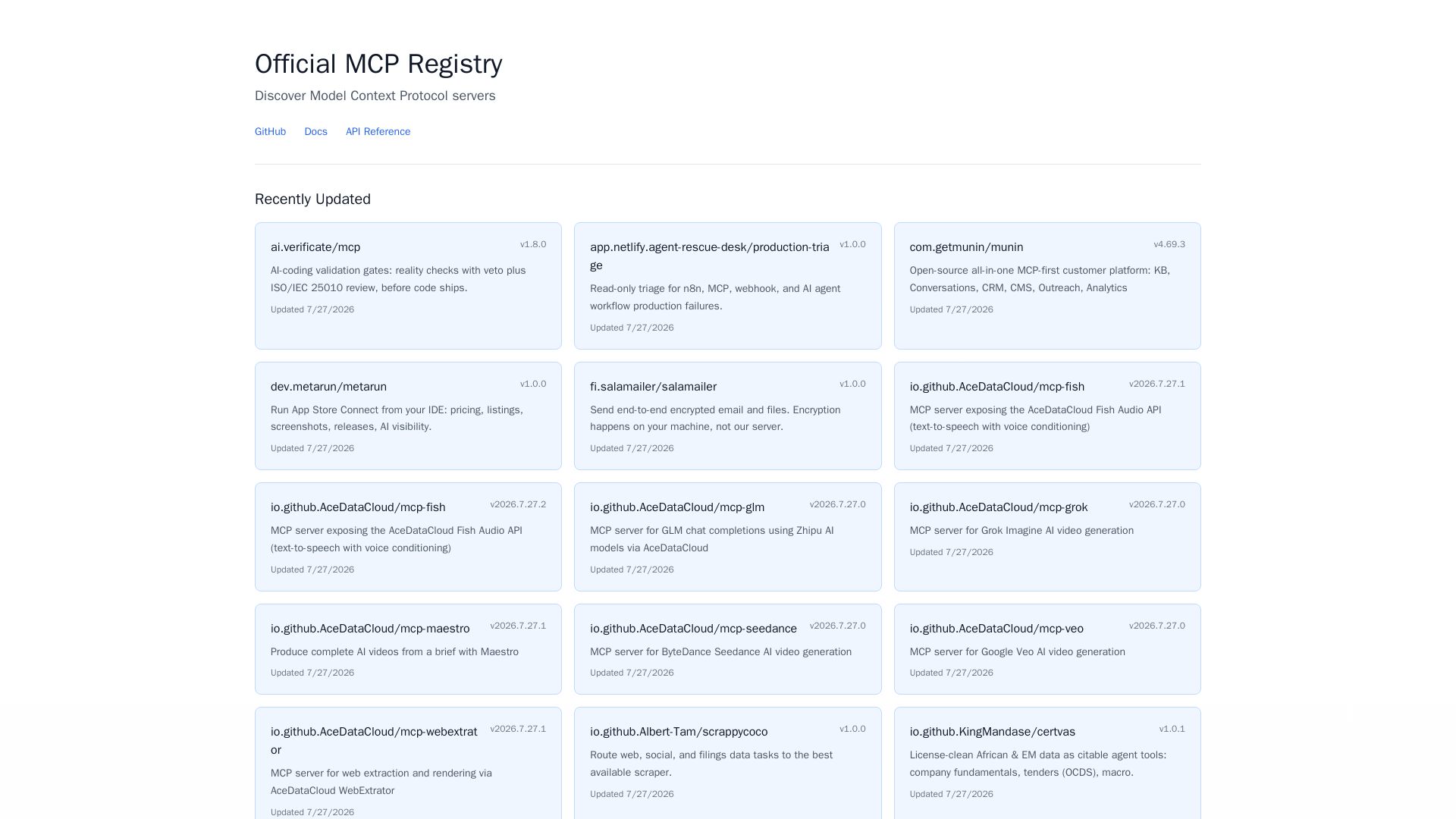
MCP Registry
Explore the official directory of MCP servers for AI integration, data processing, automation, and more. Find vetted servers with descriptions and updates.
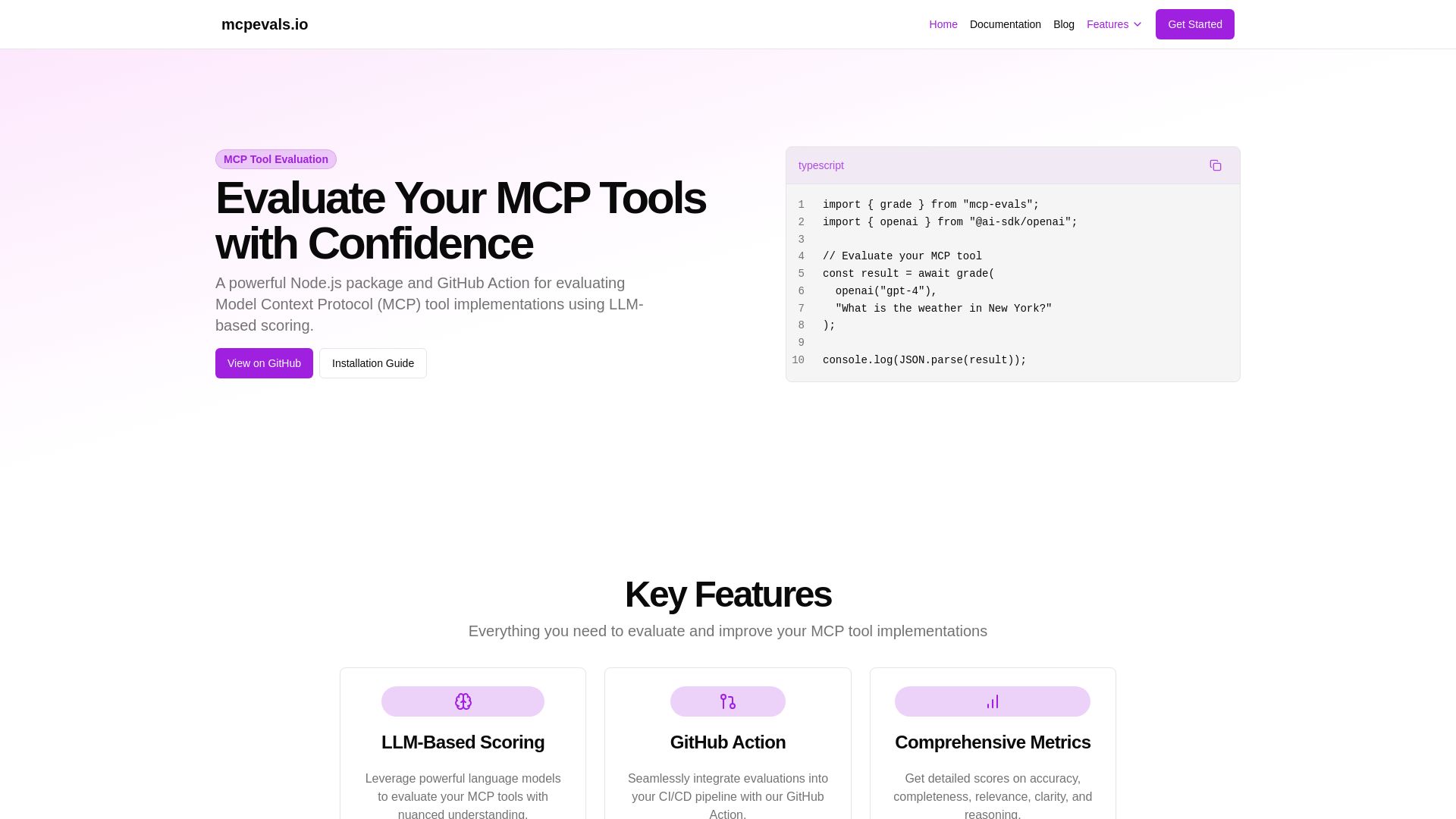
MCP Evals
A powerful Node.js package and GitHub Action for evaluating Model Context Protocol tool implementations using AI scoring. Get accurate metrics & feedback.

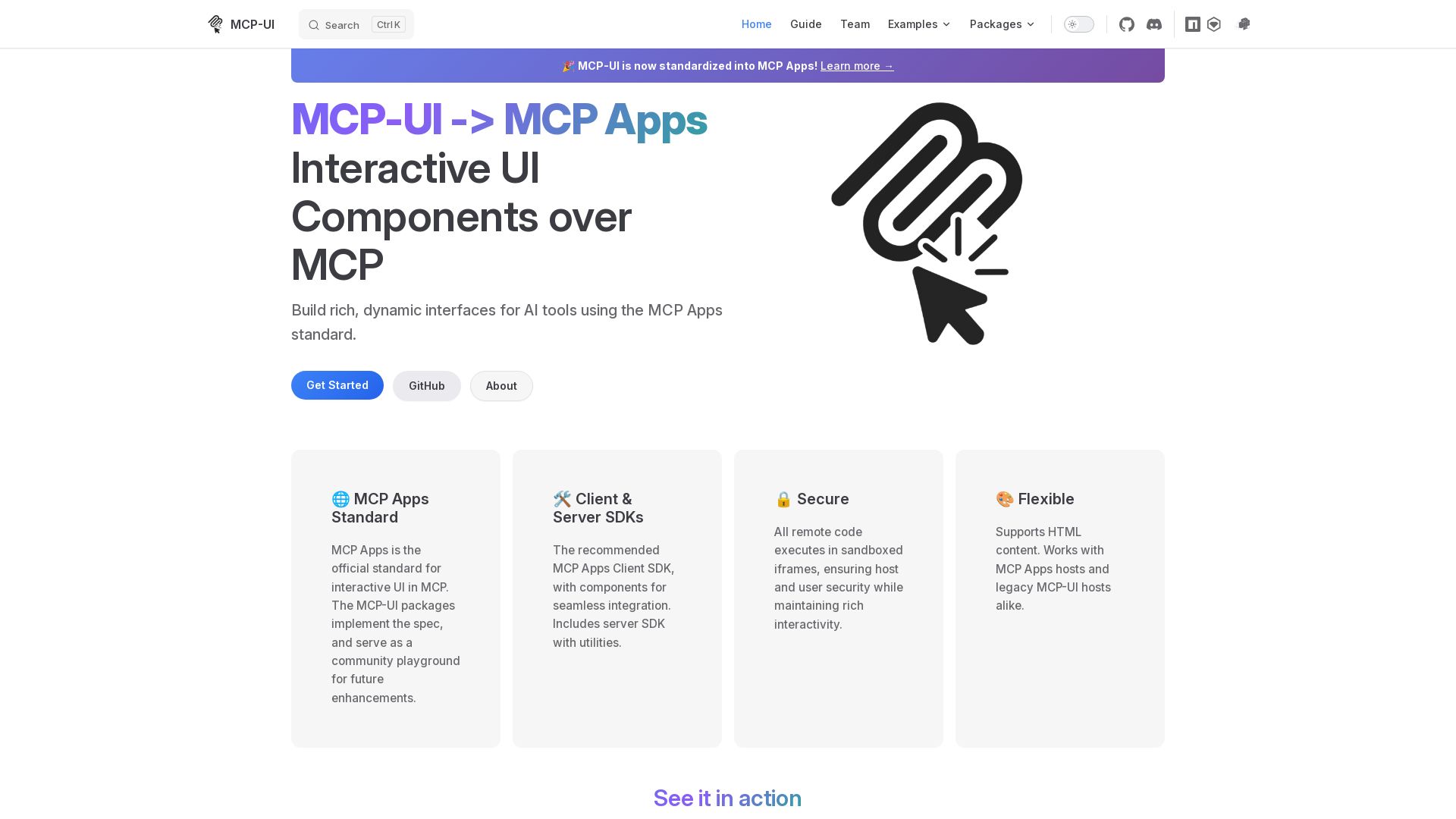
MCP-UI
Build rich, dynamic interfaces for AI tools with MCP Apps. Secure sandboxed execution, HTML support, client & server SDKs.

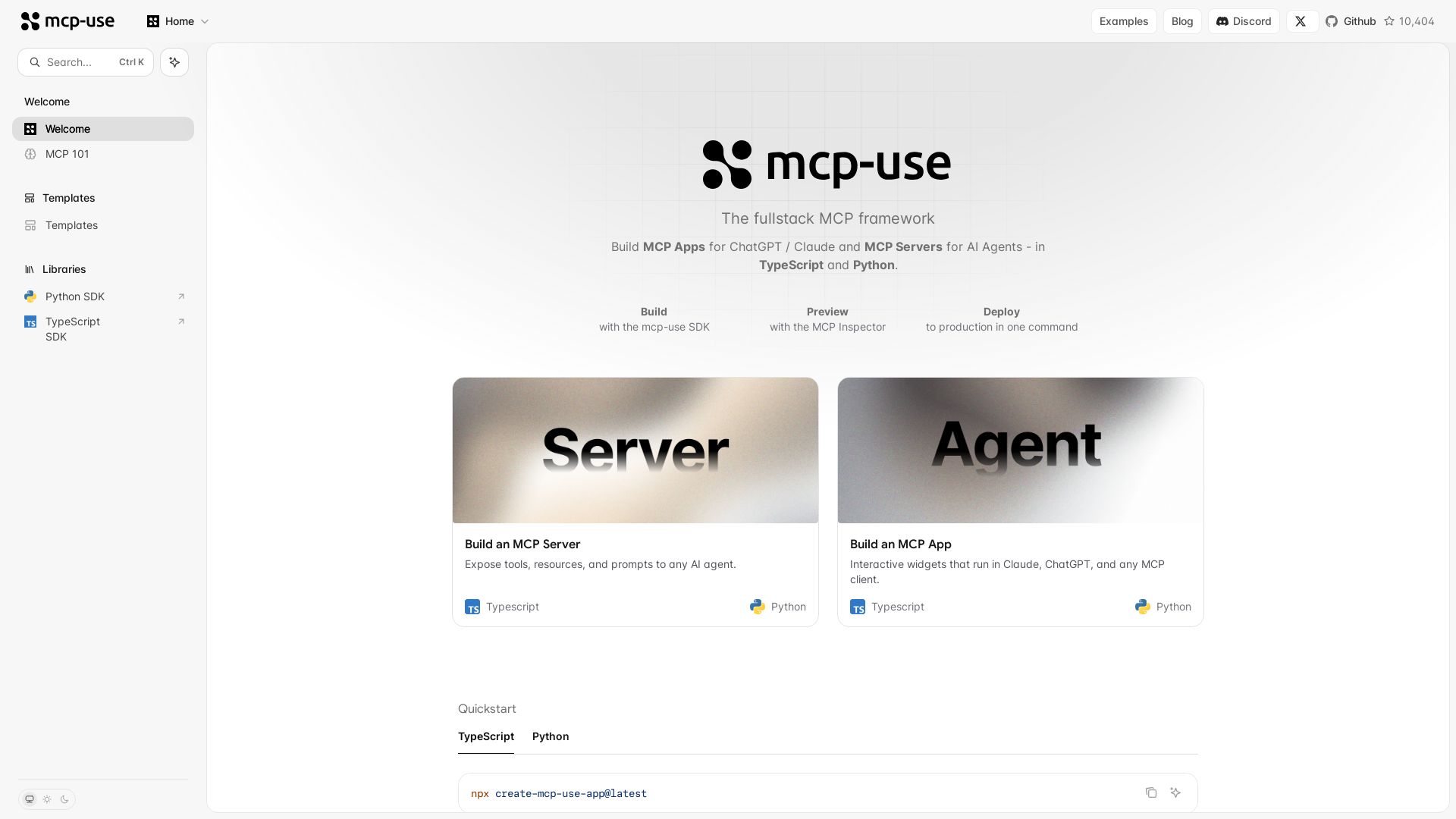
mcp-use
Build MCP apps for ChatGPT/Claude and MCP servers for AI agents. TypeScript & Python. Deploy in one command.

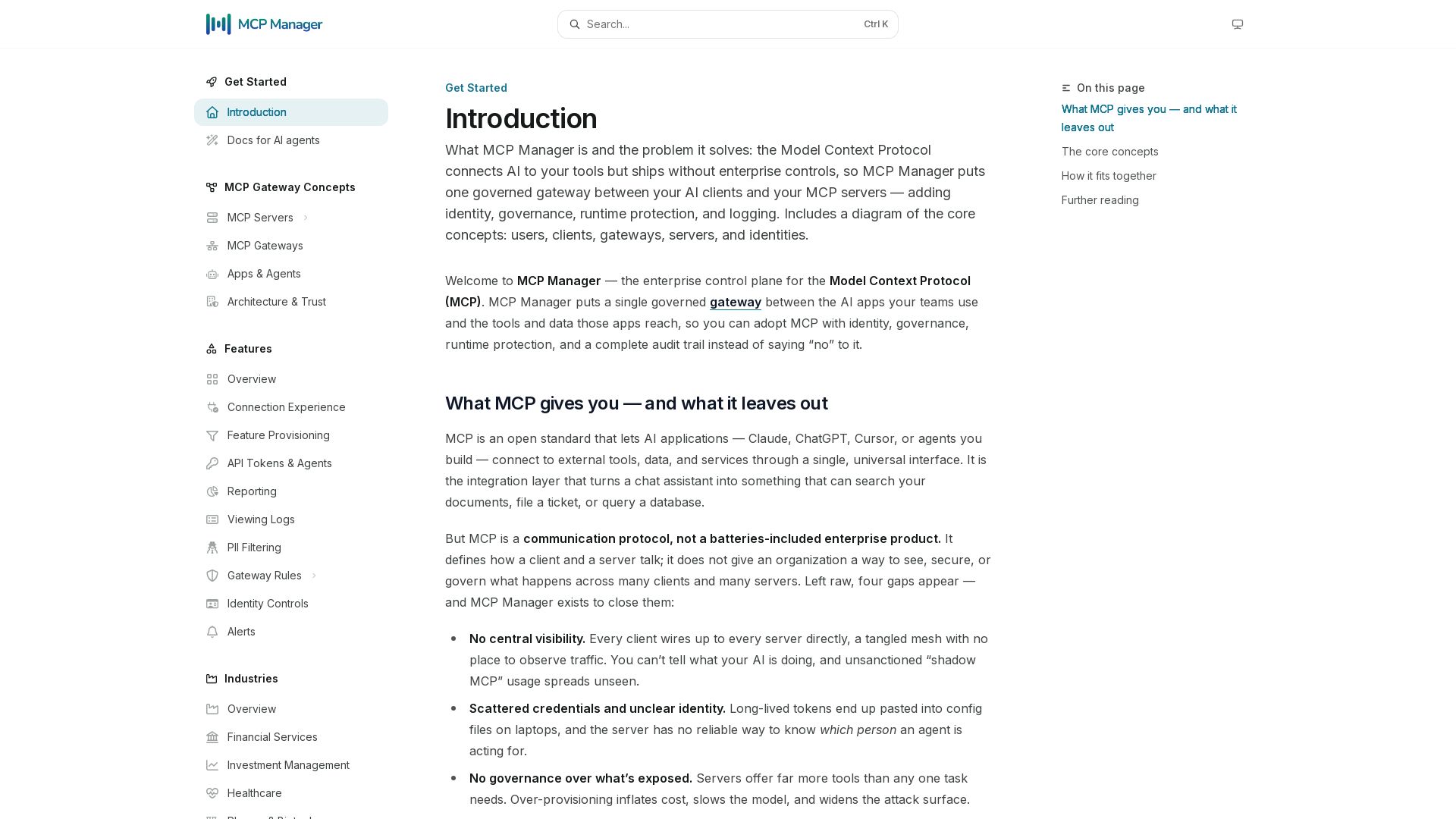
MCP Manager
Secure, govern, and observe AI tool connections. Single gateway for identity, rules, audit, and runtime protection.

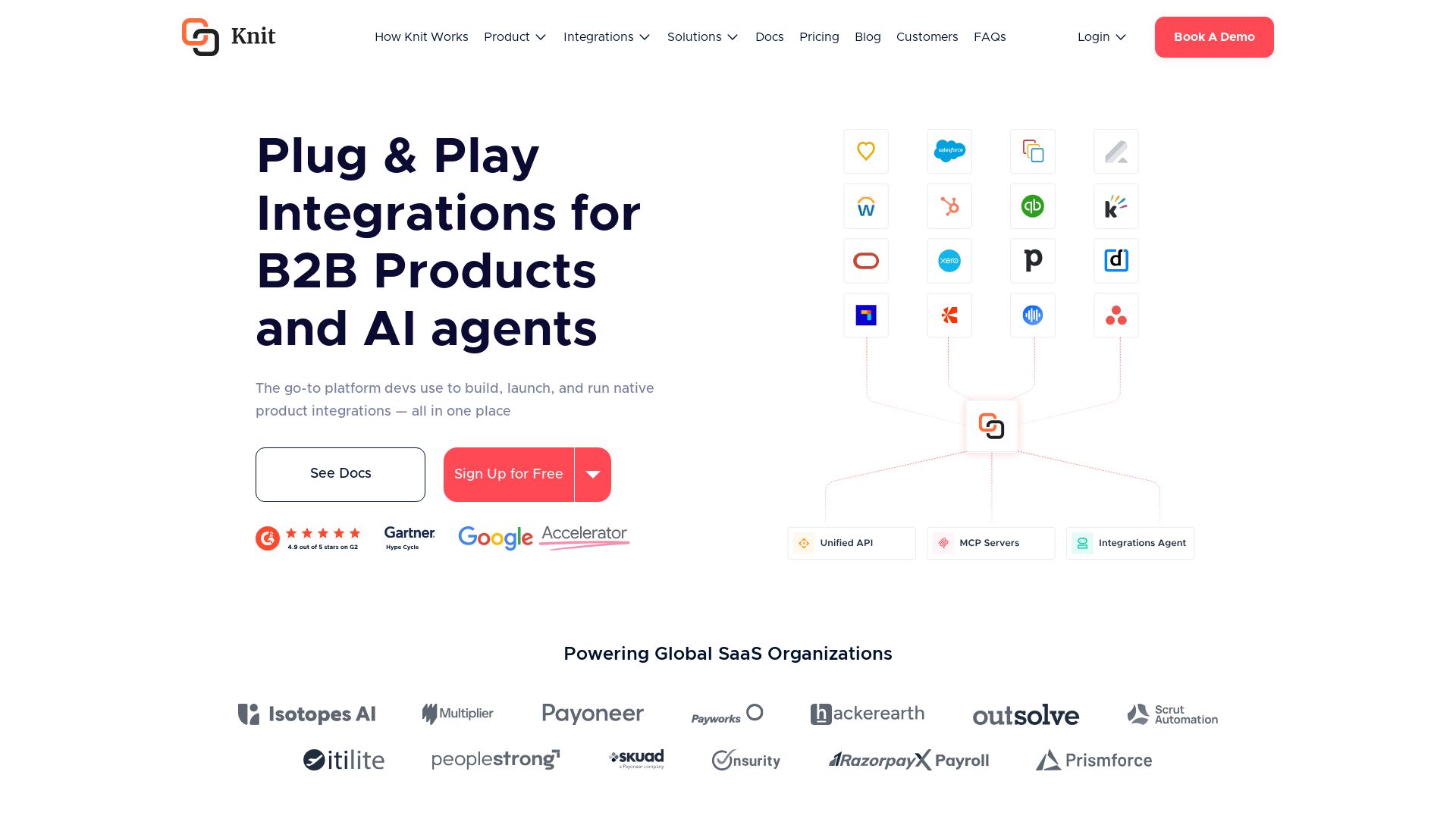
Knit
Build, launch, and run native product integrations with Unified APIs, MCP Servers, and AI Integrations Agent. Powering global SaaS organizations.

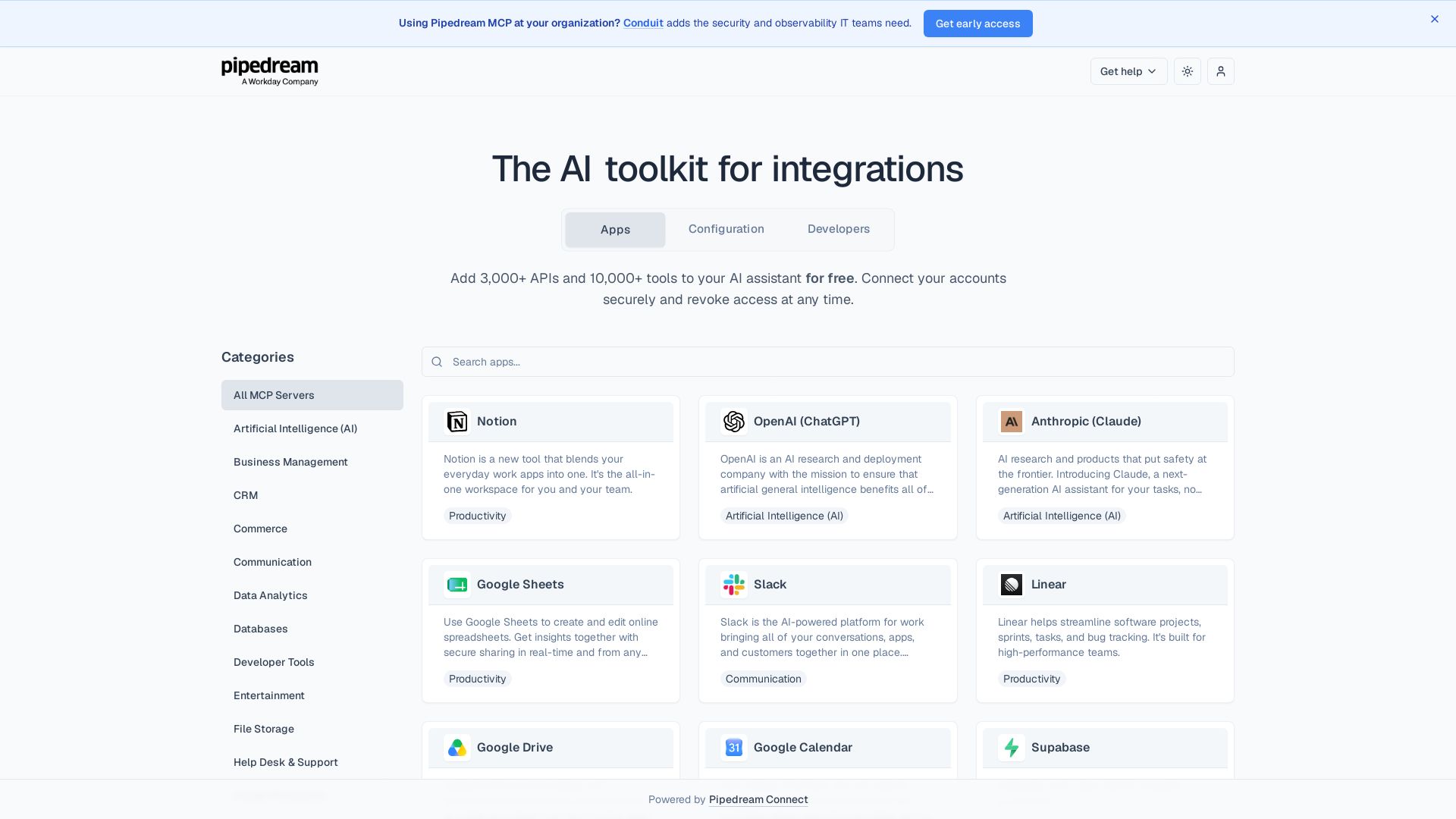
Pipedream MCP
Connect your AI assistant to 3,000+ APIs and 10,000+ tools for free. Secure, revocable access. Explore categories like AI, CRM, Databases, and more.

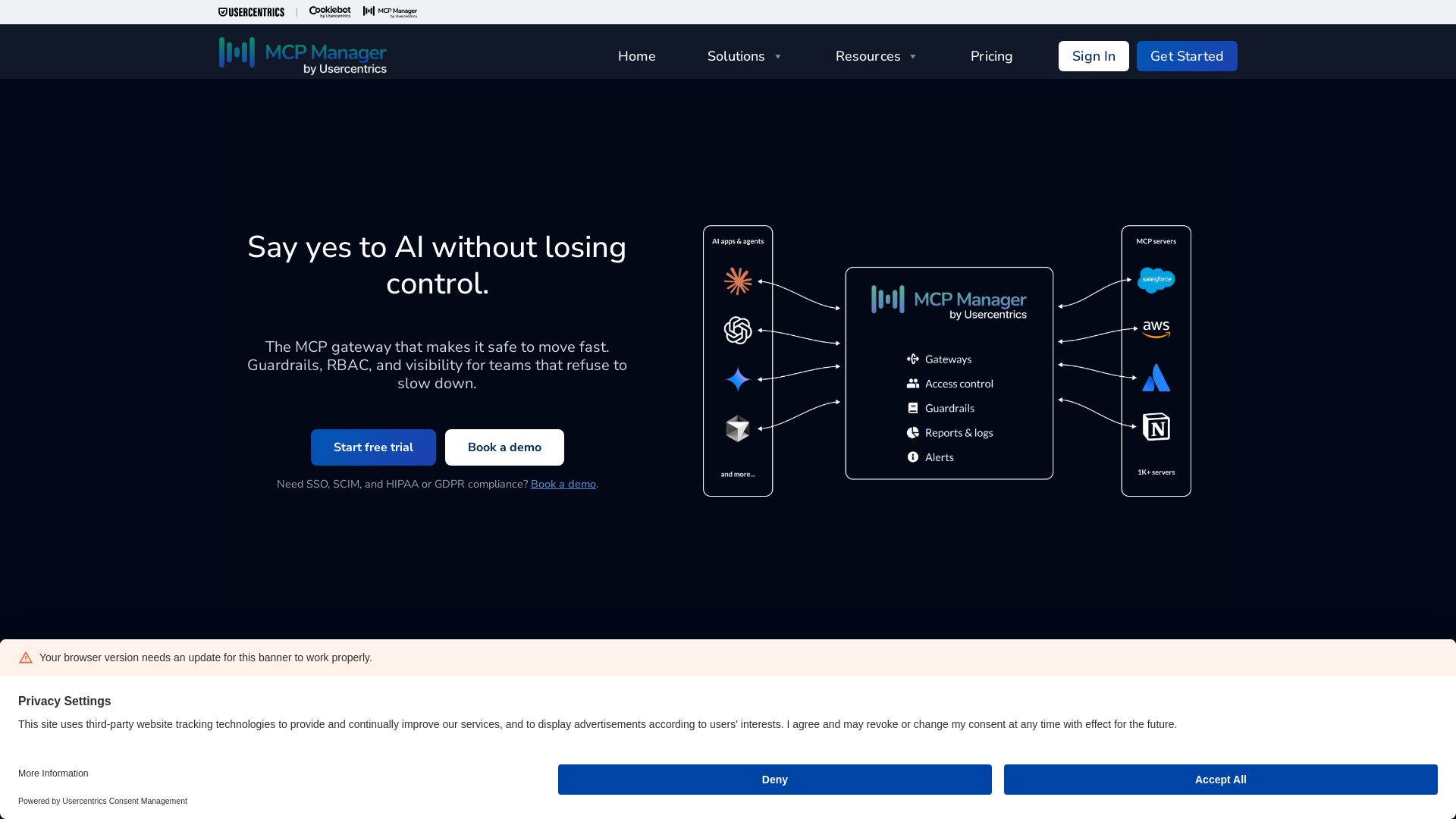
MCP Manager
Centralized MCP gateway with guardrails, RBAC, PII filtering, and visibility. Control AI connections across teams and tools. Start free trial.

ℹ️ Curation Disclosure: The overview and features of Model Context Protocol were synthesized using AI and fact-checked by our curation team to ensure accuracy.