
Amnic
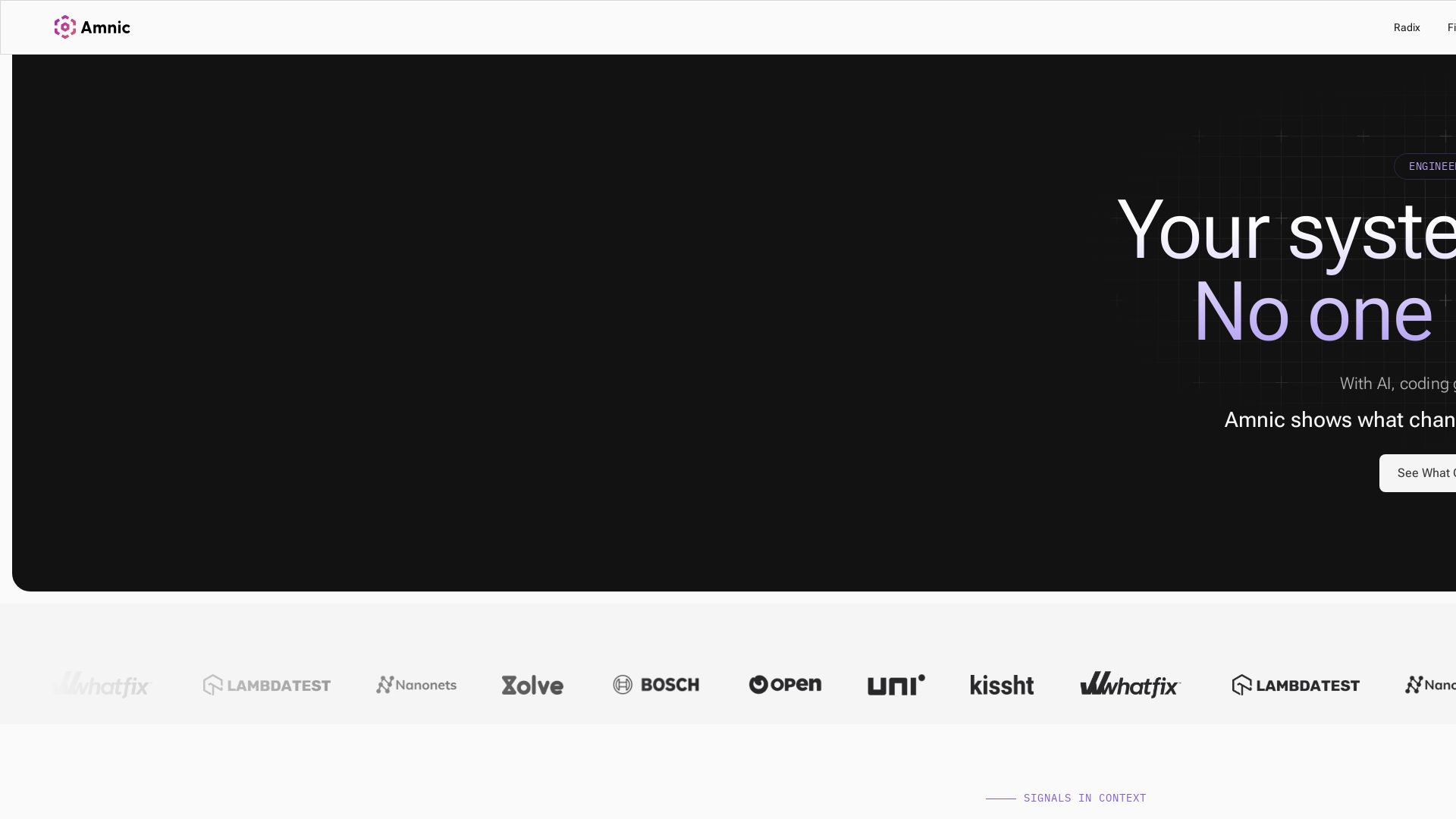
Amnic is an engineering intelligence platform that traces every code change to its downstream impact on cost, performance, and ownership. Stop cost spikes, find blast radius, and govern AI code.

Editor's Verdict
Key Takeaways
- Cost Management
- AI Traceability
- Deployment Traceability
- Context Graph
In-Depth Review: What is Amnic?
Amnic is an Engineering Intelligence Platform that connects signals from cost, runtime, and deployment into a single context graph. It shows what changed, what it affects, and who owns it. With products like Amnic FinOps for cloud cost management and Amnic Radix for engineering governance, Amnic helps teams prevent spend drift, trace AI-generated changes, and understand blast radius before merge. Integrates with 30+ tools including AWS, GitHub, Datadog, and Kubernetes.
Core Features
Cost Management
Links every dollar to the system change that caused it, enabling root cause analysis of cost spikes in seconds.
AI Traceability
Traces every change made by AI tools (e.g., Cursor, OpenAI) to downstream impact on services, cost, and ownership.
Deployment Traceability
Maps every deploy to its downstream impact across dependencies, SLO risk, and cost before merge.
Context Graph
Connects cost, runtime, and deployment signals into a single graph, with every signal traced back to the change that caused it.
Engineering Intelligence
Ties engineering and business outcomes together, providing a source of causation across the entire SDLC.
FinOps Suite
Manages cloud costs at scale, prevents spend drift before it compounds, and includes cost attribution, cost views, and cost control.
30+ Integrations
Connects to leading tools across SDLC including GitHub, Terraform, Datadog, PagerDuty, AWS, GCP, Azure, and more without migration.
Root Cause Analysis
Provides root cause for cost spikes, K8s drift, orphaned assets, and blast radius in seconds, eliminating dashboards and Slack threads.
Pricing
Free Audit
- 14-day read-only audit of engineering systems
- No commitment required
Enterprise
- Full Radix context graph
- Amnic FinOps suite
- AI traceability
- 30+ integrations
- Dedicated support
- Custom deployment
Pros and Cons
Pros
- Reduces Cloud CostsHelps achieve significant cost reduction (e.g., 30% reduction in NAT costs) by linking changes to cost spikes and optimizing resources.
- End-to-End TraceabilityTraces every change (human or AI) to its downstream impact on cost, performance, and ownership, eliminating blind spots.
- Unifies Data SilosConnects signals from cost tools, observability, CI/CD, and infrastructure into a single causation graph, reducing context switching.
- Engineer-FriendlyProvides actionable insights without requiring manual correlation, enabling engineers to quickly identify root causes and ownership.
- No Migration RequiredWorks with existing tools (Datadog, Terraform, GitHub, etc.) via read-only integrations, so no rip-and-replace needed.
Cons
- Setup OverheadInitial integration with existing toolchains may require configuration and time to map all signals correctly.
- Dependence on IntegrationsEffectiveness relies on having the supported tools; missing integrations may leave gaps in the context graph.
- Learning CurveTeams unfamiliar with causation graphs may need training to fully leverage the platform's insights.
- Pricing TransparencyEnterprise pricing is not publicly listed, requiring a sales demo to obtain quotes.
- Limited to Supported SignalsCurrently focuses on cost, runtime, and deployment signals; other domains (e.g., security) may not be covered.
Use Cases & Recommended Professions
CTO→ View Toolkit
Needs visibility into engineering impact on business outcomes and cost to make informed strategic decisions.
VP Engineering→ View Toolkit
Requires traceability of changes to ensure engineering governance and efficiency at the speed of AI.
FinOps Practitioner→ View Toolkit
Needs to correlate cloud cost spikes with specific system changes to manage spend and prevent drift.
DevOps Engineer→ View Toolkit
Benefits from automated root cause analysis of deployment issues and cost anomalies across the SDLC.
SRE (Site Reliability Engineer)→ View Toolkit
Uses context graph to understand blast radius of changes and maintain system reliability.
Engineering Manager→ View Toolkit
Needs to attribute costs and incidents to specific teams and changes to improve accountability and planning.
Frequently Asked Questions
Alternative AI Tools
View Detailed Comparison →
I Turned My Android Phone Into an MCP Server
Practical insights on agentic DevOps, AI workflows, and building with GitHub Copilot. Learn from software engineer Hector Flores.


Prospera Soft
Expert in product engineering, AI, DevOps, CloudOps, and data insights. Scalable solutions for startups to enterprises. 95% on-time delivery.

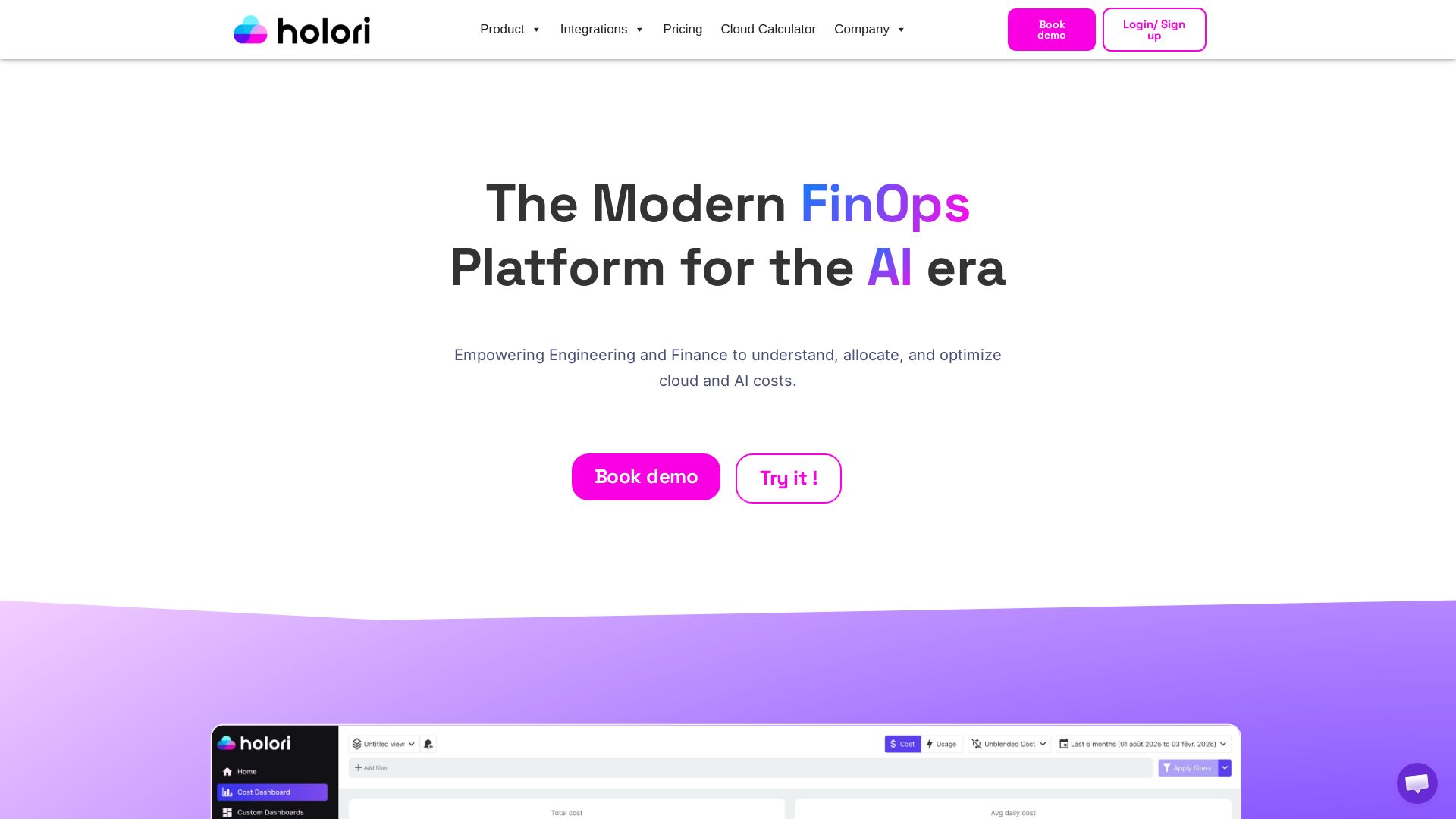
Holori
Empower engineering and finance to understand, allocate, and optimize cloud and AI costs. Consolidate multi-cloud expenses, use virtual tags, and get savings recommendations.

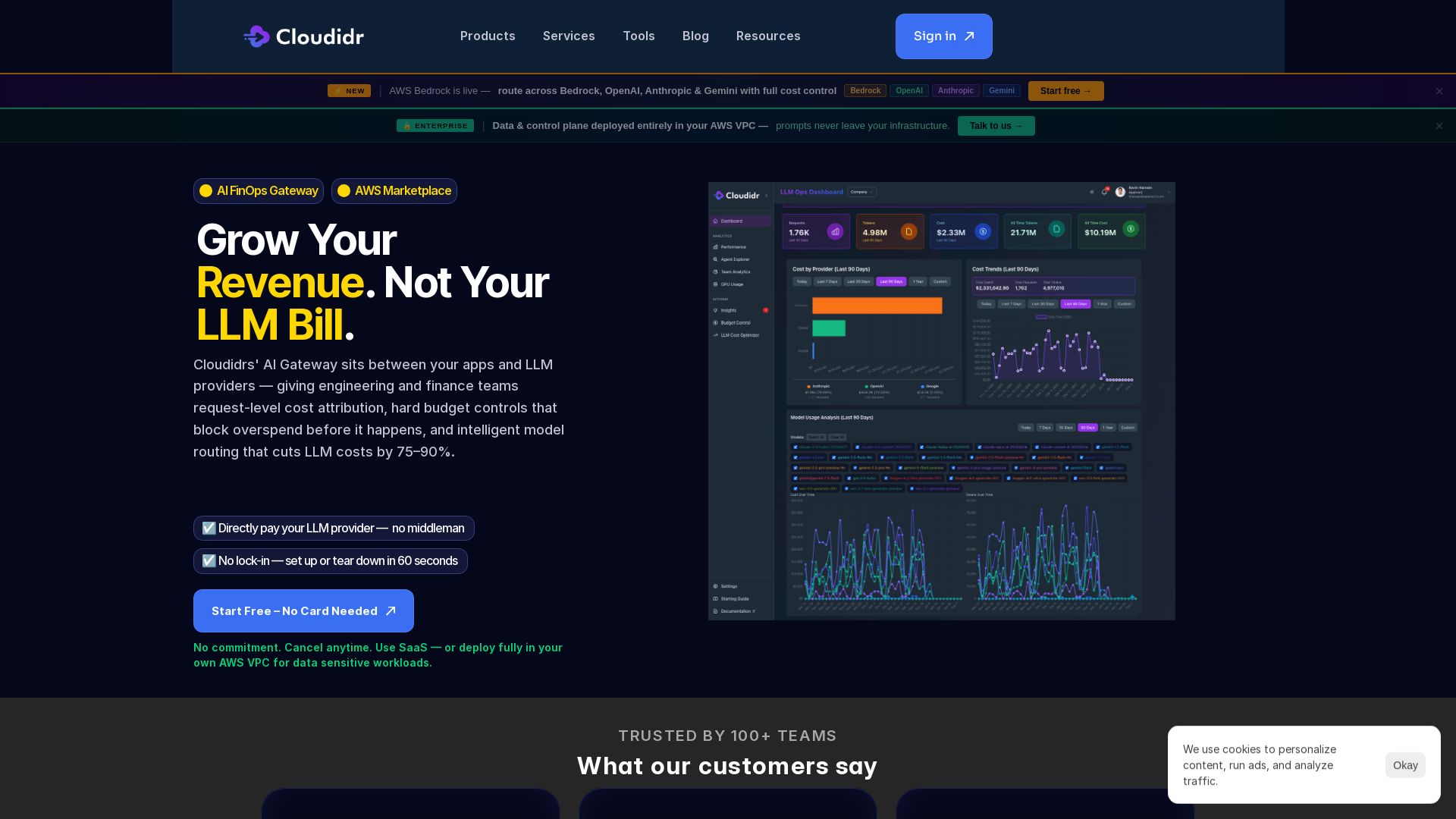
Cloudidr
Cloudidr’s AI Gateway gives engineering and finance teams request-level cost control, budget enforcement, and intelligent routing to slash LLM spend. Start free, no card needed.

Cloudchipr
Don't just track cloud costs—control them with Cloudchipr's AI agents. Automate workflows, gain granular visibility, and reduce waste across AWS, GCP, Azure.

Revefi
Autonomous AI agents optimize cost, performance, and quality across Snowflake, Databricks, BigQuery & LLMs. Reduce data costs by 30-70% in minutes.

Zeabur
Zeabur is an AI-powered DevOps platform that automates infrastructure, deploys any code, and offers servers, AI Hub, domains, email, and templates with predictable pricing.


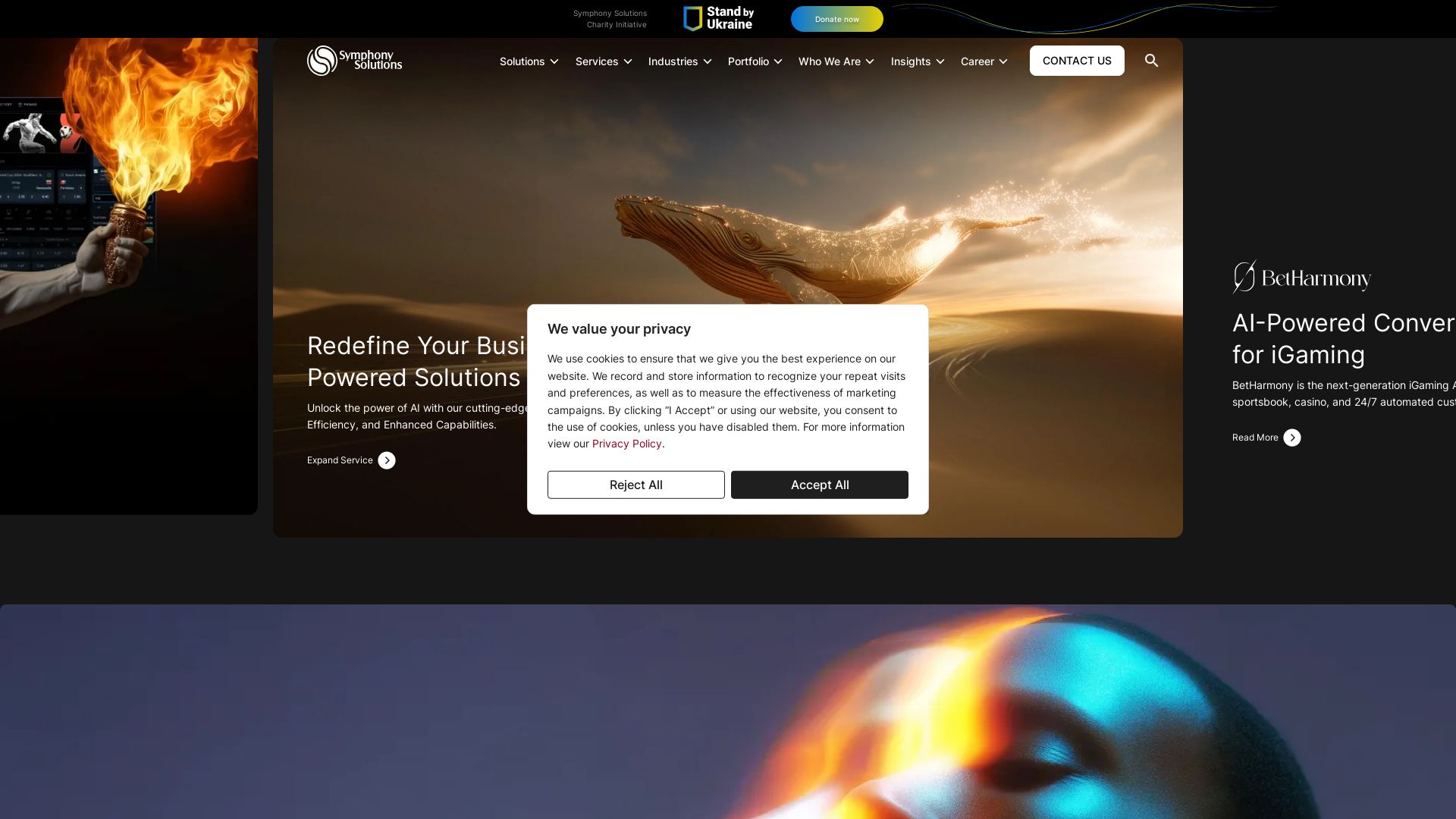
AI Agent Development Services
We deliver AI, cloud, and data solutions to accelerate business growth. Expertise in iGaming, airline, healthcare. Custom development and AI agents.

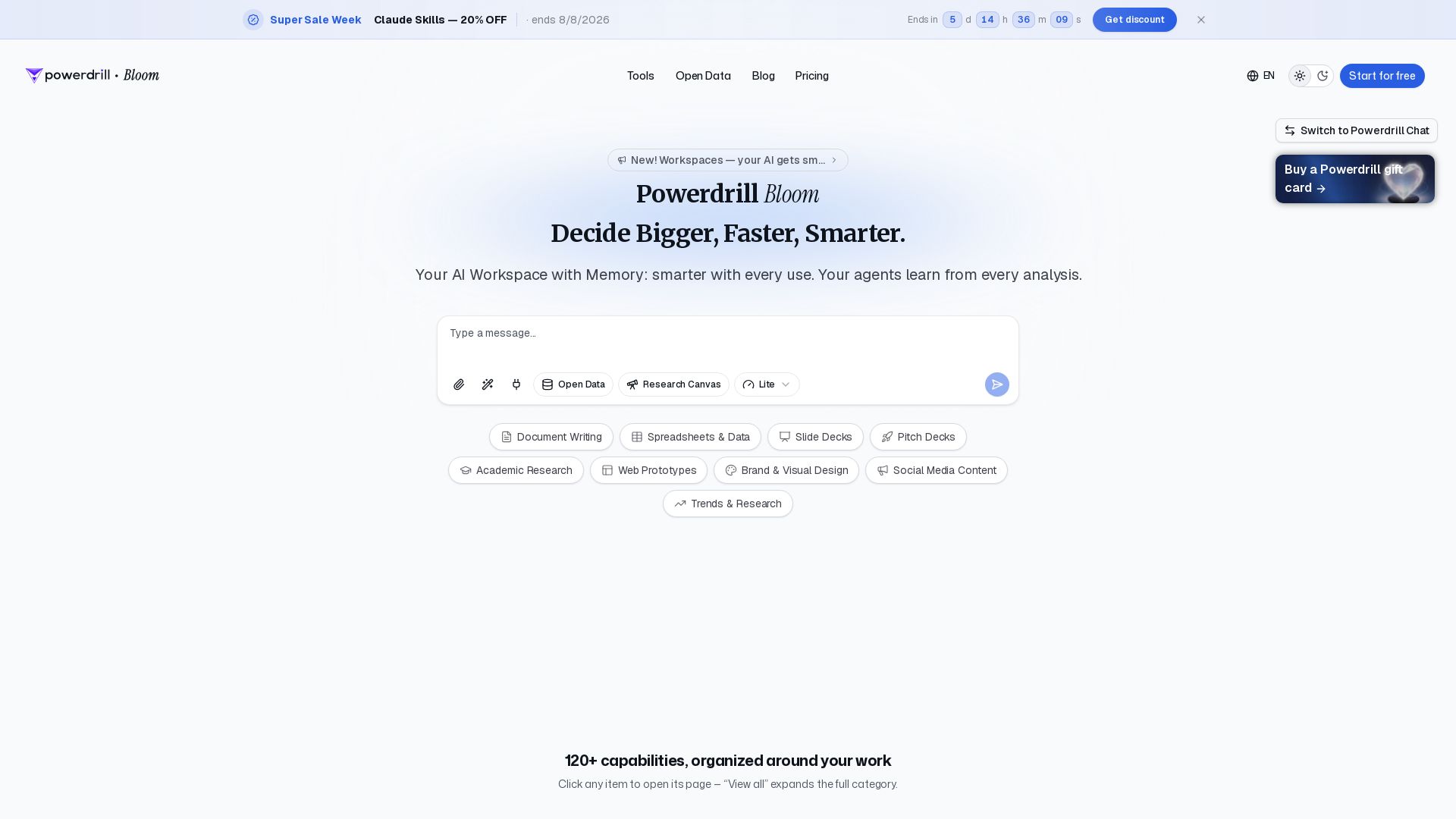
Powerdrill Bloom
Powerdrill Bloom: AI workspace with memory for data analysis, docs, research & more. Smarter with every use. Start free.

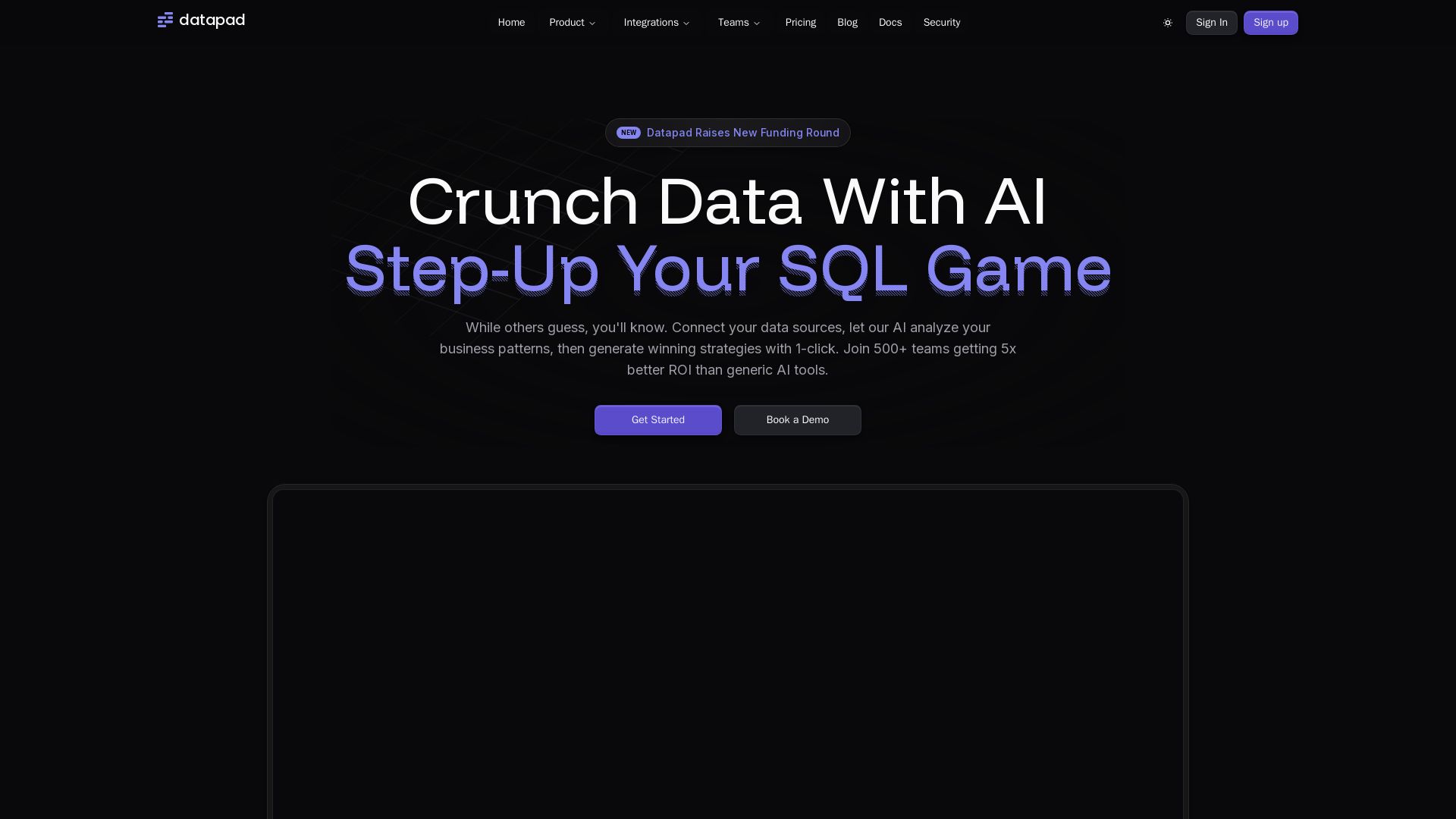
Datapad
Connect any data source, ask questions in plain English. Datapad's AI generates instant insights, dashboards, and strategies. Join 500+ teams getting 5x better ROI.

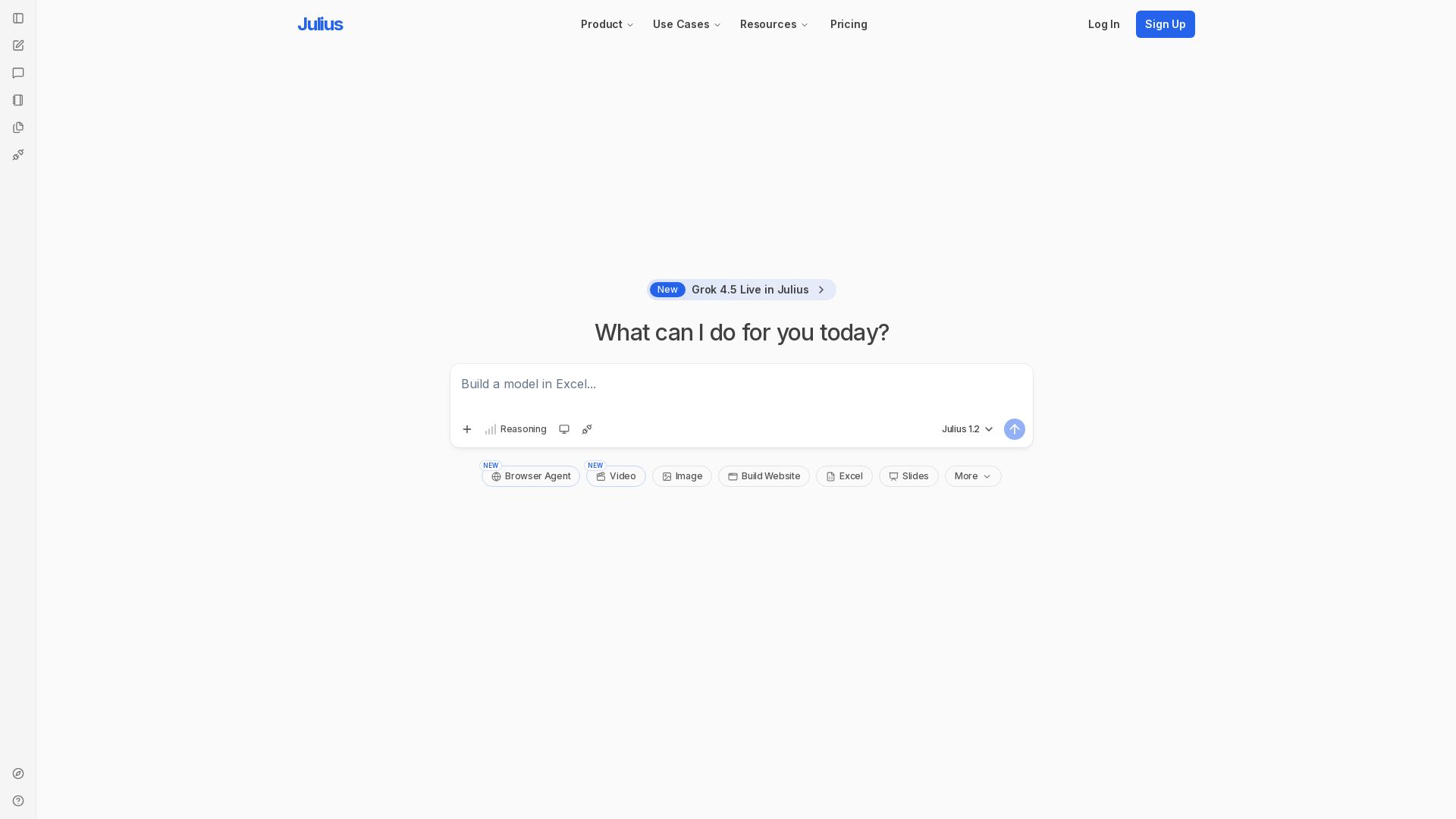
Julius AI
Unlock insights with Julius - AI assistant for data analysis, Excel models, website building, and more. Sign up free.

ℹ️ Curation Disclosure: The overview and features of Amnic were synthesized using AI and fact-checked by our curation team to ensure accuracy.