dltHub
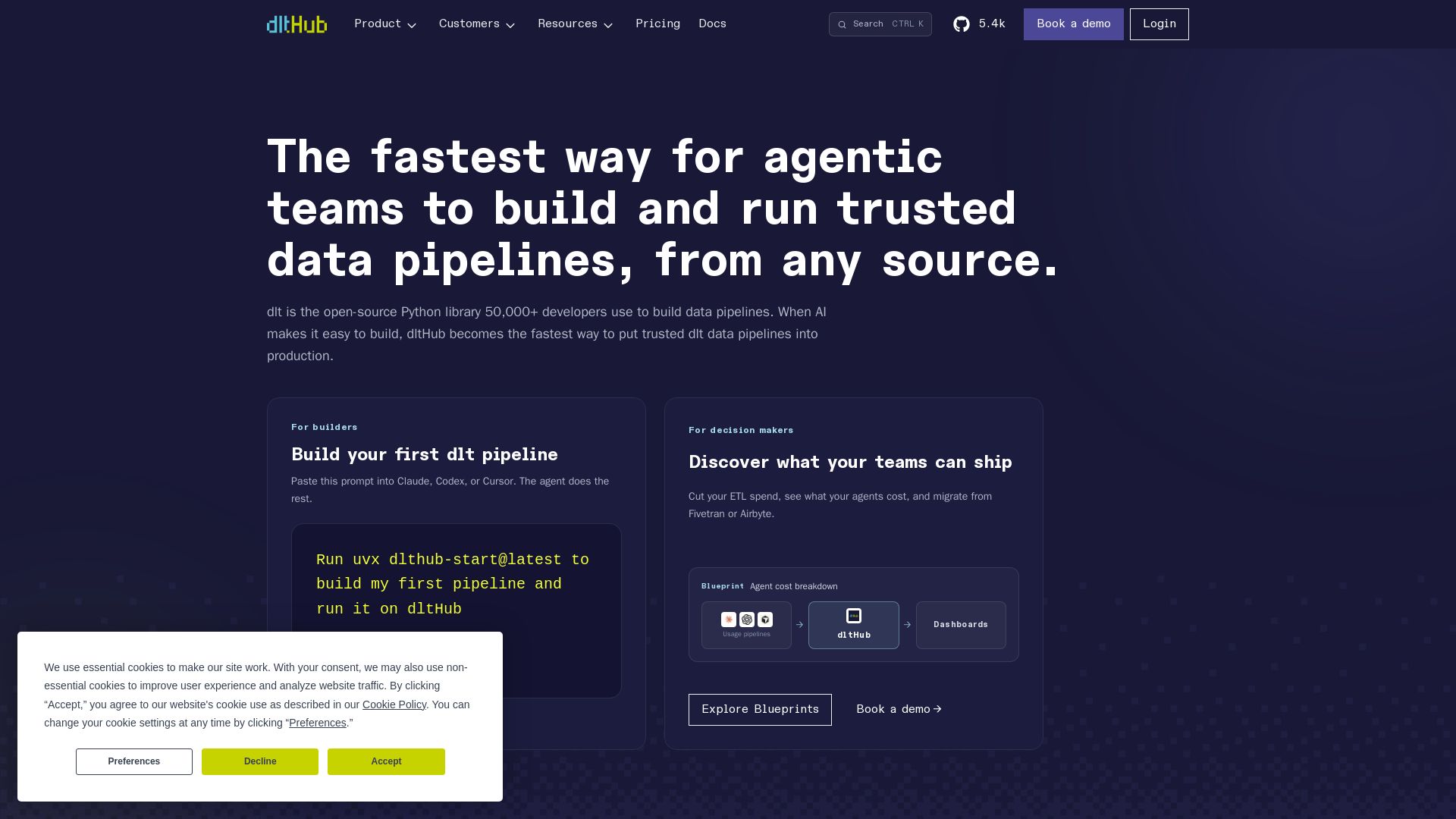
Build data pipelines with dlt, the open-source Python library trusted by 50k+ developers. Use agents, deploy with one command, and migrate from Fivetran or Airbyte 90% faster.
Editor's Verdict
Key Takeaways
- Open-source ingestion library
- Agentic workflows
- Blueprints for data workflows
- dltHub Context
In-Depth Review: What is dltHub?
dltHub is the managed platform for dlt, the leading open-source Python library for building data pipelines. It enables developers and AI agents to create, deploy, and monitor pipelines from any source, with built-in blueprints for common workflows like agent tracing, financial analysis, and vendor migration. With dltHub, teams can cut ETL costs, reduce migration time by 90%, and move from prototype to production in minutes.
Core Features
Open-source ingestion library
dlt is a free, Apache 2.0 licensed Python library for building data pipelines from any source, with reliable ingestion and loading.
Agentic workflows
Use natural language prompts to let AI agents scaffold, deploy, and debug dlt pipelines, guided by dltHub's predefined skill sequences.
Blueprints for data workflows
Ready-made end-to-end builds from specific sources to production dashboards or APIs, covering agent distillation, finance, and platform migration.
dltHub Context
Enriched context on over 10,100 REST APIs allows agents to code pipelines quickly, with tailored outputs for data users.
Managed runtime & observability
dltHub provides hosted runtime, scheduled deployments, alerting, data quality metrics, and an observability dashboard for production pipelines.
AI Workbench
Integrated environment for agents (Claude Code, Codex, Cursor) to build, test, and deploy pipelines directly within dltHub.
Migration services
Agent-led migration from legacy vendors like Fivetran or Airbyte, converted to dltHub pipelines 90% faster, with coaching on AI-forward data engineering.
Collaboration & governance
Team collaboration workflows, role-based access control, audit logs, and enterprise security controls for governed data operations.
Pricing
dlt
- Open-source, code-first ingestion library
- Reliable ingestion and loading
- Limited verified OSS connectors
- AI help and community support
dltHub
- Everything in dlt, plus:
- Managed runtime
- Hosted Marimo notebooks
- AI Workbench (Claude Code · Codex · Cursor)
- Data quality metrics & checks
- Observability dashboard
- Collaboration workflows for teams
- Eligible for volume discounts
- Source-available license: AI workbench, MSSQL Change Tracking, Iceberg, transformations
- 500 credits / month included
Enterprise
- Custom credits and volume pricing
- Enterprise security and governance controls
- Role-based access control (RBAC) and audit logs
- SLA and tailored support options
- Custom onboarding and architecture guidance
dltHub Annual
- Everything in dltHub monthly plan
- Save 17% with annual commitment
Pros and Cons
Pros
- Open-source and free foundationdlt is Apache 2.0 licensed, always free, and used by thousands of teams for code-first data pipeline development.
- Agentic pipeline developmentAI agents can build, deploy, and maintain pipelines from natural language prompts, accelerating development by 10x.
- Extensive source coveragedltHub Context covers over 10,100 REST APIs, enabling quick integration with SaaS tools, databases, and destinations.
- Fast migration from legacy vendorsAgent-led migration from Fivetran, Airbyte, or custom scripts to dltHub is 90% faster, with handover of production-ready pipelines.
- Composable blueprintsReady-made data workflows for specific use cases (e.g., agent traces, finance, platform migration) allow quick deployment to dashboards.
Cons
- Advanced features require paid planManaged runtime, observability, AI Workbench, and collaboration are only available in dltHub (paid) or Enterprise plans.
- Credit-based usage pricingdltHub uses a credit system that may require careful monitoring of usage beyond the 500 credits/month included in the base plan.
- Python-dependentdlt is a Python library, so non-Python developers may face a learning curve to build and maintain pipelines.
- Limited OSS connectors in free tierThe free dlt plan offers limited verified OSS connectors; full access to verified sources requires dltHub.
- Still evolving toolingAs a relatively new platform, some features (e.g., agentic workflows, blueprints) may still be maturing compared to legacy ETL tools.
Use Cases & Recommended Professions
Data Engineer→ View Toolkit
Needs to build and maintain trusted data pipelines from various sources to destinations, with minimal hand-coding and maximum reliability.
Analytics Engineer→ View Toolkit
Requires self-service pipeline creation and data modeling to deliver insights quickly, often with agentic assistance.
AI Engineer / ML Engineer→ View Toolkit
Ingests model traces, logs, and other AI-generated data for fine-tuning, monitoring, and distillation of specialized models.
Platform Engineer→ View Toolkit
Manages data infrastructure for the organization, needs to migrate off expensive legacy ETL and provide governed, scalable data pipelines.
CTO / CPTO→ View Toolkit
Oversees data strategy and wants to reduce ETL costs, accelerate time-to-insight, and adopt AI-forward data engineering practices.
Data Scientist→ View Toolkit
Needs to access and explore production data for analysis and modeling, often using notebooks and requiring quick pipeline setup from APIs.
Frequently Asked Questions
Alternative AI Tools
View Detailed Comparison →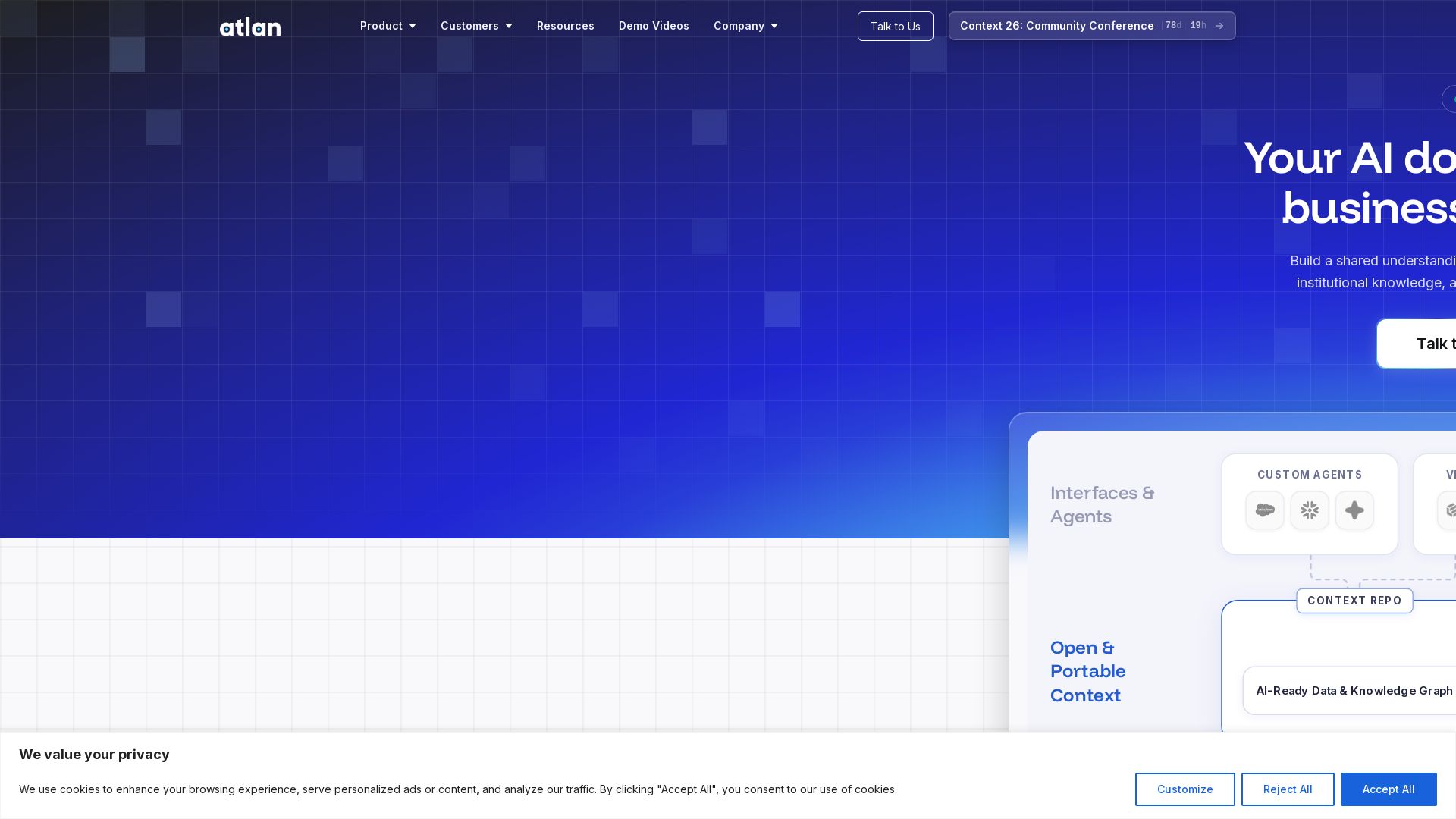
Atlan
Unify data, business logic, and knowledge into a living graph. Reduce AI hallucinations and ship agents that understand your business.

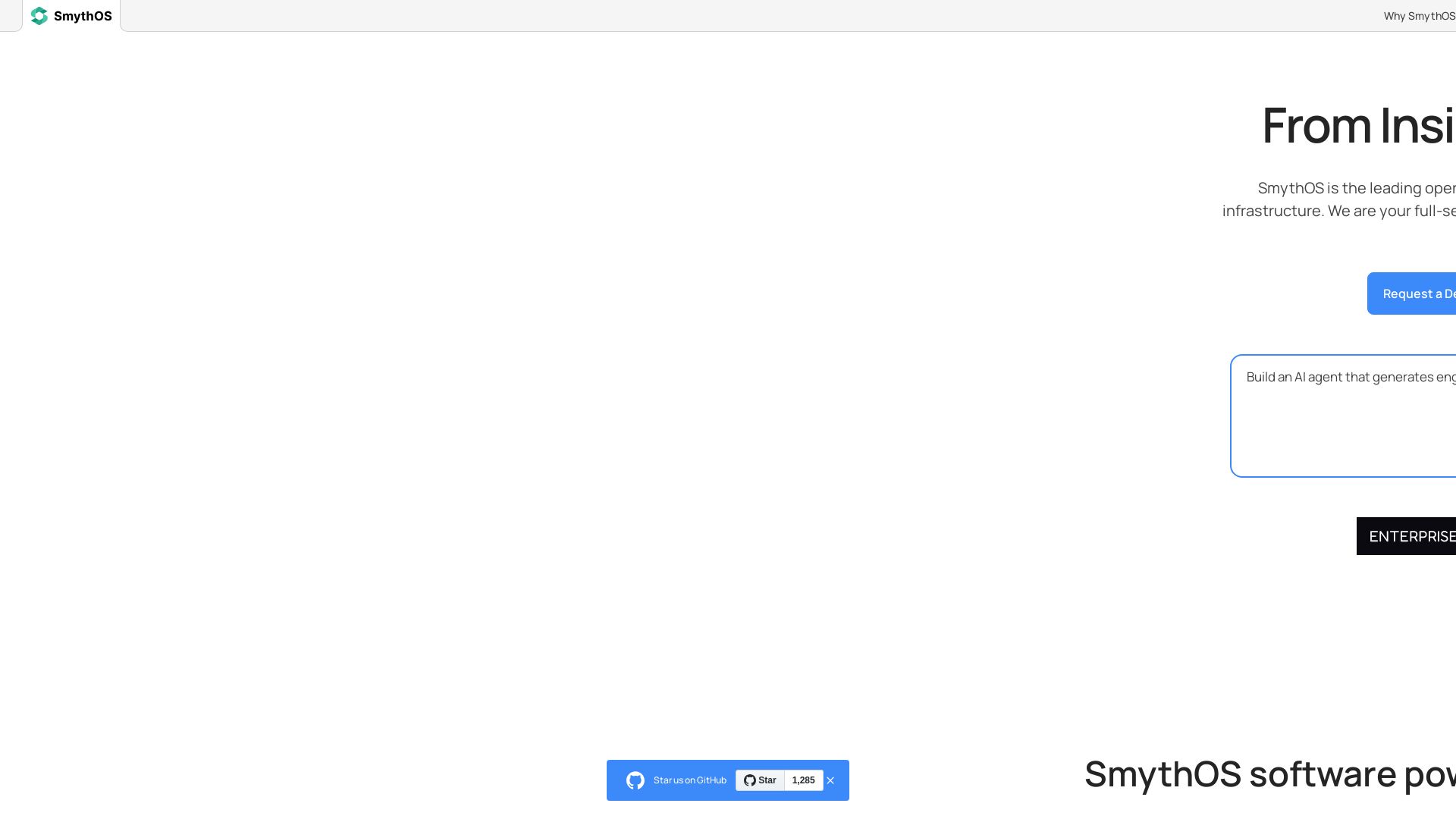
SmythOS
Build, test, and deploy secure AI agents at scale with SmythOS. Open-source runtime, SDK, and visual studio. Democratizing AI agent development.

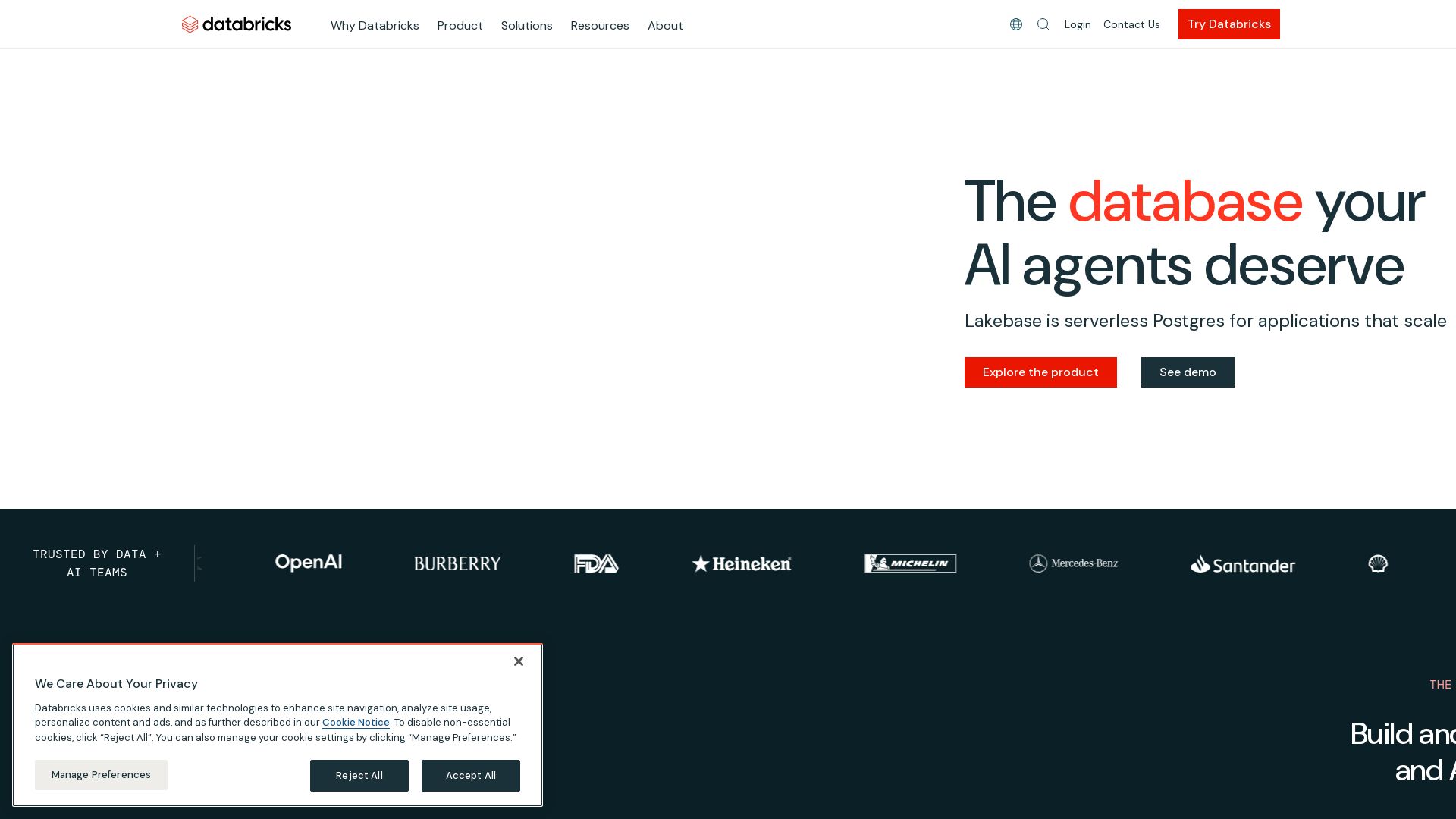
Databricks
Build AI agents, apps, and analytics on your data with Lakebase, the serverless Postgres database for scalable applications. Explore now.

What is crewAI?
Discover how IBM's AI agents unlocked $4.5B in productivity gains. Explore watsonx, IBM Bob, and hybrid cloud to drive smarter business outcomes.

RAGFlow
Build superior context for AI agents with leading open-source RAG. ETL, hybrid search, agent orchestration. Trusted by enterprises.

PrometAI
Generate investor-ready business plans in minutes with PrometAI's AI. Trusted by 100,000+ founders. Start for free, no guesswork.

Datapad
Connect any data source, ask questions in plain English. Datapad's AI generates instant insights, dashboards, and strategies. Join 500+ teams getting 5x better ROI.

Stacklok
Run AI agents securely on your Kubernetes with full governance, control, and OTel instrumentation. Trusted by Fortune 500, built by Kubernetes co-founders.

AG2
Build production-ready AI agents in minutes with AG2. Simple syntax, built-in patterns, human-AI collaboration. Open-source multi-agent framework.

AIGenerator
Plan, launch, and grow your business with AI. Generate business plans, ads, and content in minutes. Free to start.

Cequence AI Gateway
Safely connect AI agents to business apps with enterprise-grade security, OAuth 2.1, and MCP. Unlock agentic AI productivity.

PUBLICMCP
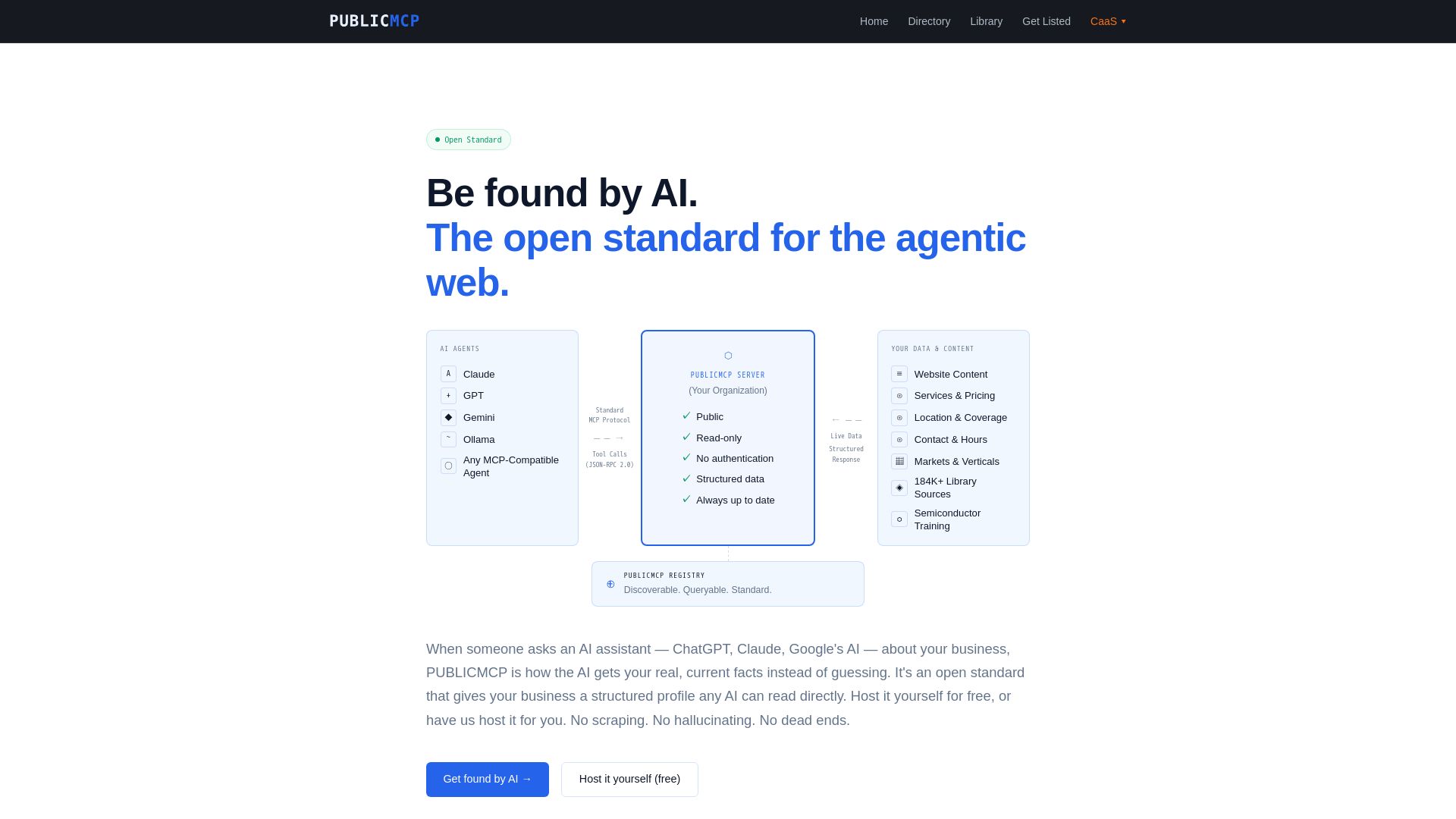
Make your business, library, or nonprofit findable by AI agents. Free self-hosting or managed hosting. Get listed in the directory.

ℹ️ Curation Disclosure: The overview and features of dltHub were synthesized using AI and fact-checked by our curation team to ensure accuracy.