
Pydantic
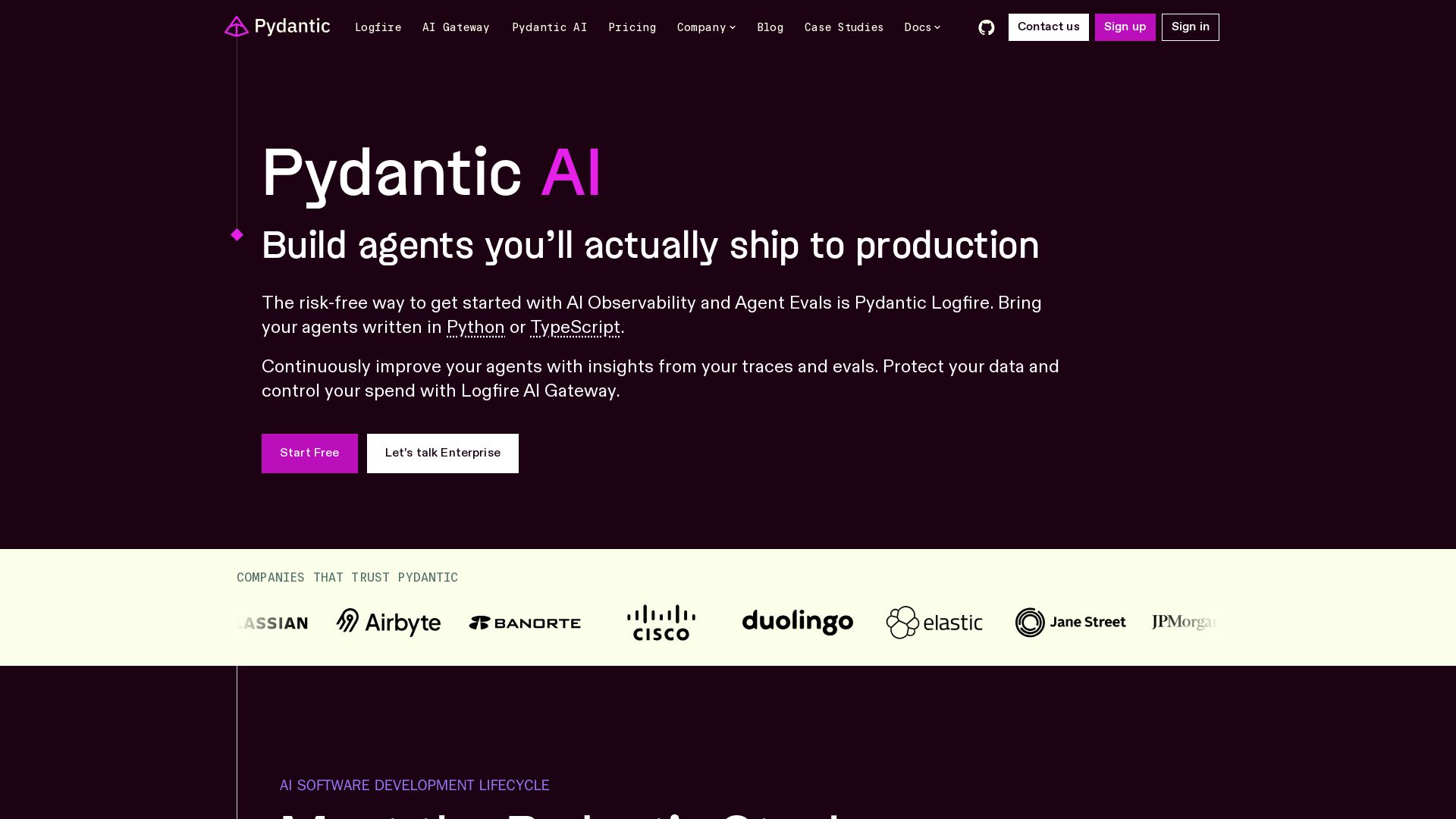
Build, iterate, and deploy type-safe AI apps with Pydantic Validation, AI, Logfire, and Evals. Open source, developer-first.
Editor's Verdict
Key Takeaways
- End-to-end AI Stack
- Open Source Foundation
- Multi-Language Support
- AI Observability with Logfire
In-Depth Review: What is Pydantic?
Pydantic provides a comprehensive AI engineering stack built on open source principles. From data validation with Pydantic Validation to agent frameworks with Pydantic AI, observability with Logfire, and evaluation with Evals, we enable end-to-end development of type-safe AI applications. Trusted by enterprises, our stack supports Python, TypeScript, Rust, and Go, focusing on developer experience and production readiness.
Core Features
End-to-end AI Stack
From building with Pydantic Validation and Pydantic AI to deploying and monitoring with Logfire, the entire AI lifecycle is covered with type safety and observability.
Open Source Foundation
Built on transparency and collaboration; all core libraries (Pydantic Validation, Pydantic AI) are MIT-licensed and free to use.
Multi-Language Support
Build type-safe applications in Python, TypeScript, Rust, and Go, with strong developer experience across languages.
AI Observability with Logfire
Monitor logs, spans, metrics, and traces in production with OpenTelemetry integration, AI-specific monitoring, and customizable dashboards.
AI Gateway
Model routing, cost control, and spend management across multiple LLM providers with built-in and BYO credentials.
Pydantic AI Agent Framework
Build type-safe, multi-agent systems with MCP support, graphs, and seamless integration with the rest of the Pydantic stack.
Pydantic Evals
Code-first evaluations and assertions to iterate and improve model responses and system behavior.
Flexible Deployment
Deploy Logfire on cloud (managed or dedicated) or self-hosted on your own Kubernetes cluster via Helm chart.
Pricing
Personal
- 1 seat (admin)
- 2 guests (read-only)
- 3 projects
- 10M logs/spans/metrics included
- 30-day data retention
- EU or US region
- Pydantic AI Gateway: up to 3 BYO provider credentials (0% markup), built-in providers with 5% markup
Team
- Everything from Personal
- Up to 12 seats (5 included, $25/extra seat)
- 10 guests (read-only)
- 5 projects
- $2/M additional records over 10M
- Price cap available
- Pydantic AI Gateway: up to 3 BYO provider credentials (0% markup), built-in providers with 5% markup
Growth
- Everything from Team
- Unlimited seats
- Unlimited guests
- Unlimited projects
- Priority support
- Extended data retention up to 90 days
- Data deletion (GDPR)
- Boilerplate BAA (HIPAA)
- Pydantic AI Gateway: unlimited BYO provider credentials (0% markup), built-in providers with 3% markup
Enterprise Cloud
- Everything from Growth
- Fully managed cloud
- SSO (Okta, etc.)
- Custom data retention
- SLA
- Audit log API
- Custom BAA (HIPAA)
- Pydantic AI Gateway as add-on: unlimited BYO and built-in providers
Enterprise Dedicated
- Everything from Enterprise Cloud
- Single-tenant infrastructure
- Dedicated VPC, K8s, Postgres, object storage
- CMEK
- Optional VPC Peering
Enterprise Self-hosted
- Everything from Enterprise Dedicated
- Open-sourced Helm chart on your Kubernetes cluster
- Postgres + any S3-compatible backend
- On-prem (full control)
- 24/7 support + setup assistance
Pros and Cons
Pros
- Comprehensive AI StackCovers validation, agent framework, observability, and evals in one ecosystem, reducing integration friction.
- Open Source & Community-DrivenCore libraries are MIT-licensed, fostering transparency and community contributions.
- Generous Free TierPersonal plan provides 10M records free with full features, ideal for prototyping and side projects.
- Multi-Language and Multi-Provider SupportSupports Python, TypeScript, Rust, Go, and integrates with various LLM providers through AI Gateway.
- Enterprise-Grade ObservabilityLogfire leverages OpenTelemetry for traces, logs, and metrics, with advanced AI-specific monitoring and self-hosted options.
Cons
- Learning Curve for Full StackThe breadth of tools may require time to understand and integrate all components effectively.
- Cost at ScaleWhile free tier is generous, high-volume usage on Team/Growth plans incurs $2/M extra, and Enterprise plans are custom-priced.
- Limited AI Gateway Markup on Lower PlansPersonal and Team plans have 5% markup on built-in providers; only Growth+ have unlimited BYO with 0% markup.
- Data Retention on Free TierOnly 30-day retention on Personal and Team plans; longer retention requires Growth or Enterprise.
- Self-Hosted ComplexitySelf-hosted Enterprise requires managing Kubernetes, Postgres, and S3, which may be non-trivial for smaller teams.
Use Cases & Recommended Professions
AI/ML Engineer→ View Toolkit
Build and deploy production-ready AI agents with type safety, evals, and observability.
Software Engineer→ View Toolkit
Integrate data validation and AI capabilities into applications using Python, TypeScript, Rust, or Go.
DevOps / Platform Engineer→ View Toolkit
Monitor AI infrastructure with Logfire, manage costs via AI Gateway, and deploy self-hosted or cloud.
Data Scientist→ View Toolkit
Use Pydantic Evals to iteratively improve model outputs and validate data pipelines.
Product Manager (AI Products)→ View Toolkit
Track system performance, usage, and cost across AI features using Logfire dashboards.
CTO / Technical Lead→ View Toolkit
Evaluate and adopt a unified AI engineering stack that simplifies building, monitoring, and scaling AI applications.
Frequently Asked Questions
Alternative AI Tools
View Detailed Comparison →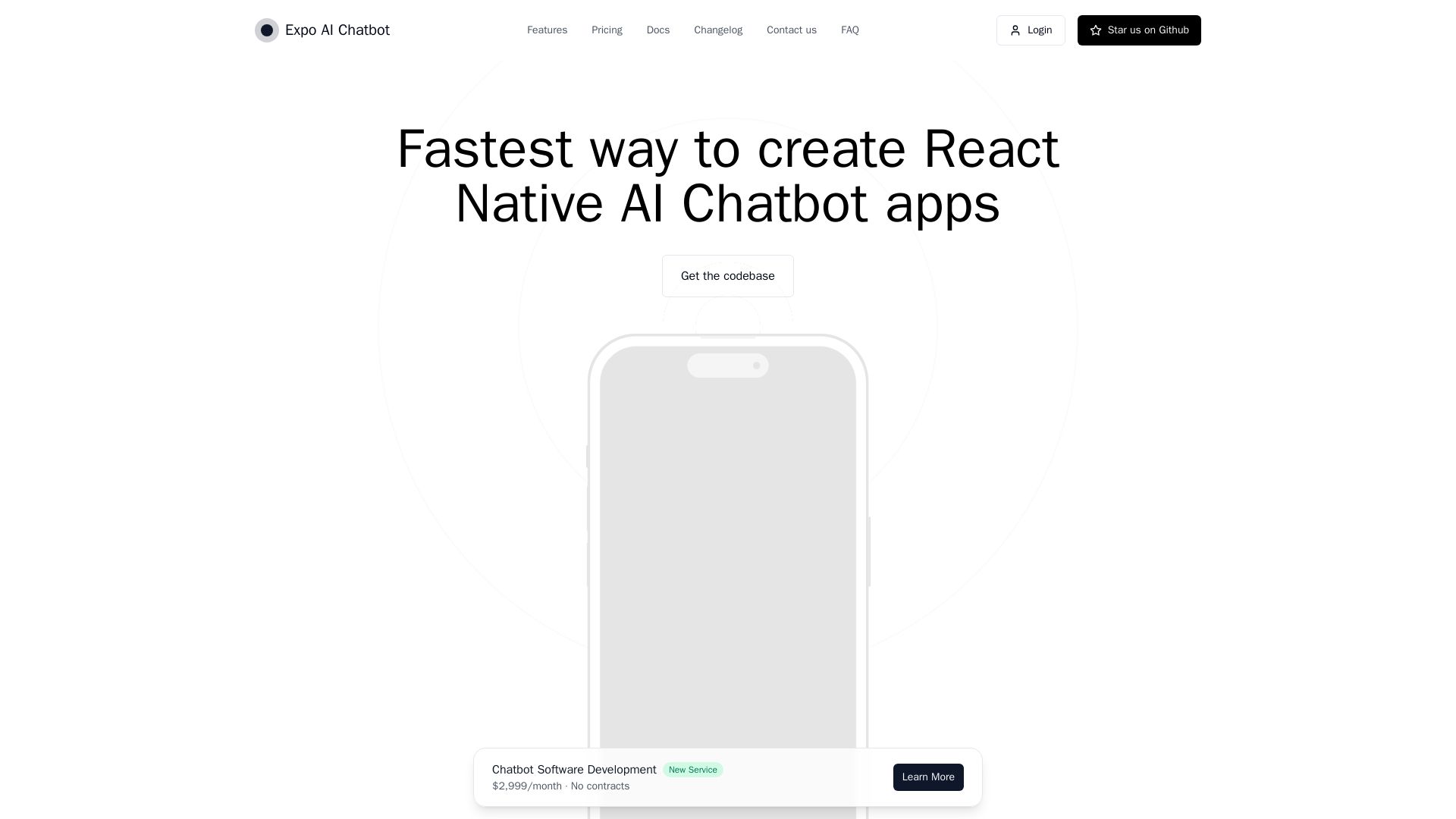
Expo AI Chatbot
Build AI chatbot apps for iOS, Android & web with Expo SDK 54, AI SDK 5, voice, long-term memory, and more. Open-source codebase.

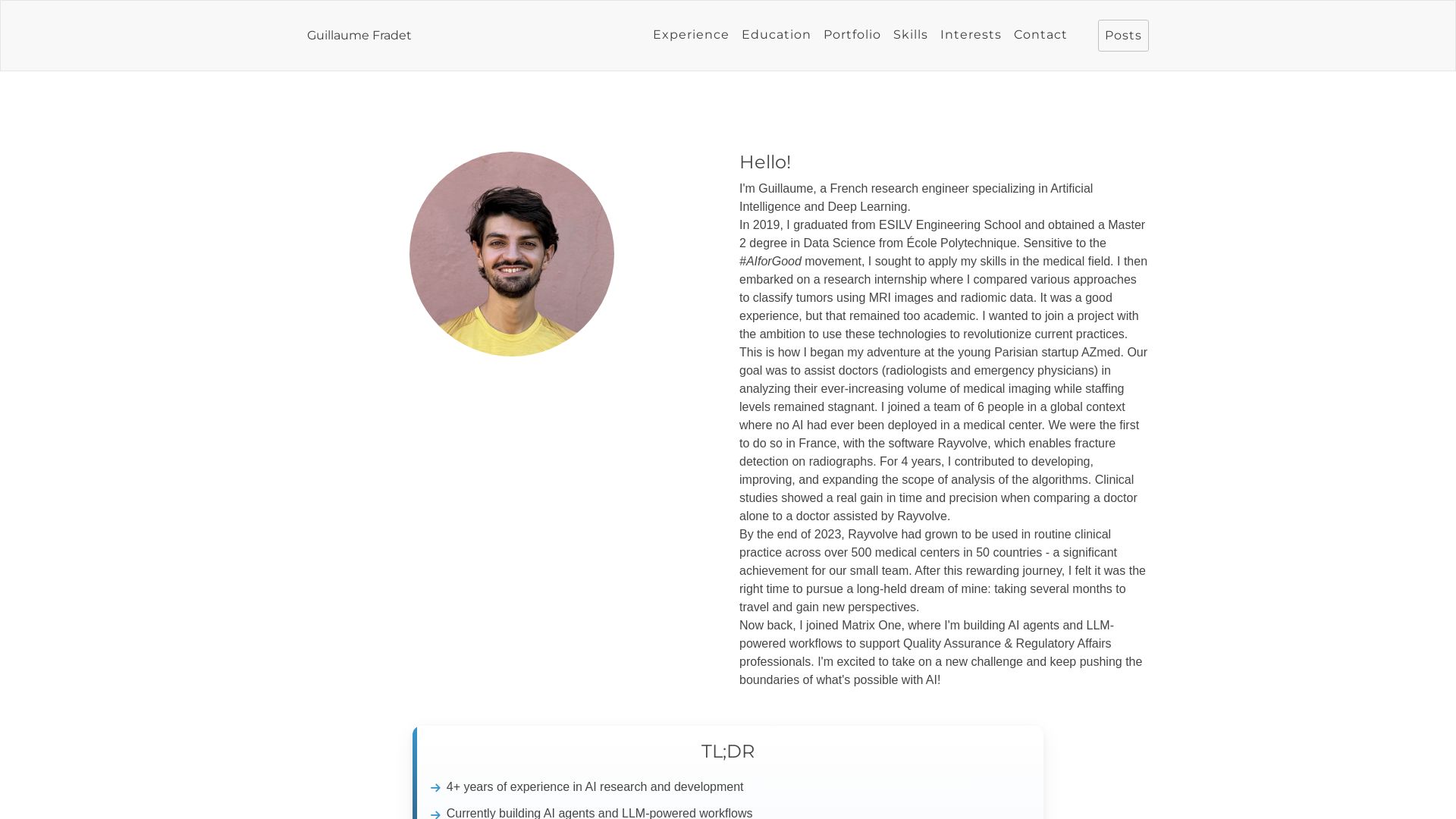
Making AI think and act: my approach to the Hugging Face AI ...
Experienced AI engineer specializing in medical imaging and LLM-powered agents. Built globally deployed radiology AI at AZmed. Now building AI agents at Matrix One.

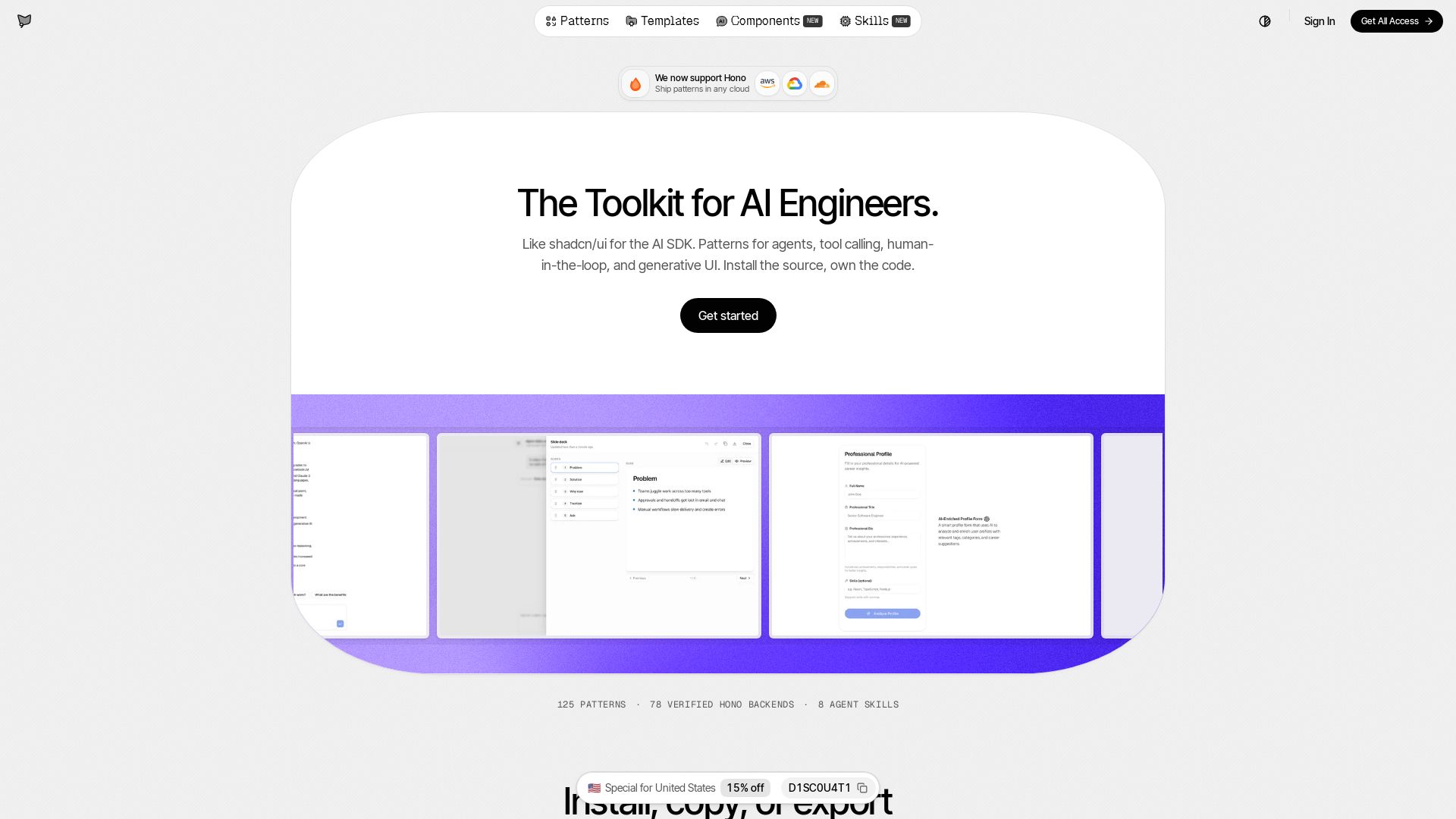
AI SDK AGENTS
The toolkit for AI engineers. Install, copy, or export 125 AI SDK patterns for agents, tool calling, human-in-the-loop, and generative UI. Full source code, own your stack.

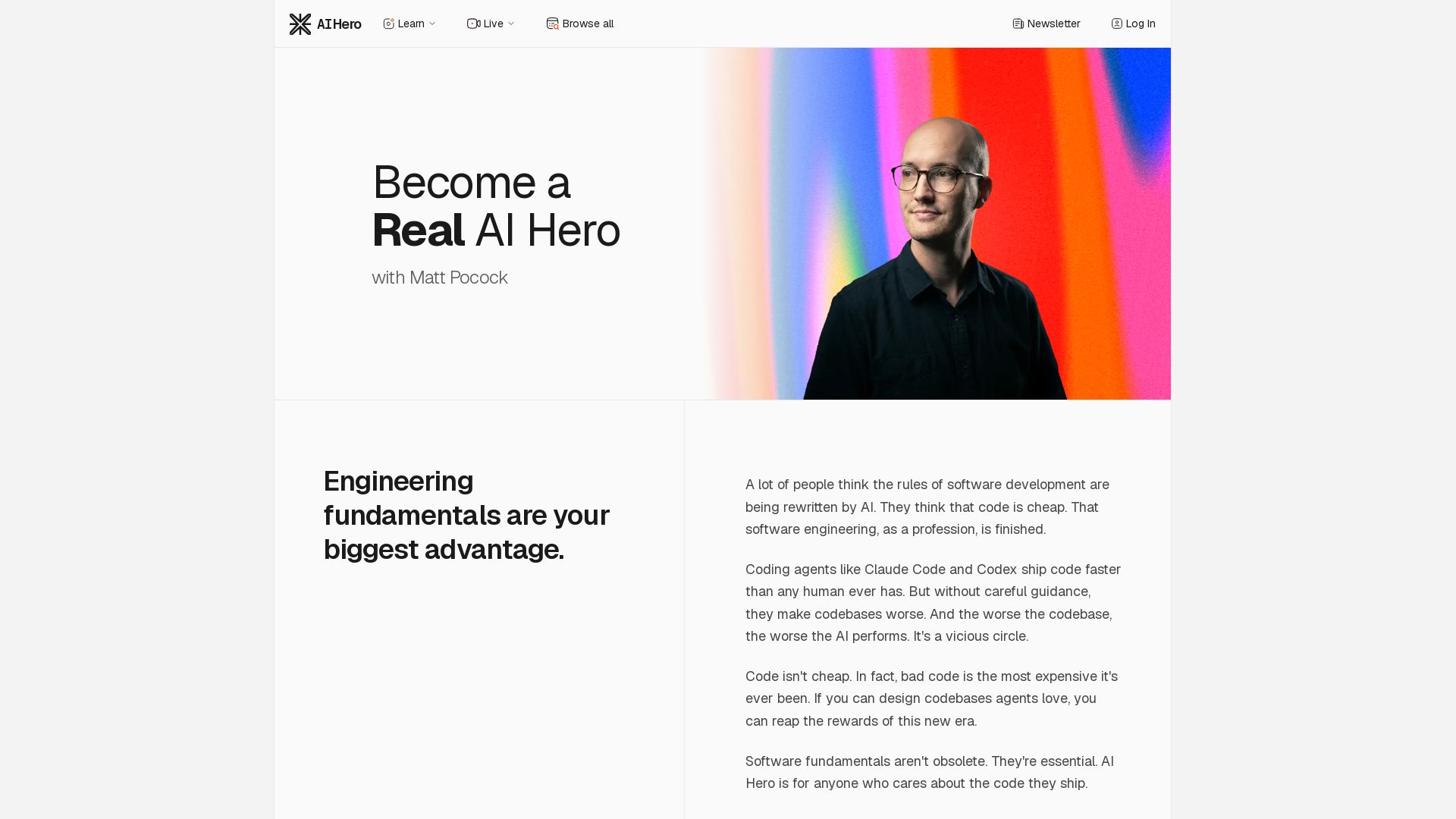
AI Hero
Master AI-assisted coding with proven engineering fundamentals. Learn to make codebases agents love, control AI output quality, and build real skills. Join 70k+ developers.

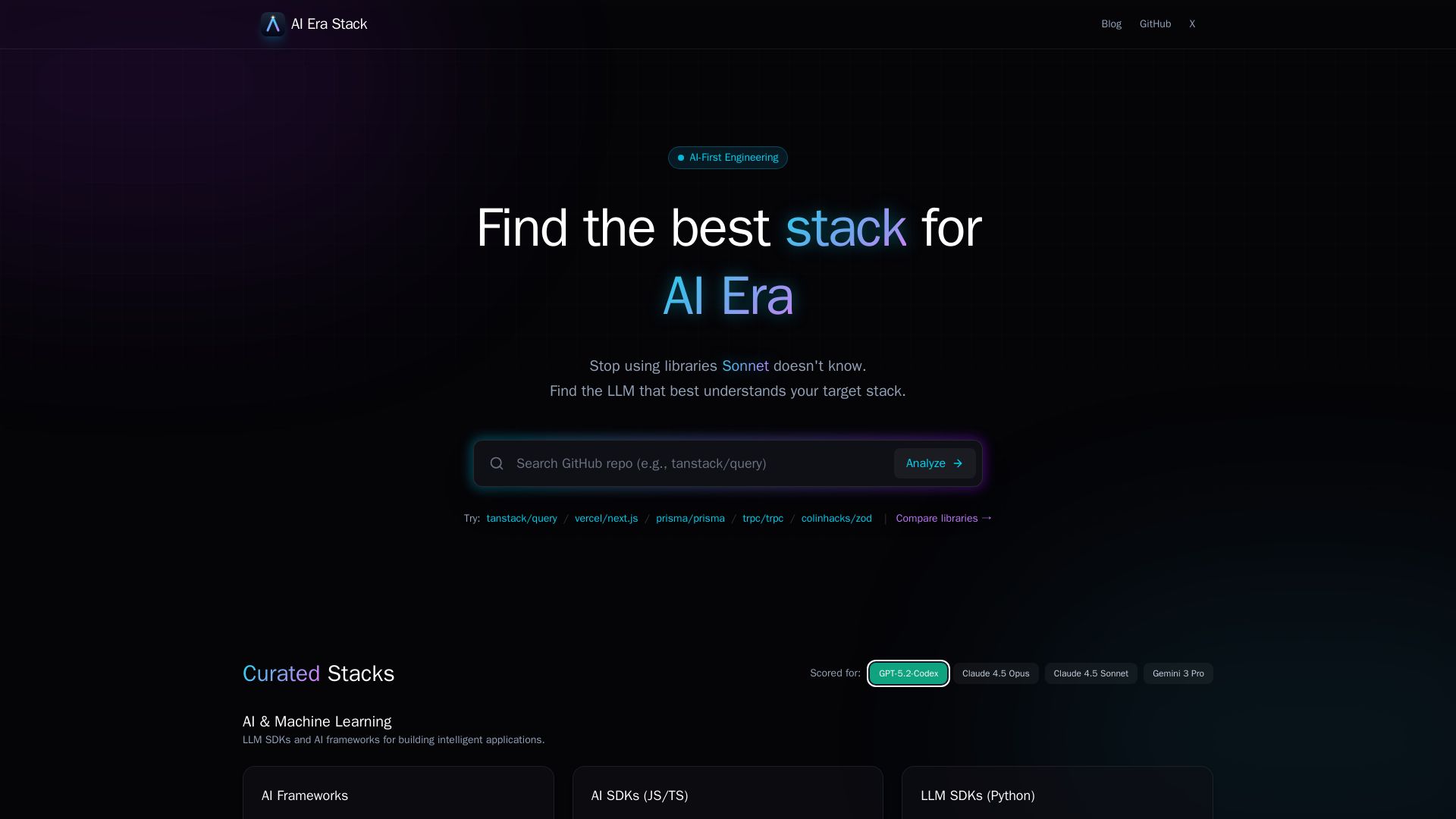
AI Era Stack
Discover which GitHub projects are best understood by LLMs like GPT, Claude, Gemini. Score based on AI coverage, adoption, and more. Choose stacks AI knows.
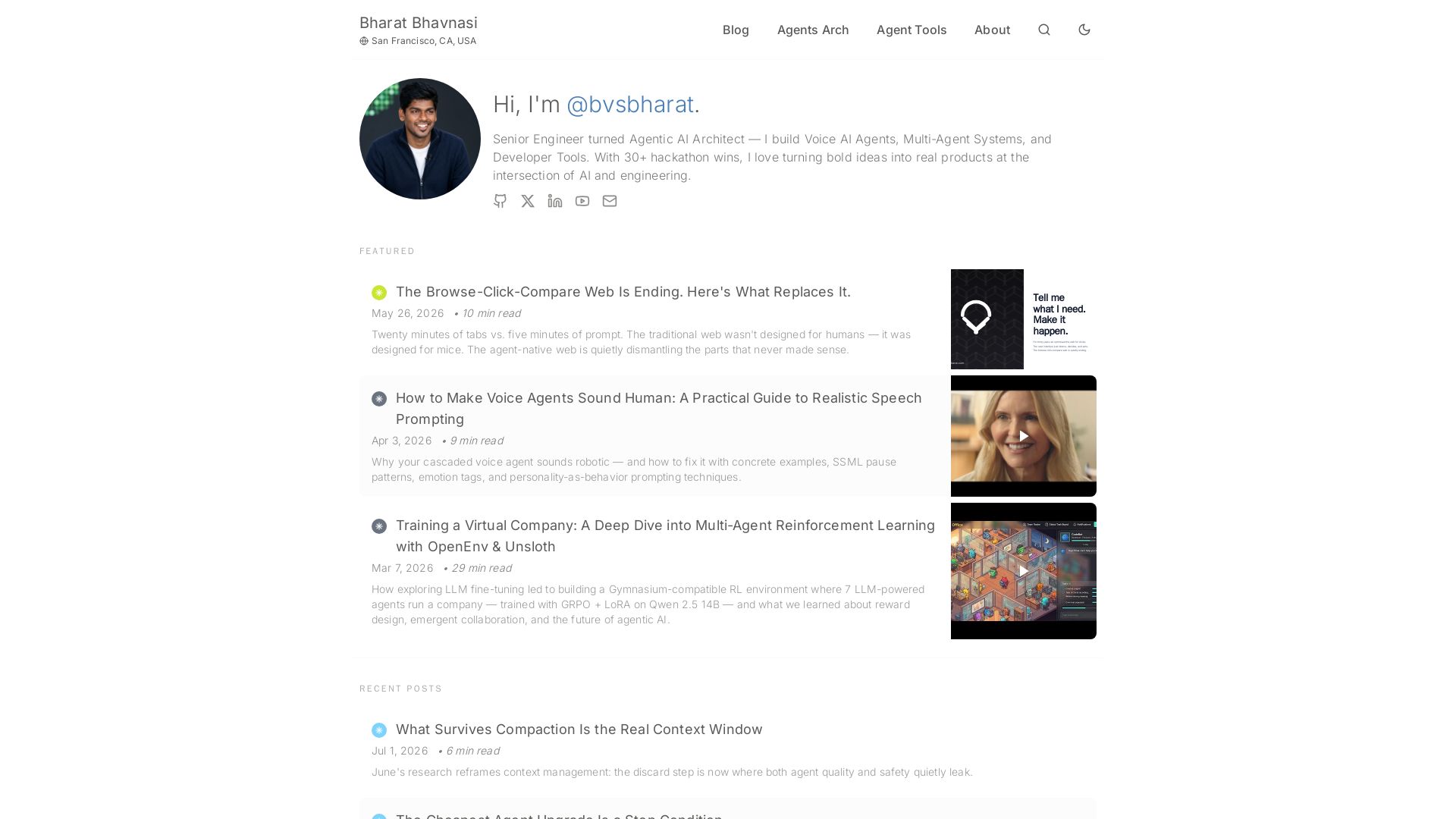
I Tested Every Major Open-Source AI Agent SDK So You Don't ...
Explore insights on Voice AI Agents, Multi-Agent Systems, and Developer Tools from a 30+ hackathon winner. Practical guides and cutting-edge research.

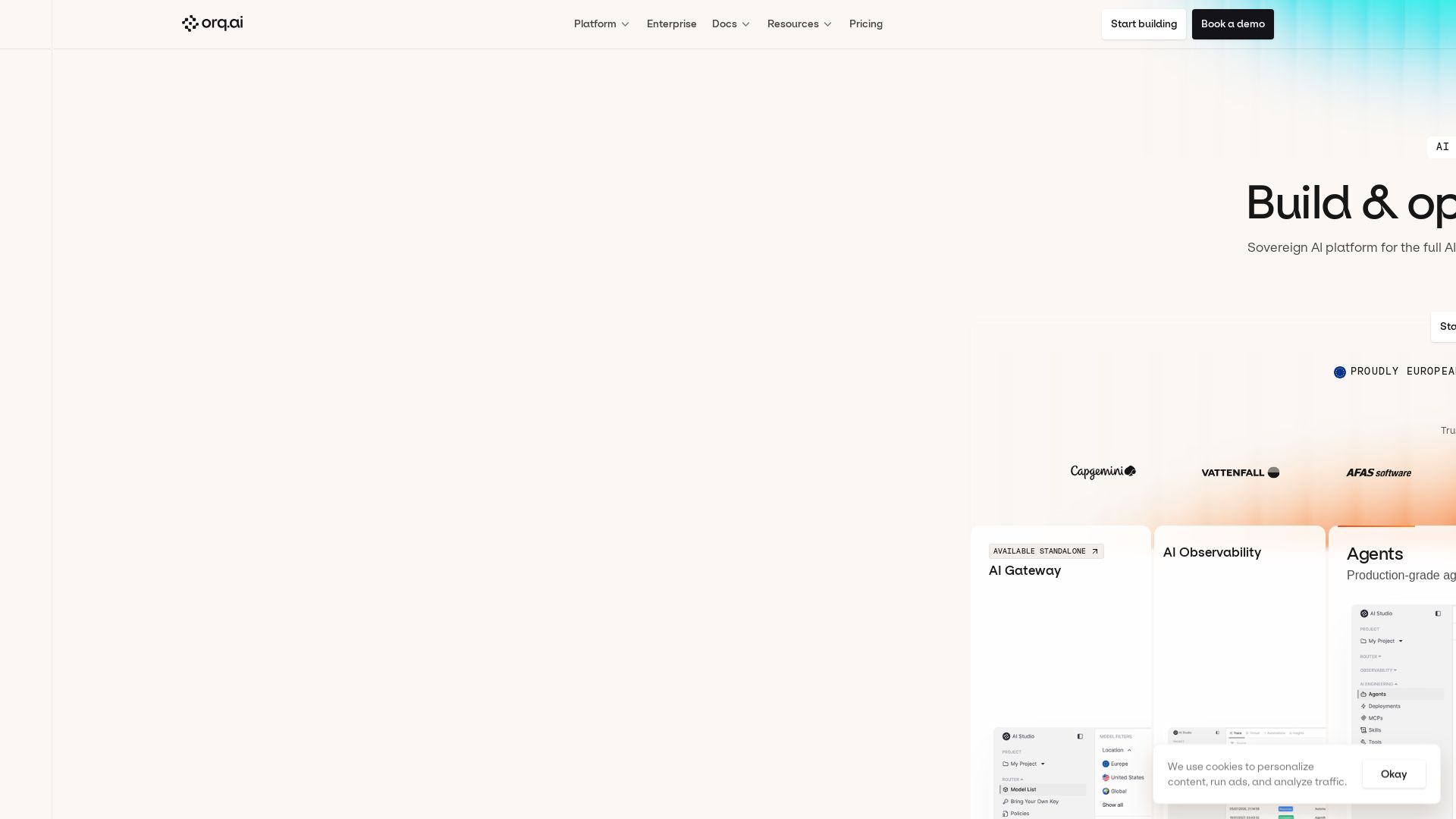
Orq.ai
Sovereign AI platform for the full AI agent lifecycle: orchestration, evals, observability, and governance. Trusted by industry leaders.

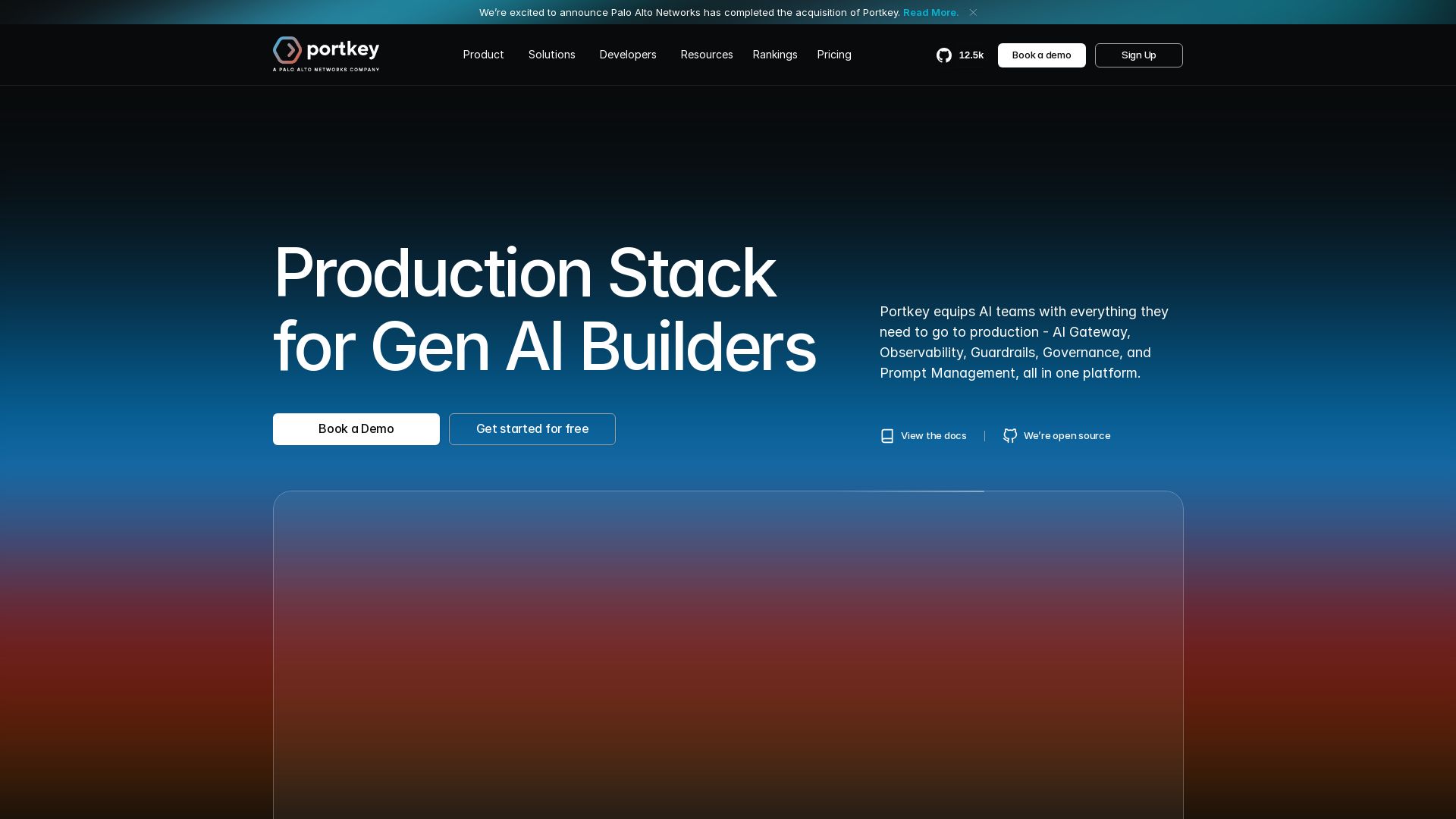
Portkey
Portkey equips AI teams with AI Gateway, Observability, Guardrails, and Prompt Management. Unified API for 1600+ LLMs. Save costs with caching. Trusted by Fortune 500s.

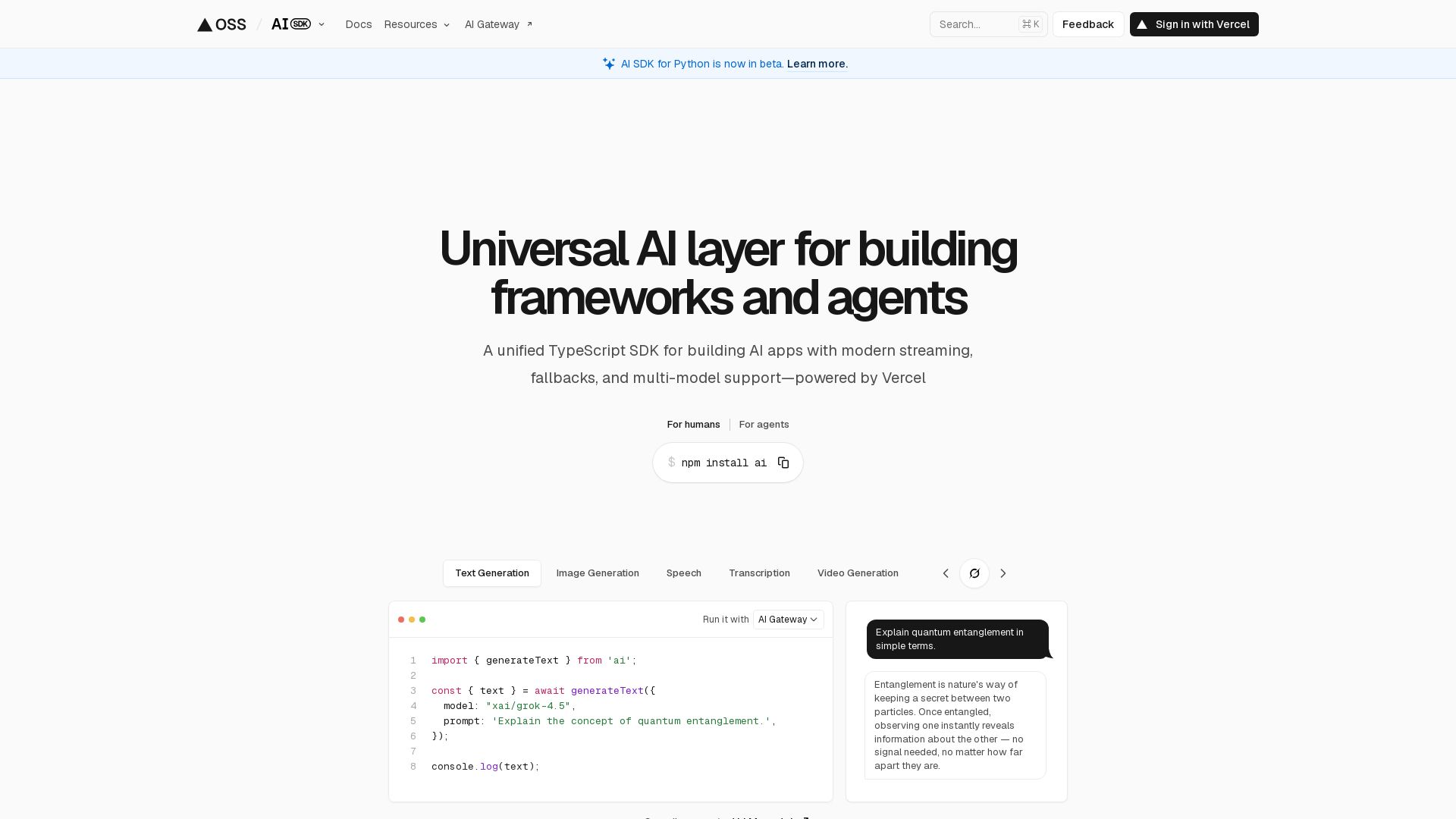
AI SDK
Unified TypeScript SDK for AI apps with streaming, fallbacks, multi-model support. Open-source, 100+ models, 18.5M weekly downloads.


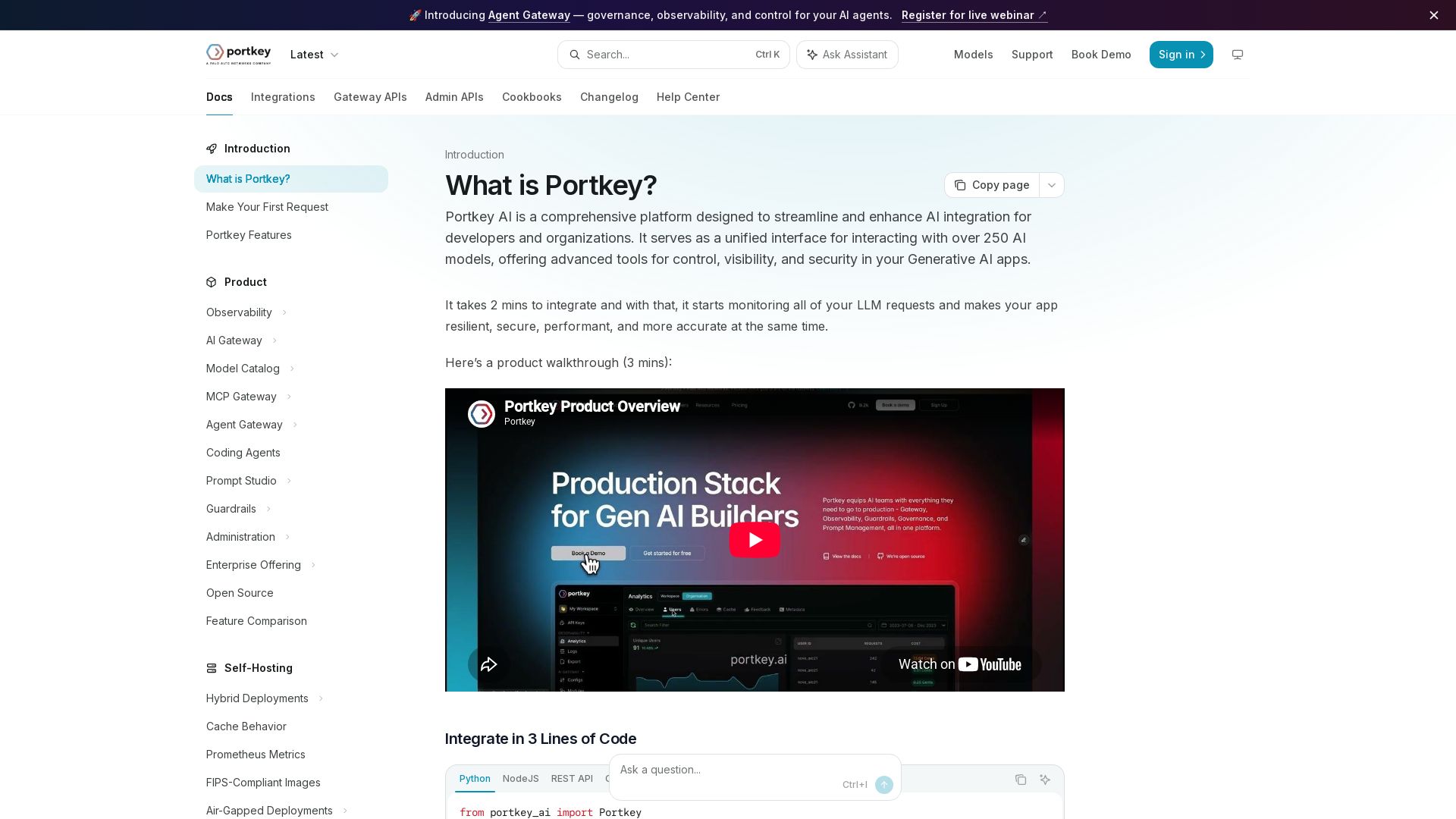
Portkey
Portkey AI provides a unified interface for 250+ AI models with observability, security, and control. Integrate in 3 lines of code.

Wizr AI
Build autonomous enterprises with AI-powered automation. Accelerate software delivery by 50% with production-ready AI systems. Trusted by world-class enterprises.

ℹ️ Curation Disclosure: The overview and features of Pydantic were synthesized using AI and fact-checked by our curation team to ensure accuracy.