
LibreChat
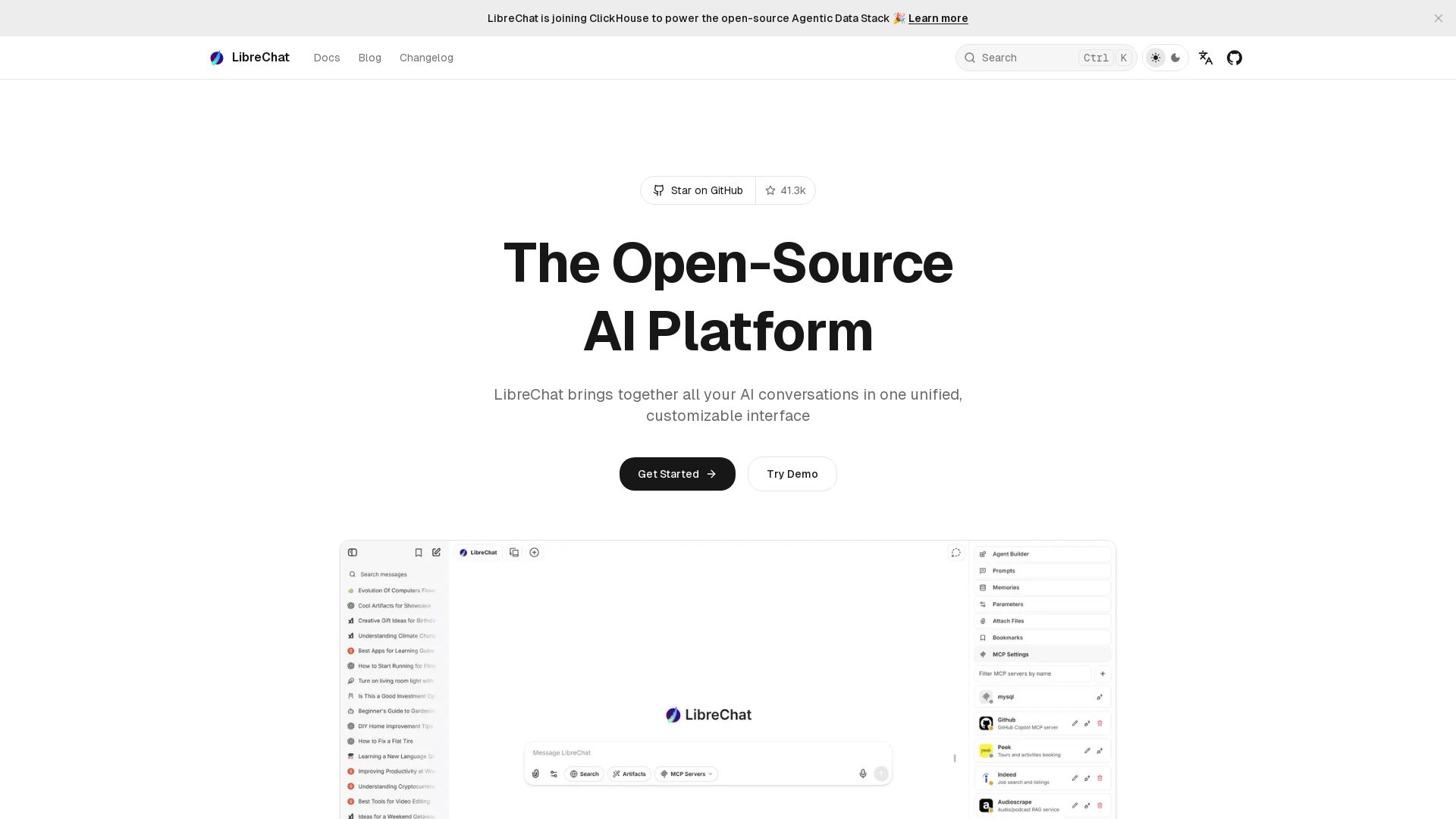
LibreChat brings together all your AI conversations in one interface. Supports multiple models, agents, code interpreter, artifacts, and more. Open-source with 41k+ stars.
Editor's Verdict
Key Takeaways
- Agents
- Code Interpreter
- Artifacts
- Memory
In-Depth Review: What is LibreChat?
LibreChat is an open-source, community-driven platform that centralizes all your AI conversations. It supports a wide range of AI models (Anthropic, OpenAI, Azure, AWS), offers advanced features like agents, code interpreter, artifacts, memory, web search, and MCP connectivity. With 41k+ GitHub stars and enterprise-ready SSO, it's the go-to solution for individuals and organizations. Easily deploy via Docker and start building today.
Core Features
Agents
Build custom AI assistants with tools, file handling, code execution, and API actions — no coding required.
Code Interpreter
Execute Python, JavaScript, Go, Rust, and more in a secure sandbox with zero setup.
Artifacts
Generate React components, HTML pages, and Mermaid diagrams directly inside chat.
Memory
Persistent context across conversations so your AI remembers preferences and history.
Web Search
Give any model live internet access with built-in search and reranking.
Model Context Protocol (MCP)
Connect AI models to any external tool or service through the open standard for AI tool integration.
Authentication
Enterprise-ready SSO with OAuth2, SAML, LDAP, and two-factor authentication.
Search
Find messages and conversations instantly using Meilisearch.
Image Generation
Create images with GPT-Image-1, DALL-E, Stable Diffusion, and Flux.
Fork
Split conversations into multiple threads for parallel exploration.
Temporary Chat
Private conversations that are not saved to history.
RAG API
Chat with files using retrieval-augmented generation.
OCR
Extract text from images and documents.
Moderation System
Content moderation and safety controls for responsible AI use.
Pricing
Open Source (Self-Hosted)
- All features included
- Community support
- Self-hosted deployment
Pros and Cons
Pros
- Open SourceFully open-source with 41.3k GitHub stars and a large community of contributors.
- Multi-Model SupportSupports Anthropic, AWS, OpenAI, Azure, and many more AI models.
- Enterprise AuthenticationComprehensive SSO options including OAuth2, SAML, LDAP, and 2FA.
- Extensive IntegrationsMCP, code interpreter, web search, and RAG API enable powerful workflows.
- Active DevelopmentRegular updates, changelog, and roadmap visible; strong community engagement.
Cons
Use Cases & Recommended Professions
Software Developer→ View Toolkit
Needs a unified AI interface to prototype code, debug, and integrate multiple models without switching contexts.
Data Scientist→ View Toolkit
Uses code interpreter and RAG API to analyze data, run experiments, and extract insights from documents.
AI Researcher→ View Toolkit
Benefits from experimenting with various models, creating agents, and leveraging memory for longitudinal studies.
Technical Writer→ View Toolkit
Uses artifacts to generate diagrams and documentation, and web search for up-to-date references.
Customer Support Manager→ View Toolkit
Leverages agents with file handling and knowledge retrieval to automate responses and improve efficiency.
DevOps Engineer→ View Toolkit
Appreciates easy self-hosting, authentication options, and integration with existing infrastructure.
Frequently Asked Questions
Alternative AI Tools
View Detailed Comparison →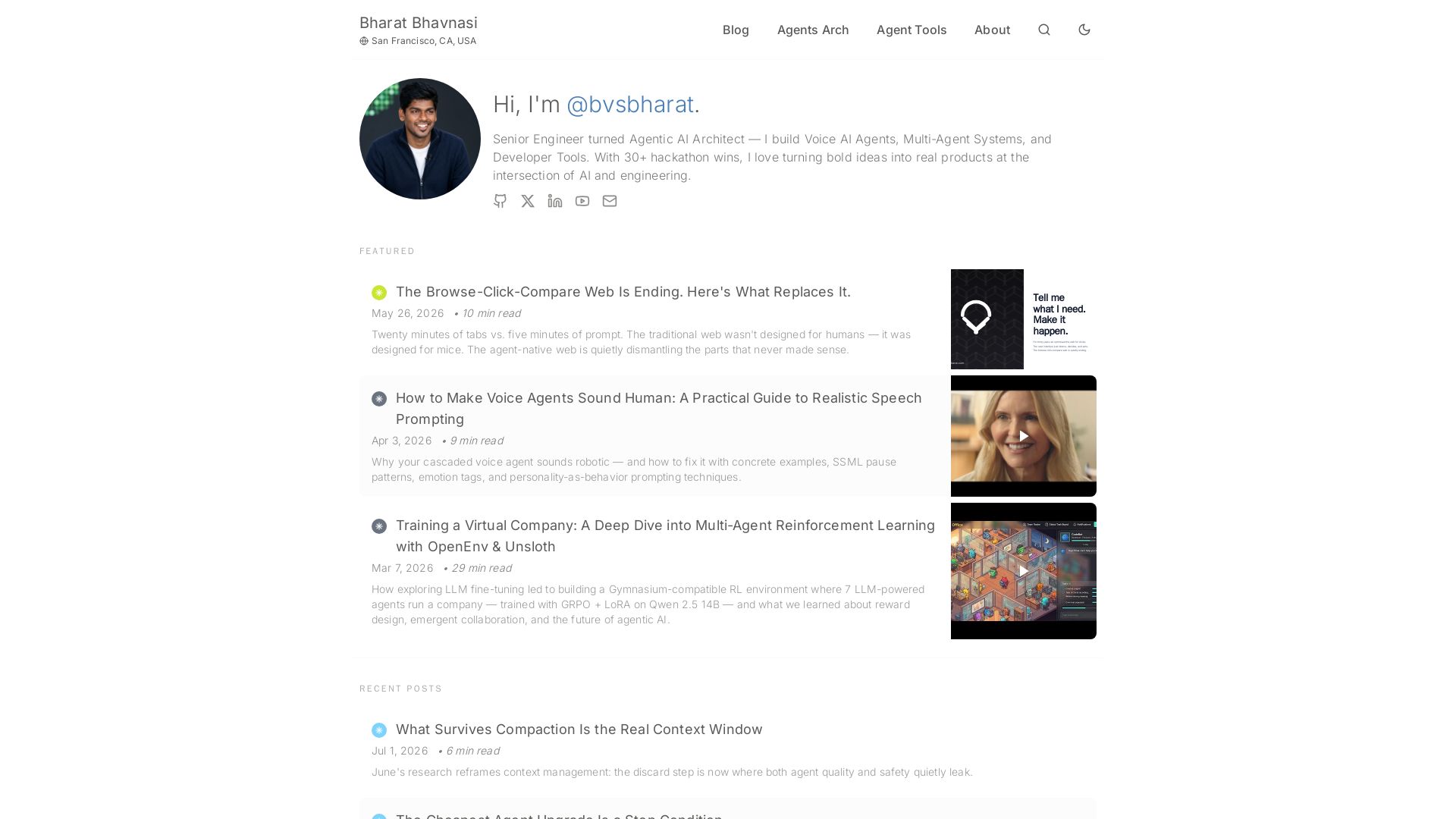
I Tested Every Major Open-Source AI Agent SDK So You Don't ...
Explore insights on Voice AI Agents, Multi-Agent Systems, and Developer Tools from a 30+ hackathon winner. Practical guides and cutting-edge research.

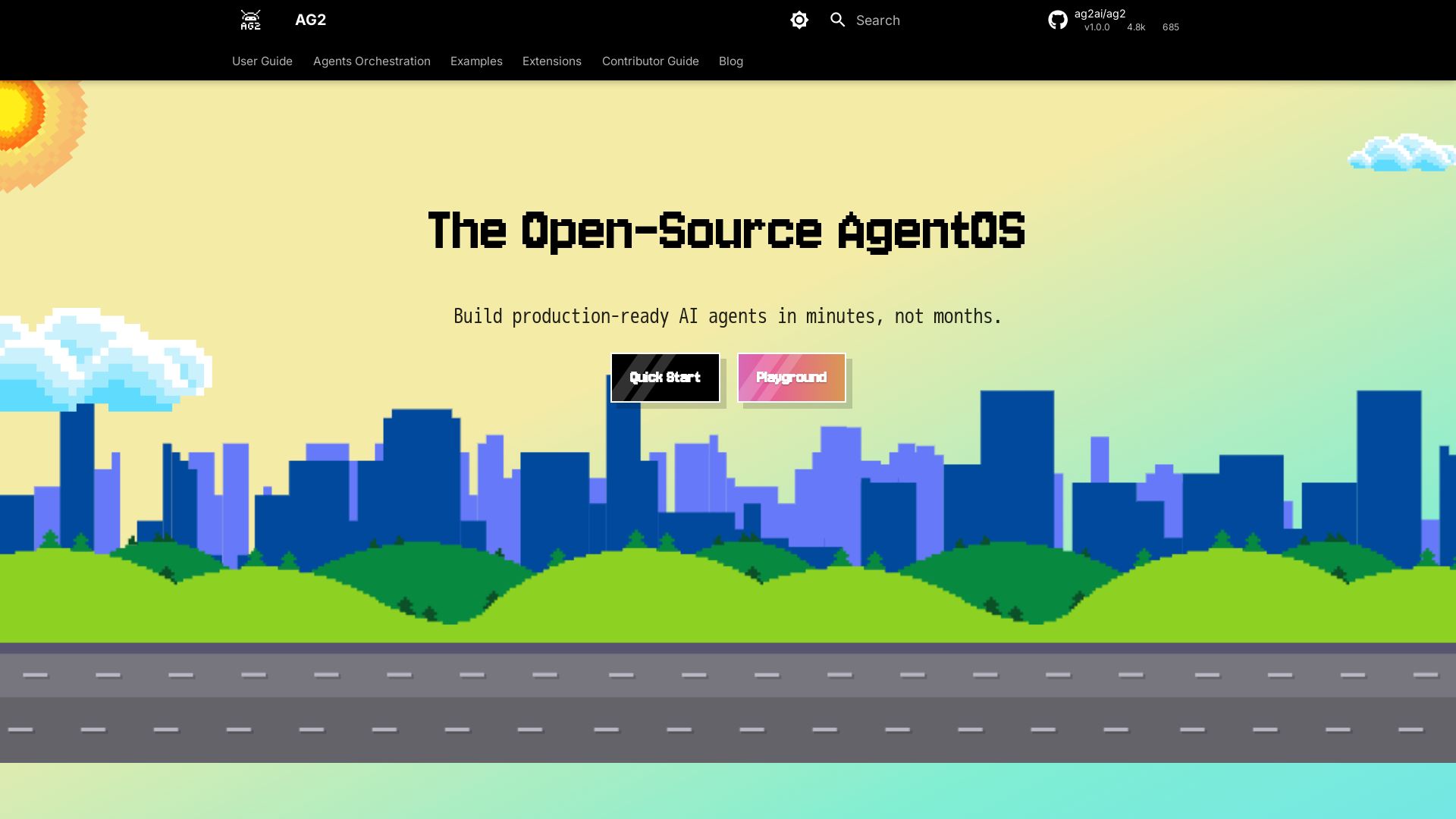
AG2
Build production-ready AI agents in minutes with AG2. Simple syntax, built-in patterns, human-AI collaboration. Open-source multi-agent framework.

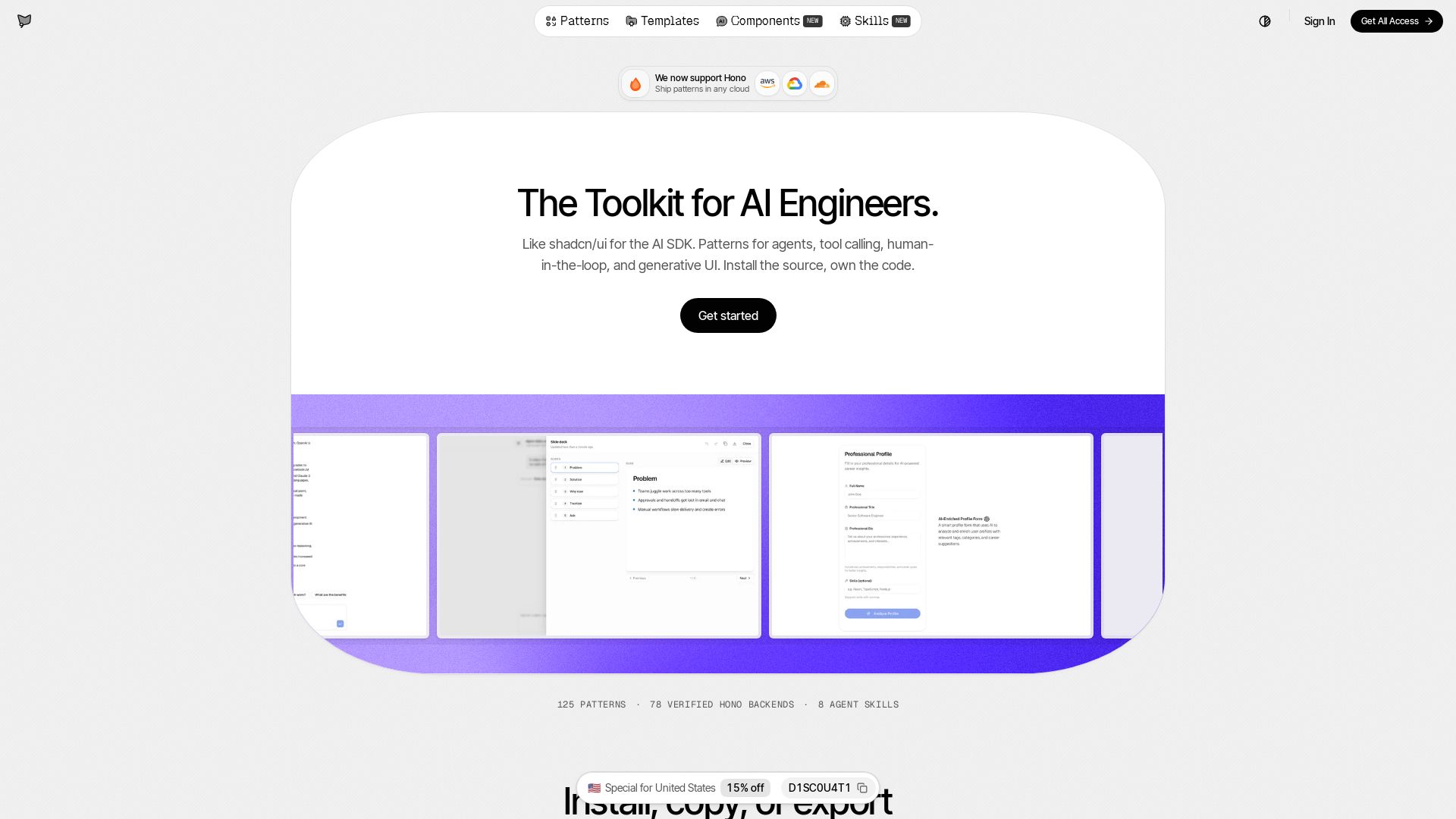
AI SDK AGENTS
The toolkit for AI engineers. Install, copy, or export 125 AI SDK patterns for agents, tool calling, human-in-the-loop, and generative UI. Full source code, own your stack.

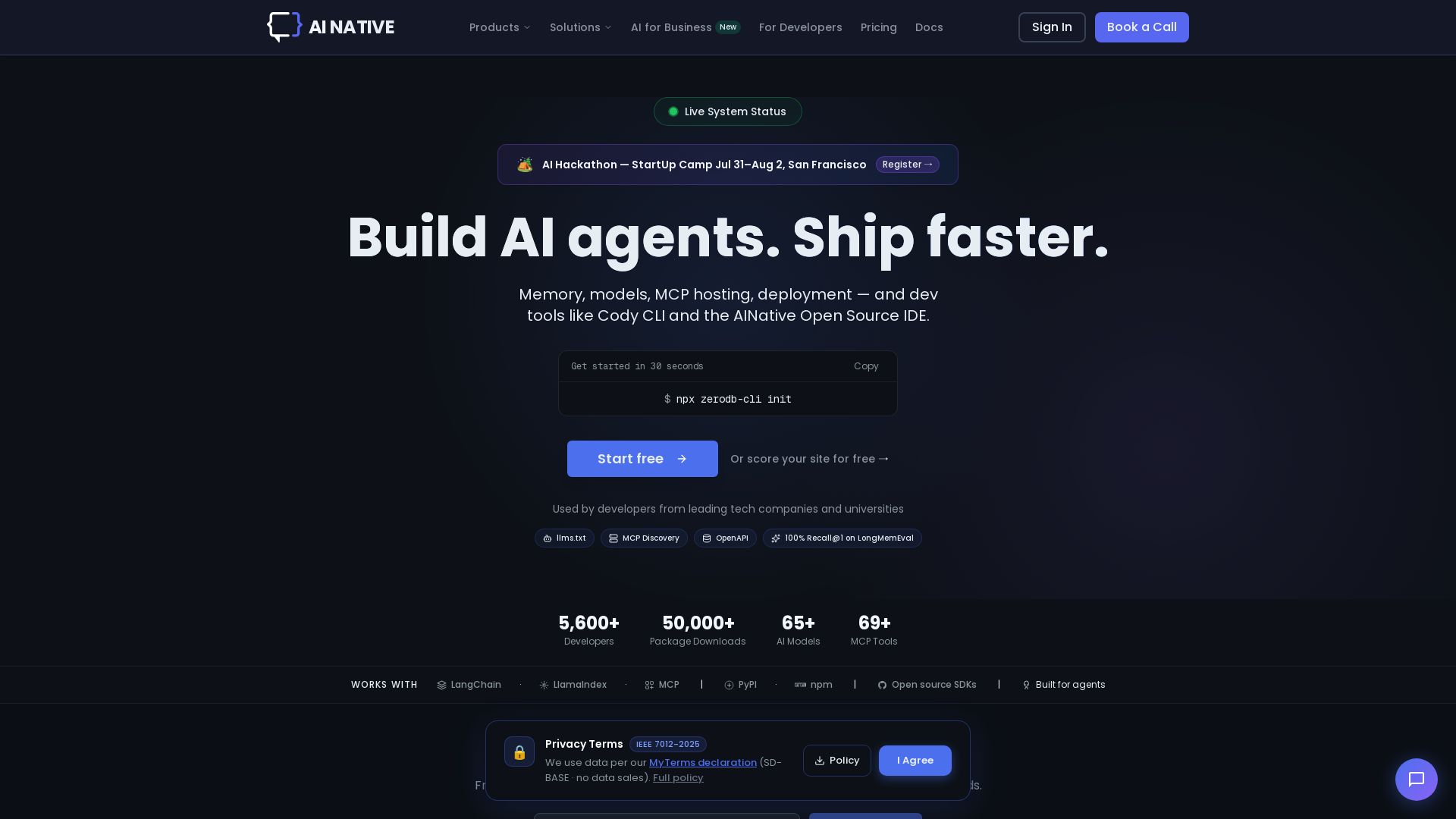
AINative Studio
ZeroDB persistent memory, MCP servers, models API, and Cody CLI. Deploy AI agents in 30 seconds. Free audit & instant database.

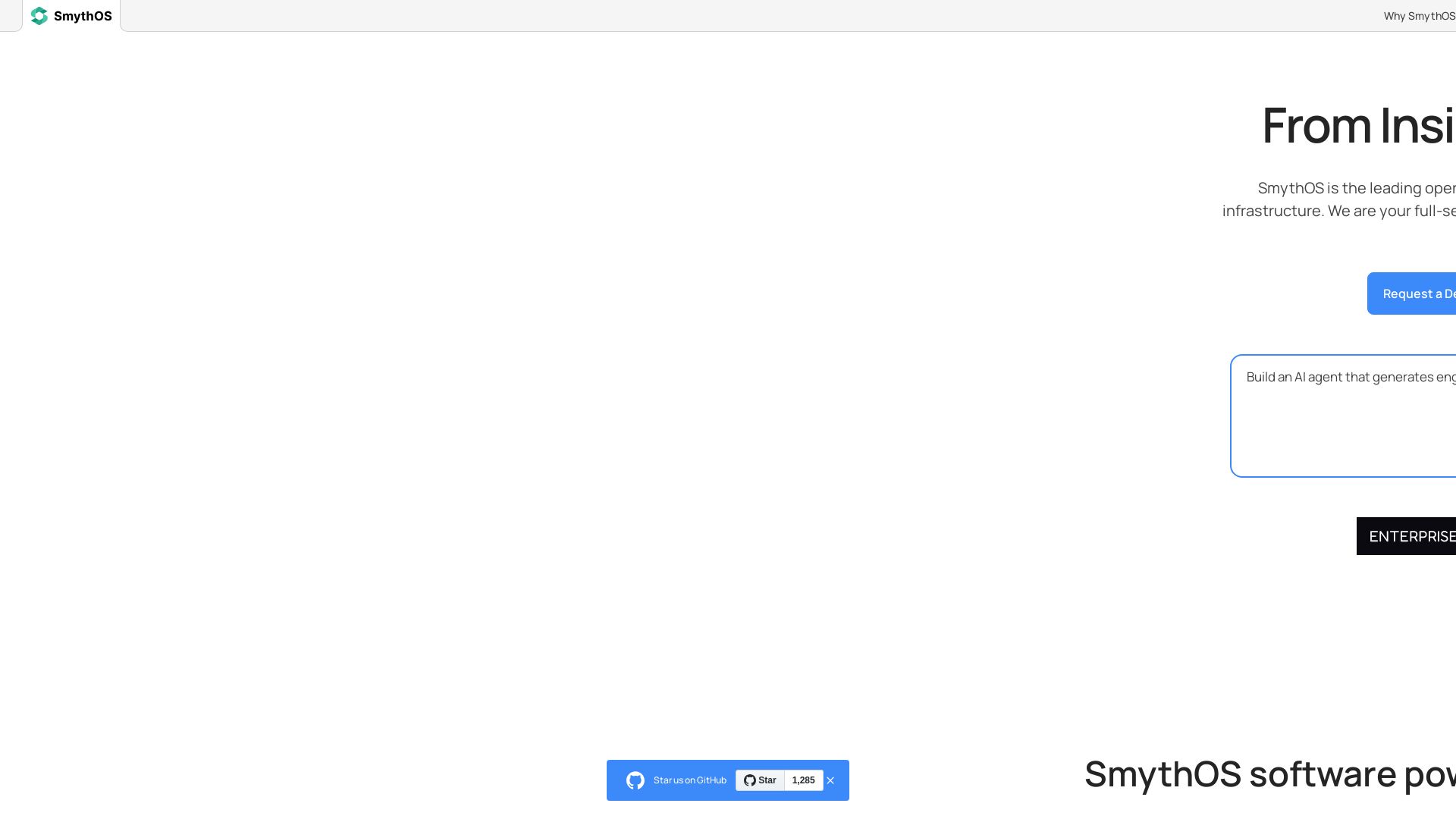
SmythOS
Build, test, and deploy secure AI agents at scale with SmythOS. Open-source runtime, SDK, and visual studio. Democratizing AI agent development.

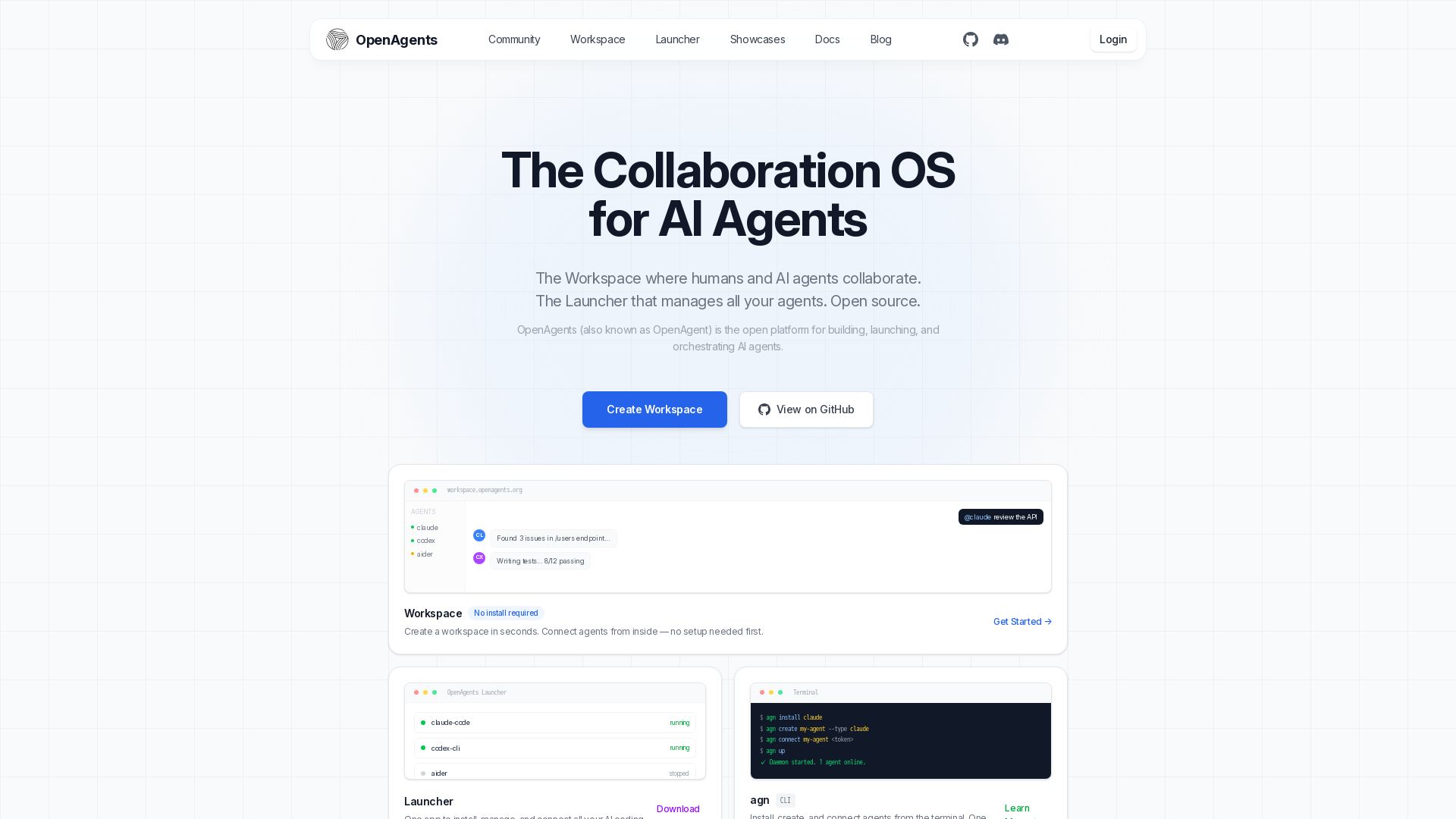
OpenAgents
Open-source AI agent platform: Collaborate with agents in a shared workspace. Manage Claude, Codex, Aider & more with the Launcher. Free, MIT license.

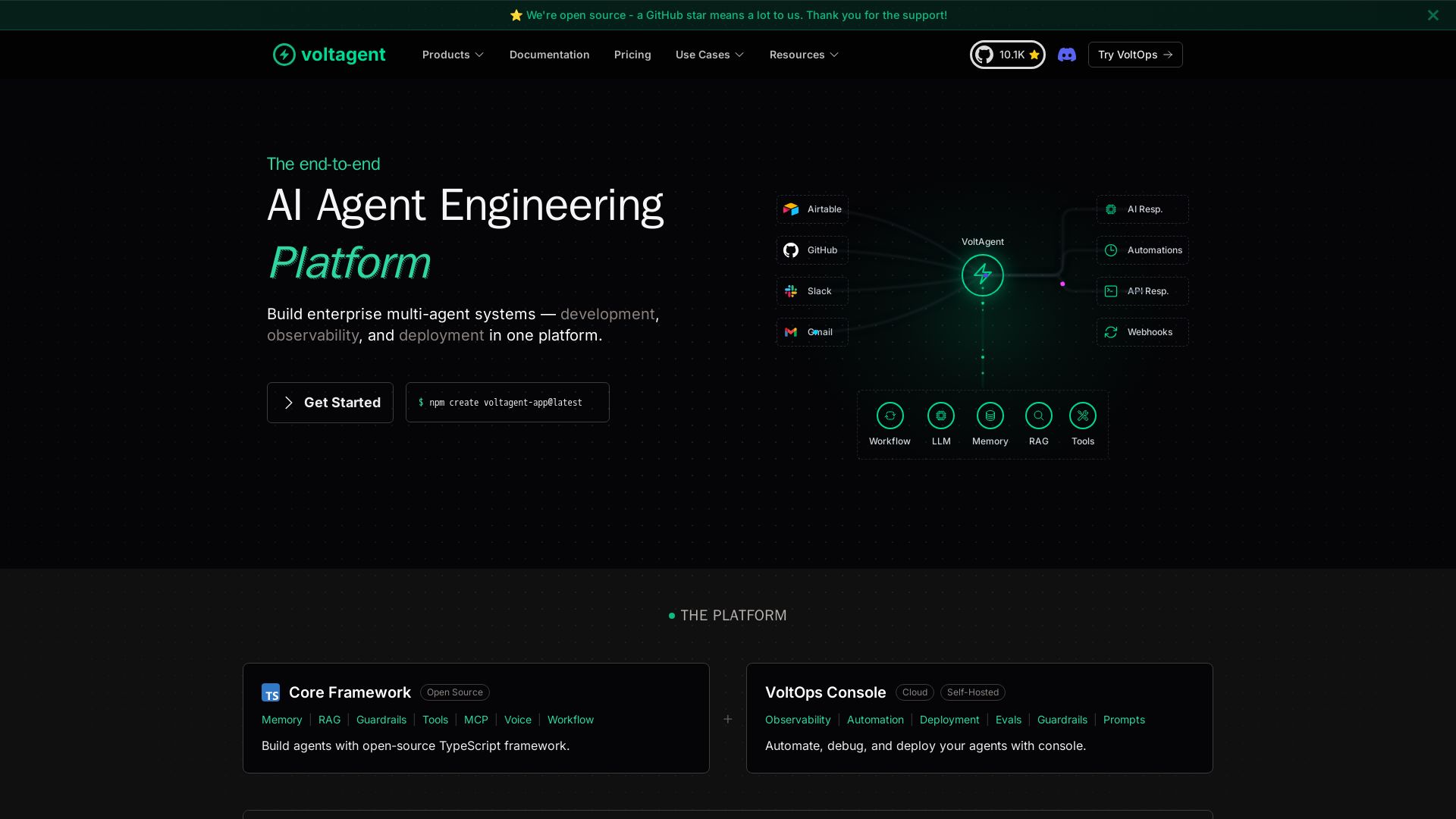
VoltAgent
Build, observe, and deploy production-ready AI agents with open-source TypeScript framework and VoltOps console. Multi-agent orchestration, RAG, tools, and more.

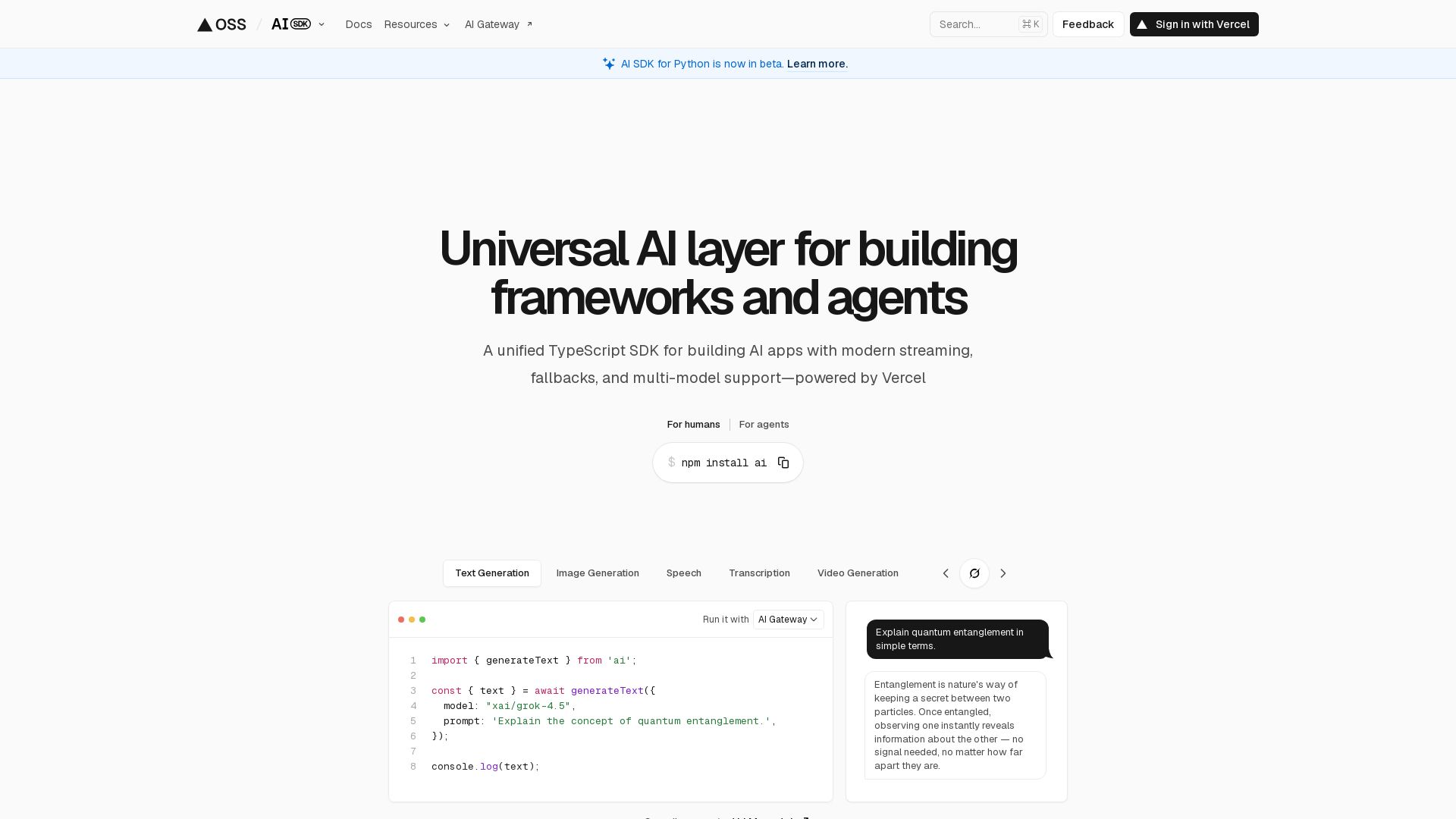
AI SDK
Unified TypeScript SDK for AI apps with streaming, fallbacks, multi-model support. Open-source, 100+ models, 18.5M weekly downloads.

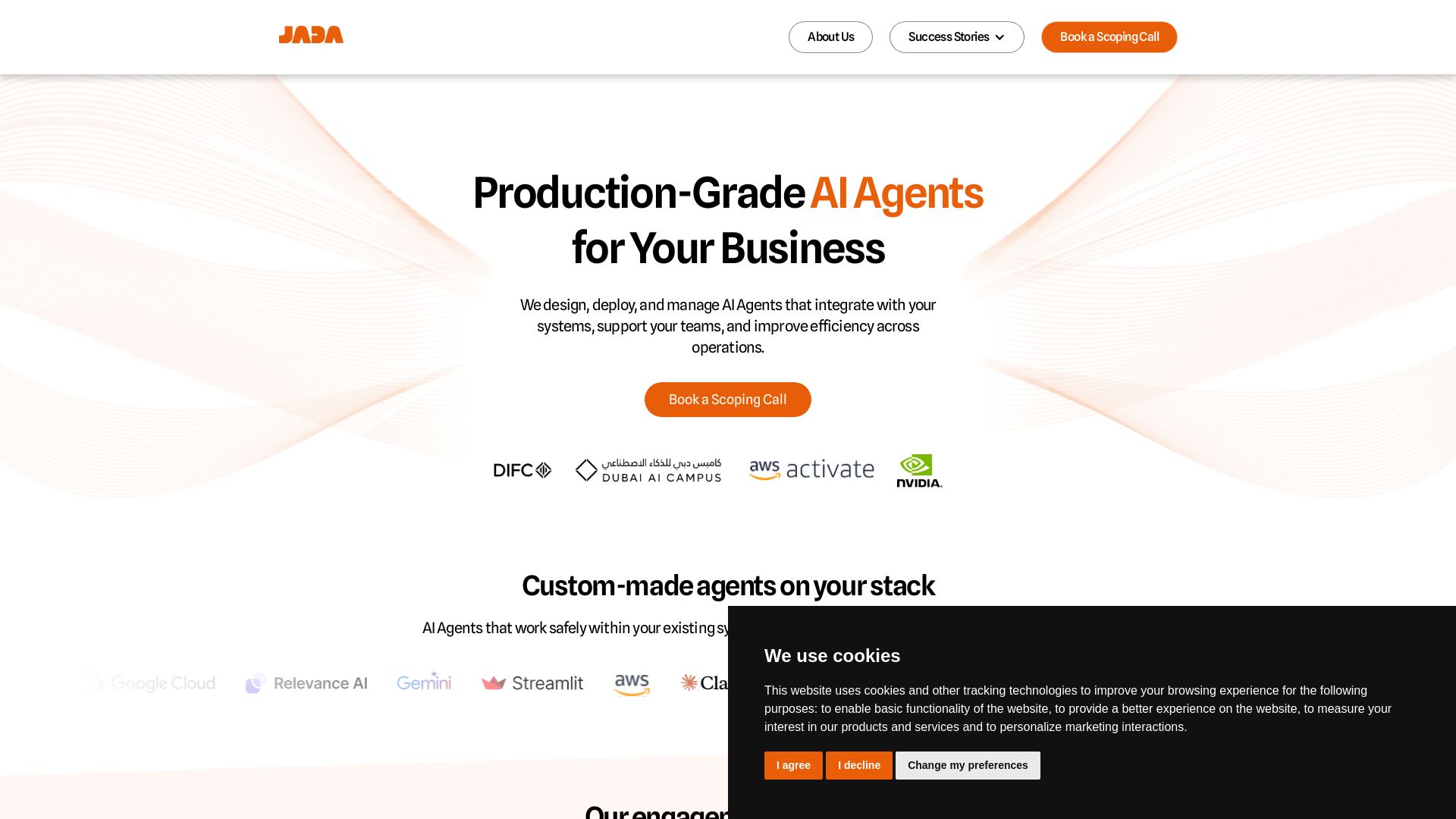
JADA
Design, deploy, and manage AI agents that integrate with your systems. From strategy to handover, we ship agents that work.

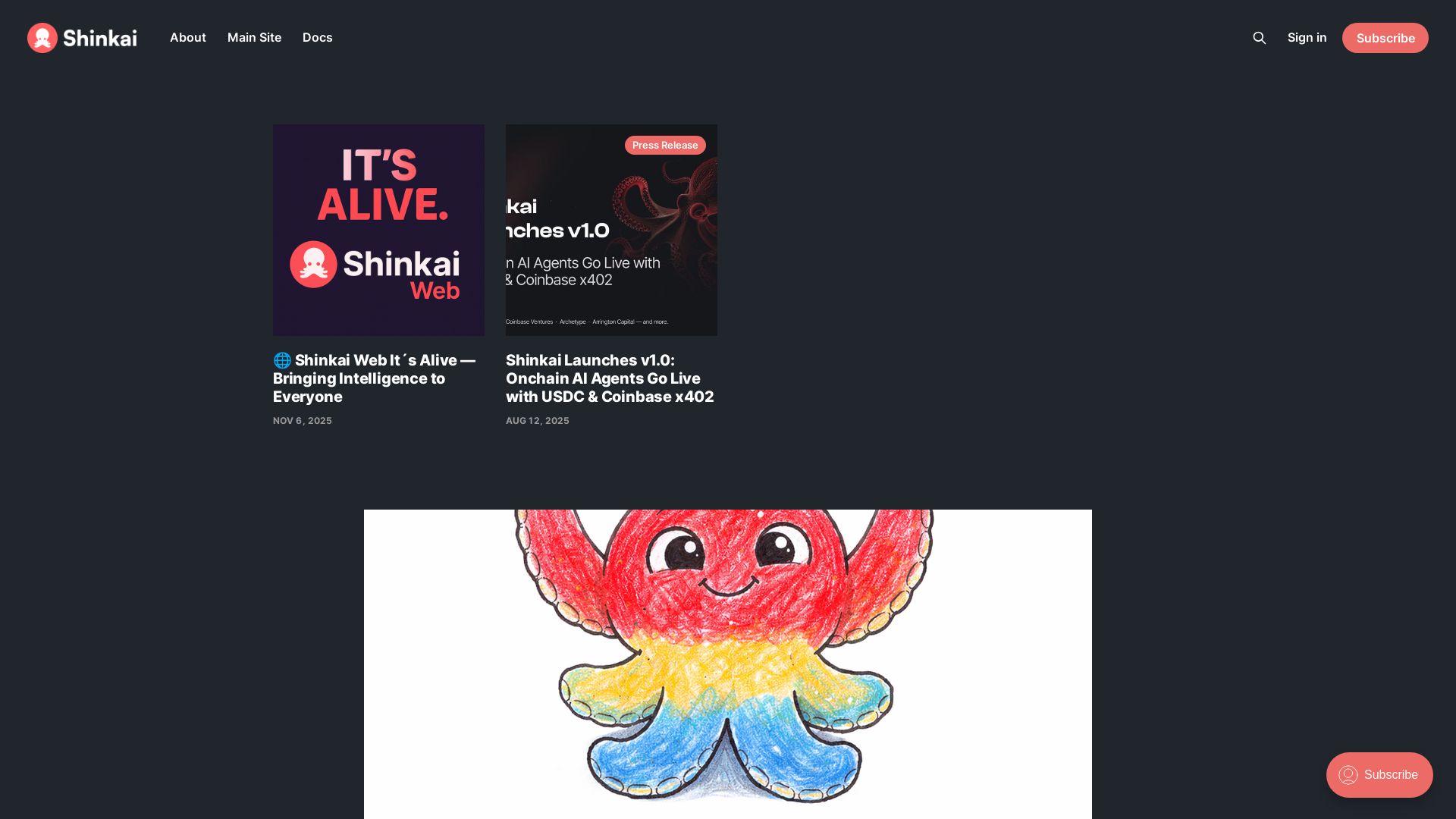
Shinkai
Shinkai launches v1.0 with onchain AI agents, USDC payments via x402. Build private, local AI agents. Join the agent economy.

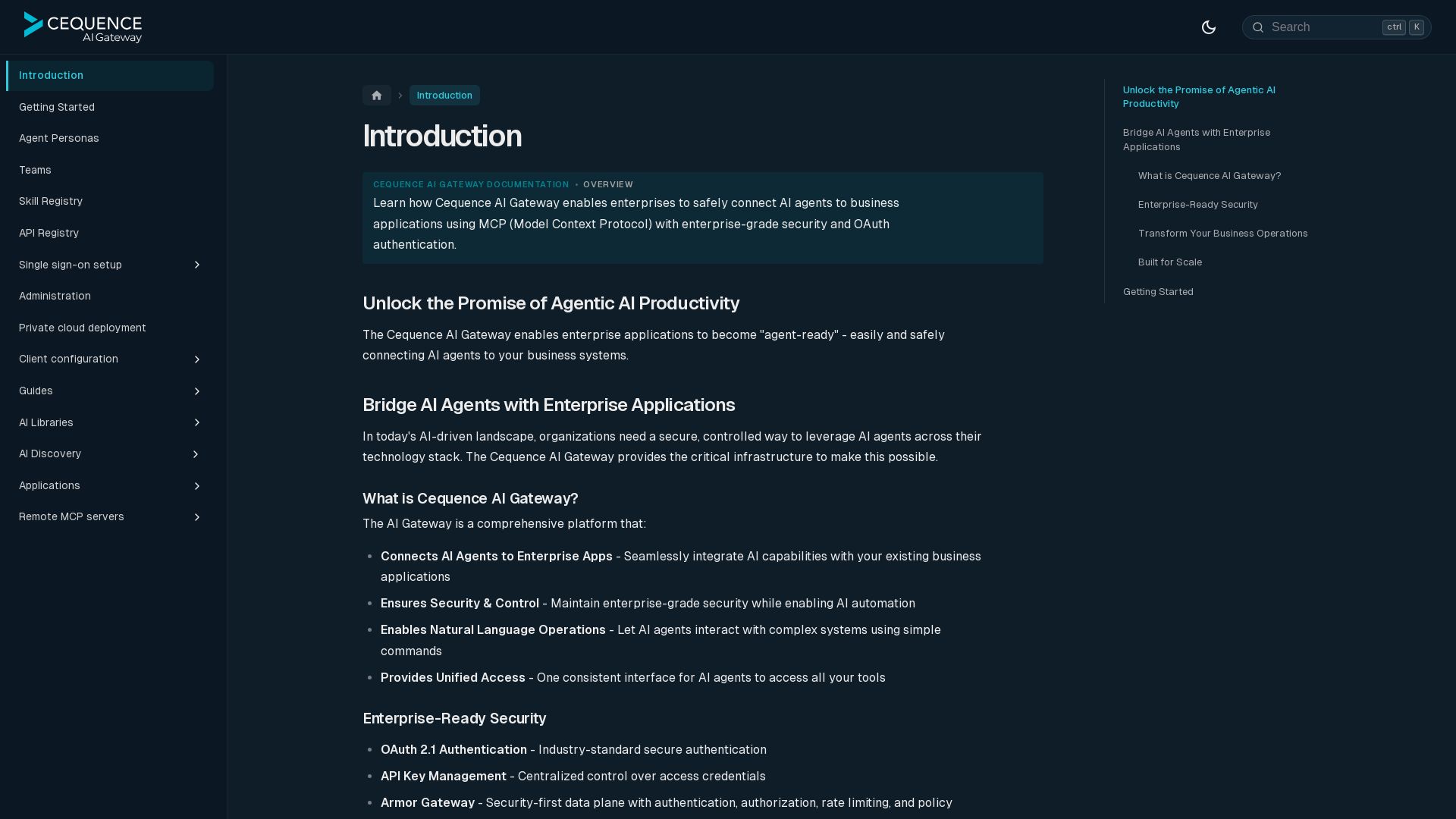
Cequence AI Gateway
Safely connect AI agents to business apps with enterprise-grade security, OAuth 2.1, and MCP. Unlock agentic AI productivity.

Making AI think and act: my approach to the Hugging Face AI ...
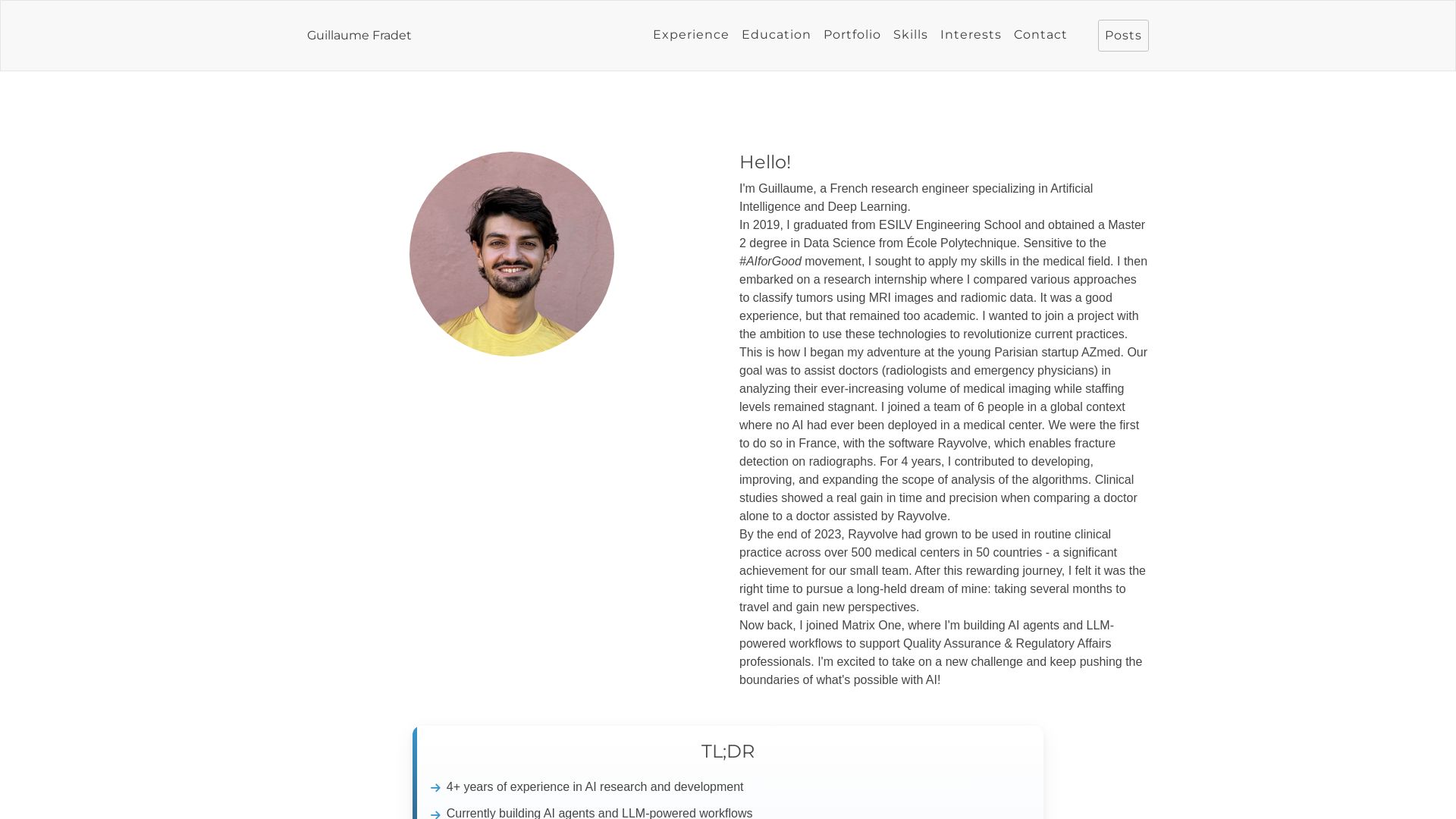
Experienced AI engineer specializing in medical imaging and LLM-powered agents. Built globally deployed radiology AI at AZmed. Now building AI agents at Matrix One.

ℹ️ Curation Disclosure: The overview and features of LibreChat were synthesized using AI and fact-checked by our curation team to ensure accuracy.