
Future AGI
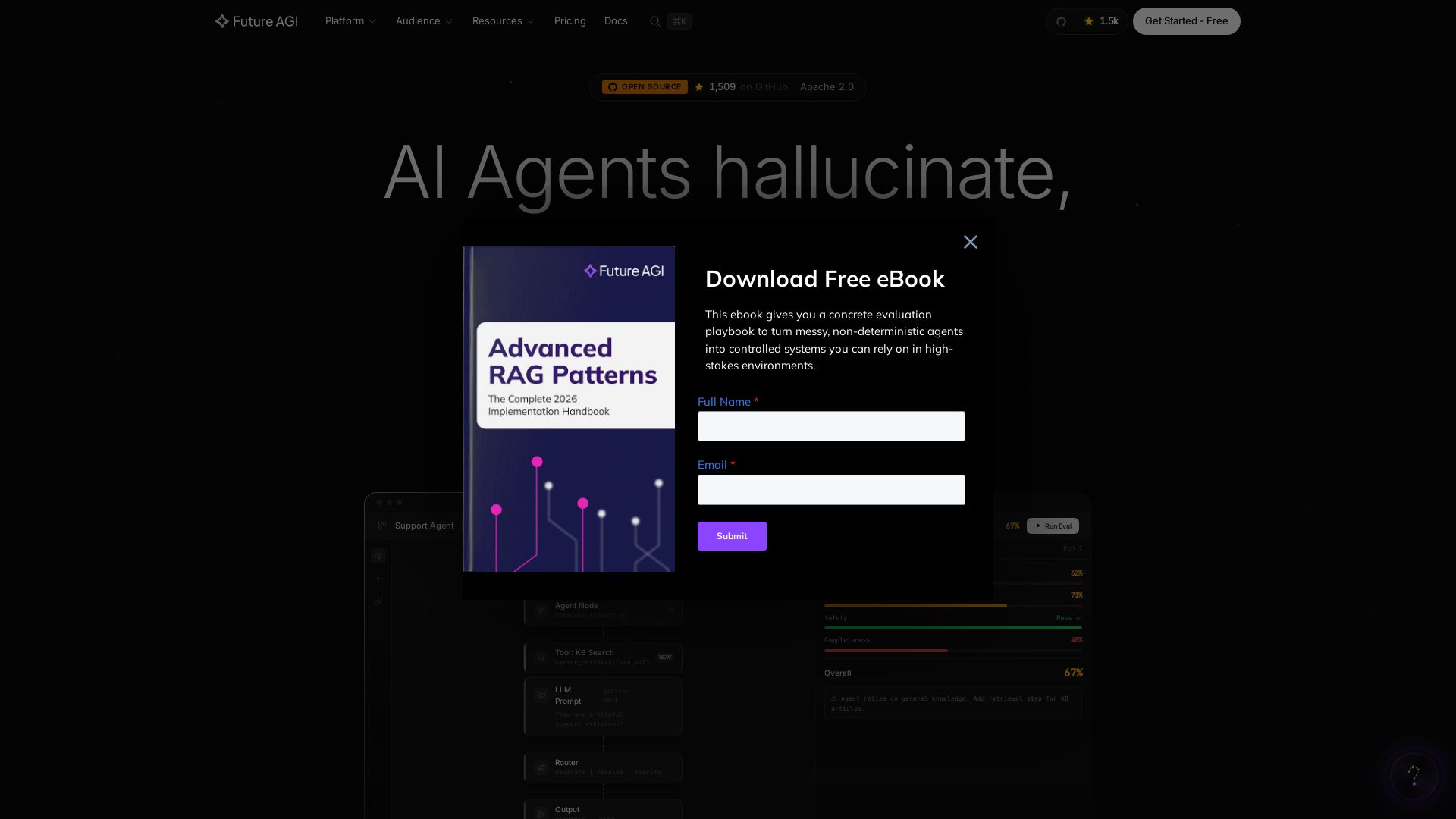
Catch AI hallucinations, evaluate accuracy, and deploy guardrails. Open-source platform to simulate, test, and monitor AI agents in production.
Editor's Verdict
Key Takeaways
- Guard
- Evaluate
- Error Feed
- Simulations
In-Depth Review: What is Future AGI?
Future AGI is the all-in-one platform for engineering reliable AI agents. It covers the full lifecycle—simulate thousands of scenarios, evaluate responses with 20+ metrics, deploy sub-100ms guardrails to block hallucinations, and monitor production with real-time tracing and alerts. Open-source, self-hostable, and integrates with any LLM or framework. Reduce AI errors, ship faster, and build agents users trust.
Core Features
Guard
Block AI hallucinations in real-time with guardrails, preventing harmful or inaccurate outputs before reaching users.
Evaluate
Run comprehensive evaluations with 20+ metrics including factuality, relevance, safety, and completeness to measure AI agent quality.
Error Feed
Sentry-style error tracking for AI agents, surfacing and triaging errors automatically with trace and root cause analysis.
Simulations
Simulate thousands of multi-turn conversations to test AI agents against realistic scenarios, edge cases, and adversarial inputs at scale.
Scenarios
Define branching conversation test scenarios with global rules and persona-based variables to cover complex user interactions.
Synthetic Data
Generate diverse, realistic test data to expand evaluation datasets and improve model robustness without manual labeling.
AI Optimization
Continuous improvement with reinforcement learning, using production feedback to optimize prompts and agent behavior over time.
Tracing
End-to-end request tracing for AI agents, providing detailed timing and span-level visibility into every step of the pipeline.
Dashboards
Custom dashboards with drag-and-drop widgets to monitor key performance indicators and visualize trends in real time.
Alerting
AI-powered alerts for anomalies and hallucination spikes, notifying teams before issues escalate into user-facing problems.
Guardrails (Monitor)
Real-time guardrail monitoring and block rate insights, tracking the effectiveness of safety measures across all agents.
Datasets
Manage and version evaluation datasets, continuously growing test coverage from simulations, production traces, and manual additions.
Experiments
Structured experiments across models and prompts to compare performance, identify best configurations, and drive data-driven decisions.
Agent IDE
Build and test AI agents visually with a purpose-built environment for rapid iteration and debugging.
Pricing
Free
- 50 GB tracing storage per month
- 2K AI credits per month for evaluations and Falcon AI
- 100K gateway requests per month
- 100K cache hits per month
- 1M text simulation tokens per month
- 60 minutes voice simulation per month
- 15 built-in guardrails
- Unlimited datasets, prompts, and dashboards
- 3 annotation queues
- 3 alert monitors
- 30-day data retention
- Community support
- Unlimited team members and projects
Pay-as-you-go
- Everything in Free plan
- Unlimited usage with pay-as-you-go pricing
- Volume discounts at scale
- Billing alerts and spending caps
- Email support
- 30-day data retention
Boost
- 90-day data retention
- 5 knowledge bases
- 10 annotation queues and 15 monitors
- SOC 2 Type II, OAuth SSO, audit logs
- 99.5% SLA and 48-hour email support
Scale
- Everything in Boost
- 1-year data retention
- Unlimited queues and monitors
- Review workflow with inter-annotator agreement
- HIPAA BAA, SAML SSO, and SCIM
- 99.9% SLA and 24-hour email support with Slack channel
Enterprise
- Everything in Scale
- Custom data retention
- ABAC and data masking
- Dedicated support engineer and customer success manager
- Training sessions and architecture review
- Financial SLA and custom rate limits
Pros and Cons
Pros
- Comprehensive End-to-End PlatformCovers simulation, evaluation, guardrails, optimization, and monitoring in one tool, eliminating the need to stitch together multiple vendors.
- Generous Free TierOffers 50GB tracing, 2K AI credits, 100K gateway requests, and more for free monthly, with no credit card required, making it accessible for small teams.
- Open Source and Self-HostableApache 2.0 licensed, allows full self-hosting for data sovereignty. Users can inspect, fork, and customize every component without vendor lock-in.
- Low Latency GuardrailsReal-time guardrails operate in under 100ms, blocking hallucinations, prompt injections, PII leakage, and toxic content with high accuracy.
- Purpose-Trained Evaluation ModelsUses specialized eval models (Turing) for accurate hallucination detection and error localization across text, image, audio, and video, outperforming generic LLM judges.
Cons
- Steep Learning CurveThe platform's extensive feature set can overwhelm new users; mastering all capabilities may require significant time and documentation study.
- Limited Free Tier Storage50GB of tracing storage per month may be insufficient for high-volume production environments, requiring pay-as-you-go or paid add-ons.
- Self-Hosting Requires DevOps ExpertiseDeploying the full stack via Docker Compose involves 21 services and complex configuration, which may be challenging for teams without infrastructure experience.
- Add-On Costs for Enterprise ComplianceAdvanced features like SOC 2, HIPAA, SAML, and extended retention require separate monthly fees ($250–$2,000), increasing total cost for regulated industries.
- Potential Vendor Dependency for Advanced CapabilitiesSome features like Falcon AI and managed eval models are cloud-based and may not be fully available in the open-source version, creating reliance on the hosted service.
Use Cases & Recommended Professions
Machine Learning Engineer→ View Toolkit
Needs to evaluate and reduce hallucinations in LLM outputs, run experiments with different models and prompts, and monitor production performance to ensure reliable AI agents.
Engineering Manager→ View Toolkit
Oversees AI agent deployments and needs automated evaluation, guardrails, and observability to maintain quality and track team productivity across multiple projects.
Product Manager (AI Products)→ View Toolkit
Defines evaluation criteria and simulates user interactions to ensure AI features meet quality standards before launch, requiring a no-code platform for cross-functional collaboration.
QA Engineer→ View Toolkit
Tests AI agents across edge cases using simulation scenarios and evaluates responses with comprehensive metrics to catch regressions and ensure robustness.
AI Developer / Prompt Engineer→ View Toolkit
Iterates on prompts and agent logic, runs structured experiments, and uses optimization feedback to continuously improve agent performance and accuracy.
Support Team Lead→ View Toolkit
Monitors customer-facing AI agents for hallucination spikes and errors, uses real-time dashboards and alerts to quickly address issues and improve bot accuracy.
Frequently Asked Questions
Alternative AI Tools
View Detailed Comparison →
Maxim
Simulate, evaluate, and observe AI agents 5x faster. End-to-end platform for prompt engineering, agent testing, and real-time monitoring.

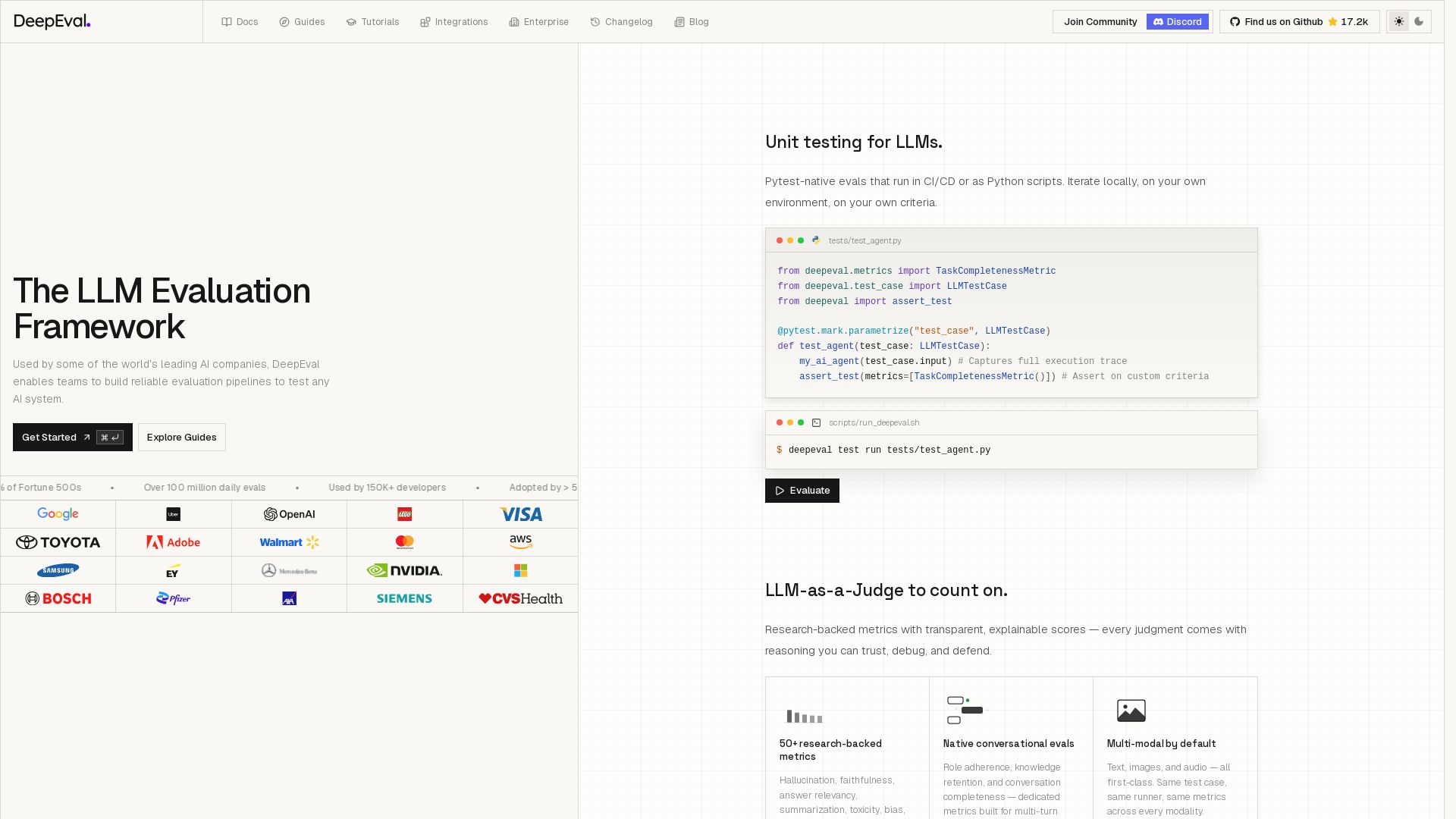
DeepEval
Open-source LLM evaluation framework with 50+ metrics, unit testing, CI/CD support, and synthetic data generation. Trusted by 150K+ developers and 50% of Fortune 500s.

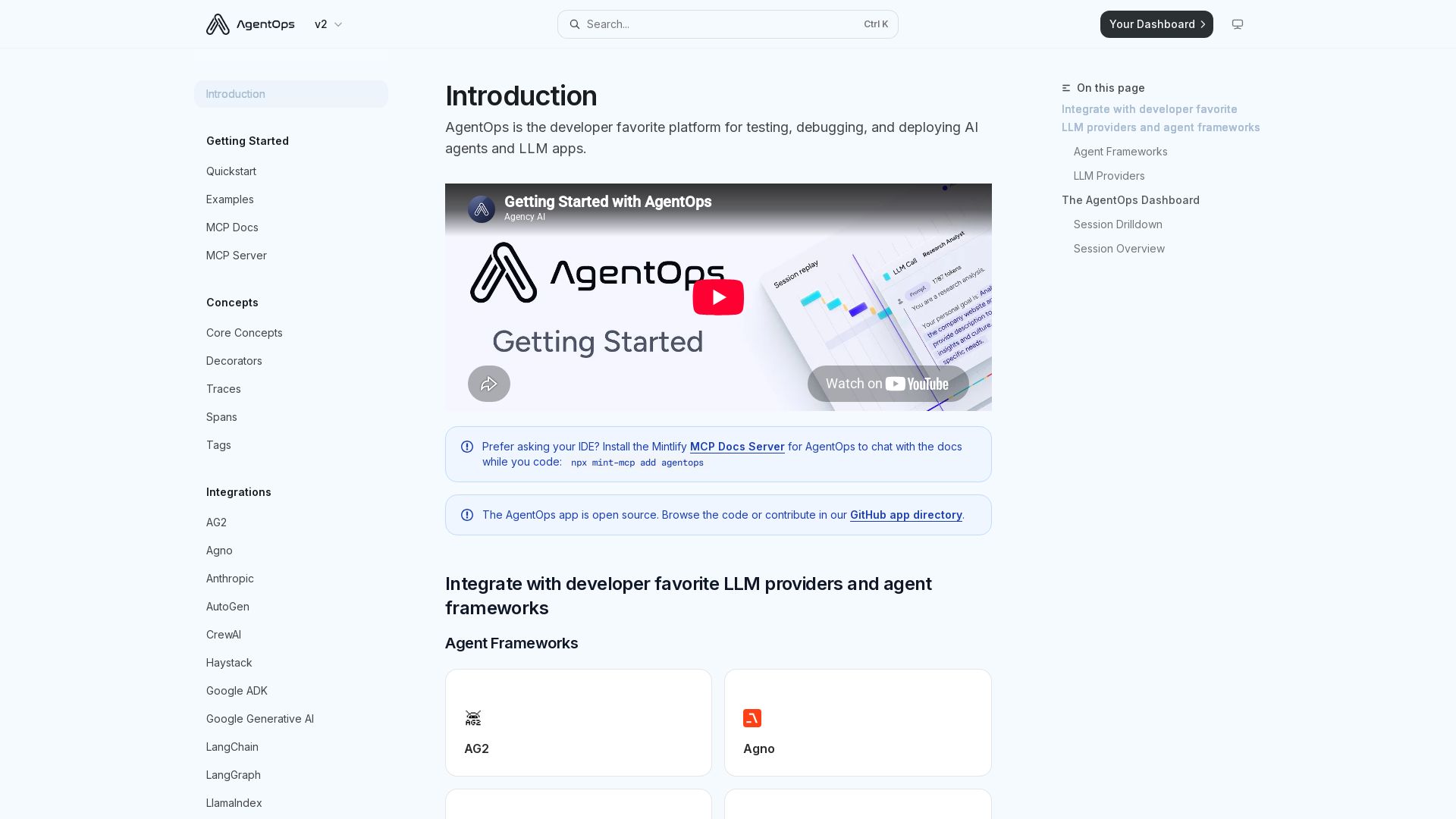
AgentOps
The developer favorite platform for testing, debugging, and deploying AI agents and LLM apps. Two lines of code for full observability.

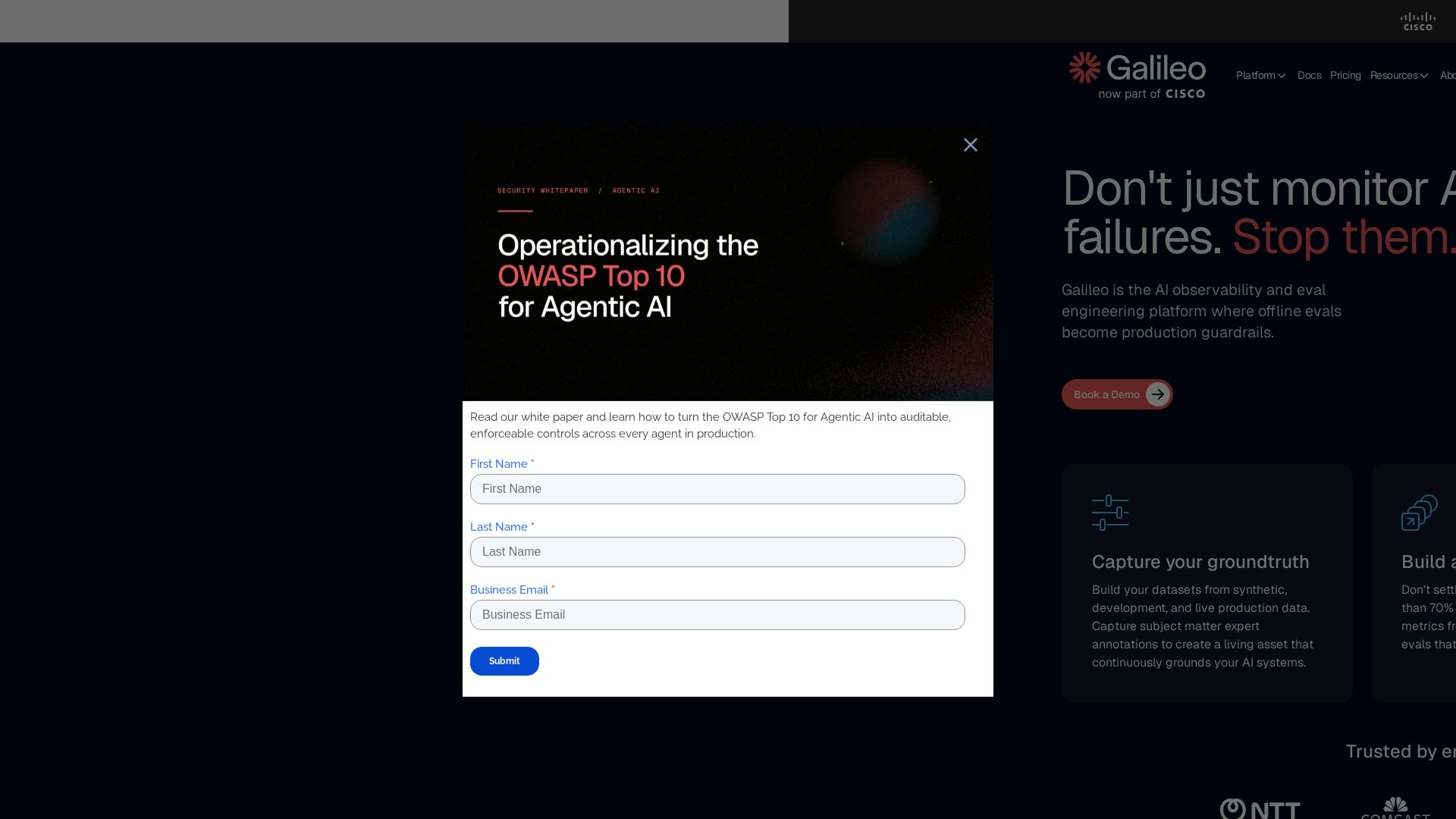
Galileo AI
Galileo is the AI observability and eval engineering platform that turns offline evals into production guardrails. Monitor, evaluate, and improve agent behavior at scale with low-cost Luna models.

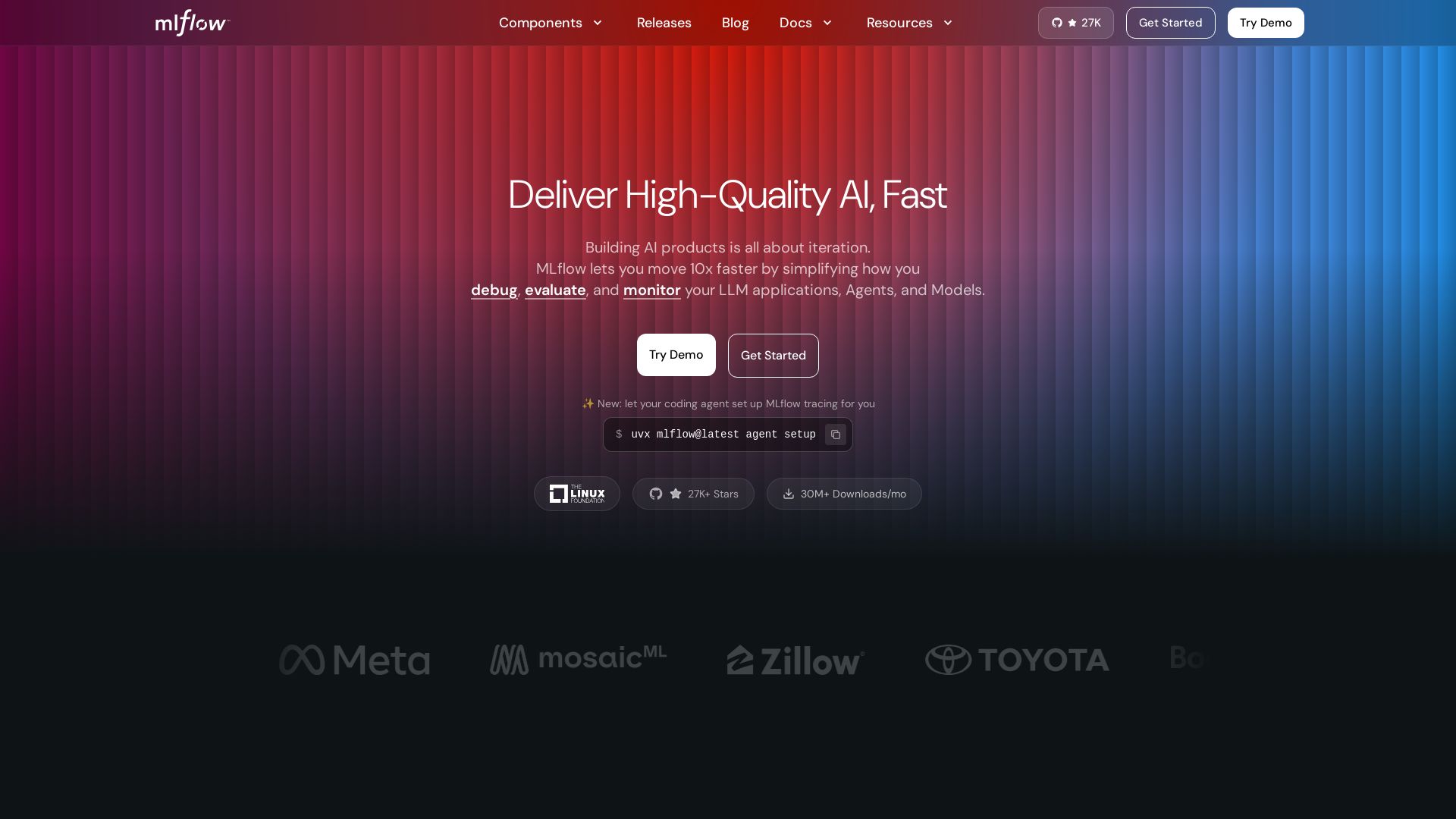
MLflow
Build, debug, evaluate, and monitor AI agents & LLMs with MLflow. Open-source, 27K+ stars, 30M+ downloads/mo. Try it free.

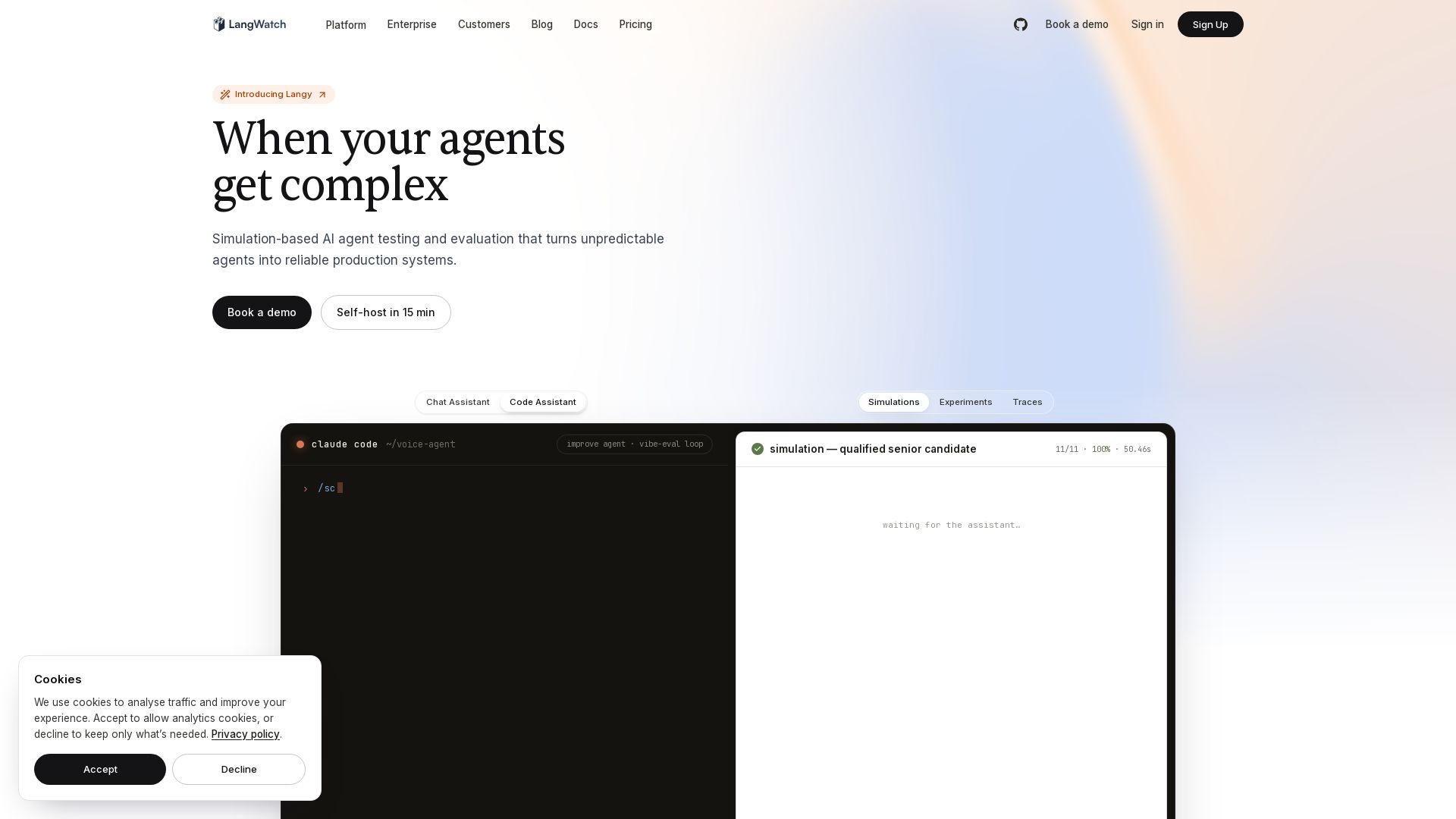
LangWatch
Simulation-based testing and evaluation for AI agents. Turn unpredictable agents into reliable production systems with continuous testing.

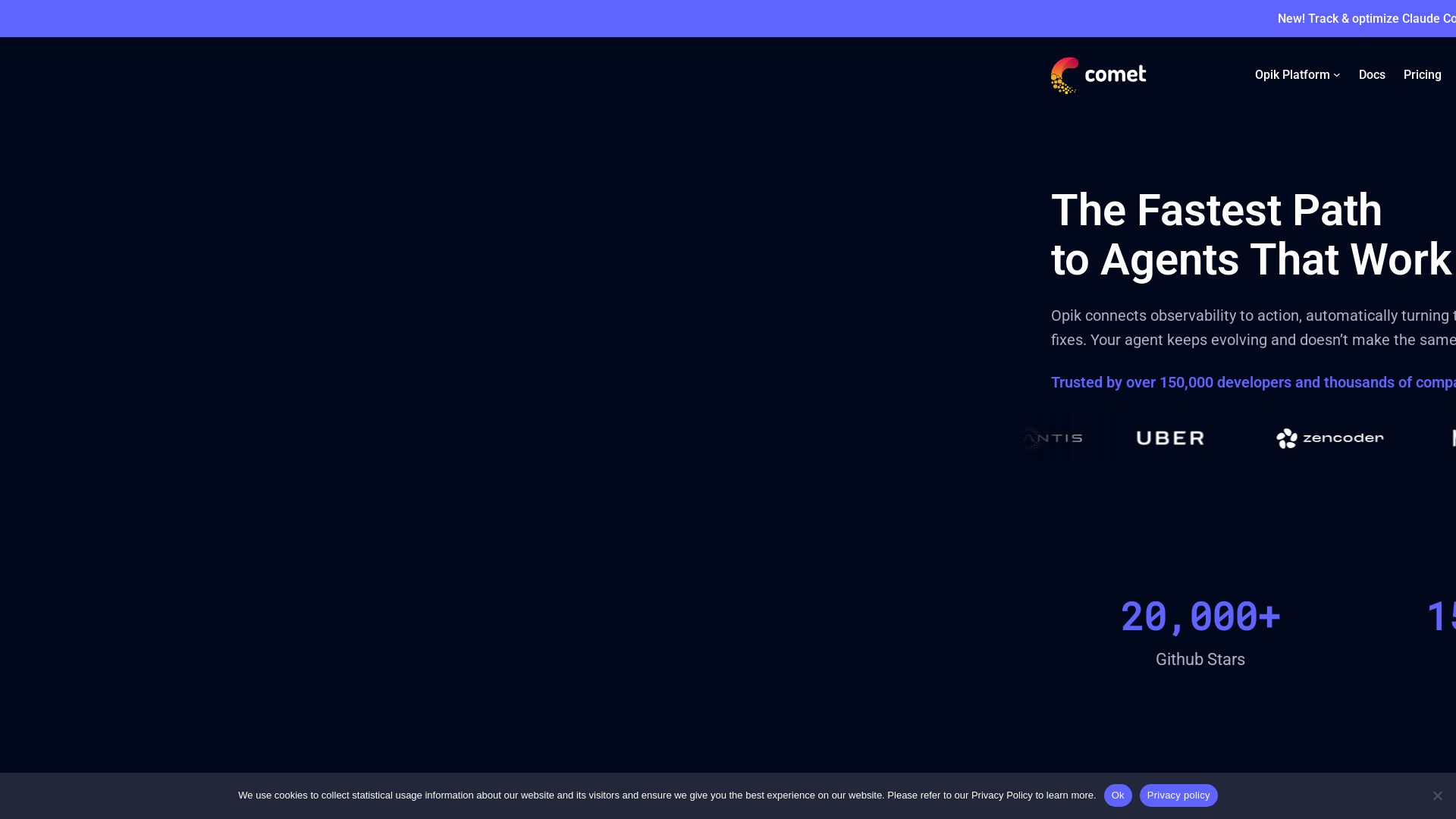
Comet
Log, detect, and fix AI agent errors with Opik. Open-source LLM observability and evaluation. Automatically surface errors, get code fixes, validate performance. Trusted by 150k+ developers.

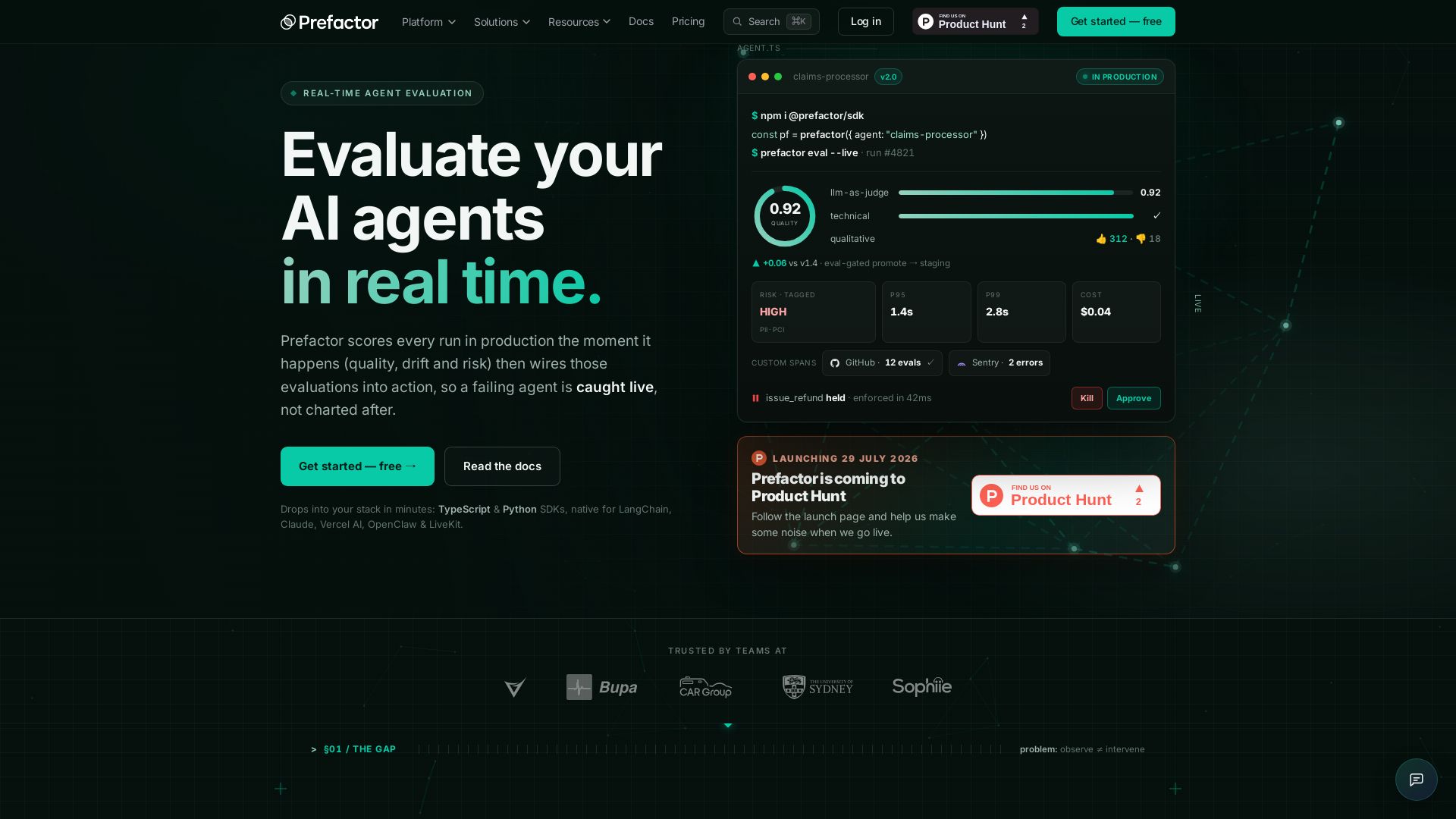
Prefactor
Evaluate AI agents in real time: score quality, drift & risk, then act instantly. Catch failures live, not after.

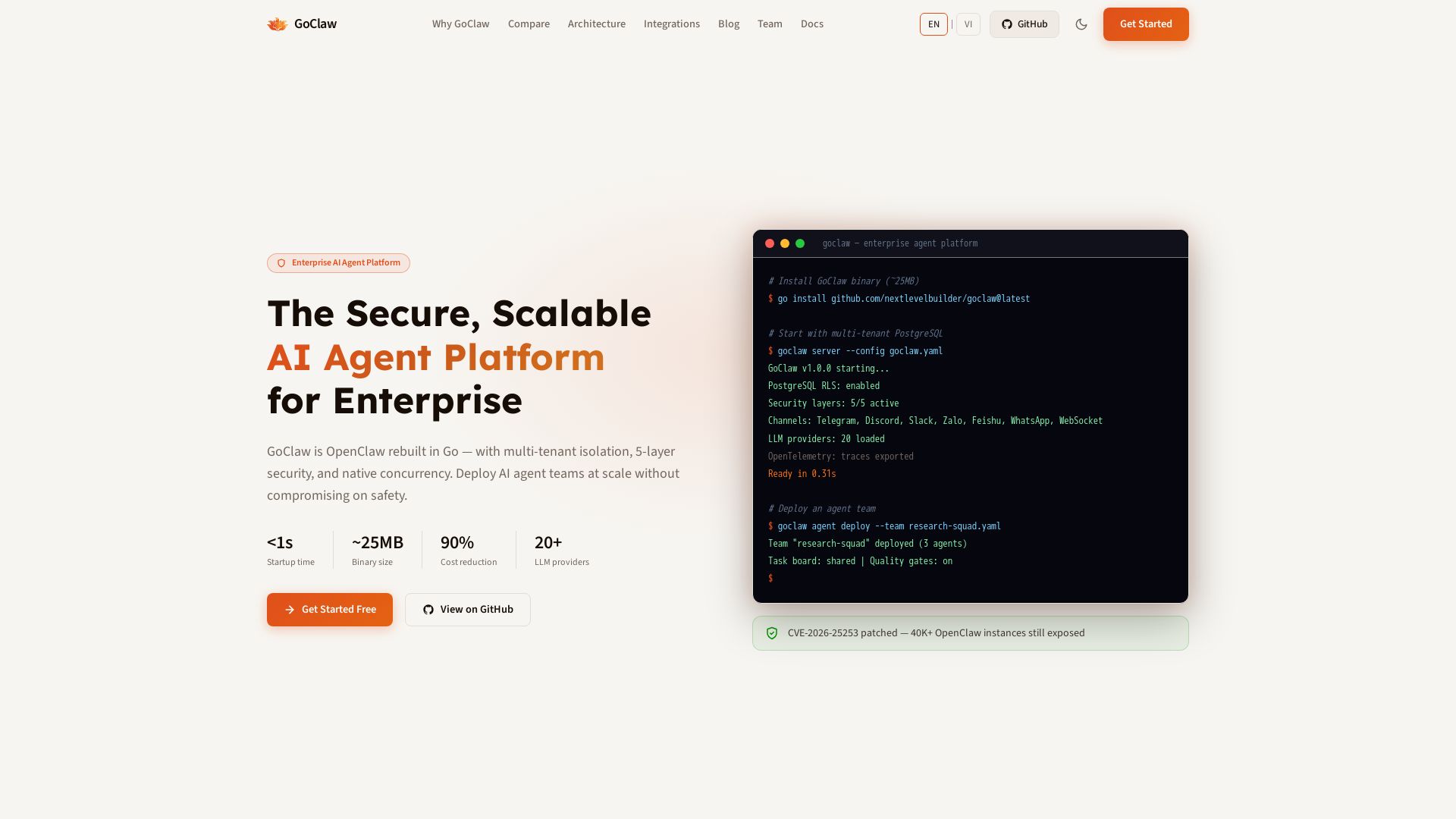
GoClaw
Deploy AI agent teams at scale with multi-tenant isolation, 5-layer security, and 90% cost reduction. Fast startup, ~25MB binary, 20+ LLMs.

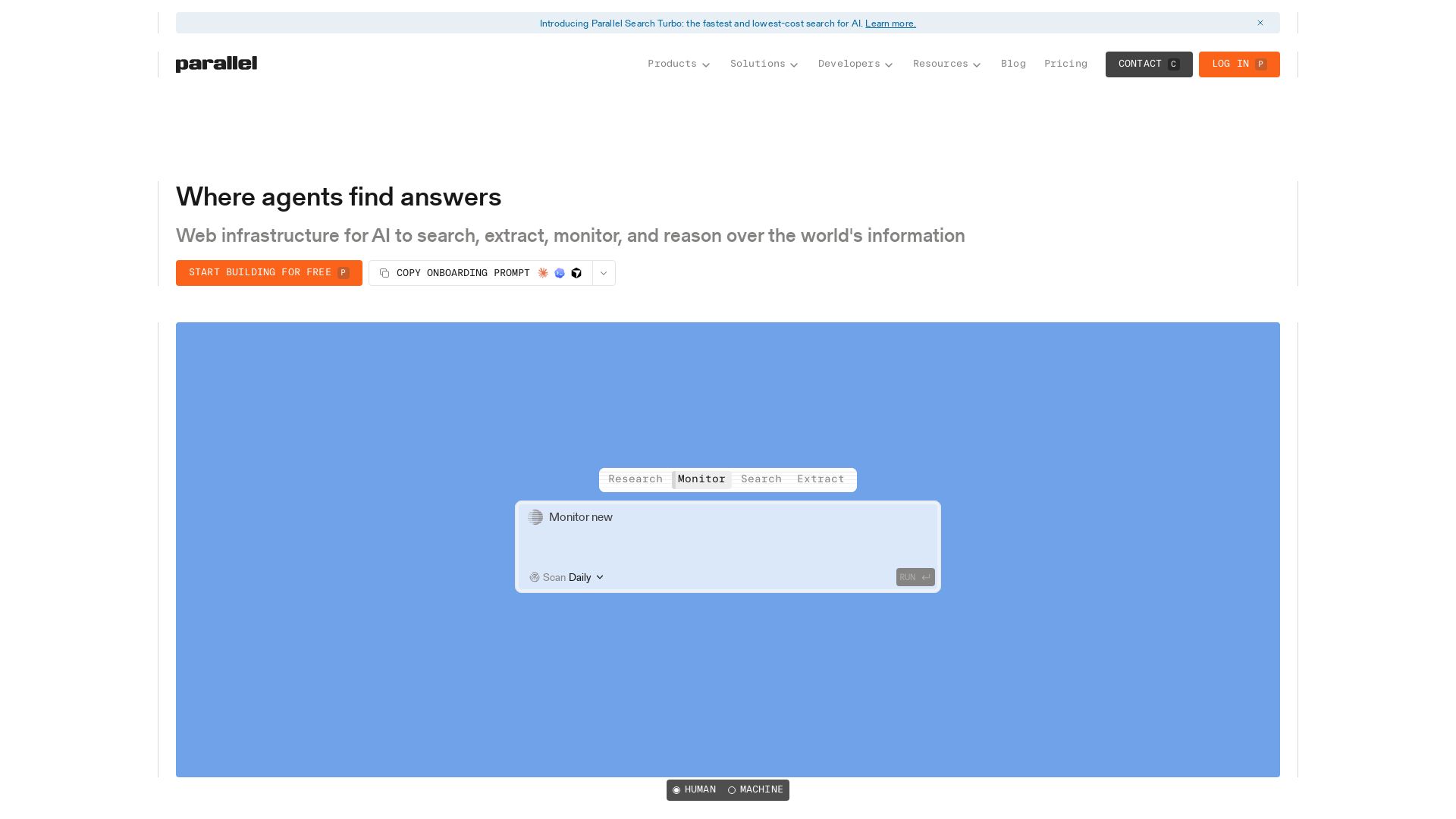
Parallel
Parallel gives AI agents real-time web search, extraction, monitoring, and deep research with cited outputs. Built for production, trusted by enterprises.

Toloka
High-quality training data for AI agents, LLMs, and coding assistants. Trusted by leading AI teams. 90+ domains, expert network.

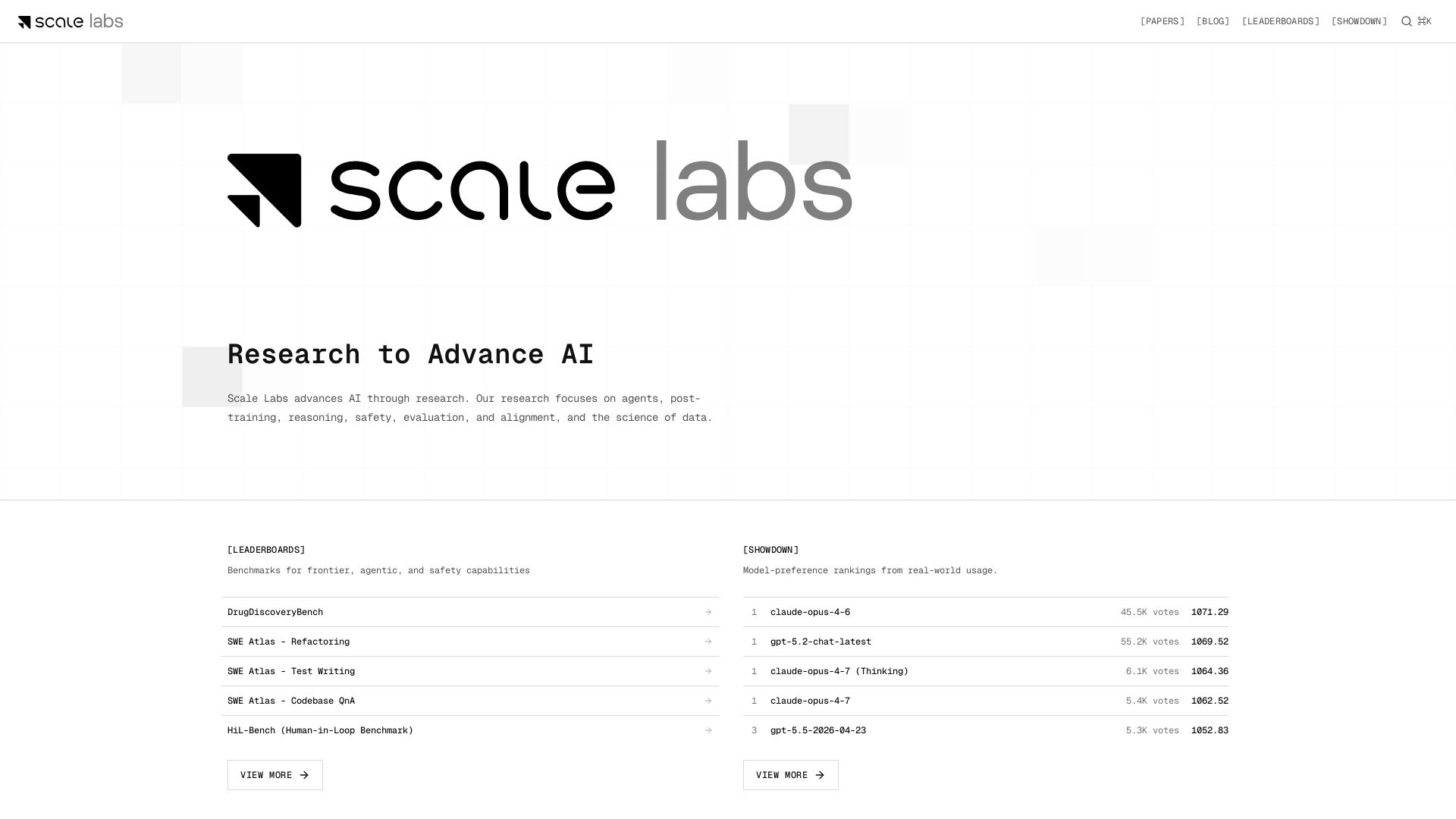
Scale Labs
Your hub for cutting-edge AI research on agents, safety, and evaluation. Explore leaderboards, model showdown rankings, and insightful blogs.

ℹ️ Curation Disclosure: The overview and features of Future AGI were synthesized using AI and fact-checked by our curation team to ensure accuracy.