Deeplake
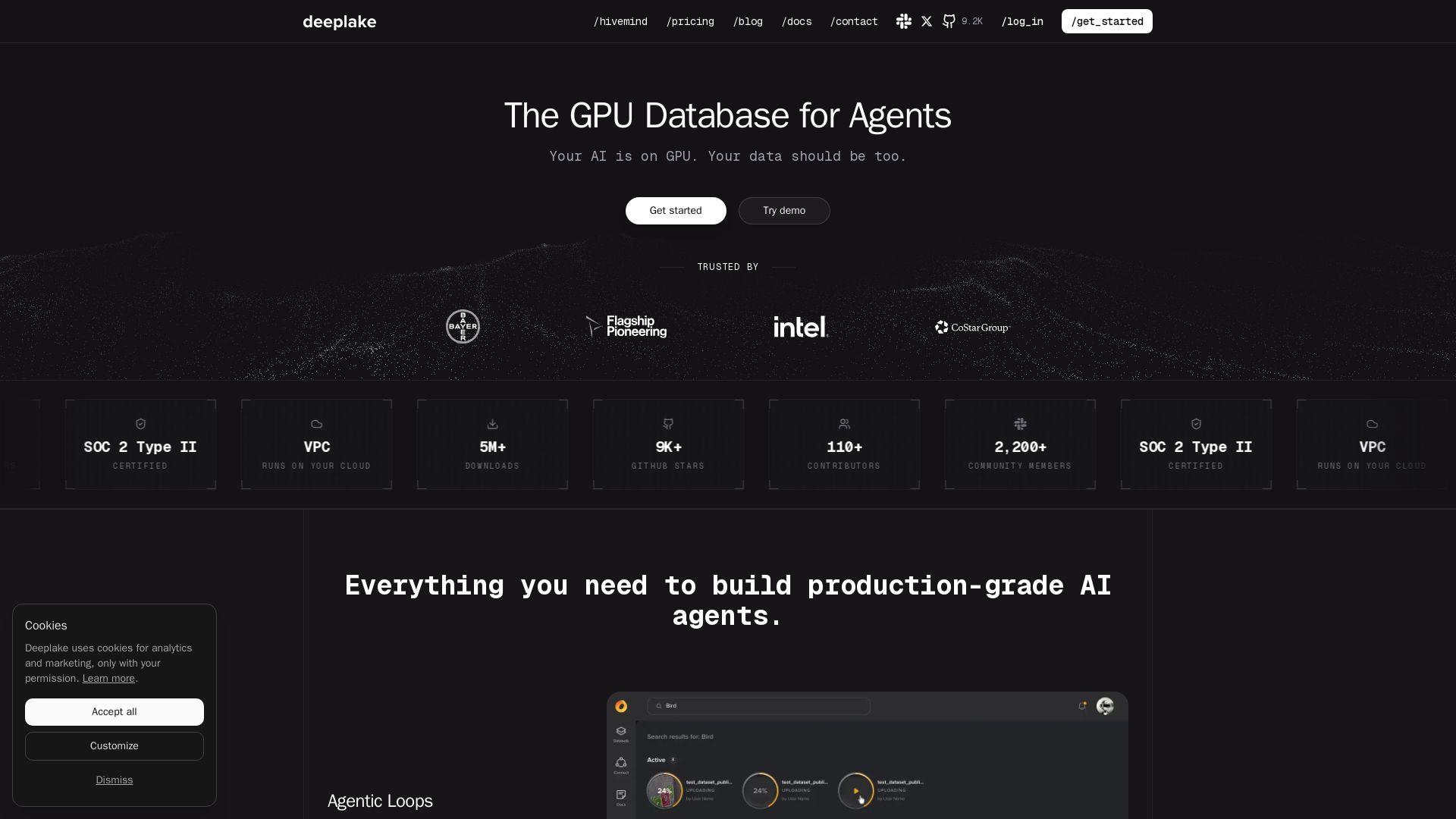
Deeplake is the first GPU-native database for AI agents. 3x faster queries, 8x lower cost. Familiar SQL, unlimited scalability.
Editor's Verdict
Key Takeaways
- GPU-Native Database
- Agentic Loops
- Physical AI Support
- Generative Media Indexing
In-Depth Review: What is Deeplake?
Deeplake is a GPU-accelerated database built for AI agents. Unlike traditional CPU-based databases, Deeplake runs directly on GPU, eliminating data transfer bottlenecks and enabling agents to execute up to 3x faster queries at a fraction of the cost. It combines the simplicity of Postgres with the speed of DuckDB and the scalability of GPU computing, making it ideal for agentic loops, physical AI, and generative media applications. Trusted by over 5 million developers, Deeplake is the memory layer that keeps AI agents fast and efficient.
Core Features
GPU-Native Database
Deeplake is the first database built natively for GPU, eliminating data transfers and enabling AI and data to operate at the same speed.
Agentic Loops
Supports rapid cycles of memory, retrieval, and action for AI agents, reducing system complexity and speeding up agents.
Physical AI Support
Handles diverse data types like video, sensors, 3D scans, and model weights, providing a single database from sensor to model.
Generative Media Indexing
Automatically indexes every media type by actual content, eliminating the need for manual folders and tags.
Postgres Compatibility
Built on PostgreSQL, offering familiar SQL interface with ACID compliance and reliability.
High Performance & Low Cost
Agents run queries 3x faster and at 8x lower cost compared to traditional solutions like Snowflake and Databricks.
Pricing
Free
- Get started with basic features
- Community support
Enterprise
- Custom deployment options
- Dedicated support
- SOC 2 Type II certification
- VPC deployment
Pros and Cons
Pros
- GPU-Native ArchitectureEliminates CPU-GPU data transfer bottlenecks, enabling faster AI workloads.
- Cost-EffectiveUp to 8x lower cost than traditional databases for AI workflows.
- Scalable & FlexibleSupports various data types and scales from small to massive datasets.
- Loved by the CommunityOver 5M downloads, 9K GitHub stars, and positive testimonials from industry leaders.
- Postgres FoundationLeverages the reliability and ecosystem of PostgreSQL with added AI optimizations.
Cons
- Limited Non-GPU Use CasesOptimized for GPU workloads, may be overkill for traditional CPU-bound databases.
- Vendor Lock-InTied to Activeloop’s platform and infrastructure.
- Learning CurveNew paradigm may require time to adapt for teams familiar with traditional databases.
- Pricing UncertaintyDetailed pricing not publicly available, requiring contact for enterprise plans.
- Relatively NewAs a newer product, may have fewer integrations and community resources than established databases.
Use Cases & Recommended Professions
AI Agent Developer→ View Toolkit
Needs a fast, GPU-native database to build memory and retrieval loops for autonomous agents.
Machine Learning Engineer→ View Toolkit
Benefits from scalable storage and querying of training data, embeddings, and model artifacts.
Data Scientist→ View Toolkit
Requires efficient data handling for large-scale analysis and experimentation with GPU acceleration.
Robotics Engineer→ View Toolkit
Manages diverse sensor and video data for physical AI applications within a single database.
Backend Developer→ View Toolkit
Integrates AI into applications and needs a database that can keep up with high query rates from agents.
Computer Vision Engineer→ View Toolkit
Works with image and video datasets that require content-based indexing and fast retrieval.
Frequently Asked Questions
Alternative AI Tools
View Detailed Comparison →
Making AI think and act: my approach to the Hugging Face AI ...
Experienced AI engineer specializing in medical imaging and LLM-powered agents. Built globally deployed radiology AI at AZmed. Now building AI agents at Matrix One.

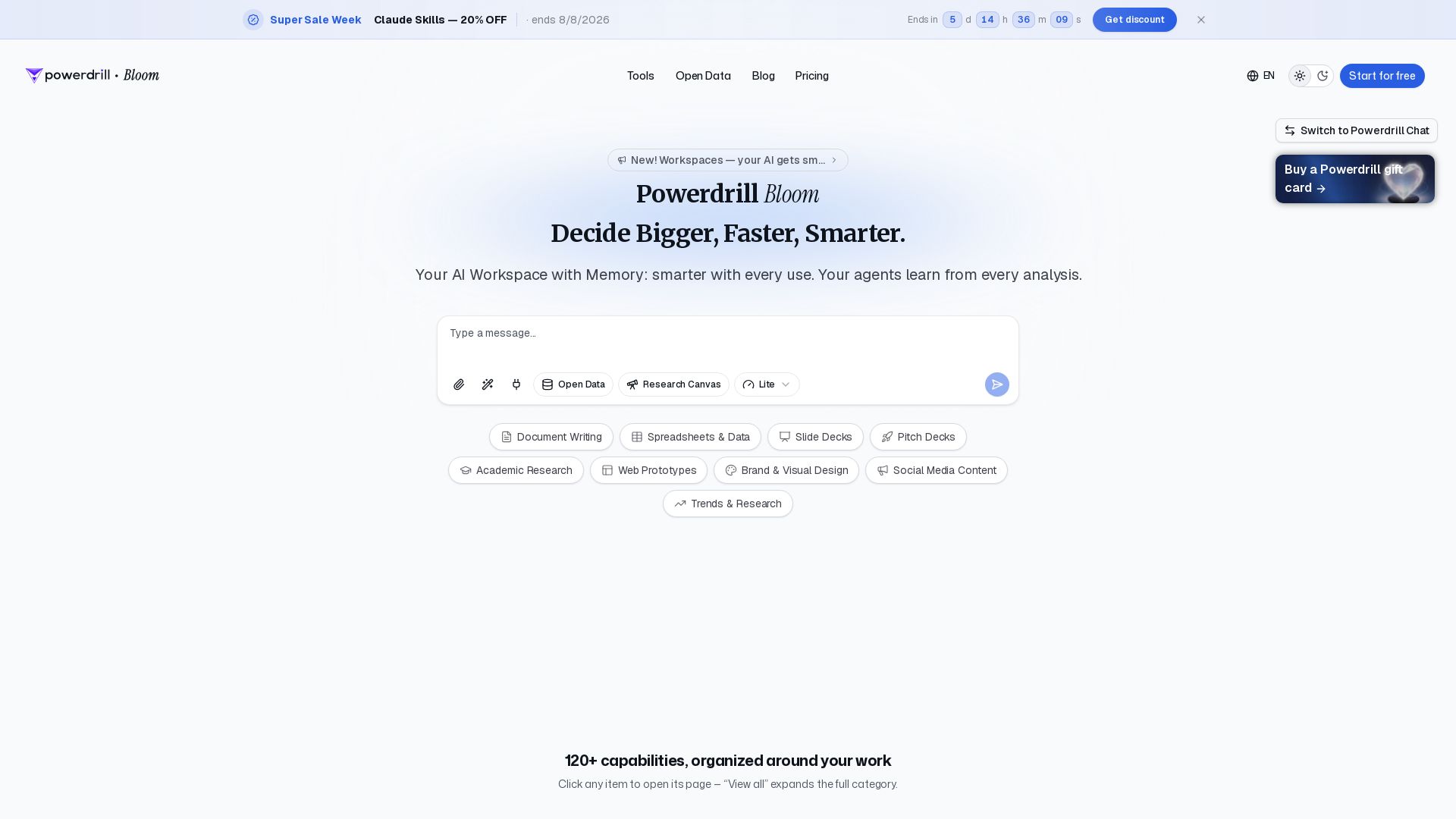
Powerdrill Bloom
Powerdrill Bloom: AI workspace with memory for data analysis, docs, research & more. Smarter with every use. Start free.

Scale Labs
Your hub for cutting-edge AI research on agents, safety, and evaluation. Explore leaderboards, model showdown rankings, and insightful blogs.

What are Autonomous AI Agents? | NVIDIA Glossary
NVIDIA powers AI, gaming, data centers, autonomous vehicles, and robotics with accelerated computing. Explore GPUs, DGX, DRIVE, and Omniverse.

Toloka
High-quality training data for AI agents, LLMs, and coding assistants. Trusted by leading AI teams. 90+ domains, expert network.


Massachusetts AI Hub
Explore no-cost Google AI training, startup accelerator, and major investments. Join the global leader in applied AI.

Building RAG LLMs on AMD Ryzen™ AI PCs
Discover AMD's comprehensive AI portfolio for data center, edge, and PCs. Trusted by leading companies, AMD delivers open, flexible solutions with CPUs, GPUs, and adaptive computing.

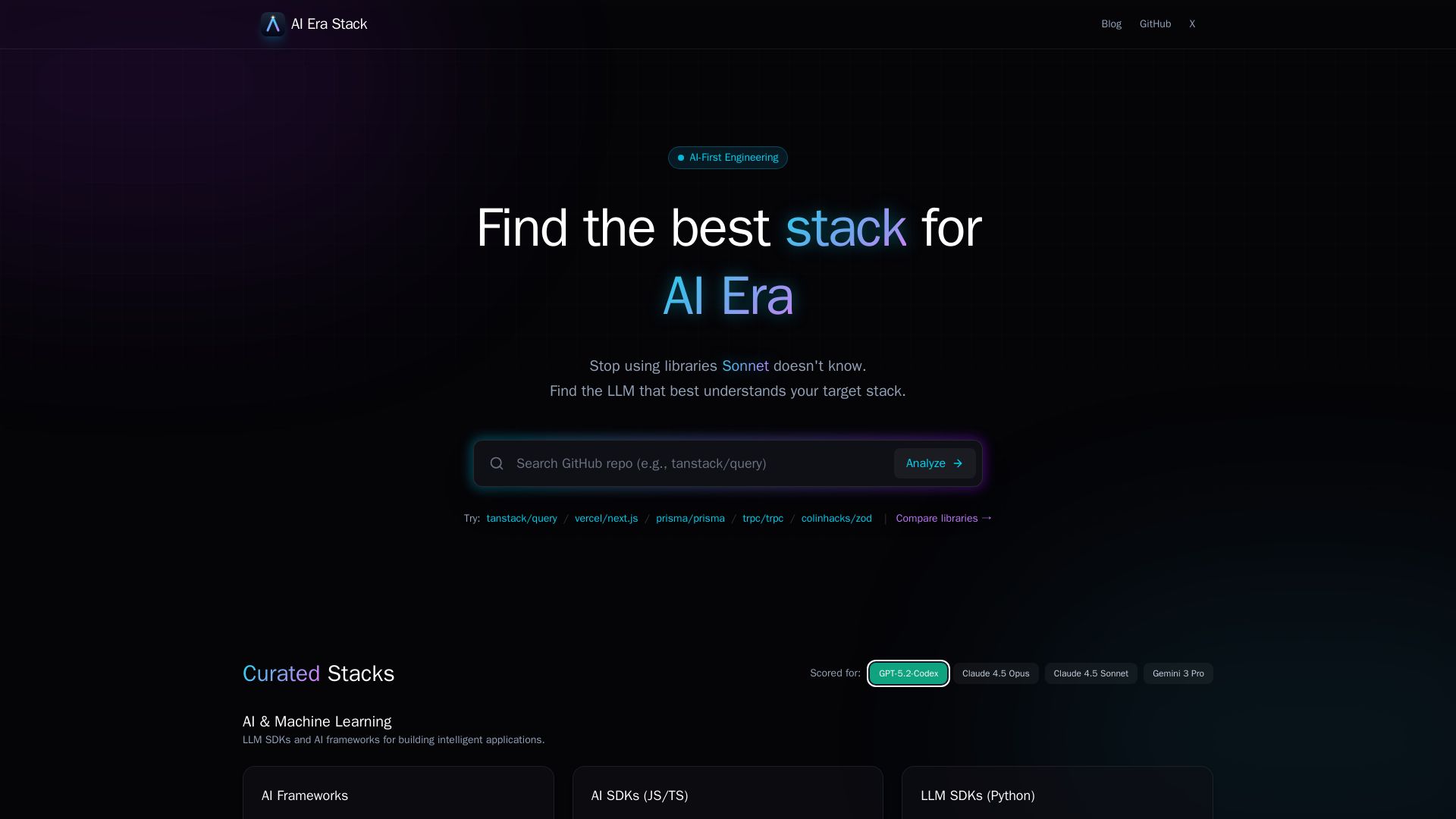
AI Era Stack
Discover which GitHub projects are best understood by LLMs like GPT, Claude, Gemini. Score based on AI coverage, adoption, and more. Choose stacks AI knows.

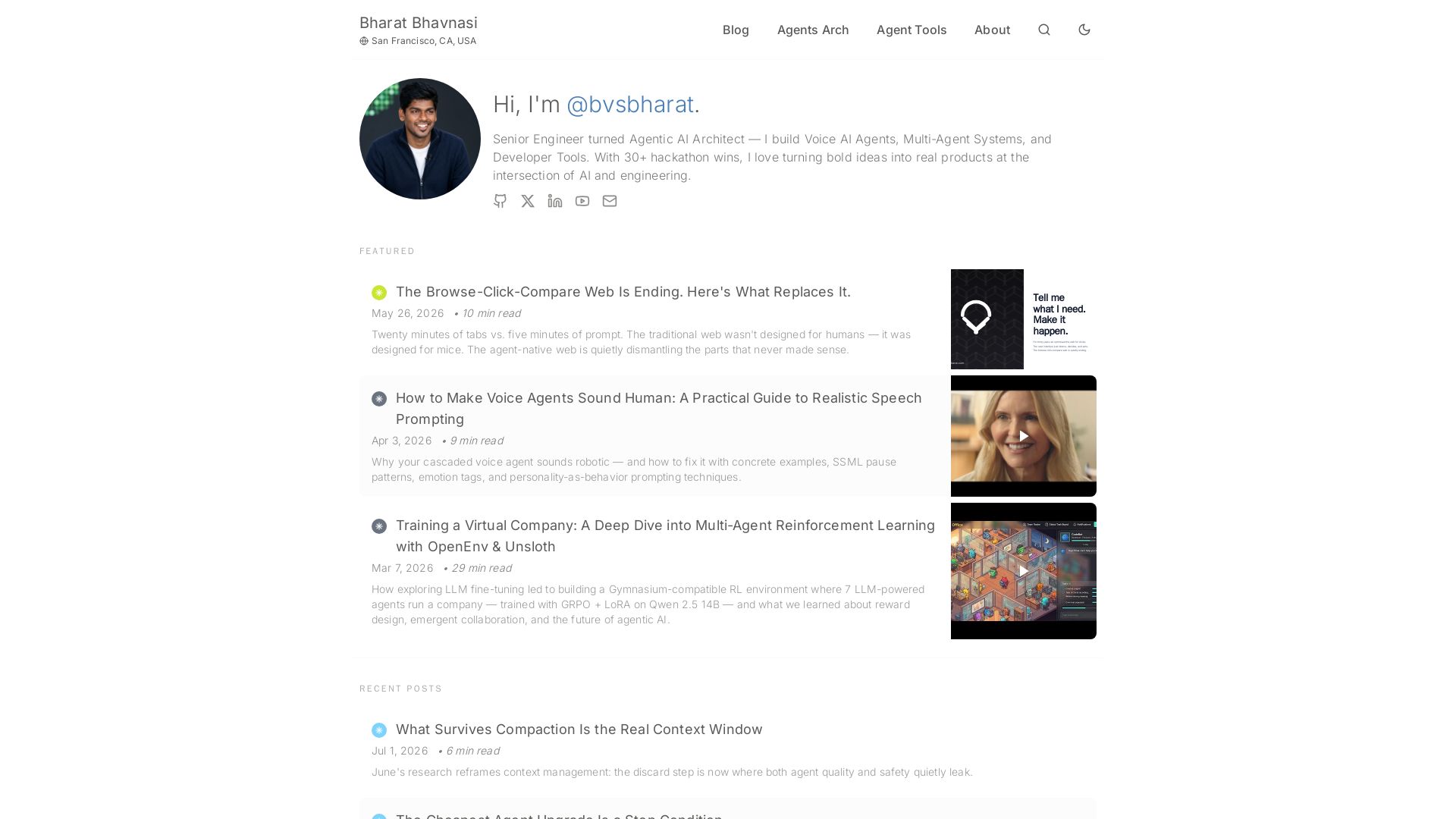
I Tested Every Major Open-Source AI Agent SDK So You Don't ...
Explore insights on Voice AI Agents, Multi-Agent Systems, and Developer Tools from a 30+ hackathon winner. Practical guides and cutting-edge research.


SF AI Labs
End-to-end AI services from strategy to launch. Proven delivery framework, expert network in San Francisco. Maximize ROI with custom AI solutions for modern companies.

NVIDIA
Explore NVIDIA's AI platforms, GeForce RTX graphics, data center solutions, and robotics. Powering innovation from gaming to autonomous vehicles.

ℹ️ Curation Disclosure: The overview and features of Deeplake were synthesized using AI and fact-checked by our curation team to ensure accuracy.