
Twilio
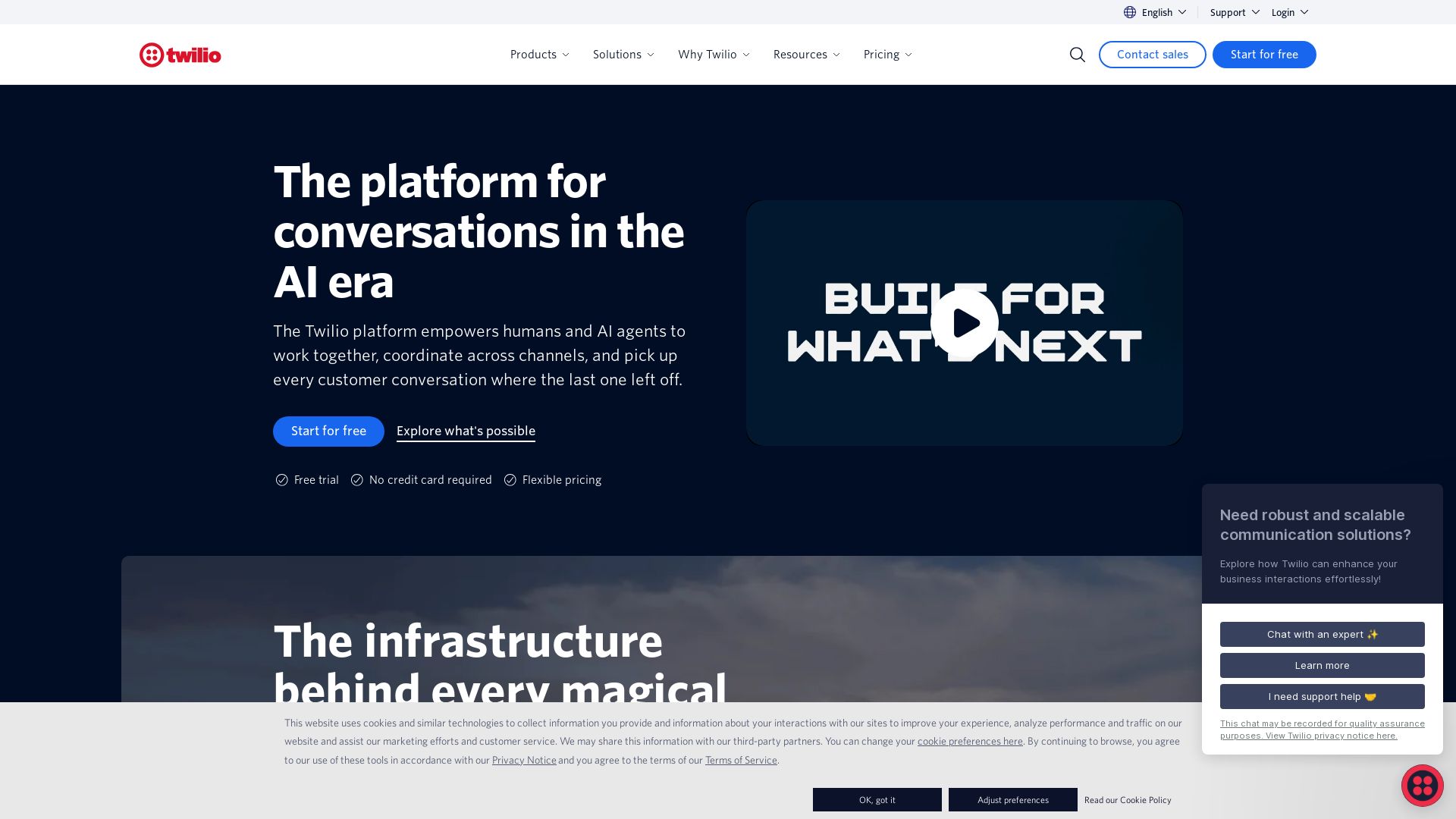
Empower humans and AI agents to work together across channels. Build personalized, continuous conversations with persistent memory and intelligence.

Editor's Verdict
Key Takeaways
- Intelligent Self-Service
- Contextual Hand-off
- Cross-Channel Continuity
- Persistent Memory
In-Depth Review: What is Twilio?
Twilio is a customer engagement platform that enables seamless conversations between humans and AI agents across channels like voice, messaging, email, and more. With intelligent self-service, contextual hand-off, cross-channel continuity, and persistent memory, Twilio ensures every interaction feels personalized and continuous. Trusted by startups to global enterprises, Twilio provides building blocks for voice, messaging, email, authentication, and customer data, all on a single platform with flexible pricing.
Core Features
Intelligent Self-Service
AI agents leverage internal knowledge and real-time data to deliver personalized, natural conversations.
Contextual Hand-off
AI agents seamlessly transfer conversations to human agents with full context, eliminating repetition.
Cross-Channel Continuity
Customers can switch between channels like chat, text, voice, and email without interruption.
Persistent Memory
Unify customer data into a living memory to anticipate needs and personalize interactions.
Reliable Infrastructure
99.95% uptime SLA with automated failover and zero maintenance windows.
Pay-as-you-go Pricing
No contracts, usage-based billing, and volume discounts allow flexible scaling.
Pricing
Twilio SendGrid Email API (Paid)
- 100 emails/day free tier
- Scalable email delivery
- Analytics and tracking
Twilio Flex (Contact Center)
- Customizable cloud contact center
- 5,000 free hours included
- Omnichannel support
Twilio Segment CDP
- Customer data unification
- Personalized multichannel campaigns
- Real-time insights
Verify (Authentication)
- User verification via SMS or voice
- Fraud prevention
- Scalable authentication
Conversation Orchestrator
- Cross-channel conversation orchestration
- AI integration
- Persistent memory
Pros and Cons
Pros
- Reliable Uptime99.95% uptime SLA with automated failover ensures high availability.
- Scalable GloballyWrite once and deploy to new markets with localization and compliance features.
- Omnichannel SupportVoice, SMS, chat, email, and more on a single platform.
- Flexible PricingPay-as-you-go without contracts, plus volume discounts as you grow.
- Free Trial AvailableStart building with no credit card required.
Cons
- Complexity for BeginnersThe wide range of products and configurations can be overwhelming for new users.
- Cost at ScaleUsage-based pricing may become expensive for high-volume applications.
- Technical Expertise RequiredDevelopers are needed to integrate and customize the platform effectively.
- Limited Free TierFree tier allowances are low; extensive usage quickly requires paid plans.
- Dependency on Twilio EcosystemDeep integration may lead to vendor lock-in for specific communication features.
Use Cases & Recommended Professions
Software Engineer→ View Toolkit
Integrate communication APIs (SMS, voice, email) into applications with scalable infrastructure.
Customer Support Manager→ View Toolkit
Deploy AI-powered contact center solutions to improve agent productivity and customer satisfaction.
Marketing Manager→ View Toolkit
Use email and messaging APIs for personalized campaigns and customer engagement.
AI/ML Developer→ View Toolkit
Build conversational AI agents with real-time data and context handling.
Product Manager→ View Toolkit
Orchestrate cross-channel customer journeys with persistent memory and analytics.
Data Analyst→ View Toolkit
Leverage customer data platform for unified insights and audience segmentation.
Frequently Asked Questions
Alternative AI Tools
View Detailed Comparison →
Chatbot Builder
Build an AI chatbot in minutes without coding. 24/7 customer support, sales automation, and seamless integrations. Start your free 14-day trial today!

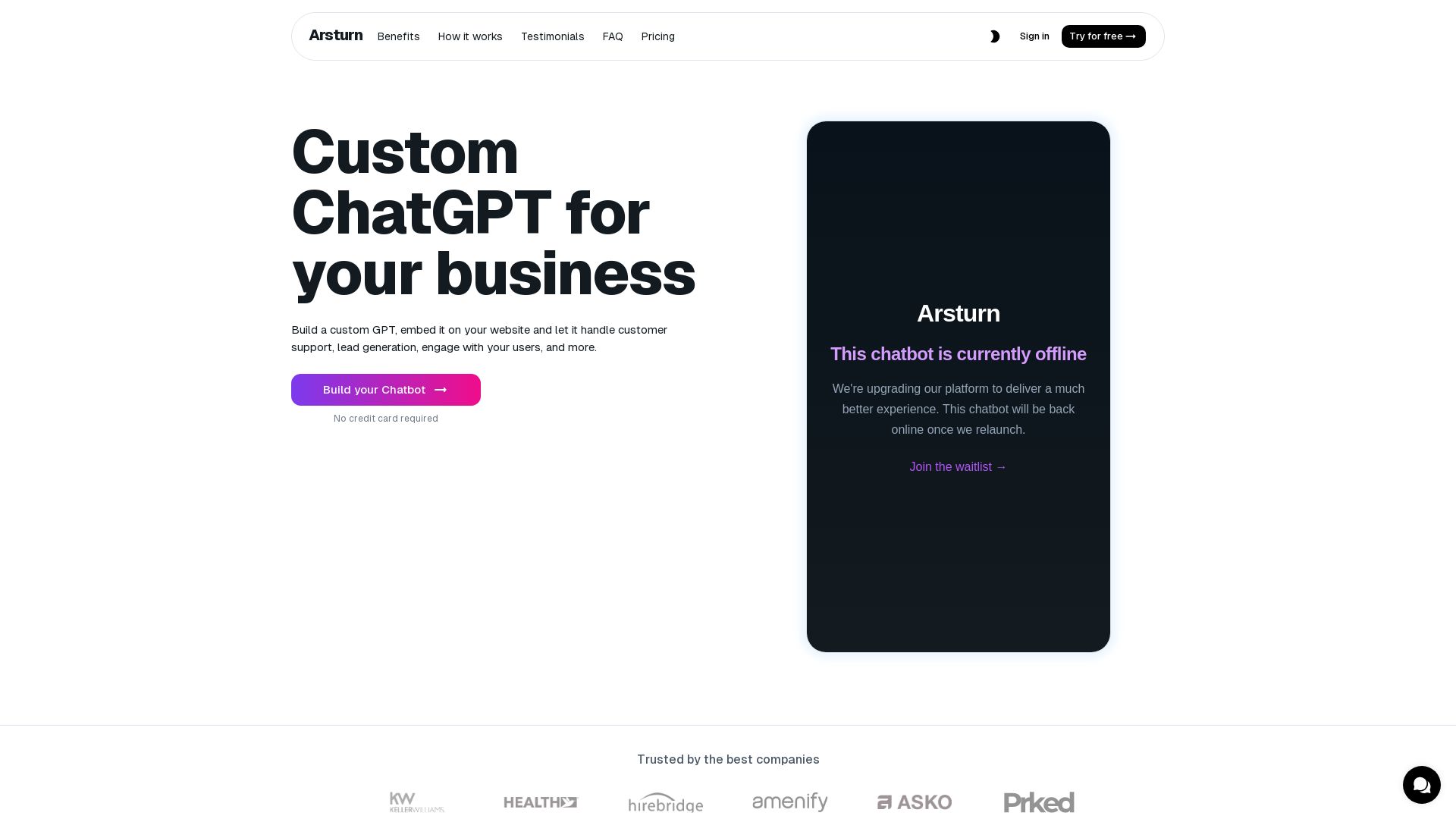
Arsturn
Build a custom GPT chatbot without coding. Train with your data, embed on website, boost engagement and lead generation. Free plan available.

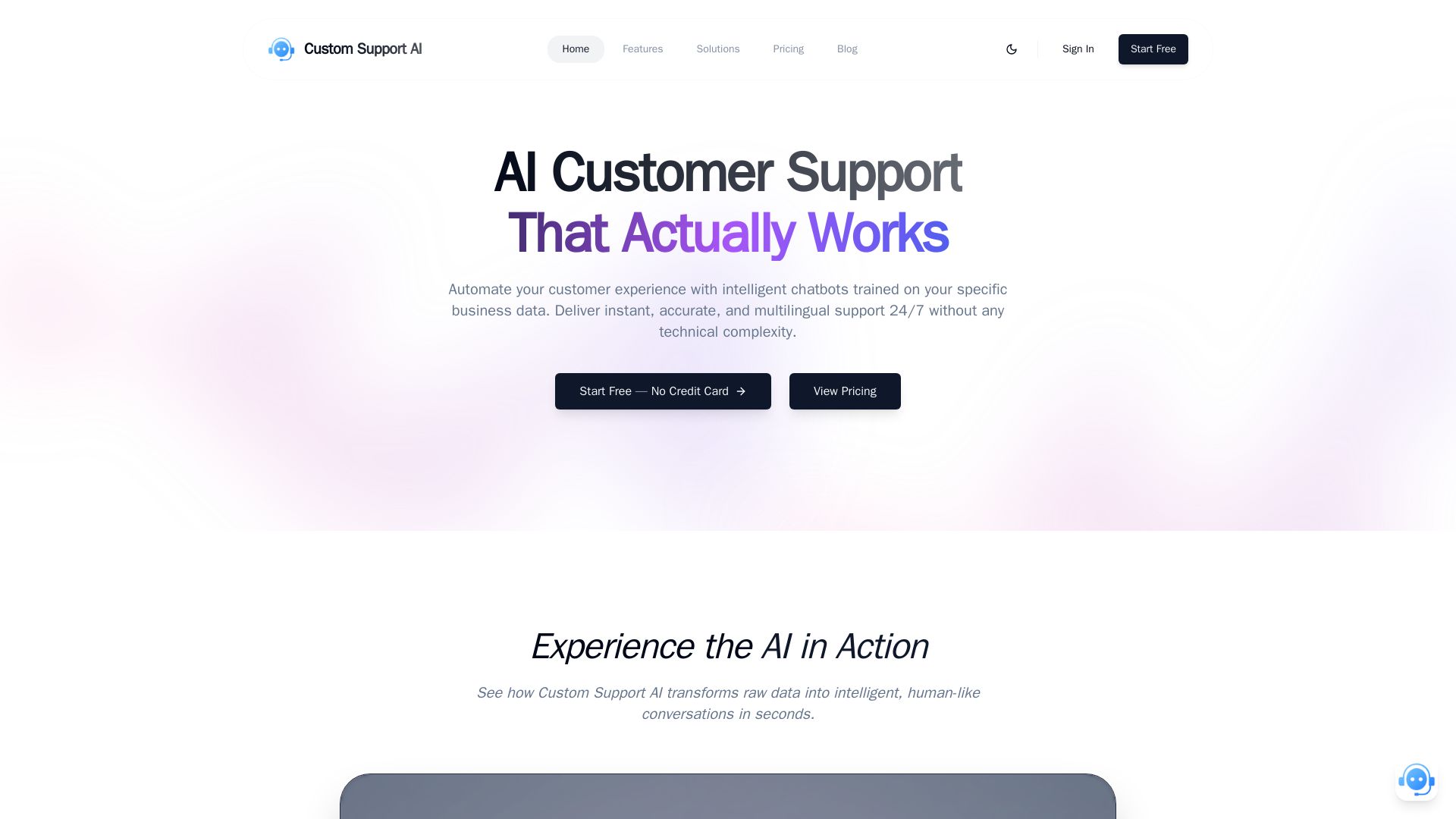
Custom Support AI
Deliver instant, accurate, multilingual customer support 24/7 with AI chatbots trained on your business data. Simple integration, no credit card required.

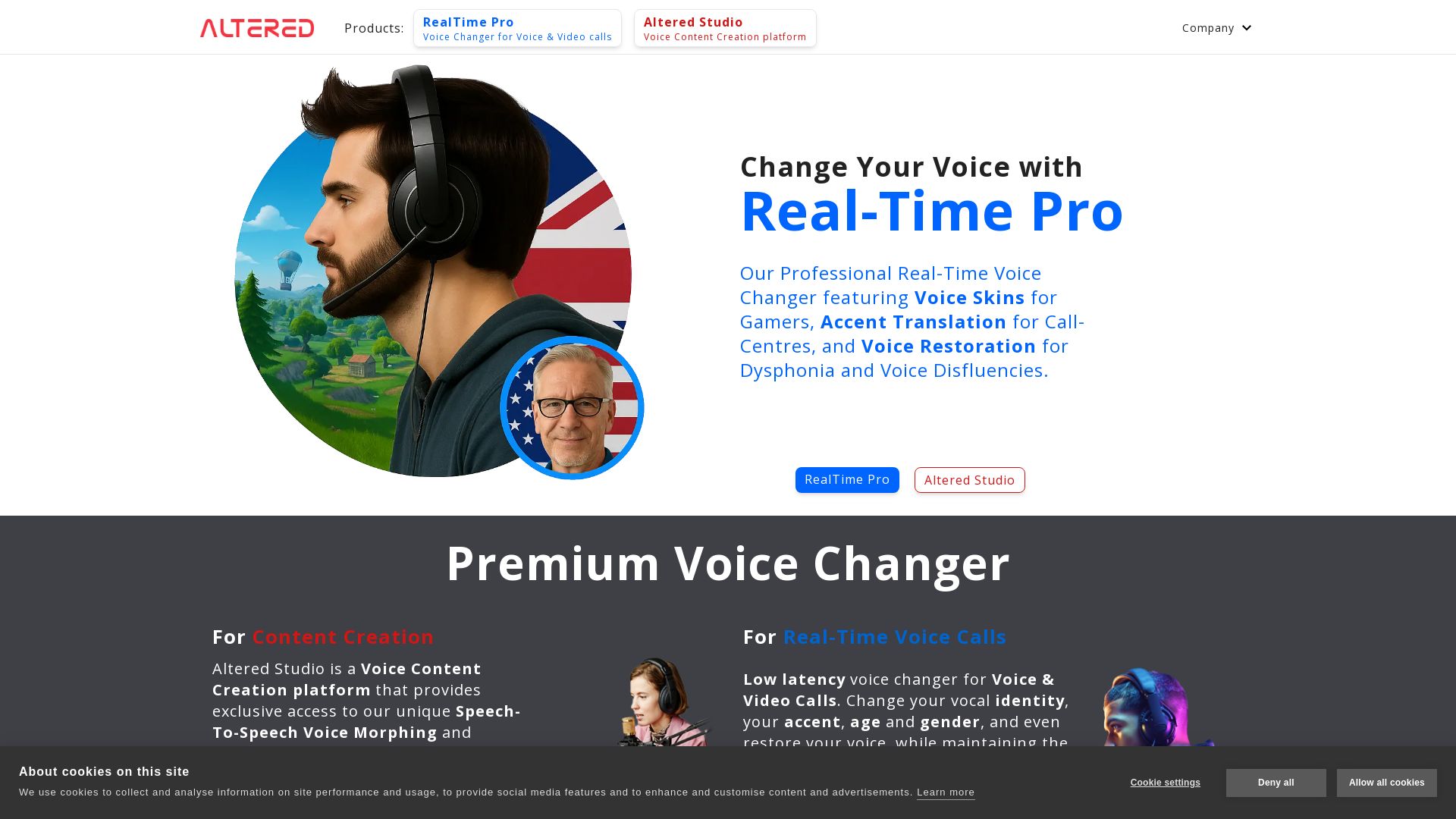
Altered
AI voice changer for real-time calls and content creation. Morph your voice, clone voices, and clean audio with Altered Studio and Real-Time Pro.

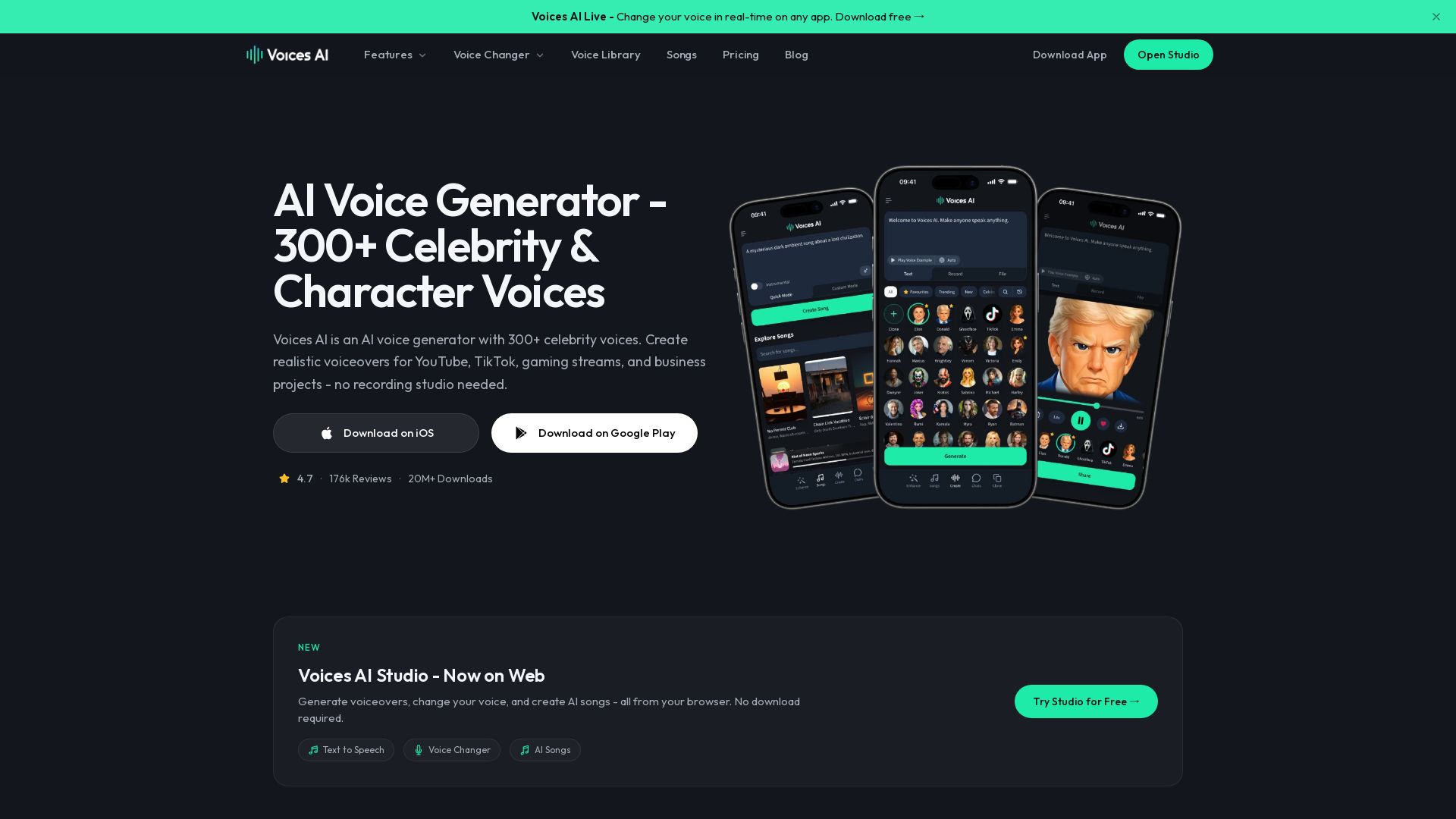
Voices AI
Change your voice in real-time or generate realistic voiceovers with 300+ celebrity voices. Perfect for YouTube, TikTok, gaming, and business. Download free!

Expo AI Chatbot
Build AI chatbot apps for iOS, Android & web with Expo SDK 54, AI SDK 5, voice, long-term memory, and more. Open-source codebase.

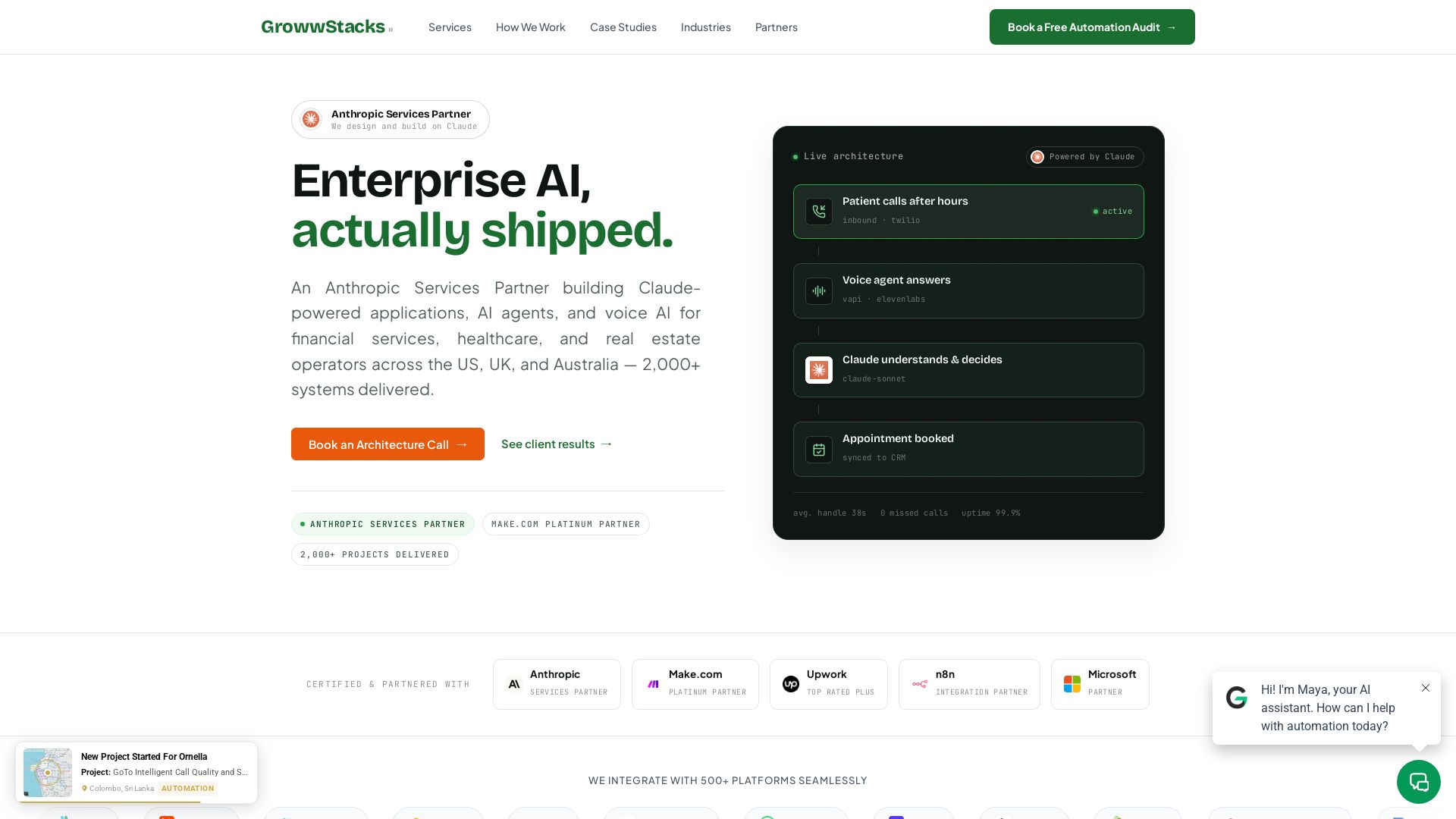
GrowwStacks
We design and build Claude-powered AI agents, voice AI, and workflow automation for financial services, healthcare, and real estate. 2000+ systems delivered. Free audit.

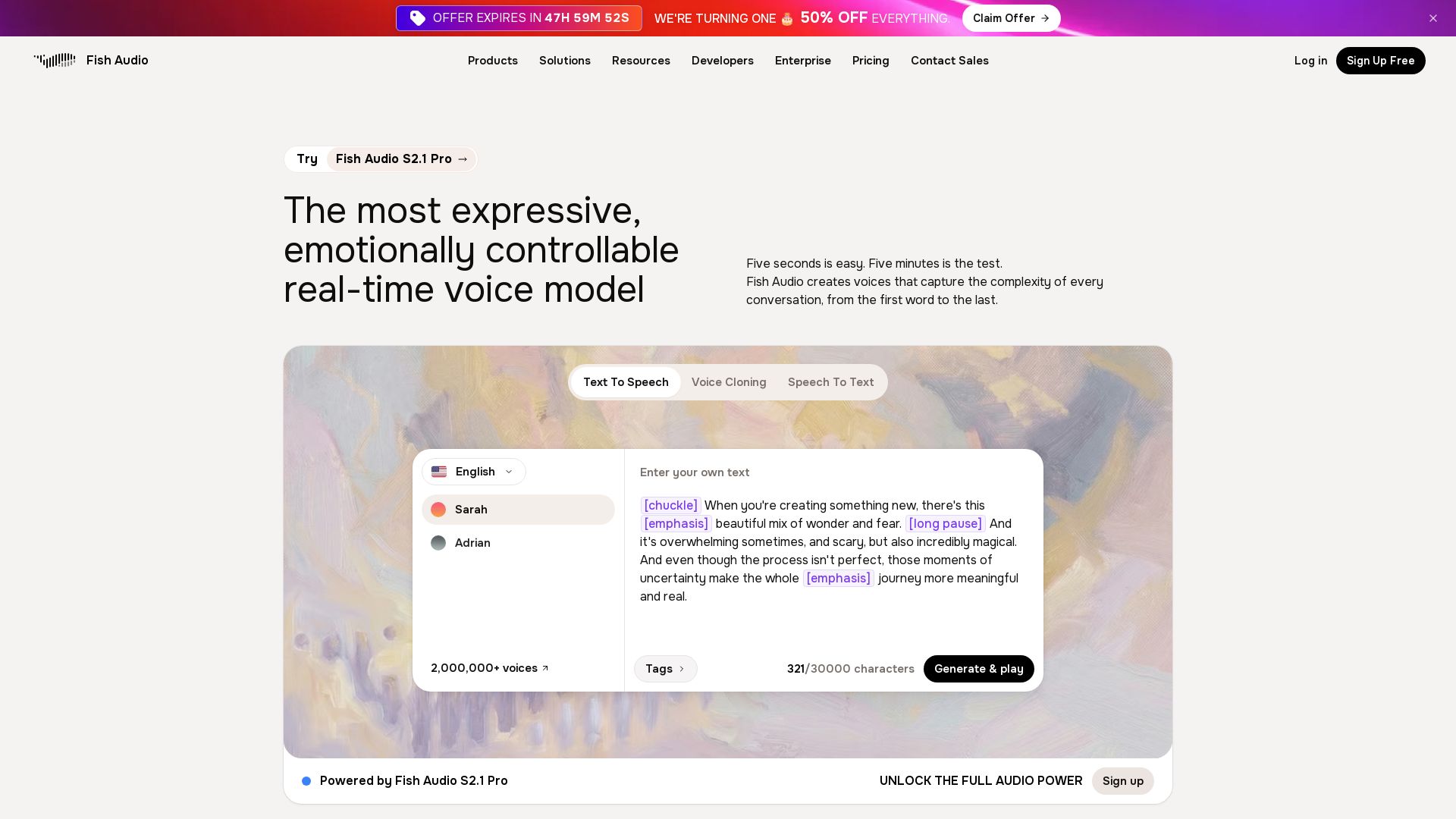
Fish Audio
Create studio-quality AI voices with emotional control. Clone any voice in 15 seconds, supports 30+ languages. Trusted by millions. 50% off now!


ChatBot
Train an AI agent on your website in minutes. Answer questions, recommend products, and close sales 24/7. Free 14-day trial, no credit card.


Kaily
Meet Fynd Kaily, the AI agent that sells, resolves, and automates tasks. Deploy on WhatsApp, website, voice, and more. Try free!

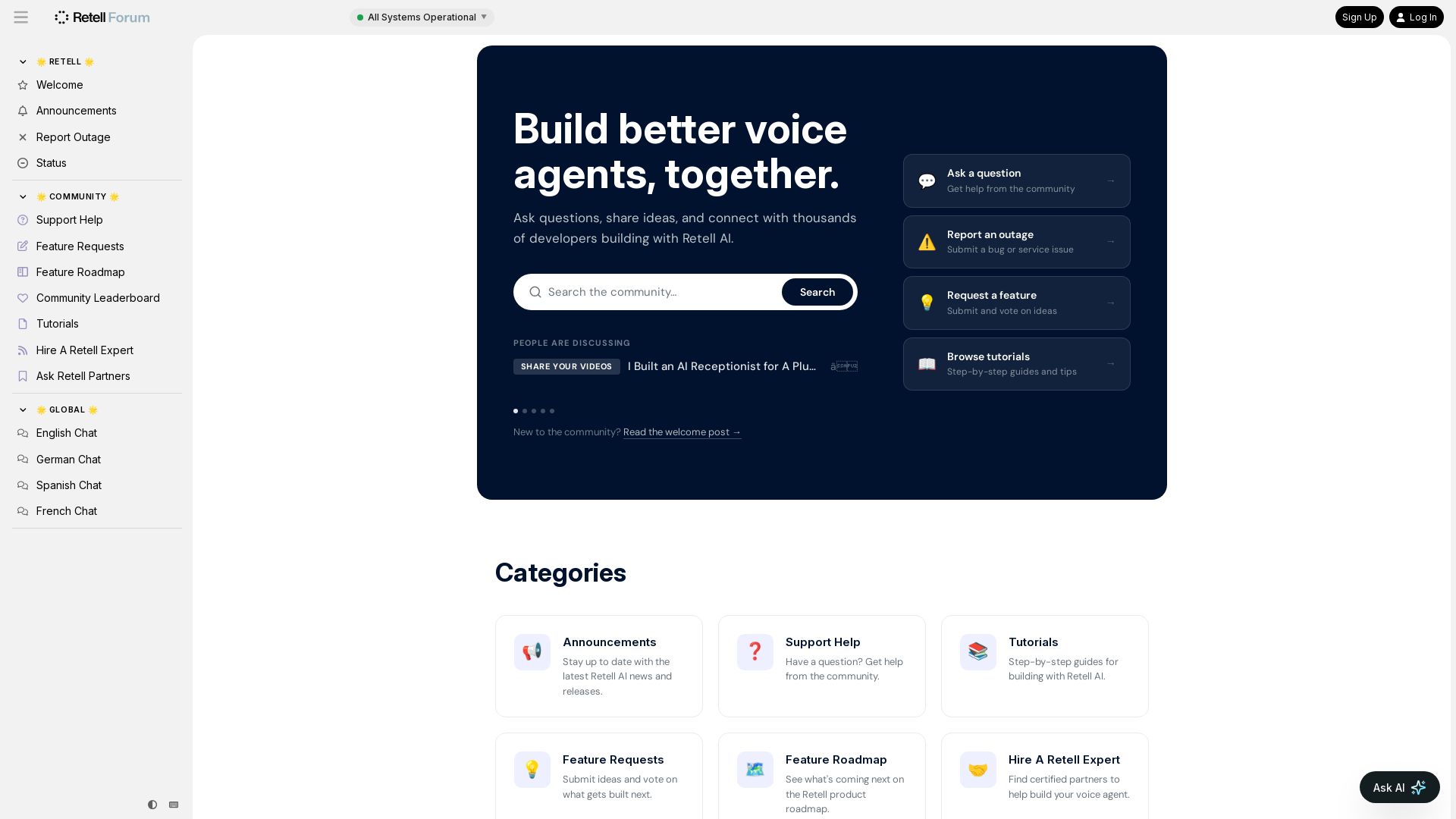
Retell AI
Join thousands of developers in the Retell AI community. Get help, share ideas, request features, and access tutorials for building voice agents.

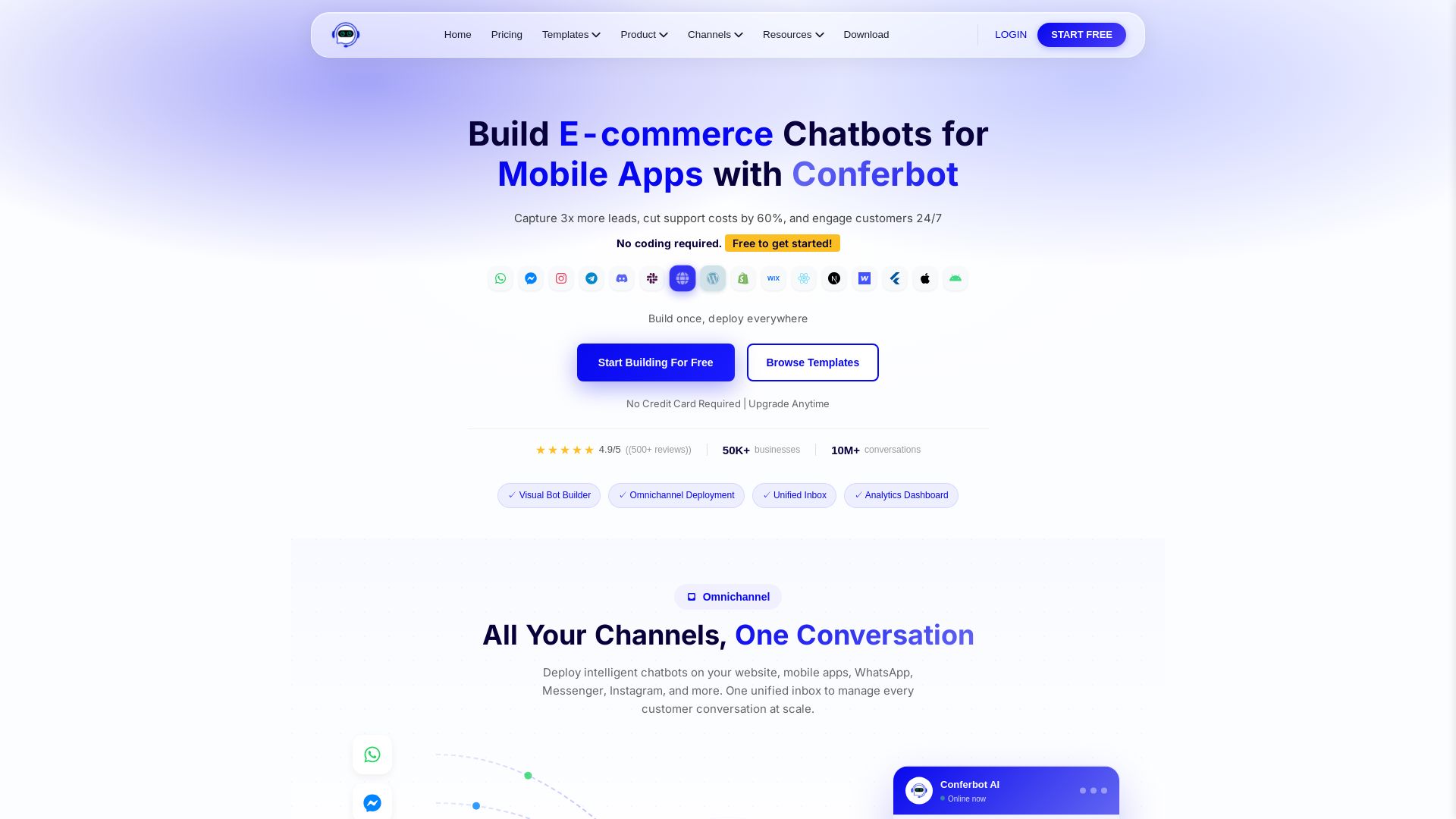
Conferbot
Capture 3x more leads and cut support costs by 60% with Conferbot. Deploy no-code AI chatbots across 13+ channels in minutes. Free to start, no credit card required.

ℹ️ Curation Disclosure: The overview and features of Twilio were synthesized using AI and fact-checked by our curation team to ensure accuracy.