
Supermemory
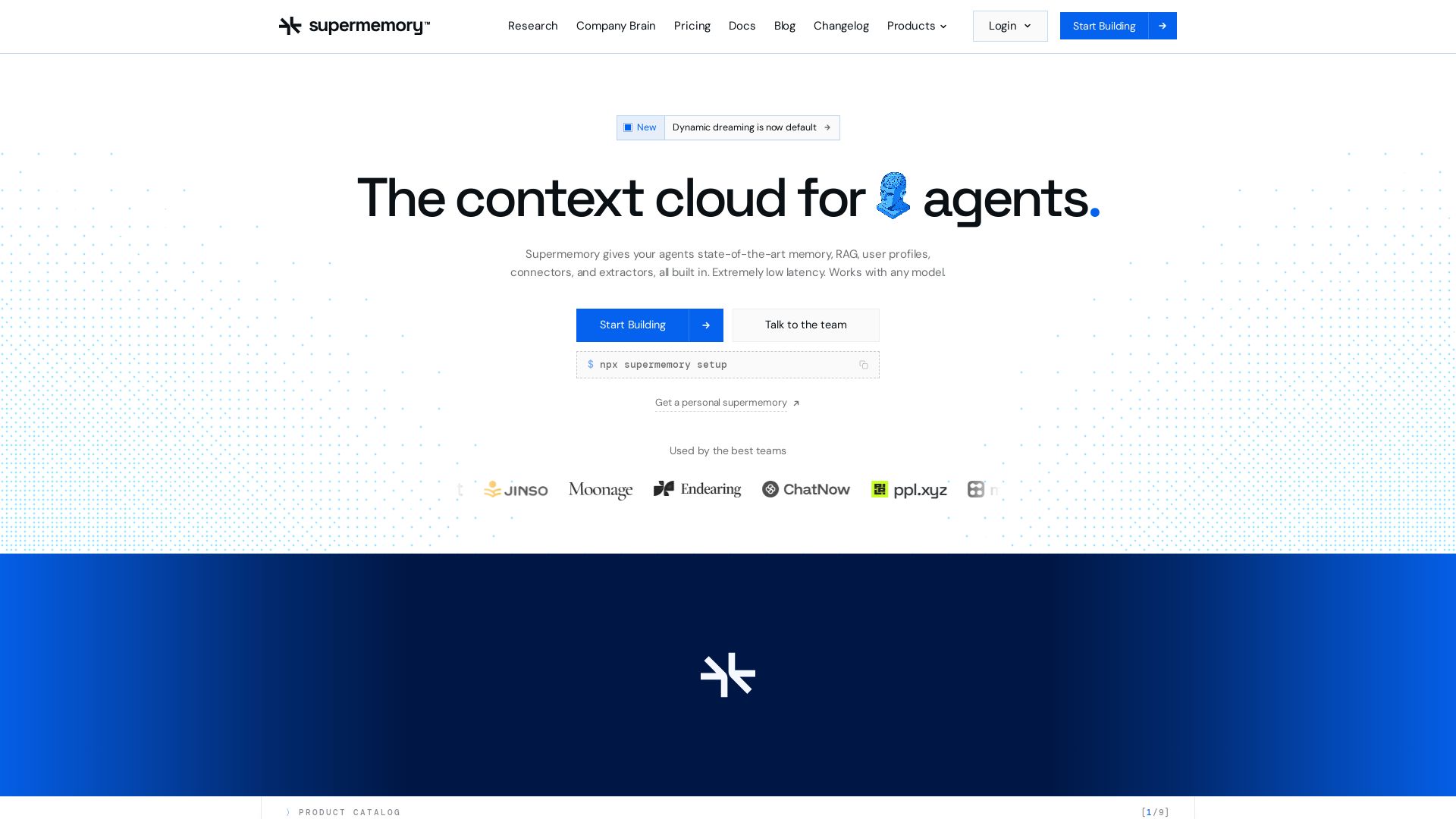
Give your AI agents persistent memory, RAG, user profiles, and connectors via one API. Sub-300ms latency, works with any model. Used by leading teams.
Editor's Verdict
Key Takeaways
- Memory Graph
- SuperRAG
- Connectors
- User Profiles
In-Depth Review: What is Supermemory?
Supermemory is a context infrastructure platform that provides AI agents with state-of-the-art memory, retrieval-augmented generation (RAG), user profiles, connectors, and extractors—all through a single API. It features a custom knowledge graph that enables fast, sub-300ms recall and supports continual learning, contradiction resolution, and real-time traversal. Supermemory is designed to be easily integrated via SDKs in TypeScript, Python, and more, and is self-hostable with SOC 2, GDPR, and HIPAA compliance. With use cases spanning AI assistants, knowledge bases, real-time knowledge, and internal tools, Supermemory helps developers build agents that remember and understand context across sessions, reducing latency and token usage compared to traditional RAG systems.
Core Features
Memory Graph
Persistent, structured knowledge graph that evolves with user interactions, enabling agents to remember, contradict, and infer across sessions.
SuperRAG
State-of-the-art retrieval augmented generation with sub-300ms latency, supporting multimodal extraction and retrieval without embeddings or vectors.
Connectors
Pre-built integrations with popular services like Google Drive, Notion, Gmail, GitHub, and S3 for seamless data ingestion.
User Profiles
Auto-built ontologies and fact hierarchies that track users' evolving preferences and knowledge for personalized agent responses.
Dynamic Dreaming
Default memory consolidation technique that merges, updates, and forgets knowledge to keep agents contextually aware without manual intervention.
Self-Hostable
Deploy fully air-gapped, on-premises, or in your VPC with the same API, ensuring data sovereignty and compliance (SOC 2, HIPAA, GDPR).
Real-Time Traversal
Sub-300ms graph traversal for querying memories, RAG, and profiles in a unified structure, optimized for agent loops.
Extractors
Automatic content extraction from raw data (PDFs, audio, video) optimized for retrieval and memory generation.
Pricing
Free
- ~$5/month of usage built in
- Hermes Plugin
- Supermemory MCP
- Community support
Pro
- ~$20/month of usage built in
- Unlimited storage
- Unlimited users
- Auto top-up available
- Google Drive, Notion & OneDrive connectors
- 2 teammates included
- OpenClaw, Claude Code and other plugins
- Email support
Max
- ~$130/month of usage built in (6× Pro)
- Unlimited storage
- Unlimited users
- Gmail & Granola connectors (+ Pro)
- Auto top-up available
- OpenClaw, Claude Code and other plugins
- Priority support
Scale
- ~$600/month of usage built in
- Unlimited storage
- Unlimited users
- Up to 10 teammates
- All connectors (Gmail, GitHub, S3, Web Crawler + Pro)
- Auto top-up + spend caps
- Priority support
- SOC 2 · HIPAA BAA
- Self-hosted option
Enterprise
- Security & compliance: Air-gapped self-hosting, SOC 2, HIPAA, GDPR, custom contracts & DPA
- Enterprise MCP
- Scale & performance: ~Unlimited usage, committed-spend pricing, custom rate limits & throughput
- dedicated infrastructure
- Dedicated account manager
- Forward Deployed engineer
- 1:1 onboarding & integration
- Uptime SLA
- Priority Slack channel
Pros and Cons
Pros
- Extremely Low LatencySub-300ms recall and graph traversal, 10× faster than Zep and 25× faster than Mem0.
- Unified Context InfrastructureOne API for memory, RAG, profiles, connectors, and extractors, replacing multiple disjoint systems.
- State-of-the-Art Memory QualityLeads major benchmarks (LongMemEval, LoCoMo, ConvoMem) with persistent, evolving knowledge graphs.
- Self-Hostable and CompliantSupports on-prem, VPC, and air-gapped deployments with SOC 2, HIPAA, and GDPR compliance.
- Deduplication Saves CostsOnly net-new content is billed (SM tokens), providing a 100% discount on repeated context compared to vector databases.
Cons
- Usage-Based Pricing Can Scale QuicklyHeavy usage or large-scale deployments may incur significant costs, though auto top-up and caps help manage.
- Free Tier LimitationsFree plan pauses when balance runs out, with no pay-as-you-go option; requires upgrade for continuous use.
- Complexity for BeginnersAdvanced features like graph traversal and custom extractors may have a learning curve for new developers.
- Dependency on Supermemory InfrastructureSelf-hosted requires dedicated resources; cloud version relies on their uptime and SLAs.
- Relatively New ProductAs a newer platform, community plugins and third-party integrations may be less extensive than established competitors.
Use Cases & Recommended Professions
AI Assistant Developer→ View Toolkit
Needs persistent memory and reasoning to build agents that remember user context across sessions and adapt over time.
Knowledge Base Engineer→ View Toolkit
Requires self-improving retrieval systems that ingest and sync from multiple sources to keep agents updated with the latest context.
Real-Time Agent Architect→ View Toolkit
Builds agents that rely on up-to-date facts from APIs, docs, and tools, needing millisecond retrieval for operational decisions.
Enterprise AI Team Lead→ View Toolkit
Seeks compliant, self-hostable memory infrastructure with SOC 2/HIPAA, custom deployments, and enterprise-grade support.
Startup Founder→ View Toolkit
Wants to ship AI agents quickly with free credits ($2,000) and all features unlocked for three months to validate product-market fit.
Academic Researcher→ View Toolkit
Studies memory systems and needs an open evaluation platform (MemoryBench) plus free access to state-of-the-art memory for experiments.
Frequently Asked Questions
Alternative AI Tools
View Detailed Comparison →
Vectorize
Give your AI agents persistent memory that learns from mistakes. Open source, MIT licensed. #1 on BEAM benchmark. Per-user context, cross-session persistence.

Cognee
Open-source memory platform for AI agents. Capture context, turn it into graph memory, and let agents recall across sessions. Start local, scale to cloud.

I Tested Every Major Open-Source AI Agent SDK So You Don't ...
Explore insights on Voice AI Agents, Multi-Agent Systems, and Developer Tools from a 30+ hackathon winner. Practical guides and cutting-edge research.

VoltAgent
Build, observe, and deploy production-ready AI agents with open-source TypeScript framework and VoltOps console. Multi-agent orchestration, RAG, tools, and more.

Mem0
Drop-in memory for AI agents. Persistent context, lower token costs, faster responses. Built for production with governance and control.

Airbyte
Connect once, get pre-indexed real-time context from your CRM, support, code repos, and more. Your AI agents finally understand relationships.

Hindsight
AI agents never forget with Hindsight. Multi-strategy retrieval, observation consolidation, and configurable reasoning. Retain, recall, reflect for persistent context.

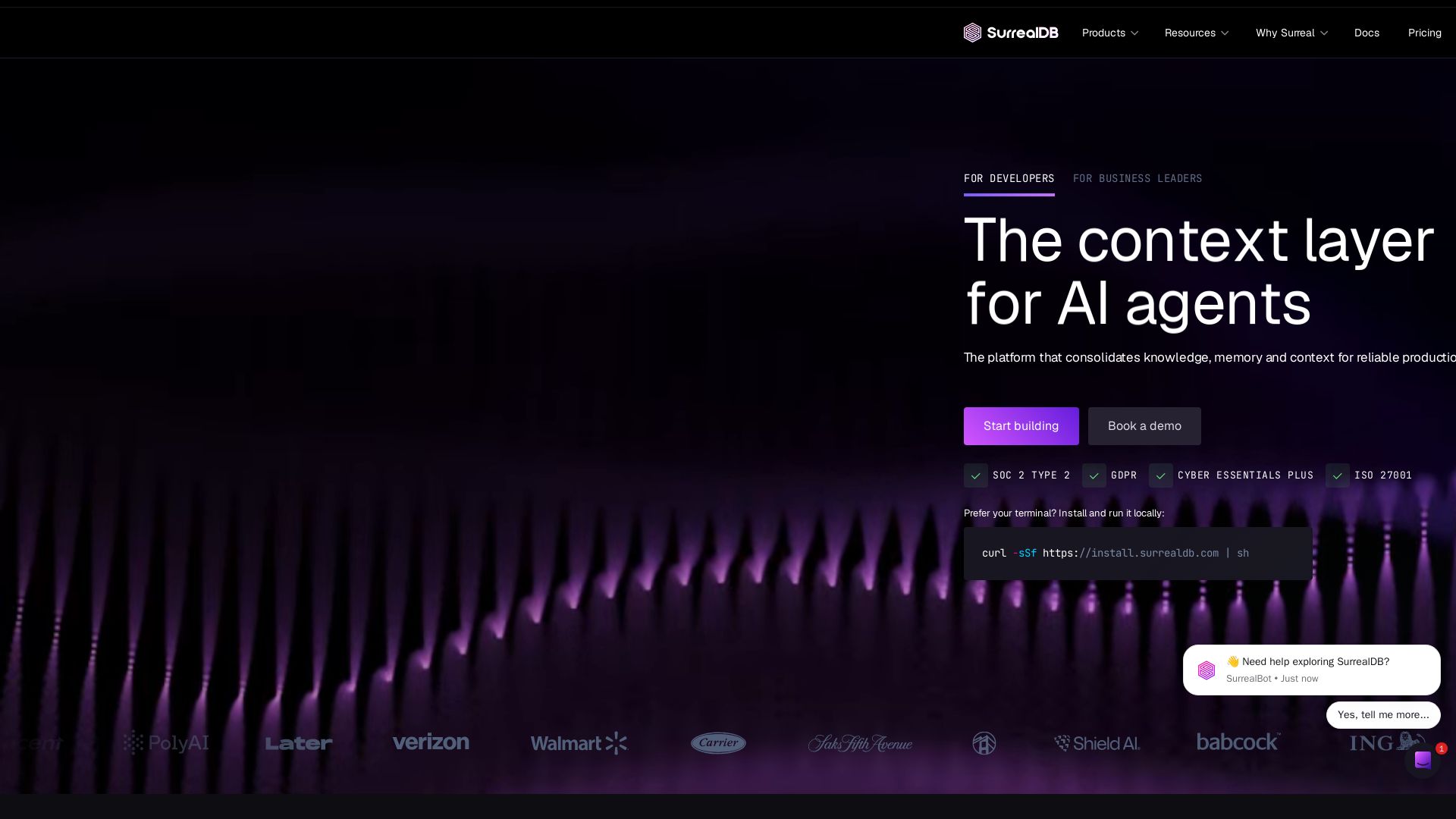
SurrealDB
Build production-scale AI agents with SurrealDB's unified platform for knowledge, memory, and context. Documents, graphs, vectors, time-series in one query. SOC 2, GDPR compliant.
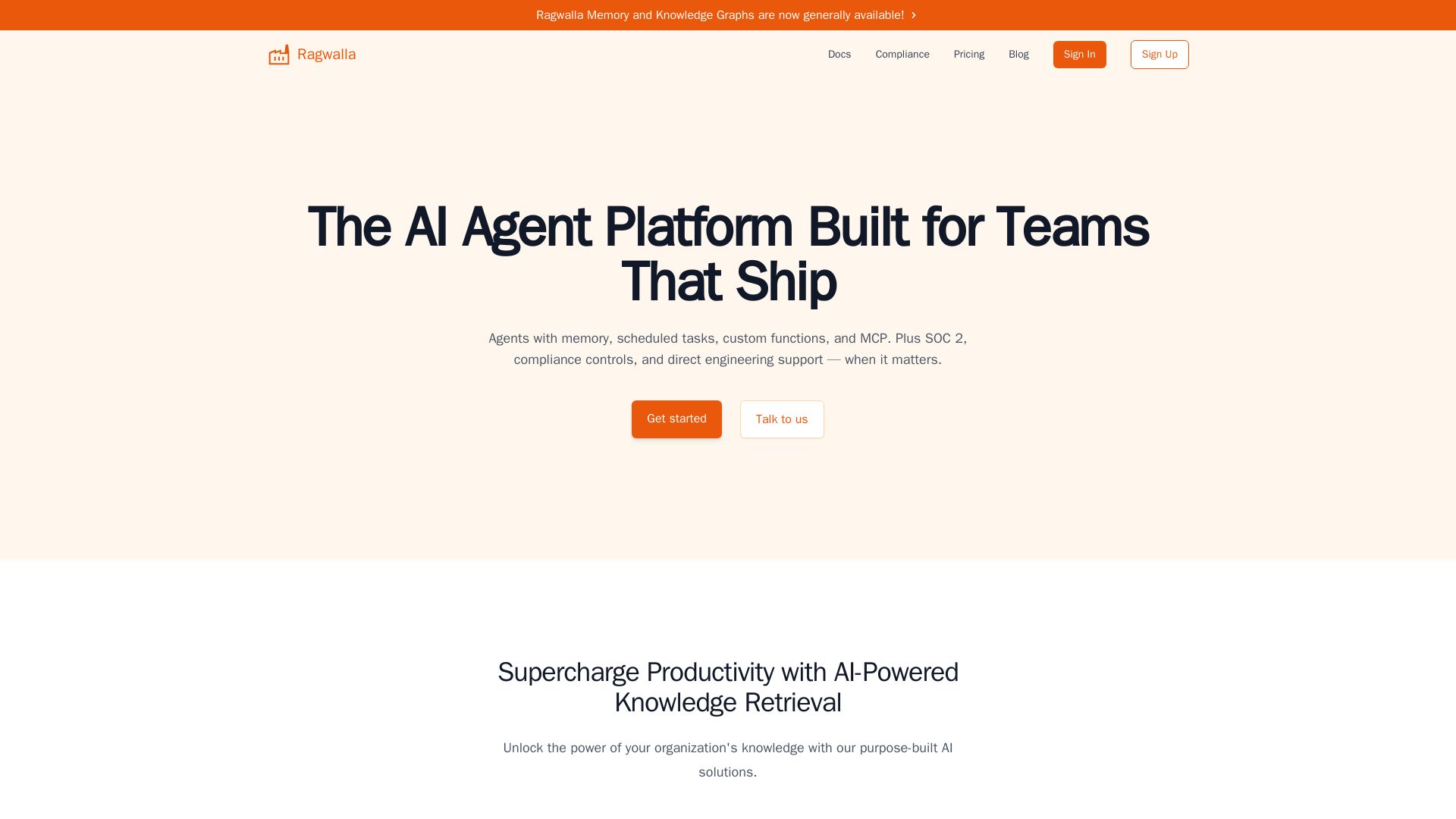
Ragwalla
Ragwalla: AI agent platform for teams. Build agents with memory, scheduled tasks, custom functions, and MCP. SOC 2 compliant, enterprise security.


Chatbot Builder
Build an AI chatbot in minutes without coding. 24/7 customer support, sales automation, and seamless integrations. Start your free 14-day trial today!

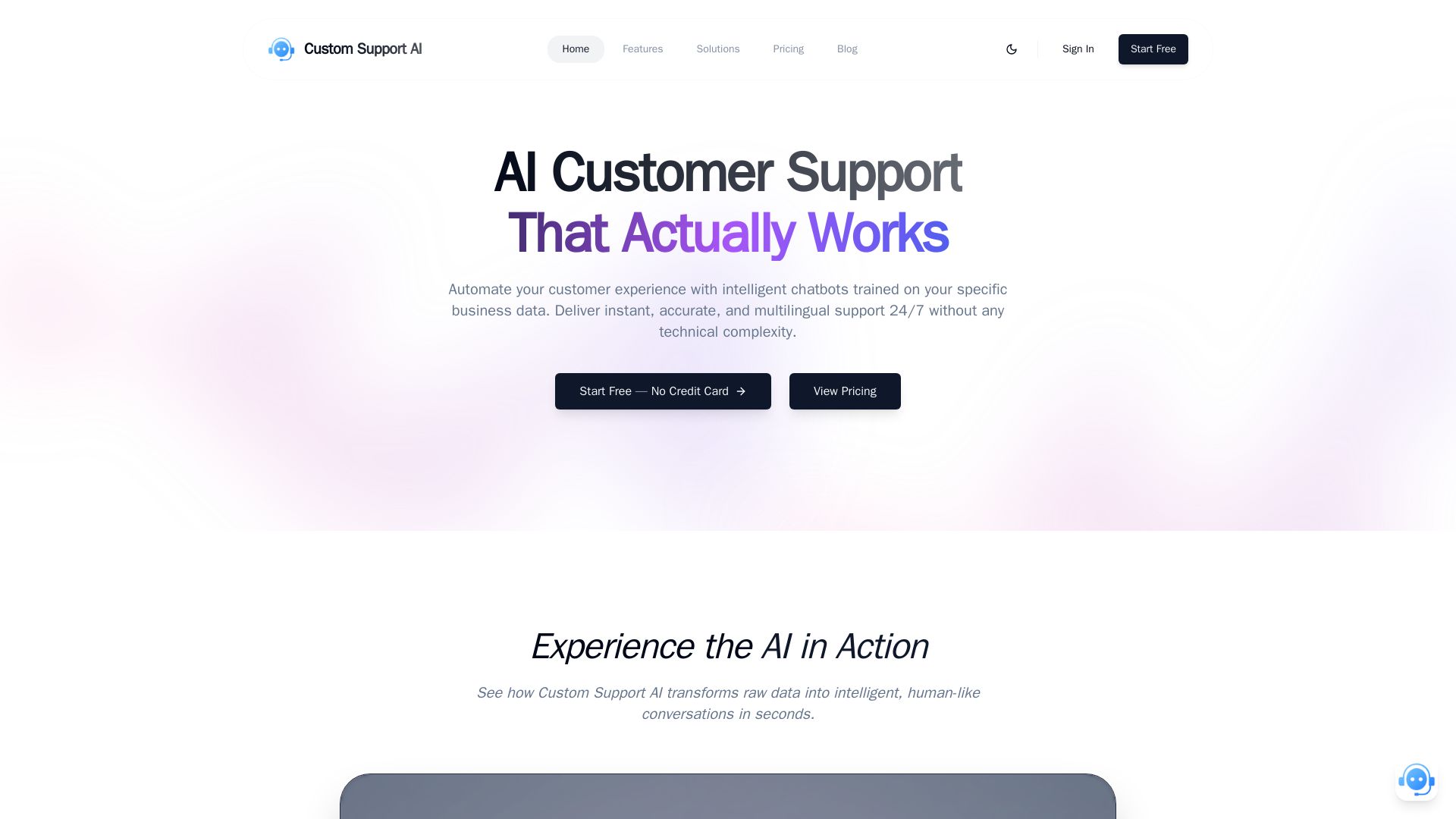
Custom Support AI
Deliver instant, accurate, multilingual customer support 24/7 with AI chatbots trained on your business data. Simple integration, no credit card required.

AG2
Build production-ready AI agents in minutes with AG2. Simple syntax, built-in patterns, human-AI collaboration. Open-source multi-agent framework.

ℹ️ Curation Disclosure: The overview and features of Supermemory were synthesized using AI and fact-checked by our curation team to ensure accuracy.