
OpenCV
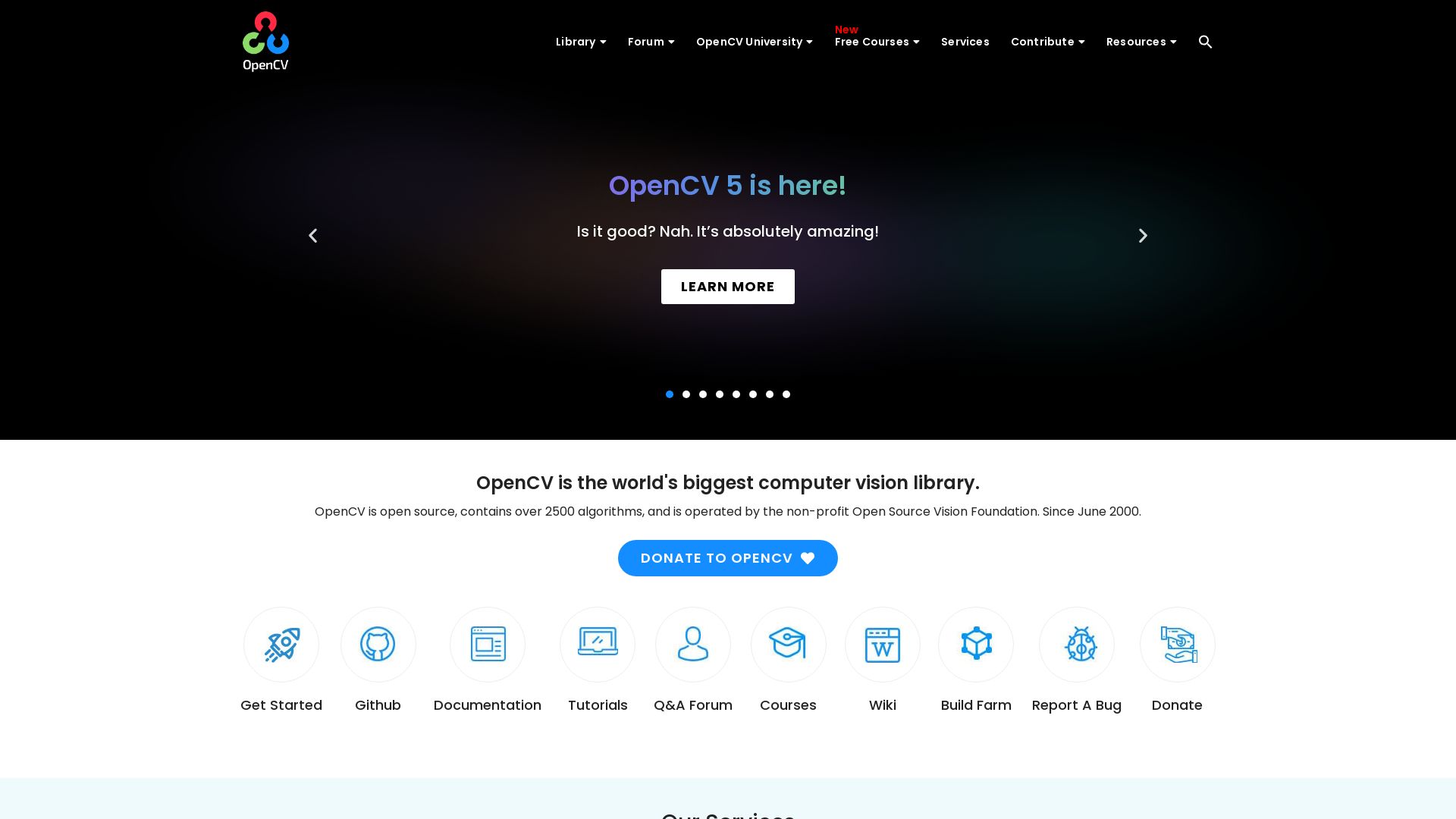
OpenCV: free, open-source computer vision library with 2500+ algorithms. Learn AI and Computer Vision with free courses.


Editor's Verdict
Key Takeaways
- Open Source Library
- Cross-Platform
- Real-Time Optimized
- Cloud Optimized
In-Depth Review: What is OpenCV?
OpenCV is the world's leading open-source computer vision library, offering over 2500 optimized algorithms for real-time applications. The site provides free tutorials and paid courses through OpenCV University, cloud-optimized builds (COOL), consulting services from OpenCV experts, and a community forum. It also features a member store, blogs, and events. Whether you're a developer, researcher, or business, OpenCV provides the tools and resources to advance your computer vision projects.
Core Features
Open Source Library
Free for commercial use under Apache 2 License, with over 2500 algorithms.
Cross-Platform
Supports C++, Python, and Java interfaces on Linux, MacOS, Windows, iOS, and Android.
Real-Time Optimized
High-performance library focused on real-time computer vision applications.
Cloud Optimized
Up to 70% faster than pip install when running in the cloud.
Free Crash Course
Free OpenCV Crash Course covering image manipulation, object detection, and deep learning.
OpenCV University
Trusted destination for learning Computer Vision, Deep Learning, and AI through bootcamps and courses.
Consulting Services
World-class team delivering custom Computer Vision solutions for businesses.
Community Forum
Active Q&A forum, documentation, tutorials, and wiki for support and collaboration.
Pricing
OpenCV Library (Open Source)
- 2500+ algorithms
- Apache 2 License
- Cross-platform (Linux, MacOS, Windows, iOS, Android)
- C++, Python, Java interfaces
- Real-time optimization
OpenCV Gold Membership
- Support OpenCV foundation
- Membership benefits (partnership programs)
Cloud Optimized OpenCV
- Up to 70% faster than pip install
- High-performance build for cloud
OpenCV University Courses
- Mastering OpenCV with Python
- Deep Learning with PyTorch or TensorFlow
- Generative AI for Art
Donate
- Support OpenCV development
Pros and Cons
Pros
- Open Source & FreeOpenCV is released under the Apache 2 License, free for both personal and commercial use.
- Vast Algorithm LibraryContains over 2500 optimized algorithms covering all major computer vision tasks.
- Cross-Platform CompatibilityRuns on Linux, MacOS, Windows, iOS, and Android with C++, Python, and Java interfaces.
- Real-Time PerformanceHighly optimized for real-time applications, essential for video processing and live analytics.
- Strong Community & Learning ResourcesExtensive documentation, tutorials, forums, and free courses like the OpenCV Crash Course.
Cons
- Learning CurveDespite many resources, beginners may find the breadth of algorithms and concepts overwhelming.
- Library SizeThe full library is large (several hundred MB), which may be unsuitable for embedded systems with limited storage.
Use Cases & Recommended Professions
Computer Vision Engineer→ View Toolkit
Needs OpenCV to build and deploy vision algorithms for object detection, tracking, and recognition.
AI Researcher→ View Toolkit
Uses OpenCV for prototyping and benchmarking computer vision models in research projects.
Robotics Engineer→ View Toolkit
Relies on OpenCV for real-time perception and navigation in autonomous robots and drones.
Data Scientist→ View Toolkit
Incorporates OpenCV to preprocess image data and extract features for machine learning pipelines.
Software Developer→ View Toolkit
Integrates OpenCV into applications for face detection, AR, or image manipulation features.
Machine Learning Engineer→ View Toolkit
Leverages OpenCV's deep learning module to run inference with models like YOLO or OpenPose.
Frequently Asked Questions
Alternative AI Tools
View Detailed Comparison →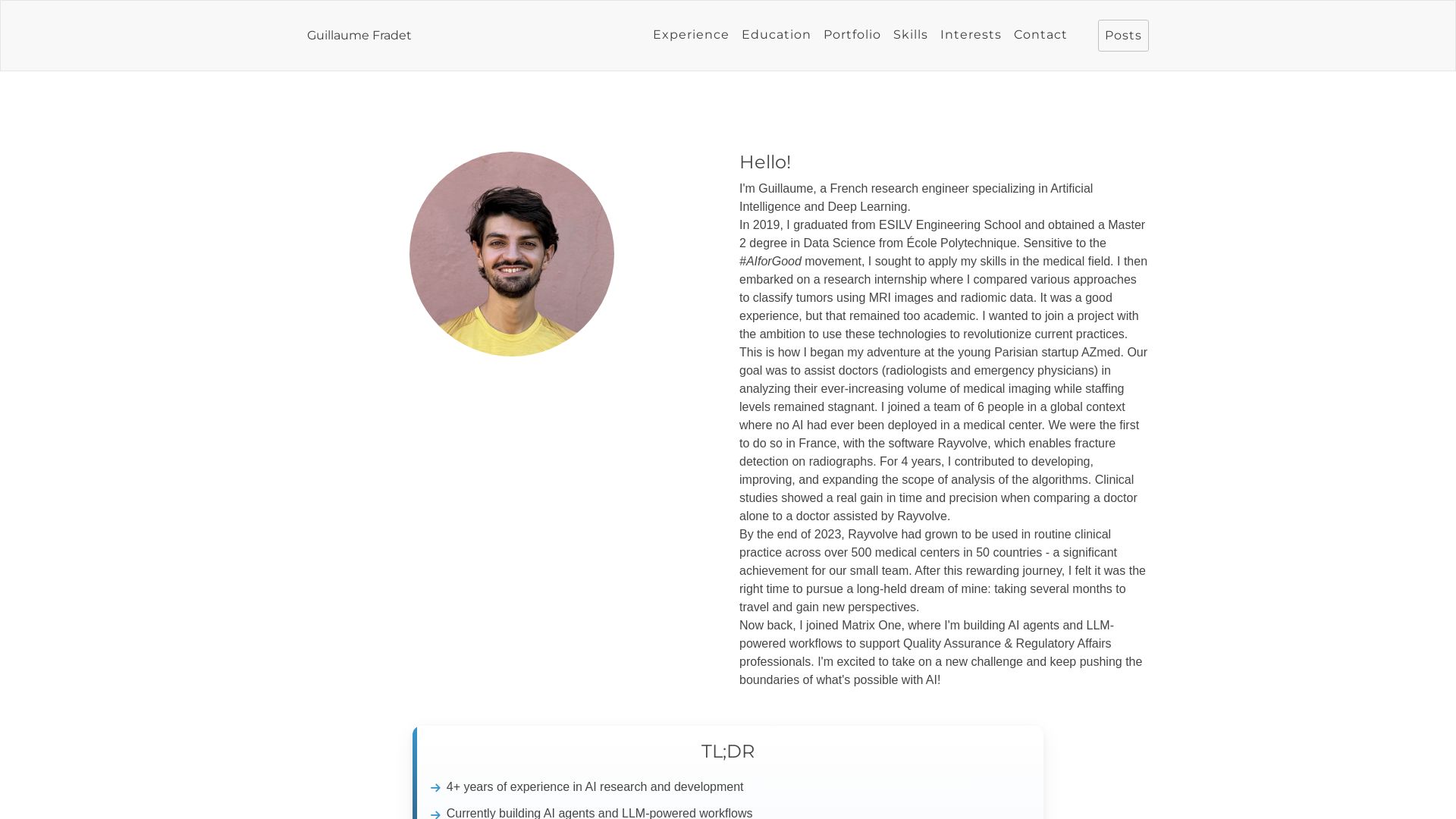
Making AI think and act: my approach to the Hugging Face AI ...
Experienced AI engineer specializing in medical imaging and LLM-powered agents. Built globally deployed radiology AI at AZmed. Now building AI agents at Matrix One.

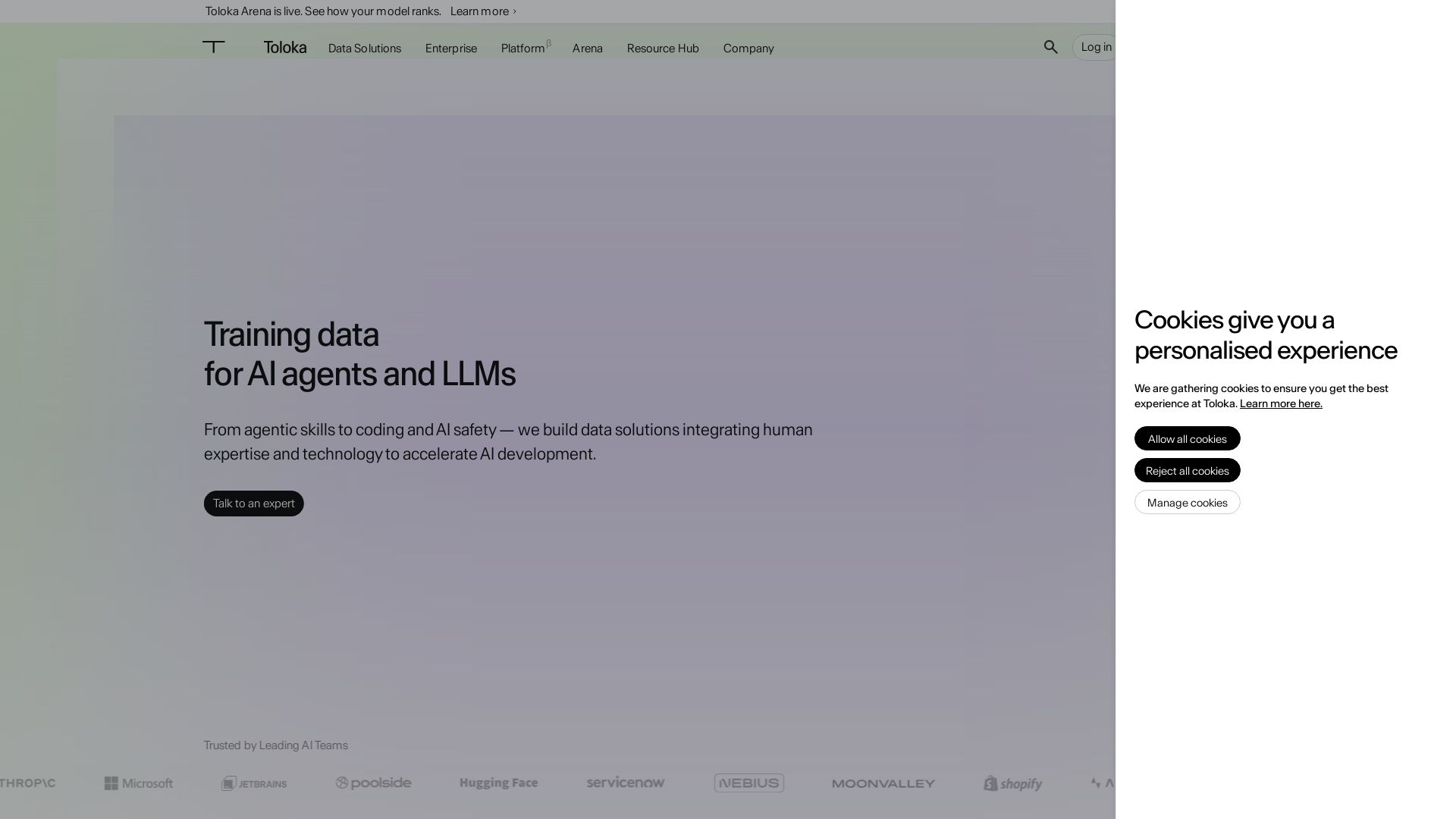
Toloka
High-quality training data for AI agents, LLMs, and coding assistants. Trusted by leading AI teams. 90+ domains, expert network.

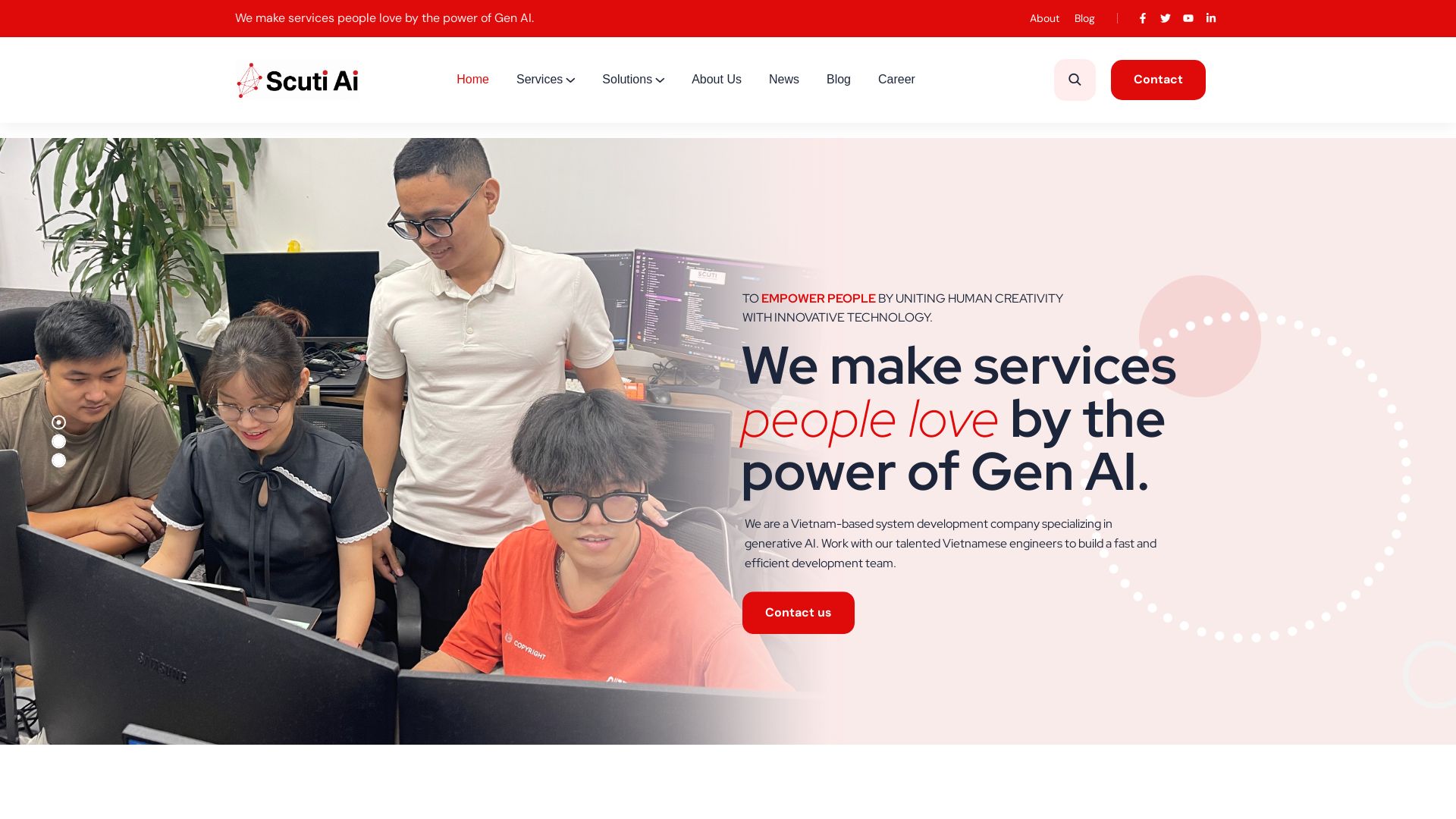
Scuti AI
We specialize in generative AI, AI-OCR, RAG, and offshore development. Combining Vietnam's speed with Japan's quality to automate tasks and boost business.

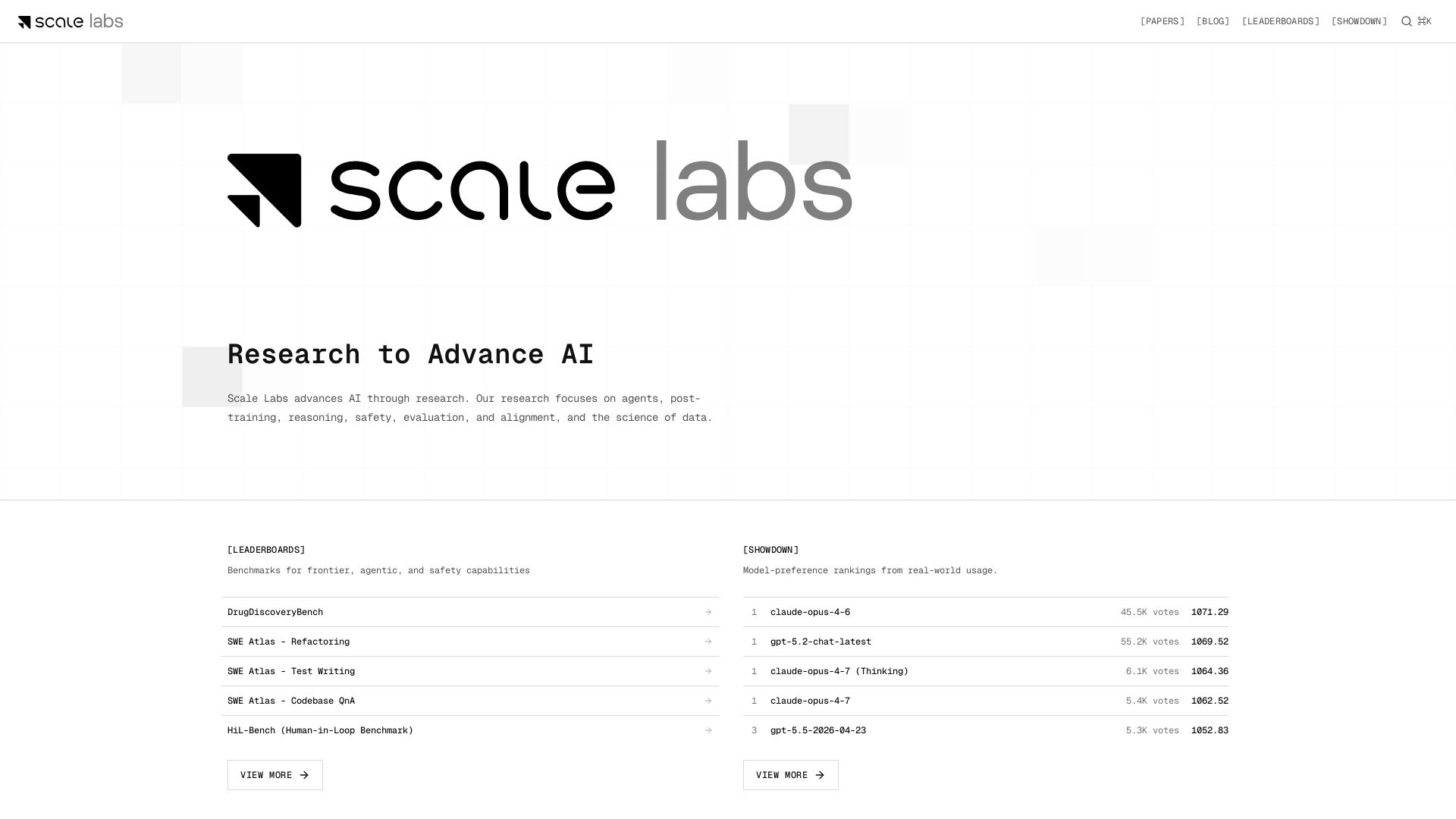
Scale Labs
Your hub for cutting-edge AI research on agents, safety, and evaluation. Explore leaderboards, model showdown rankings, and insightful blogs.


Massachusetts AI Hub
Explore no-cost Google AI training, startup accelerator, and major investments. Join the global leader in applied AI.


I Tested Every Major Open-Source AI Agent SDK So You Don't ...
Explore insights on Voice AI Agents, Multi-Agent Systems, and Developer Tools from a 30+ hackathon winner. Practical guides and cutting-edge research.


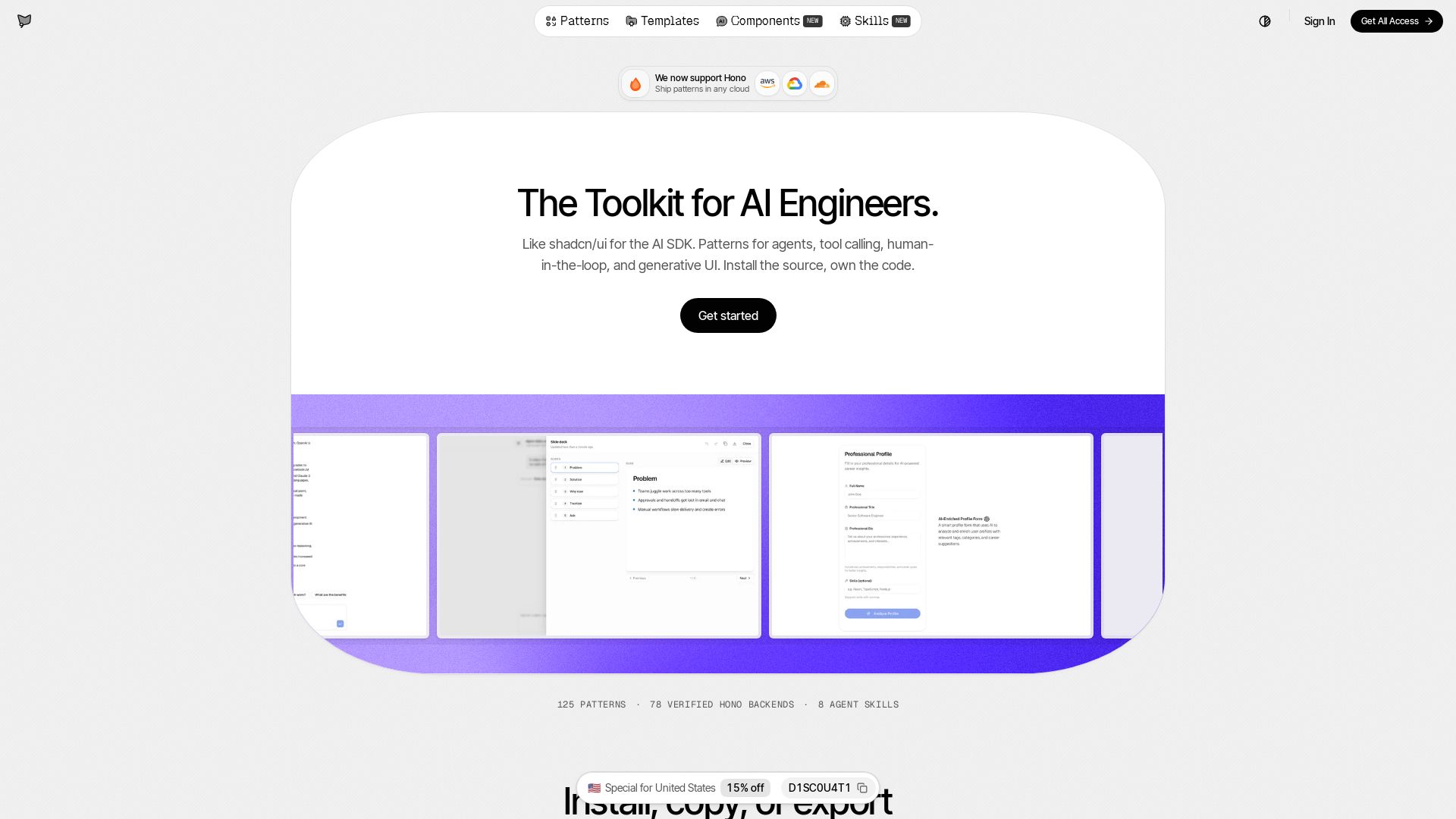
AI SDK AGENTS
The toolkit for AI engineers. Install, copy, or export 125 AI SDK patterns for agents, tool calling, human-in-the-loop, and generative UI. Full source code, own your stack.


Section AI
Turn AI investment into workforce transformation with Section. Command center, coaching, and strategic support to drive measurable ROI.


IBM demonstrates extreme scale with a 100B vector ...
IBM Research invents the future of computing with quantum supercomputing, AI, and hybrid cloud. Explore breakthroughs, open-source tools like Qiskit and Granite models, and more.

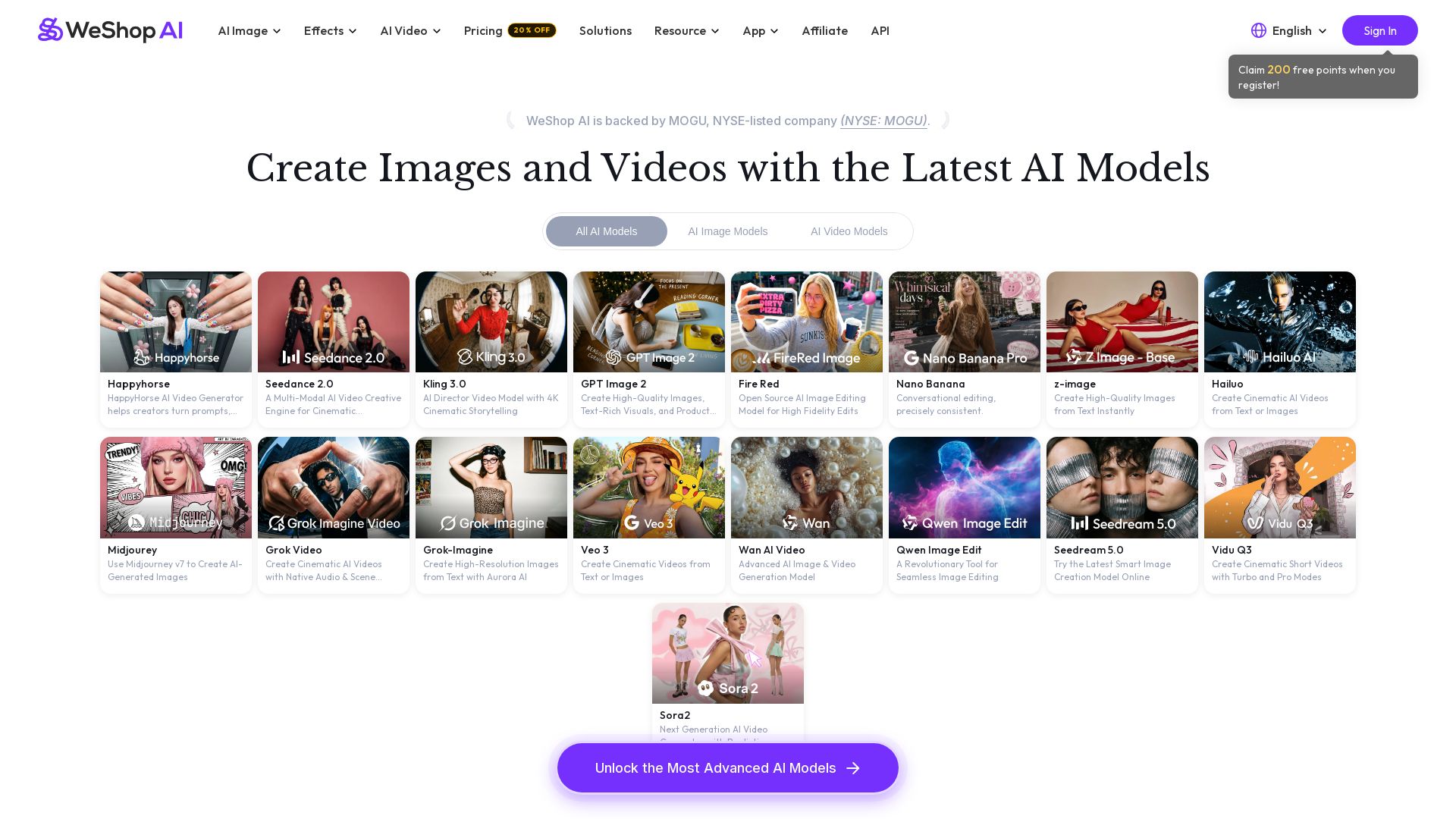
WeShop AI
Generate high-quality AI images and videos using top models like Midjourney, Kling, and Seedance. Try virtual try-on, AI fashion models, and more. Trusted by 3M+ users. Start with 200 free points!


HIX AI
HIX AI is an AI agent workspace that lets you research, create slides, videos, images, and more with one tool. Boost productivity with deep research and automated content creation.

ℹ️ Curation Disclosure: The overview and features of OpenCV were synthesized using AI and fact-checked by our curation team to ensure accuracy.